



At the heart of the global digital revolution, e-commerce has become a cornerstone of economic growth, and Saudi Arabia is no exception. With the increasing number of online shoppers, rising digital spending, and robust communication infrastructure, the Saudi market has become fertile ground for thriving online stores. In this context, platforms like Shopify, Salla, and Zid stand out as powerful tools for entrepreneurs, but owning an online store alone is not enough; competition is fierce, and distinction has become paramount.
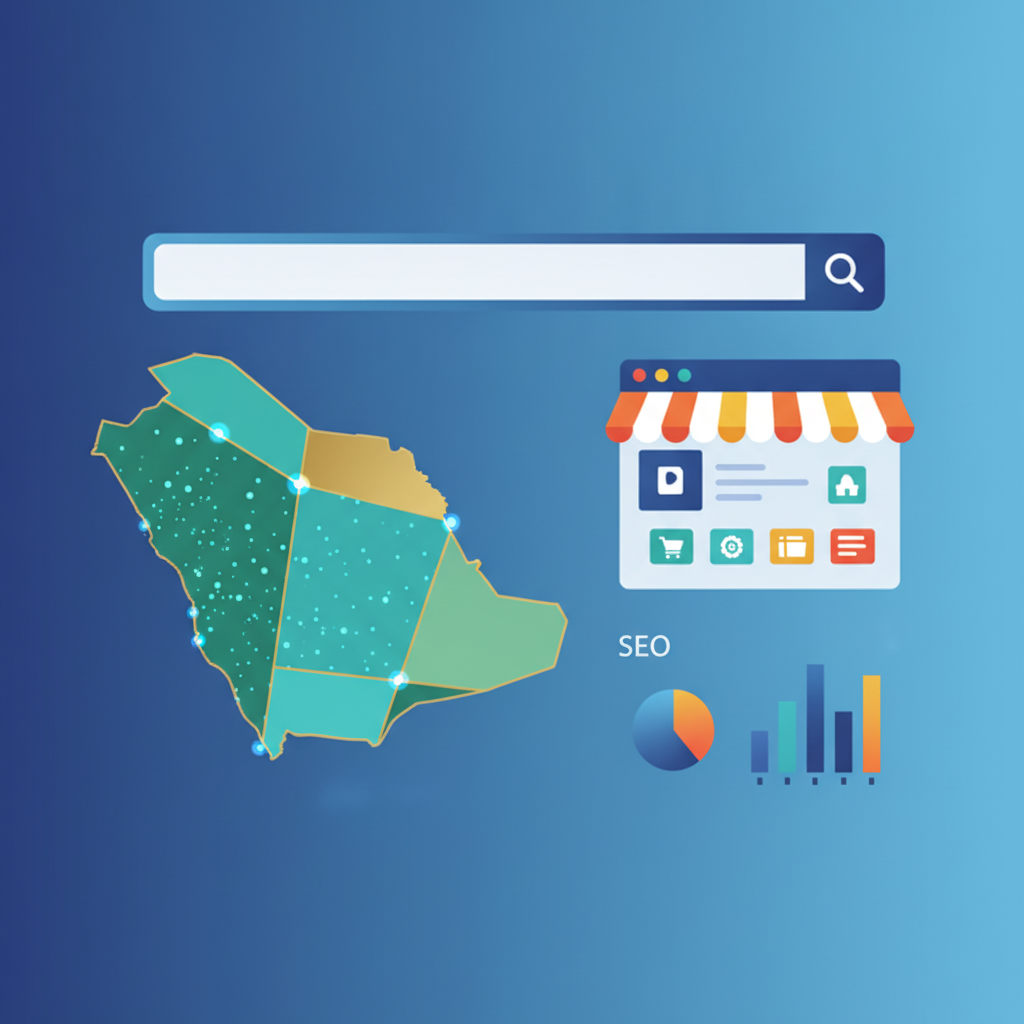
To achieve success in this competitive market, a strong marketing strategy is essential, and Search Engine Optimization (SEO) is at the forefront. Shopify SEO is not just a technical term; it's an art and a science aimed at making your store appear at the top of search results when customers search for your products or services. Imagine having the best products and prices, but no one can find your store; this is where the importance of SEO lies. It is the bridge connecting your store to potential customers, and it is the silent engine that drives thousands of free visits daily, converting them into sales and profits.
Understanding Shopify SEO Basics and its Role in the Saudi Market
Shopify SEO is a set of practices designed to improve your store's visibility on search engines like Google, thereby increasing organic (unpaid) traffic. When potential customers in Saudi Arabia search for specific products, they usually click on the first links that appear in the search results. If your store is not visible in these results, you are missing a golden opportunity to attract these customers, regardless of the quality of your products or your store's design.
The Saudi market has unique characteristics that must be considered when implementing SEO strategies. Arabic is the dominant language in searches, and there are specific local terms and phrases. Seasonal occasions like Ramadan and national holidays represent peak shopping times, requiring flexible and adaptable SEO strategies. Understanding Saudi consumer behavior, their search habits, and the terms they use is key to succeeding in ranking higher in local and regional search results.
Fortunately, Shopify, similar to other leading e-commerce platforms like Salla and Zid, offers built-in tools and features to facilitate the SEO process. Store owners can modify titles, meta descriptions, URL structures, and add alt text for images, giving them a strong foundation to start. However, maximizing these features requires a deep understanding of SEO principles and their strategic and thoughtful application, with a specific focus on the Saudi market's unique characteristics.
Keyword Research: Key to Success in Saudi Arabia
Keyword research is the cornerstone of any successful SEO strategy and the first step to ensure your store reaches its target audience in Saudi Arabia. This process involves identifying the words and phrases that your potential customers use when searching for the products or services you offer. The research must be comprehensive and consider linguistic and cultural differences, as well as common colloquial and local terms.
It's not just about finding the most popular words; it's about understanding the search intent behind each keyword. Is the user looking for information, comparing products, or ready to make a purchase? Answering these questions will help you target the most valuable keywords for your store. Investing time and effort in this phase will pay off in the long run, ensuring that SEO efforts are directed towards words that bring the most qualified visitors for a purchase.
In the Saudi context, it is essential to use keyword research tools that effectively support the Arabic language, such as Ahrefs, SEMrush, or even Google's Keyword Planner. These tools help you discover search volume, competition level, and related keywords, allowing you to build a strong list of target keywords that will form the basis of your content and product pages. Remember that keywords are not static; they evolve constantly, requiring periodic review and updates.
Long-Tail Keywords
While short-tail keywords (like "shoes" or "dresses") might seem appealing due to high search volumes, they are often highly competitive and difficult to rank for. This is where long-tail keywords come into play. These are more specific and longer phrases (consisting of three or more words) that reflect a more precise search intent from users.
For example, instead of targeting "perfumes," you might target "luxury women's perfumes for occasions in Riyadh" or "best long-lasting men's perfume." These phrases might have lower search volumes, but the competition is weaker, and more importantly, a user searching with such specificity is closer to making a purchase decision. They know exactly what they want, and your store offering that specific product will have a greater chance of conversion.
To find long-tail keywords, you can use Google's autocomplete suggestions, the "People also ask" section in search results, analyze frequently asked customer questions, or even monitor competitors. Integrating these keywords into your product content, category descriptions, and blog posts will ensure you attract a precise and interested segment of the Saudi audience, significantly boosting conversion rates and reducing paid marketing costs.
Local and Seasonal Keywords
The Saudi market is vast and geographically and culturally diverse, making the targeting of local and seasonal keywords an indispensable strategy. Local keywords include city and region names (e.g., "children's clothes in Jeddah" or "electronics Dammam"), which helps attract customers geographically close to your store or warehouses, or those looking for fast shipping options within their city.
Seasonal keywords, on the other hand, leverage annually recurring events and occasions that significantly impact purchasing behavior in the Kingdom. Think of Ramadan, Eid al-Fitr, Eid al-Adha, Saudi National Day, back-to-school season, and sales events like White Friday. Each of these occasions presents unique opportunities to target specific keywords (e.g., "Eid gifts," "Ramadan dresses," "National Day discounts").
To effectively implement this strategy, you must plan your seasonal SEO campaigns in advance. Use Google Trends to monitor search interests at specific times of the year, and prepare your page content and products with these keywords beforehand. This not only increases your chances of visibility but also ensures you deliver the most relevant content to customers at the moment they are ready to purchase, enhancing the effectiveness of your marketing efforts and maximizing benefits during these golden periods.
On-Page SEO for your Shopify Store
After identifying the appropriate keywords, the next step is to implement them within your Shopify store. This is known as On-Page SEO, and it includes all elements on your store's pages that you can control to improve your search rankings. This not only covers textual content but also extends to titles, descriptions, images, and link structure. Accurate implementation of these elements sends strong signals to search engines about the relevance and quality of your store's content.
On-page optimization is not limited to satisfying search engine algorithms; it also aims to provide an excellent user experience. Well-organized and clear content, attractive headings, and optimized images all contribute to visitors spending more time in your store, browsing more products, and ultimately completing a purchase. Search engines are becoming smarter at evaluating user experience, so investing in user experience optimization is an investment in SEO.
Remember that every page in your Shopify store, whether it's a product page, category page, or blog post, is an opportunity for SEO optimization. Each page should be optimized for a single main keyword or a set of related keywords. This requires careful planning and strategic distribution of keywords across all your store's pages, while avoiding keyword stuffing, which can lead to negative results and penalties from Google.
Optimizing Page Titles and Meta Descriptions
Page titles (Title Tags) and meta descriptions are among the most crucial elements of on-page SEO, as they are the first thing users see on a search results page. A good title should be attractive, contain the main keyword, and not exceed 60 characters to ensure it appears in full. As for the meta description, it should be an engaging summary of the content, contain the keyword, and encourage users to click, while ensuring it does not exceed 160 characters.
In Shopify, you can easily edit these elements for each product page, category page, or blog post through the "Edit Website SEO" section in each page's settings. Use keywords intelligently in the title and description, and try to make them unique for each page. For example, for a "women's evening dress" product, the title might be "Luxury Women's Evening Dress | Shop Latest Styles in Saudi Arabia" and the description "Discover our collection of luxurious women's evening dresses for 2024. High quality and modern designs suitable for all occasions in Saudi Arabia. Fast shipping."
Do not underestimate the power of these descriptions; they are not just for satisfying search engines, but they are your first opportunity to convince potential customers to click on your store's link instead of competitors'. The more persuasive and relevant the titles and descriptions, the higher the click-through rate (CTR), which is a strong positive signal to search engines indicating that your content is valuable and deserves a higher rank in search results. This simple adjustment can make a significant difference in the number of visits your store receives.
URL Structure and Content Design
Your Shopify store's URL structure should be clean, concise, clear, and contain primary keywords. Clear URLs not only help search engines understand your page content but also make them easy for users to remember and share. Avoid long and complex URLs that contain random numbers or symbols. For example, instead of `/products/product-id-123456789`, use `/products/womens-blue-evening-dress`.
As for content design, it is the essence of on-page SEO. The content of your product pages, category pages, and blog posts should be informative, unique, and engaging for the reader. Use primary and secondary keywords naturally throughout the content, focusing on quality and the value you provide to the customer. Do not stuff keywords, as this negatively impacts user experience and can lead to penalties from search engines. You can refer to our guide on comparing Shopify, Salla, and Zid to choose the most suitable platform for your content.
Break content into small paragraphs, use subheadings (H2, H3), and bulleted and numbered lists to make the text easy to read and understand. Long, high-quality content often ranks higher in search results because it provides more value to the user. Remember that the ultimate goal is to answer all potential customer questions about the product or service, thereby reducing bounce rates and increasing conversion rates. Investing in high-quality content is an investment in your store's long-term success.
Images, Videos, and Their Optimization
Images and videos play a vital role in e-commerce, especially in a store like Shopify, as they not only attract customer attention but can also significantly improve SEO if optimized correctly. Product images should be high quality, clear, and display the product from multiple angles. But more importantly, from an SEO perspective, they should be technically optimized, from file sizes to alt text.
To optimize images, ensure their file sizes are as small as possible without compromising quality, to speed up page load times. Use descriptive file names for images that include keywords (e.g., `womens-red-evening-dress.jpg` instead of `IMG_001.jpg`). Most importantly, use alt text to accurately describe each image, incorporating relevant keywords. This helps search engines understand the image content and improves accessibility for visually impaired users.
As for videos, they can increase the time users spend in your store, sending positive signals to search engines. Use videos to showcase products through reviews or demonstrations, and upload them to platforms like YouTube or Vimeo then embed them into your product pages. Make sure to optimize video titles and descriptions using keywords. Optimized images and videos not only enhance user experience but also increase your store's chances of appearing in visual search results, bringing more targeted traffic to your store.
Technical SEO for Shopify
In addition to on-page content optimizations, there are technical aspects to consider to ensure your Shopify store is easily indexed by search engines and provides a seamless user experience. Technical optimizations include website loading speed, responsiveness across different devices, site structure, and Schema Markup. These elements may not be directly visible to users, but they are crucial in determining how search engines rank your store.
Shopify, as a platform, automatically handles much of the technical SEO work for you, such as generating sitemaps and managing certain aspects of structuring. However, there are still steps you can take to ensure your store operates at maximum technical efficiency. Investing in these aspects ensures that your content and keyword efforts are not in vain, and that search engines can access, understand, and rank your content correctly.
Ignoring technical SEO can be costly, as a slow-loading or non-responsive mobile store can lead to high bounce rates and lower rankings, even if its content is excellent. Therefore, it is essential to conduct regular technical audits of your site and ensure there are no issues that might prevent search engines from effectively indexing your pages. This requires an understanding of some technical concepts or seeking assistance from an expert in these areas.
Store Speed and Responsiveness
Store loading speed is a critical factor in SEO and user experience, especially in the Saudi market where users expect fast-responding pages. Slow loading speed negatively impacts bounce rates, causing customers to leave your store before they can even see your products. Google considers page speed an important ranking factor, so optimizing it is essential for topping search results.
To improve your Shopify store's speed, you can start by optimizing images and videos as mentioned earlier. You should also choose a lightweight and fast-loading theme, and avoid overusing apps that might slow down your store. Review installed apps and delete unnecessary ones. Tools like Google PageSpeed Insights and GTmetrix can also be used to analyze your store's performance and get specific recommendations for improvement.
In addition to speed, your store must be responsive across all devices, especially smartphones and tablets. A large percentage of shoppers in Saudi Arabia browse and purchase via their phones. Ensure your store's design automatically adapts to different screen sizes and that the user experience is smooth on mobile. Shopify is designed to be generally responsive, but it's always important to test your store on various devices to ensure the best possible experience, which boosts your SEO rankings.
Sitemap and Schema Markup
A sitemap is a file that tells search engines about all the pages and content available in your store, making it easier for them to crawl and index. Shopify automatically generates a sitemap for your store (usually found at `yourstore.com/sitemap.xml`) and updates it when you add new products or pages. Make sure to submit your sitemap to Google Search Console to ensure all your pages are properly indexed.
Schema Markup, on the other hand, is additional code you add to your pages to help search engines better understand your page content, thereby displaying rich information (Rich Snippets) in search results. For example, product schema markup can show the price, ratings, and product availability directly in search results, making your store's link more attractive and encouraging clicks.
Shopify provides good support for product schema markup by default in most themes, but you can use additional apps or modify the code to further enhance this aspect. Using schema markup does not guarantee a higher rank in search results, but it increases the chances of your store appearing with detailed and attractive information, leading to a higher click-through rate. This simple technical optimization can give you a clear competitive advantage in the Saudi market.
Off-Page SEO and Link Building for the Saudi Market
While on-page SEO focuses on optimizing elements within your Shopify store, off-page SEO focuses on activities outside your site to increase its authority and trustworthiness in the eyes of search engines. The most important element of off-page SEO is building backlinks, which are links pointing to your store from other websites. These links are considered "recommendations" or "votes of confidence" from other sites, and the higher the quality and authority of these sites, the more valuable the backlink.
In the Saudi market, building backlinks requires a strategy tailored to the market's nature and local websites. You should focus on acquiring links from relevant Saudi websites related to your products or industry, such as specialized blogs, news sites, active forums, or influencers. The quality of links is far more important than their quantity; one link from a high-authority site is better than dozens of links from weak or irrelevant sites.
Off-page SEO is not limited to backlinks; it also includes brand mentions online, your social media activity, and positive reviews and ratings for your products. All these factors contribute to building your store's reputation and authority online, directly and indirectly affecting your search engine rankings. Investing in link building and digital public relations is a long-term investment that pays off in organic traffic and sustainable sales.
Building High-Quality Backlinks
Building high-quality backlinks is one of the most challenging aspects of SEO, but it is the most impactful in raising your Shopify store's authority in the eyes of search engines. Effective strategies for link building include reaching out to bloggers and influencers in the Saudi market who publish content relevant to your products, and offering valuable guest posts that include links to your store. This method provides valuable content to their audience while giving you strong backlinks.
You can also search for active Saudi forums in your niche and participate effectively, including links to your products or blog posts when appropriate and valuable to the discussion. Don't forget local directories and websites that list Saudi e-commerce stores; getting links from them enhances your local presence. The key is to focus on building genuine relationships and providing value to others before requesting a link.
Avoid buying links or using shady link-building techniques, as these practices can lead to severe penalties from Google and harm your store's reputation in the long run. Instead, focus on creating exceptional, linkable assets, such as comprehensive product guides, research studies, or infographics. The more valuable your content, the more likely others will want to link to it voluntarily, solidifying your position as a trusted source in the Saudi market.
Social Media Presence
Although social media presence does not directly affect SEO rankings, it plays a significant role in off-page SEO by increasing brand awareness, driving traffic to your store, and generating social signals. In Saudi Arabia, platforms like Twitter, Instagram, Snapchat, and TikTok are immensely popular, making them essential channels for interacting with potential customers and building a community around your brand.
Post engaging and diverse content on these platforms, including product photos and videos, customer stories, useful tips, and special promotions. Encourage interaction and engagement from your audience, and respond to comments and messages regularly. The more engagement your brand receives on social media, the more likely users are to search for it directly on search engines, which boosts your brand authority.
Social media can also be used to distribute your blog content or new product pages, increasing their visibility and shareability, thereby generating natural backlinks over time. For more information on choosing the optimal platform for your store in the Saudi market, we recommend reading our article: Shopify vs. Salla: Which is More Suitable for the Saudi Market? Remember that an active and thoughtful social media presence is an integral part of a comprehensive marketing strategy that supports SEO efforts and contributes to the growth of your Shopify store.
Monitoring Performance and Continuous Improvement
SEO efforts do not stop at implementing initial strategies; it is an ongoing process that requires careful performance monitoring, data analysis, and adaptation to changes. Search engines constantly update their algorithms, consumer behavior shifts, and competitors refine their strategies. Therefore, regularly monitoring and analyzing your SEO results will help you understand what works and what doesn't, allowing you to adjust your strategies to achieve the best possible outcomes for your Shopify store in the Saudi market.
You must be familiar with the tools that assist in this process and how to interpret the data they provide. These tools not only tell you about your progress but also reveal new opportunities and potential issues that need to be addressed. A data-driven approach is key to making informed decisions and effectively and sustainably improving your store's SEO performance.
Remember that SEO is not a sprint; it's a marathon. Patience, persistence, and a commitment to continuous improvement are the factors that will set your store apart and enable it to dominate search results in the long run. Through regular monitoring and analysis, you can stay ahead of the competition and maximize the free organic traffic that SEO brings you.
Utilizing Google Analytics and Search Console
Google's free tools, such as Google Analytics and Google Search Console, are essential for monitoring your Shopify store's SEO performance. Google Analytics provides deep insights into your store's visitors: where they came from, what pages they visited, how long they spent in your store, and conversion rates. Through it, you can track organic traffic, identify the most visited pages, and understand user behavior, helping you improve content and user experience.
Google Search Console, on the other hand, gives you a direct view from Google on how it perceives your store. It allows you to monitor the performance of keywords your store appears for, track clicks and impressions, and identify any indexing or crawling issues that might hinder your store's visibility. It also notifies you of any penalties imposed by Google on your store. Using these two tools together provides you with a comprehensive dashboard for all aspects of your store's SEO.
By analyzing the data extracted from these tools, you can identify keywords that need further optimization, pages that are performing well, and pages that need restructuring or updating. Understanding the differences between various platforms can also help optimize your strategies, as we discuss in Salla vs. Shopify comparison. Don't just install these tools; dedicate regular time to review their reports and use this information to make informed decisions to improve your store's SEO.
Adapting to Search Algorithm Updates
The world of SEO is constantly changing, as search engines, especially Google, regularly update their algorithms. These updates can be minor or major and can significantly impact your store's rankings. Therefore, it is crucial to be prepared to adapt to these changes and stay informed about the latest developments in the field of SEO.
To stay informed, follow specialized SEO blogs, industry news sources, and official Google updates. Don't just react after a change occurs; try to understand the core principles Google focuses on (such as quality, relevance, user experience) so you can anticipate future changes and proactively adapt your strategies. This approach ensures that your SEO efforts for your Shopify store remain effective and fruitful in the long run.
When you notice a change in your store's rankings after an algorithm update, there's no need to panic. Analyze the data in Google Search Console and Google Analytics to identify the affected pages or keywords. Then, adapt your content and strategies based on the new algorithm's requirements. For example, if the update focuses on high-quality content, you might need to update your pages with more detailed and comprehensive content. This continuous adaptation is key to maintaining top search results in the Saudi market.
In conclusion, Shopify SEO is a vital investment for any e-commerce store aspiring to dominate search results in the booming Saudi market. In this article, we have covered essential aspects from local and seasonal keyword research, to on-page optimizations for product pages and link structure, to technical aspects like website speed and schema markup, and finally to the importance of off-page link building and continuous performance monitoring. Each of these steps, when meticulously applied with attention to the specifics of the Saudi market, contributes to building a strong digital presence for your store.
Remember that SEO is not a magic solution that happens overnight; it is an ongoing journey that requires patience, analysis, and adaptation. Whether you are using Shopify, Salla, or Zid, the fundamental principles of SEO remain constant: provide high-quality content, focus on user experience, and build authority and trustworthiness for your brand. By adhering to these principles and leveraging available tools, you can attract more qualified visitors, convert them into loyal customers, and achieve sustainable growth for your online store.
Start implementing these strategies today, monitor your results, and do not hesitate to adapt and improve. Competition is fierce, but opportunities are greater for those with the right vision and strategy. Make Shopify SEO your gateway to topping search results in Saudi Arabia, and unlock the immense potential this promising market offers.