


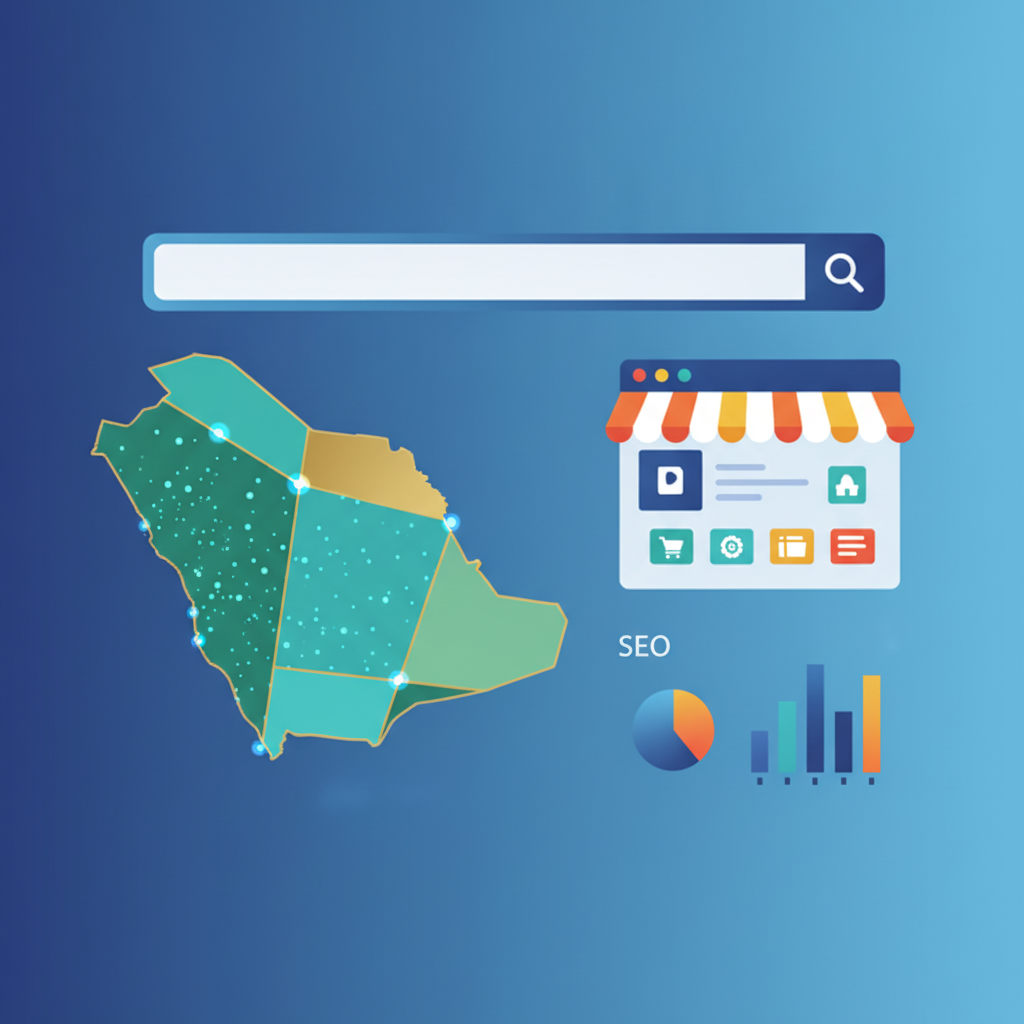
Introduction: The Importance of Shopify SEO in the Saudi Market
In the rapidly evolving world of e-commerce, merely setting up an online store is no longer sufficient for success. Competition is fierce, and customers search for products and services through search engines daily. This is where the importance of Search Engine Optimization (SEO) emerges as a critical factor to ensure your online store is visible and appears at the top of search results. For stores built on the Shopify platform targeting the flourishing Saudi market, understanding and implementing specialized SEO strategies for the local market is not just a competitive advantage, but a crucial necessity to increase sales and build a strong brand. The Saudi market is characterized by unique features in terms of consumer behavior, language, and search terms, which necessitates a tailored approach that does not ignore these differences.
The Kingdom of Saudi Arabia is one of the fastest-growing e-commerce markets in the region, with an increasing number of online shoppers and rising digital spending. Amidst this growth, e-commerce platforms like Shopify play a pivotal role in enabling entrepreneurs and store owners to reach this wide audience. However, merely being present on a powerful platform like Shopify does not guarantee automatic success. Instead, it requires continuous and deliberate effort in optimizing the store's SEO to ensure attracting qualified visitors and converting them into customers. This article will unveil the secrets of Shopify SEO specifically designed to make your store top the Saudi market, with a quick comparison to how things work on local platforms like Salla and Zid, ensuring you have a comprehensive and detailed understanding of best practices that guarantee your store's distinction and sustainable growth in this promising market.
Shopify SEO Fundamentals: Before You Start
Before diving into advanced details, it's essential to lay the right foundations for your Shopify store's SEO. This process begins with understanding how search engines work and how they index and rank content. This includes ensuring your store is technically ready for crawling and indexing, and that you have a clear and logical site structure. Although Shopify offers many built-in features for SEO, there are essential steps every store owner must take to ensure a strong start. These steps include improving site speed, securing the site with an SSL certificate, and ensuring the site is responsive across all devices (mobile and tablet), which are crucial factors directly affecting user experience and search engine rankings.
One of the most critical fundamental aspects is keyword research. You must focus on the keywords Saudi customers use when searching for your products. This means researching keywords in standard Arabic as well as common local dialects, considering synonyms and popular terms in the Kingdom. For example, instead of just searching for 'clothes,' you might need to search for 'evening dresses Jeddah' or 'luxury abayas Riyadh.' Use available keyword research tools such as Google Keyword Planner, Ahrefs, or SEMrush to identify relevant keywords with good search volume and reasonable competition. Remember that the goal is not just to attract visitors, but to attract qualified visitors who have genuine purchase intent.
Fundamentals also include optimizing site structure and content organization. Your store should be logically organized to make it easy for visitors and search engines to navigate. Use clear product categories and subcategories, and ensure every product page is easily accessible within a few clicks from the homepage. URLs, product pages, category pages, and blog pages should be organized and clear. For example, a product's URL should be concise, clear, and reflect the product's name, such as yourstore.com/products/product-name. This differs slightly from platforms like Salla or Zid, which may generate less customizable automatic URLs, but Shopify gives you greater flexibility in this aspect, allowing you to make the most of every link. In this context, it is also important to mention the importance of choosing the right platform for your store, and you can refer to our article Salla, Zid, and Shopify: Which is Best for Your Store? for a deeper understanding.
Optimizing Your Shopify Store for the Saudi Market: Advanced Strategies
After establishing the fundamentals, it's time to move on to advanced strategies that will help your Shopify store excel in the Saudi market. These strategies go beyond mere keywords to include content optimization, link building, and local experience enhancement. One of the most prominent aspects is optimizing content for both product and category pages, as well as the blog. The content must be in proper Standard Arabic, but it must also resonate with the local culture and use common expressions and terms in the Kingdom. For example, when describing a product, use persuasive language that suits Saudi taste, focusing on quality and luxury if your products warrant it.
On-Page SEO Content Optimization
On-page content optimization is vital and requires meticulous attention to detail. Start by optimizing product titles and descriptions. Product titles should be engaging and include target keywords, while descriptions should be information-rich and answer all potential customer questions. Use long paragraphs, bullet points, and lists to make the content easy to read and understand. Don't hesitate to include customer reviews, which are a very important SEO element that builds trust and provides fresh content continuously. For category pages, write a unique description for each category containing relevant keywords, and don't forget to optimize images with descriptive alt tags that include keywords. This ensures your store also appears in image search results, increasing opportunities to attract visitors. These details may seem small, but they make a significant difference in your store's overall SEO performance.
Link Building (Off-Page SEO) and Local Marketing
Building high-quality backlinks remains one of the most important SEO ranking factors. Focus on acquiring links from trusted and relevant Saudi websites in your industry. This could include collaborating with Saudi bloggers, influencers, or getting mentions from local news sites or specialized forums. Additionally, local marketing is crucial for the Saudi market. Ensure your store is listed on Google My Business with all correct and updated information. Encourage customers to leave reviews and ratings on your Google My Business page, as this significantly impacts local search rankings. Local strategies are not limited to Google; they also include presence on the most popular social media platforms in Saudi Arabia, such as Twitter and Snapchat, where you can build a community and organically promote your products. This type of presence enhances your brand's strength and indirectly contributes to improving your store's SEO.
Technical and Local Experience Optimization
The technical experience of the website is one of the factors that greatly affects SEO, especially page loading speed. In the Saudi market, where the percentage of smartphone users is increasing, mobile site speed is indispensable. Use tools like Google PageSpeed Insights to analyze your store's speed and identify areas for improvement. Ensure images are optimized and that the code is as clean as possible. Furthermore, don't forget to optimize Sitemaps and the Robots.txt file to ensure search engines can crawl and index your store efficiently. From a local experience perspective, make sure to use the local currency (Saudi Riyal) and popular payment methods in the Kingdom such as Mada, Visa, and Mastercard, in addition to cash-on-delivery or installment options via Tabby and Tamara. These details not only improve user experience but also send positive signals to search engines about your store's relevance to the local audience. For more on platform selection, you might find the article Shopify vs. Salla: Which is Better for the Saudi Market? helpful in making your decision.
Tools and Resources for Shopify SEO
To get the most out of your Shopify store's SEO efforts, you'll need to leverage some helpful tools and resources. These tools not only simplify the process but also provide valuable data and strategic insights that can guide your decisions. First, Google Analytics and Google Search Console are indispensable. Google Analytics gives you detailed insights into visitor behavior in your store, such as most visited pages, bounce rates, and traffic sources. Google Search Console, on the other hand, is a crucial tool for monitoring your store's performance in Google search results, identifying crawl issues, the keywords your store ranks for, and click-through rates. These tools are free and should be an integral part of your SEO strategy.
Second, there are many Shopify SEO apps available in the Shopify App Store that can simplify many tasks. Apps like Plug-in SEO or SEO Manager & Image Optimizer help optimize titles and descriptions, create sitemaps, automatically optimize images, and monitor technical issues. While platforms like Salla and Zid offer some basic SEO features within their control panels, Shopify's flexibility in adding apps gives it a significant advantage in customizing and improving SEO more deeply. However, it's important to choose apps carefully to ensure they fit your budget and needs and do not negatively impact your store's speed. We always recommend reading reviews and ensuring the app is compatible with the requirements of the Saudi market.
Third, utilize keyword research and competitor analysis tools. Tools like Ahrefs, SEMrush, and Moz Keyword Explorer are not just for keyword research, but also for evaluating keyword difficulty and analyzing competitor SEO strategies in the Saudi market. Through these tools, you can discover the keywords your competitors rank for, their backlink sources, and the content that performs best for them. This information is invaluable in formulating an effective SEO strategy that allows you to outperform competitors. Furthermore, don't hesitate to use content analysis tools like Yoast SEO (if you're using a WordPress blog connected to Shopify) or grammar checking tools to ensure the quality of Arabic content and its freedom from spelling and grammatical errors, which enhances your store's credibility with the Saudi audience. Another aspect to consider is optimizing specific pages like product pages, and you can find more insights on this in our article Product Page: Optimizing It to Increase Salla and Zid Sales, which offers valuable general principles applicable across platforms.
Measuring Performance and Continuous Improvement
SEO efforts don't stop once strategies are implemented; rather, it's an ongoing process that requires continuous monitoring, measurement, and improvement. You should regularly track key performance indicators (KPIs) to assess the effectiveness of your strategies. Among the most important indicators are: your store's ranking in search results for targeted keywords, organic traffic volume, click-through rate (CTR), bounce rate, and average session duration. Use Google Analytics and Google Search Console to track these indicators regularly. If you notice a decline in performance or failure to achieve desired goals, this indicates the need to re-evaluate your strategies and make necessary adjustments.
Continuous improvement requires you to stay updated with the latest developments in the world of SEO and search engine algorithm updates. Google, for example, makes hundreds of updates annually, some of which can significantly impact your store's rankings. Subscribe to specialized SEO blogs, follow experts in the field, and try to apply new practices that are compatible with your store and the Saudi market. For instance, with the increasing importance of voice search, you may need to optimize your content for long-tail questions and natural language conversations that Saudi customers might use when searching by voice.
Don't be afraid to experiment with new strategies. Conduct A/B tests on product titles, descriptions, or page designs to see what performs best. For example, you might discover that a specific product title phrasing increases the click-through rate, or that a particular description format increases the time visitors spend on the page. Remember that the Saudi market is dynamic, and consumer behavior is constantly changing. Therefore, adaptability and continuous improvement are key to long-term success. Through careful monitoring and continuous optimization, you will ensure that your Shopify store not only ranks high in search results but maintains this distinction and continues to grow and thrive.
Conclusion
In conclusion, Shopify SEO for the Saudi market is an ongoing journey that requires continuous commitment and effort. We have clarified that success depends not only on creating an attractive store but on an integrated SEO strategy that considers the specifics, culture, and consumer behavior of the Saudi market. From laying technical foundations and local keyword research to optimizing technical content, building links, and utilizing supporting tools, every step contributes to building a strong digital presence for your store. Excelling in the Saudi e-commerce market requires a deep understanding of the importance of search engine compatibility and the ability to adapt to continuous changes in consumer behavior and search algorithms.
Remember that SEO is not a magic solution that happens overnight; it is a long-term investment that yields qualified traffic, increased sales, and a trusted brand for your store. Whether you use Shopify or consider other platforms like Salla or Zid, the fundamental principles of SEO remain constant, but their application requires customization for the target market. By focusing on providing an excellent user experience, valuable content, and a robust site structure, you will position your store in the best possible place for success and prosperity in the competitive Saudi market.
Therefore, start applying these strategies today, closely monitor your store's performance, and do not hesitate to adjust and improve. The future of e-commerce belongs to those who master the art of appearing in the right place at the right time. With your commitment to these principles, your Shopify store will become not just a shopping destination but a beacon that attracts Saudi customers and builds their loyalty to your brand, ensuring you sustainable growth and lasting success in this promising market.