



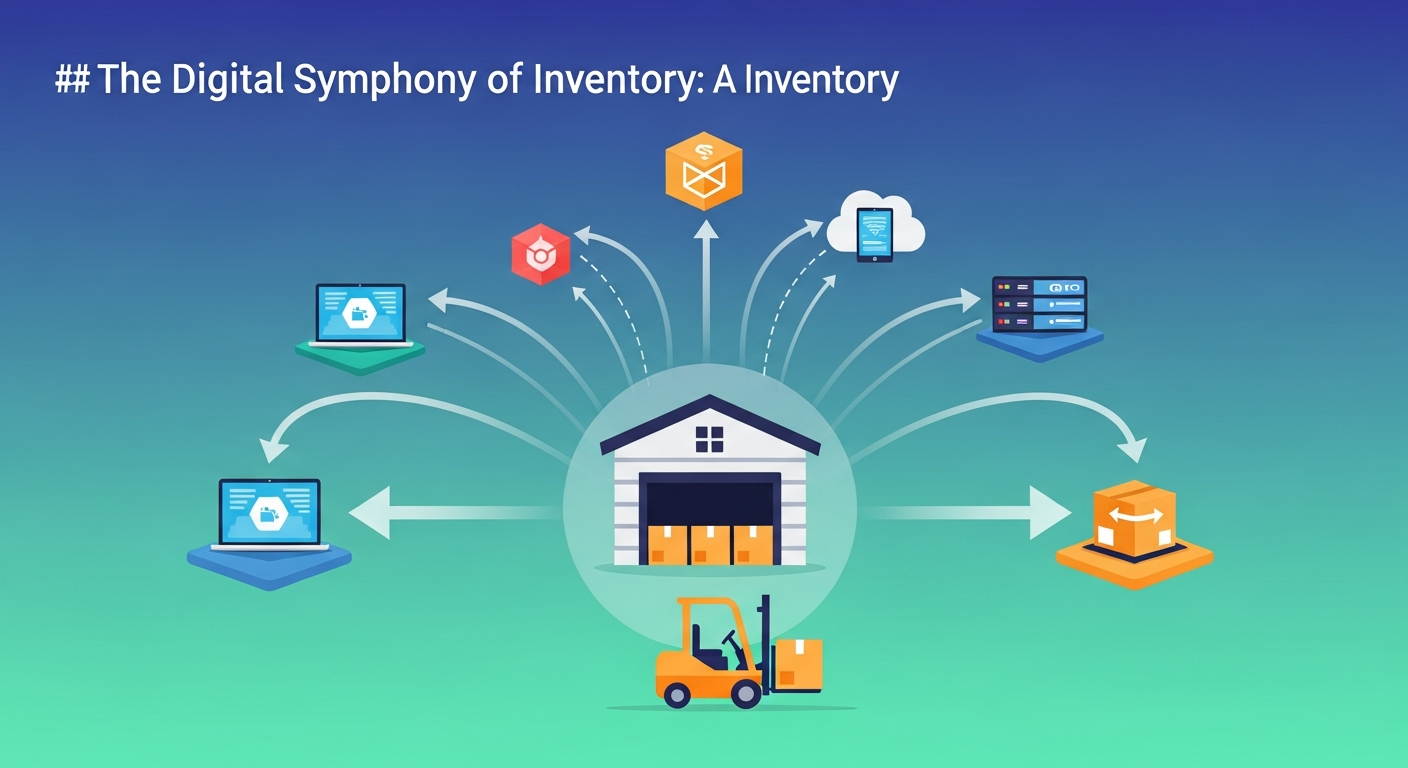
Introduction: Inventory Management - The Cornerstone of E-commerce Success
In the fast-paced world of e-commerce, it's not enough to have great products and an attractive storefront; it requires meticulous management of every operational detail to ensure continuous success and growth. Among these details, inventory management stands out as a critical element that cannot be underestimated. It's not merely a process of tracking goods, but an art and science aimed at achieving the optimal balance between product availability and holding costs, directly impacting customer satisfaction, cash flow, and overall store profitability. Understanding how to effectively manage inventory can be the difference between a thriving store and one facing difficulties.
For stores operating on leading e-commerce platforms like Zid, Salla, and Shopify, inventory management takes on double importance. These platforms offer powerful tools and features, but maximizing their benefits requires a clear strategy and systematic approach to inventory. A store that frequently experiences stockouts loses potential sales and customer trust, while a store that accumulates large quantities of inventory incurs high storage costs and faces the risk of product obsolescence. Therefore, optimizing inventory management efficiency has become an urgent necessity for every e-commerce merchant striving for excellence in a highly competitive market.

What is Inventory Management and Why is it Crucial for Your Store's Success?
Inventory management is the comprehensive process of tracking, monitoring, and organizing goods in your store, from the moment they are received from suppliers until they are delivered to the end customer. This process includes demand forecasting, determining optimal inventory levels, tracking product movement, and managing returns. The primary goal is to ensure the availability of required products at the right time and in the correct quantity, while minimizing costs associated with storage and operations. It is a dynamic process that requires continuous monitoring and adjustments based on market conditions and customer behavior.
Inventory management is crucial for several fundamental reasons that affect all aspects of your e-commerce business. First and foremost, it directly impacts customer satisfaction. When a customer finds the product they want available for purchase and quick delivery, their experience is positive, fostering brand loyalty. Conversely, stockouts lead to customer frustration and may prompt them to seek alternatives from competitors, harming your store's reputation and reducing repeat purchase opportunities. For this reason, meeting customer expectations regarding product availability should be a top priority.
Secondly, inventory management plays a pivotal role in cash flow control and profitability. Inventory represents frozen capital, and the accumulation of unsold products means a drain on funds that could have been invested elsewhere. On the other hand, stockouts lead to lost sales opportunities and potential profits. Therefore, achieving a delicate balance between inventory availability and its costs ensures healthy cash flow and contributes to enhancing the store's overall profit margin. This balancing act requires a deep understanding of the product lifecycle and customer purchasing patterns.
The Importance of Inventory Management in the E-commerce Context
In the e-commerce environment, the importance of inventory management is amplified due to the nature of operations, which are characterized by speed and reliance on real-time data. Unlike traditional stores, where customers can physically see the product, online shoppers rely entirely on the information displayed on the product page, including availability status. Any error in inventory updates can lead to a negative customer experience, such as purchasing a product that is actually out of stock, which necessitates order cancellation and exposes the store to criticism and loss of credibility.
Platforms like Salla, Zid, and Shopify allow store owners to manage their inventory digitally, offering significant potential for automation and optimization. However, these capabilities require a clear strategy to leverage them. There must be a precise system for real-time inventory updates, especially for stores selling through multiple channels or with large product quantities. The ability to track every unit of inventory from the warehouse to the customer's door is a true competitive advantage in the digital market, ensuring operational efficiency and transparency.
Furthermore, effective inventory management plays a vital role in enabling the store to scale and grow. When the system is robust, the store can add more products, handle a larger volume of orders, and even expand into new markets with confidence. Without a solid foundation for inventory management, expansion becomes risky and can lead to operational chaos. Automation and analytics can aid in this process, allowing store owners to focus on growth strategies rather than getting bogged down in repetitive manual details.
Common Challenges in Inventory Management and How to Overcome Them
Inventory management involves a set of challenges faced by most e-commerce store owners, regardless of their business size. One of the most prominent challenges is inaccurate demand forecasting. Predicting future sales is difficult, influenced by many factors such as seasons, trends, marketing campaigns, and even unexpected global events. Inaccurate forecasting leads to either stockouts (selling less than needed) or overstocking (buying more than needed), both of which have negative consequences for profitability and customers. Overcoming this challenge requires using historical data, advanced analytical tools, and close monitoring of market trends.
Another major challenge is managing overstocking and understocking. Overstocking ties up capital, increases storage costs, and risks product obsolescence or damage. Meanwhile, understocking means losing potential sales and frustrating customers. Balancing these two extremes requires a precise strategy and continuous review of inventory levels. Techniques such as Reorder Points and Safety Stock can help mitigate these issues. Stores can leverage the reporting features available on platforms like Salla, Zid, and Shopify to effectively monitor these levels.
Finally, human errors and lack of automation represent another common challenge. Manual data entry, physical counts, and inaccurate tracking can lead to costly errors that affect inventory accuracy and overall customer satisfaction. The absence of automated systems can lead to wasted time and resources, especially as the store grows and the volume of products and orders increases. Overcoming this challenge necessitates investing in inventory management systems, using barcodes, training employees, and maximizing the use of integrated tools offered by the platforms.
Specific Challenges for Platforms like Salla, Zid, and Shopify
Although e-commerce platforms like Salla, Zid, and Shopify provide powerful tools for inventory management, there are specific challenges that merchants might face when using them. One such challenge is the complexity of multi-channel inventory management. Many merchants don't limit sales to their online store; they also sell through social media, other marketplaces (like Amazon or Noon), or even physical stores. These scenarios require precise inventory synchronization across all channels to avoid selling an unavailable product. This synchronization might require external tools or custom integrations, which can be a technical and financial challenge.
Another challenge relates to customization or integration limitations at times. While these platforms offer great flexibility, some merchants with complex inventory management needs might find that basic features do not meet all their requirements, or that integration with external systems (such as ERP or WMS) requires additional effort. For example, large stores might need specialized solutions that go beyond the basic capabilities of the platform, necessitating the search for additional apps or the development of custom solutions. For a deeper understanding of choosing the most suitable platform, you can refer to our comprehensive guide: Salla, Zid, and Shopify: Which is Best for Your Store? which provides a detailed comparison.
Finally, lack of expertise in data analysis can be a significant challenge. Platforms like Salla, Shopify, and Zid provide rich reports and analytics on sales and inventory, but extracting actionable insights requires analytical skills. Without understanding how to read and interpret these reports, merchants might miss opportunities to optimize their inventory, such as identifying best-selling or slow-moving products, or accurately forecasting future demand. Investing in employee training or using simplified analytical tools can help overcome this challenge, turning raw data into smart business decisions.
Effective Inventory Management Strategies
To achieve maximum efficiency in inventory management, e-commerce store owners must adopt proven strategies suitable for their business nature. One such strategy is ABC analysis, a method of classifying inventory based on its value and importance. Products are divided into three categories: Category A (high-value products that constitute a small portion of total inventory but contribute a large percentage of revenue), Category B (medium-value and importance products), and Category C (low-value products that make up the largest portion of inventory units). This classification allows for allocating management and monitoring efforts to the most critical products, ensuring efficient resource utilization.
Another important strategy is Just-In-Time (JIT). This strategy aims to minimize inventory levels by ordering goods from suppliers only when there is an actual need for them, i.e., just before they are sold. This approach reduces storage costs, minimizes the risk of inventory obsolescence, and improves cash flow. However, implementing JIT requires strong and reliable relationships with suppliers and a highly efficient supply chain, as any delay can lead to stockouts and delays in order delivery to customers. The risks of this strategy should be carefully evaluated before fully adopting it.
In addition, determining Safety Stock and Reorder Points is a vital strategy to avoid stockouts. Safety stock is an extra quantity of inventory held as a reserve to cope with unexpected fluctuations in demand or supply delays. The reorder point is the level at which inventory should reach before placing a new order with suppliers. Determining these levels requires careful analysis of historical data, supplier lead times, and seasonal demand fluctuations. Forecasting tools available in many inventory management systems can help accurately calculate these values, ensuring continuous product availability.
Implementing Inventory Strategies in Salla, Zid, and Shopify
To effectively implement these strategies on platforms like Salla, Zid, and Shopify, store owners can leverage built-in features and additional applications. For example, these platforms allow setting inventory quantities for each product and variant (such as colors and sizes), and provide settings for low stock alerts. Stores can use these alerts to determine reorder points, helping them place orders in a timely manner. They can also track sales for each product to identify high-performing (Category A) and low-performing (Category C) products for ABC analysis implementation.

For the Just-In-Time strategy, stores on Salla, Zid, and Shopify can use dropshipping as a form of JIT, where no actual inventory is held. This significantly reduces storage costs and risks. However, it is crucial to ensure the reliability of suppliers and the quality of their products. A 'pre-order' option can also be enabled for products that might take longer to arrive or follow a JIT strategy, allowing customers to purchase with awareness of potential shipping delays. It is also important to understand how to price products correctly based on inventory costs, and you can learn more about this by reading our article Product Pricing: Smart Strategies for Salla and Zid Stores.
Furthermore, many apps and extensions in the Salla, Zid, and Shopify app stores offer advanced inventory management solutions, such as demand forecasting tools, automated purchase orders, and multi-channel inventory synchronization. Investing in these tools can significantly enhance inventory management efficiency and reduce human errors. It is essential to seek out applications that integrate seamlessly with the platform and meet your store's specific needs, considering the cost and expected return on investment. The shift towards automated solutions saves time and effort, allowing focus on strategic aspects of the business.
The Role of Technology and Automation in Inventory Management
Technology has revolutionized the way inventory is managed, and automation has become a cornerstone for achieving efficiency and accuracy in this field. Modern Inventory Management Systems (IMS), whether built into e-commerce platforms like Shopify, Salla, and Zid, or standalone systems that integrate with them, allow for real-time inventory tracking. This means that every sale, purchase, or return is automatically recorded, providing accurate visibility into available stock levels and reducing manual errors. Relying on advanced systems ensures that data is consistently updated and accurate, which is vital for making sound decisions.
Automation plays a crucial role in streamlining operations such as reordering, updating inventory levels, and reporting. Instead of spending hours on manual inventory counts or data entry, automated systems can do this instantly. For example, automatic alerts can be set up when stock reaches a reorder point, or even automatic purchase orders can be generated for suppliers. This not only saves time and effort but also reduces the risk of stockouts due to human oversight. Integrating artificial intelligence into these systems can significantly improve demand forecasting, and you can read more about this topic in our article Artificial Intelligence: Enhancing Your Store in Salla and Zid.
Additionally, technology contributes to improving inventory accuracy and reducing waste. The use of barcode scanners and Radio Frequency Identification (RFID) systems can speed up receiving, storage, and shipping processes, and reduce errors in inventory counting. Furthermore, the integration between an Inventory Management System and a Warehouse Management System (WMS) can improve the efficiency of storage and product retrieval. These tools not only increase accuracy but also provide valuable data that can be used to analyze performance and identify areas for continuous improvement in inventory operations.
Practical Tips for Improving Inventory Efficiency
To achieve maximum efficiency in managing inventory for your store on Salla, Zid, or Shopify, there are several practical tips you can apply. First, conduct regular and periodic inventory counts. Whether it's a full annual inventory or cycle counting for specific parts of the inventory more frequently, this process is essential to ensure the accuracy of digital records and their match with physical stock. Regular inventory helps identify discrepancies between recorded and actual inventory, uncover errors or losses, allowing you to correct them quickly and avoid future problems.
Secondly, maintain strong and transparent relationships with suppliers. Suppliers are a key partner in your supply chain, and effective communication with them can significantly reduce inventory issues. Sharing demand forecasting information with suppliers, negotiating flexible payment and shipping terms, and ensuring their ability to fulfill orders on time are all factors that contribute to smooth inventory flow. Transparency about your expectations and needs can help suppliers better prepare and avoid unexpected delays that affect your inventory levels.
Thirdly, use data to continuously improve demand forecasting. Don't rely on guesswork; instead, use historical sales data, analyze seasonal trends, the impact of marketing campaigns, and even customer demographic data to predict future demand more accurately. E-commerce platforms provide powerful analytical tools that can assist you in this. The more accurate your demand forecast, the better your ability to maintain optimal inventory levels and avoid overstocking or stockouts. This continuous analysis ensures your store's flexibility and its ability to adapt to changes in the market.
Optimizing Shipping and Logistics to Reduce Inventory Costs
Efficient shipping and logistics directly impact inventory management costs and a store's cash flow. One effective way to reduce these costs is to leverage direct shipping or dropshipping, where the supplier ships the product directly to the customer. This reduces the need to store inventory in your own warehouses, thereby cutting down on storage, insurance, and warehouse management costs. However, this approach requires selecting reliable suppliers who guarantee product quality and fast shipping to maintain customer satisfaction.
Another method is to work with Third-Party Logistics (3PLs) companies. These companies specialize in warehouse management, packaging, and shipping, and can provide cost-effective solutions, especially for stores that lack the capacity to invest in their own logistical infrastructure. 3PL companies can help stores improve supply chain efficiency and reduce delivery times, leading to lower inventory levels and reduced holding costs. You can refer to our article on shipping costs: How to Reduce Them in Your Salla and Zid Store for additional tips on this aspect.
Furthermore, store owners should continuously review shipping costs from suppliers and costs for shipping products to customers. Negotiating better rates with shipping companies and choosing the most cost- and time-efficient shipping methods can significantly impact the overall profit margin. Optimizing packaging to reduce weight and dimensions can also lower shipping costs. Paying attention to every detail of the shipping and logistics process helps reduce hidden costs associated with inventory and enhances the overall operational efficiency of the store.
Continuous Monitoring and Improvement
Inventory management is not a one-time process, but an ongoing cycle of monitoring and improvement. E-commerce store owners, whether on Salla, Zid, or Shopify, should dedicate regular time to analyzing inventory and performance reports. These platforms typically provide detailed dashboards and reports on inventory levels, best-selling products, slow-moving items, and even inventory turnover rate. Utilizing these reports helps identify products that need reordering, those that should be cleared through promotions or discounts, and those requiring an adjustment in purchasing strategy.
It is also essential to adapt inventory strategies to changes in market and customer behavior. What might be effective in one season might not be in another. For example, during holiday seasons or major sales events like White Friday, demand increases significantly, requiring higher inventory levels and intensified supply. Conversely, less active periods might necessitate reducing inventory to avoid overstocking. Flexibility in planning and execution is key to success in the ever-changing e-commerce environment. Monitoring competitors and industry trends can also provide valuable insights for adjusting inventory strategies.
Finally, store owners should be prepared to invest in new technology and tools that can enhance inventory management efficiency. This might mean upgrading the current inventory management system, integrating new applications, or even using artificial intelligence solutions to improve demand forecasting. The goal is to streamline operations, increase accuracy, and reduce human error. Viewing inventory management as a continuous investment in operational efficiency, rather than just a cost, will ultimately lead to improved overall store performance and increased profitability in the long run.
Conclusion
In conclusion, effective inventory management is not just an operational function; it is the heart of business operations for any successful e-commerce store, especially those operating on leading platforms like Salla, Zid, and Shopify. It is the crucial factor that connects customer satisfaction, cash flow, profitability, and the ability to grow and expand. By adopting smart strategies, maximizing the use of available technological tools, and continuously monitoring and improving, store owners can transform inventory challenges into opportunities to enhance efficiency and stand out in the market.
In this article, we have covered the essential aspects of inventory management, starting from its definition and importance, moving through common challenges and how to overcome them, and finally reaching effective strategies and the role of technology and automation. Remember that the goal is not only to avoid stockouts or overstocking but to achieve the optimal balance that ensures the availability of required products at the lowest possible costs. This balance requires a deep understanding of market and customer behavior, in addition to a commitment to accuracy and continuous data analysis.
Therefore, we urge all e-commerce store owners to review their inventory management systems, evaluate their efficiency, and identify areas for improvement. Do not hesitate to invest in the right tools, train your team, and adopt a proactive and flexible approach. The future in e-commerce belongs to those who master the art of managing details, and the key to success lies in intelligently and efficiently managed inventory. Start implementing these principles today, and watch how your operations transform into a powerful engine for growth and success.