


Electronic Invoicing: Implementation for Your Store in Salla and Zid
In the rapidly evolving world of e-commerce, merely selling products or services online is no longer sufficient for success and sustainability. Adhering to operational and legal standards has become an integral part of any successful business strategy. Among these standards, which are steadily gaining increasing importance, electronic invoicing stands out as a critical component to ensure transparency, efficiency, and compliance with changing regulations. It is not just a process of replacing paper invoices; it is a radical digital transformation that redefines how financial transactions are managed and documented in online stores.
Electronic invoicing is a proactive step towards a fully digital future, where governments and regulatory bodies worldwide, especially in the Middle East and North Africa region, are striving to digitize all aspects of the economy. Saudi Arabia, for instance, through the Zakat, Tax and Customs Authority (ZATCA), is leading this transformation by mandating electronic invoicing as an urgent necessity for all VAT-registered taxpayers. This trend directly impacts thousands of online stores operating on platforms such as Salla, Zid, and Shopify, making the understanding and implementation of electronic invoicing indispensable for business continuity and avoiding violations.
In this comprehensive article, we will delve into everything related to electronic invoicing, starting from its definition and benefits, through legal requirements, to how to effectively implement it on leading e-commerce platforms like Salla and Zid. We will provide you with a detailed guide that ensures your store's full compliance with regulations, helps you improve the efficiency of your financial operations, and provides a better experience for your customers. This is an opportunity not only to comply but also to leverage the competitive advantages offered by this modern technology.
What is Electronic Invoicing?
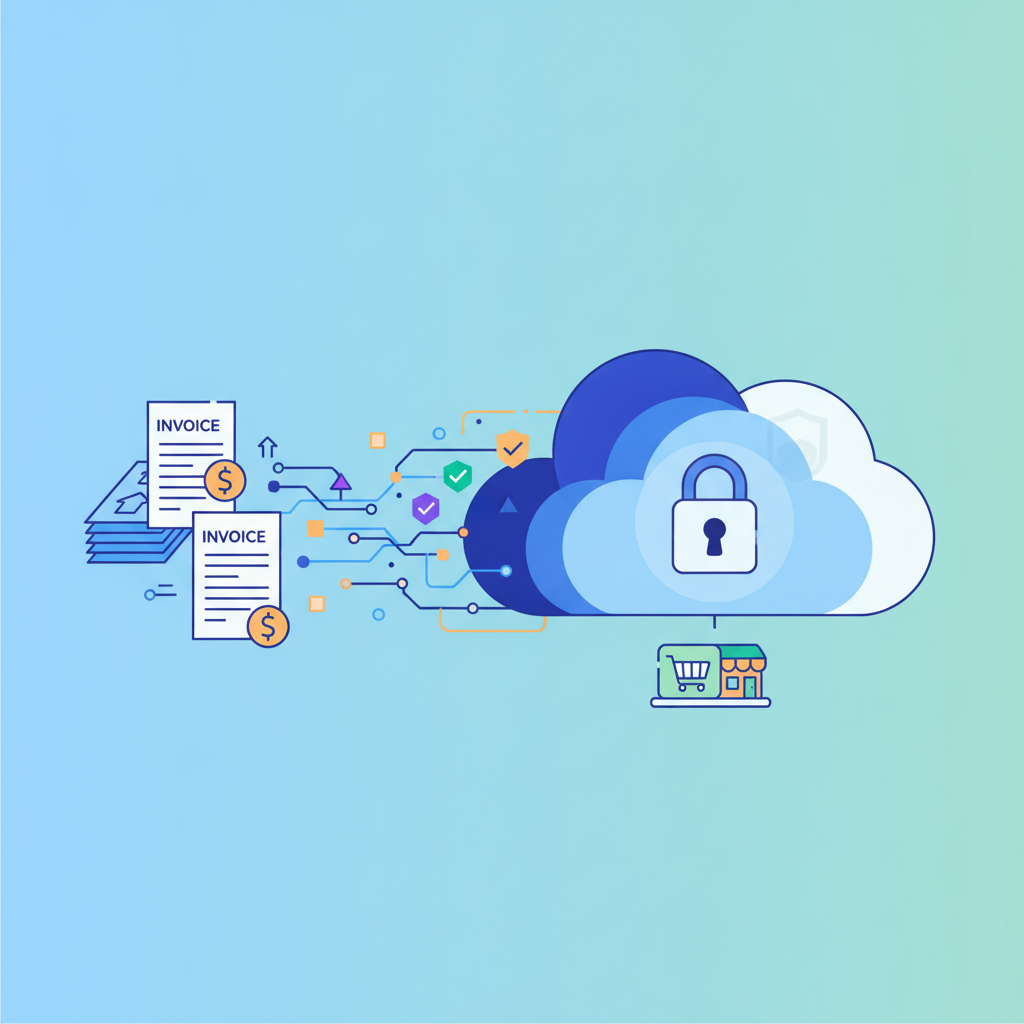
Electronic invoicing is the process of issuing, exchanging, and storing invoices in a structured electronic format that allows for automated and efficient data processing. Unlike traditional paper invoices or even invoices sent via email as unstructured PDF files, electronic invoicing typically requires the use of specific data formats such as XML or JSON, and often includes a digital signature to ensure the authenticity and integrity of the data. This standardized format makes it easier for automated systems to read and interpret invoices, significantly reducing human errors and accelerating the financial transaction cycle.
The primary goal of electronic invoicing is to create a fully integrated digital ecosystem for invoice processing, from issuance by the seller, through receipt by the buyer, to archiving by both parties. This system not only enhances the efficiency of business operations but also plays a pivotal role in combating tax evasion and improving tax compliance for nations. Through electronic invoices, tax authorities can track transactions instantly and accurately, providing valuable insights into economic activities and contributing to building a more transparent and reliable digital economy.
It is important to distinguish between an electronic invoice and a regular digital invoice, which might merely be an image or an unstructured PDF file. A true electronic invoice is a structured and digitally signed digital document that can be read and processed automatically by accounting and tax systems. This distinction is crucial for ensuring regulatory compliance, especially since regulatory bodies set precise technical specifications for what an electronic invoice must contain and how it should be exchanged and archived. It is not just a paper-to-digital conversion; it is a comprehensive restructuring of the entire invoicing process.
Why is E-invoicing Essential for Your E-commerce Store?
Adopting electronic invoicing is no longer an optional luxury for e-commerce stores; it has become an urgent necessity imposed by legislative and economic developments. Ignoring this technology means risking legal penalties and losing a significant competitive advantage in the growing e-commerce market. Electronic invoices are not just a means of compliance but a powerful tool for improving your store's operational and financial performance, whether you use Salla, Zid, or Shopify.
Understanding the fundamental reasons for the necessity of electronic invoicing helps store owners appreciate its true value and invest in it strategically. Electronic invoicing contributes to building customer trust, enhancing transparency with government agencies, and streamlining internal operations, all of which are essential factors for the growth and prosperity of any e-commerce business in the current competitive landscape. Let's review the most important of these reasons in detail.
Electronic invoicing serves as the backbone supporting your store's financial and administrative operations, providing an integrated solution to meet modern e-commerce challenges. It ensures that all your transactions are accurately documented, facilitating review and auditing processes, and reducing the chances of financial disputes. Furthermore, it allows you to focus on developing your business rather than getting bogged down in time-consuming routine administrative tasks.
Legal Compliance & Regulations
Legal requirements are the biggest driver for adopting electronic invoicing in many countries, especially in Saudi Arabia, which has made significant strides in this area. The Zakat, Tax and Customs Authority (ZATCA) mandated electronic invoicing in two phases, to include all VAT-registered taxpayers starting from 2023. This means that any e-commerce store operating in Saudi Arabia and registered for VAT must issue electronic invoices compliant with ZATCA requirements. Non-compliance with these regulations can lead to significant financial penalties and business disruption, making compliance an imperative that cannot be underestimated.
ZATCA's requirements include precise technical aspects related to invoice format, content, digital signature mechanisms, and methods of sending them to the authority's 'Fatura' platform. This requires e-commerce store owners, whether using Salla, Zid, or Shopify, to ensure that the electronic invoicing solution they choose is fully compatible with these standards. Selecting a non-compliant solution can expose the store to legal problems, so it is essential to look for approved solutions or those that offer seamless integration with government systems.
It is not just Saudi Arabia; many other countries in the region and globally are following suit, such as the UAE and Egypt. Therefore, adopting electronic invoicing today puts your store in a strong position for the future and protects it from any potential legislative changes that may occur in other markets where the store might want to expand. It is a long-term strategy that ensures both compliance and flexibility. You can check our guide to store authentication in Salla and Zid to understand more about legal requirements for stores.
Operational Efficiency & Cost Savings
Electronic invoicing offers tremendous improvements in the operational efficiency of e-commerce stores, directly translating into cost and time savings. Instead of manual printing, packaging, mailing, and archiving of paper invoices, all these processes are done digitally and automatically. This significantly reduces expenses related to paper, ink, printing equipment, and physical storage, freeing up a budget that can be directed towards other aspects of store development.
Furthermore, electronic invoicing contributes to accelerating the payment cycle and reducing human errors. Invoices are issued instantly and accurately, and sent directly to the customer or regulatory bodies without delay or the need for frequent manual intervention. This reduces the chances of data entry errors and improves the accuracy of financial reports, making it easier for store owners to track financial performance and make informed decisions. The time saved in these processes can be utilized for more strategic tasks, such as marketing or customer service.
Automating the invoicing process also helps improve cash flow management. Invoices that are delivered faster and more accurately are often paid faster, improving the store's liquidity and reducing the need for debt collection. This overall efficiency is not just an advantage; it is a competitive necessity in the fast-paced e-commerce environment, where every second and minute counts towards achieving customer satisfaction and increasing sales.
Enhanced Customer Experience
A superior customer experience is key to the success of any e-commerce store, and electronic invoicing plays an indirect but effective role in enhancing this experience. When a customer receives a clear, accurate, and instant electronic invoice via email or through their store account, they feel a sense of professionalism and transparency. This contributes to building trust between the store and the customer, making the purchasing process smoother and more reliable, especially when the invoice is needed for any reason such as warranty or return.
Easy access to electronic invoices reduces the friction customers might face when needing a copy of their invoices. Instead of having to contact customer service and request a paper invoice be resent or search through archives, customers can easily access it via a direct link or from their dashboard in the store. This ease and speed reflect the store's attention to the customer experience and saves them time and effort, enhancing their loyalty to the store and increasing the likelihood of repeat purchases.
Moreover, electronic invoices allow for the inclusion of additional useful information for the customer in an organized and tidy manner, such as warranty details, return policies, or even links to related products. This adds value to the invoice and transforms it from a mere financial document into a tool for effective customer communication. Attention to the finest details in the customer journey, from browsing a product to receiving the invoice, is what distinguishes successful stores in today's competitive market.
Accurate Financial Analytics
Electronic invoicing is a goldmine of data for e-commerce stores, providing accurate and organized financial information that can be easily analyzed. Since invoices are issued in a structured format, accounting and analytics systems can automatically extract data from them to generate comprehensive financial reports. This includes tracking sales, revenues, collected VAT, and even analyzing customer purchasing patterns, providing valuable insights for informed business decisions.
Through electronic invoices, e-commerce stores on platforms like Salla, Zid, and Shopify can link invoice data directly with inventory management and accounting systems. This integration ensures that financial and inventory data are updated instantly and accurately, reducing discrepancies and facilitating monthly or annual financial reconciliations. The ability to access this data quickly and accurately is invaluable for evaluating store performance and identifying areas for improvement, or even detecting any potential issues early on.
The availability of accurate financial data also simplifies the auditing process by government agencies or external accountants. All records are readily available and organized, reducing the time and effort required for review processes and increasing transparency. This advantage not only protects the store from legal risks but also enhances its credibility with potential investors and partners, opening new avenues for growth and expansion. Remember that choosing the most suitable platform for your store is the first step to ensuring compatibility with these systems.
Security & Fraud Reduction
Electronic invoicing significantly enhances the security of financial transactions and reduces the risks of fraud and manipulation, compared to paper invoices which are easily counterfeited or altered. Electronic invoices often include digital signatures and verification codes (such as QR codes) that ensure the authenticity of the invoice and prevent tampering after issuance. These security features make them more reliable and harder to forge, protecting both the store and its customers.
Electronic invoicing also provides a complete and encrypted digital record of all transactions, making it easy to track any changes or attempts at fraud. Each invoice is linked to a specific transaction and is recorded and stored in secure systems, providing an undeniable audit trail. This additional layer of security protects the store from financial losses due to internal or external fraud, and provides peace of mind for business owners.
Furthermore, using electronic invoicing solutions that comply with international and local standards ensures that invoice data is stored securely and in accordance with data protection regulations. This protects sensitive customer information and reduces the risks of data breaches, enhancing the store's reputation and customer trust. In an era of increasing cyber threats, electronic invoicing is an essential tool for maintaining the integrity and security of your e-commerce store.
Implementing E-invoicing in E-commerce Platforms
The process of implementing electronic invoicing in e-commerce stores requires an understanding of how different platforms like Salla, Zid, and Shopify operate, and how electronic invoicing solutions can be integrated with them. Each platform has its own mechanisms for integration, and the available options may vary in terms of ready-made applications, the need for custom development, or the use of compatible third-party solutions. The goal is to achieve maximum automation and compliance with minimal effort.
Choosing the right solution depends on several factors, including the size of the store, its budget, the complexity of its legal requirements, and the level of technical expertise available. It is very important to look for solutions that offer seamless integration with your current store platform to ensure a smooth user experience and minimize technical problems. Investing in the right solution from the start will save a lot of time and effort in the long run.
In the following sections, we will review how to handle electronic invoicing on each of these platforms, focusing on the most common options and best practices to ensure successful and effective implementation. Remember that the goal is not just to issue an invoice, but to issue a correct and compliant invoice automatically and easily.
Salla
Salla is one of the most prominent e-commerce platforms in the Arab world, especially in Saudi Arabia, where it boasts a wide user base. Salla understands the importance of electronic invoicing, and therefore usually offers various options to help stores comply. These options may include ready-made applications in the Salla App Store, or integrations with third-party electronic invoicing service providers approved by regulatory bodies like ZATCA.
For Salla store owners, the first step is to search the Salla App Store for approved electronic invoicing solutions. These applications are usually designed for seamless integration with the Salla system, making the setup and management process easier. When choosing an application, it must be ensured that it supports the legal requirements of the store's country, and provides features such as digital signatures, required formats, and automatic sending of invoices to relevant government agencies.
If there isn't a direct application that meets all requirements, stores can enlist the help of app developers or integration companies to connect their Salla store with external electronic invoicing solutions via the Application Programming Interfaces (APIs) provided by Salla. This option offers greater flexibility but may require additional investment in development. Regardless of the option, it must be ensured that invoices issued from your Salla store comply with all legal and technical standards.
Zid
Zid is also a leading e-commerce platform in the Arabian Gulf region, offering integrated solutions for store owners. Like Salla, Zid is keen on facilitating compliance with electronic invoicing requirements for its users. Zid often also provides applications in the Zid App Market or integrations with specialized electronic invoicing partners, giving stores multiple options to efficiently implement these requirements.
When using Zid, the store owner should start by checking the Zid App Market for electronic invoicing solutions. These solutions have typically undergone review and compatibility with the Zid environment, reducing technical complexities. It is essential to ensure that the chosen solution meets all local requirements, such as ZATCA requirements in Saudi Arabia, including specific data formats, electronic signature mechanisms, and the ability to send invoices to the designated government portal.
In some cases, a ready-made application might not perfectly meet all needs. Here, the Application Programming Interfaces (APIs) provided by Zid can be utilized to connect the store with external electronic invoicing solutions. This requires technical expertise or the assistance of developers, but it gives the store greater flexibility in choosing the most suitable solution. The most important thing is to ensure that the electronic invoicing process is as smooth and automatic as possible, to guarantee efficiency and continuous compliance.
Shopify
Shopify is a powerful and popular global platform, characterized by its flexibility and scalability through its extensive app marketplace. Given Shopify's global reach, it does not impose a single electronic invoicing solution but relies on third-party applications (Apps) to help merchants comply with local requirements in each country. This means that Shopify store owners need to search for electronic invoicing apps in the Shopify App Store that are compatible with the local laws of the country where the store operates.
When searching for an electronic invoicing app for Shopify, it is crucial to ensure that the app supports the specific electronic invoicing standards in your country, such as ZATCA requirements in Saudi Arabia. The app should provide the ability to generate invoices in the required data formats (e.g., XML), include digital signatures, and be able to send invoices to regulatory bodies if required. Many of these apps also offer additional features such as customizing invoice templates and tracking payment status.
In addition to ready-made apps, larger stores or those with specific requirements can leverage Shopify's APIs to develop custom integrations with external electronic invoicing systems. This allows for the highest levels of flexibility and control but requires an investment in technical development. Regardless of the method, a Shopify store must ensure that all invoices issued to customers and government agencies comply with the latest legal and technical requirements for electronic invoicing. Our comparison of Shopify with Salla and Zid might help you decide which is most suitable for your needs.
Steps to Set Up E-invoicing for Your Store
Setting up electronic invoicing for your store requires careful planning and following systematic steps to ensure compliance and efficiency. This process is not as complicated as it seems, but it requires attention to detail and an understanding of the specific requirements of your country and the e-commerce platform you use. By following these steps, you can ensure that your store is fully prepared to handle electronic invoicing smoothly and professionally.
Investing in understanding these steps and implementing them correctly will save you a lot of time, effort, and potential problems in the future. Store owners should view this process as an opportunity to improve their store's infrastructure and enhance its credibility, rather than just a legal burden. Good planning is the key to success in this digital transformation.
Remember that technology is constantly evolving, as are regulations. Therefore, setting up electronic invoicing is not a one-time process, but an ongoing commitment to staying informed and regularly updating your systems. Let's review the essential steps you need to take.
- Understand Legal Requirements:
Before embarking on any technical step, you must first understand the legal requirements for electronic invoicing in your country. For example, in Saudi Arabia, VAT-registered stores must comply with the regulations of the Zakat, Tax and Customs Authority (ZATCA), which include precise technical specifications for invoice format, content, and sending mechanism. This understanding will determine the type of solution you will need and the features it must possess.
You should visit the official websites of the relevant government tax and invoicing authorities in your country to review the latest guidelines and technical documentation. These authorities often provide detailed guides and workshops to help taxpayers comply. Investing time in this phase will save you many future adjustments and ensure full compliance from day one.
You should also pay attention to the differences between a tax invoice and a simplified invoice, and when each should be used. These details are crucial to ensuring the correctness of invoices and avoiding any violations.
- Choose the Right Electronic Invoicing Solution:
Based on your understanding of the legal requirements, it's time to choose the technical solution for electronic invoicing. You have several options: either use a ready-made application from your platform's app store (Salla, Zid, Shopify) that is approved and compliant with local regulations, or integrate with a third-party electronic invoicing service provider, or develop a custom solution if you have unique requirements and sufficient budget. The most common option for small and medium-sized stores is to use ready-made applications available in app marketplaces.
When choosing a solution, make sure it provides essential features such as generating invoices compliant with required formats (e.g., XML), digital signing of invoices, secure storage of invoices, and sending them to government agencies if necessary. The solution should also be user-friendly and offer good technical support. Compare different solutions in terms of cost, features, and ease of integration for your store.
Look for ratings and reviews of different solutions, and consult other store owners who have gone through the same experience. Others' experiences can help you make an informed decision and avoid common mistakes in choosing a solution.
- Connect the Solution to Your E-commerce Store:
After choosing the solution, the next stage is to connect it to your e-commerce store. If you selected an app from the Salla, Zid, or Shopify app store, the connection process is usually easy and done with a click of a button along with some initial settings. These settings often include entering your store's tax information, selecting a default invoice template, and configuring the invoicing mechanism (e.g., upon order confirmation or product shipment).
If you choose to integrate with a third-party service provider, you may need to use your platform's Application Programming Interfaces (APIs) for the connection. This process may require technical expertise or the help of a developer. The developer will link your store's system to the electronic invoicing system to ensure smooth data flow, so that an electronic invoice is automatically generated for each new order or when a specific event occurs in your store.
It is essential to conduct thorough tests after the connection process to ensure that invoices are issued correctly and automatically, that all required data is present, and that they are successfully sent to the relevant authorities. Do not fully launch the system before ensuring it is error-free.
- Customize Invoice Templates:
Although electronic invoices require specific data formats, many electronic invoicing solutions allow for customization of the visual appearance of invoices. This means you can add your store's logo, change colors, and modify some text to align with your brand identity. It must be ensured that customizations do not conflict with the legal requirements for invoice content.
Customizing invoices not only enhances your brand identity but also makes invoices more professional and clear for your customers. You can also ensure that your contact information and return or warranty policies are clearly displayed on the invoice, reducing customer inquiries.
Be sure to review the customized template with the tax authority or consult an expert to ensure it remains compliant with technical and legal requirements before final adoption.
- Continuous Training and Testing:
After setting up the system, it is essential to train your team on how to handle electronic invoicing, especially if any manual operations are necessary (such as reviewing invoices before sending in some cases). Everyone should be familiar with the process, how to access invoices, and how to deal with any problems that may arise. Training ensures effective system usage and reduces errors.
Regular system tests should also be conducted to ensure its continuous proper functioning, especially after any updates to your e-commerce platform or the electronic invoicing application. Track any changes in legal requirements and update your settings accordingly. Electronic invoicing is an ongoing process, and adapting to changes is key to success.
Review invoice reports regularly to ensure there are no missing or incorrect invoices, and ensure that all invoices are sent to the relevant authorities on time. This continuous monitoring ensures full compliance and avoids any potential penalties.
Best Practices for Effective E-invoicing
To maximize the benefits of an electronic invoicing system and ensure continuous compliance and efficiency, e-commerce store owners should adopt a set of best practices. These practices not only help avoid legal and operational problems but also contribute to improving the overall performance of the store and enhancing customer trust. Implementing electronic invoicing is not just a technical process; it is part of a broader strategy for managing your store.
Adhering to these practices reflects your store's professionalism and commitment to quality and compliance, which can be a competitive strength in the market. Remember that building a good reputation takes time and effort, and electronic invoicing can play a significant role in this aspect. Let's review the most important of these practices.
Effective electronic invoicing goes beyond merely issuing invoices; it is about accuracy, transparency, and security at every step of the process. By integrating these practices into your daily operations, you can transform the challenge of compliance into an opportunity for continuous growth and improvement.
- Regular Compliance Checks:
Electronic invoicing legal and regulatory requirements are constantly changing. Therefore, it is essential to conduct regular checks to ensure that your store's electronic invoicing system remains compliant with the latest regulations issued by the relevant government agencies. Subscribe to official newsletters, follow updates from electronic invoicing solution providers, and consult tax and accounting experts regularly.
Failure to update your system or comply with new changes can expose your store to penalties, even if you were compliant before. These regular reviews should be an integral part of your operational agenda to ensure continuous protection for your store.
You can also use self-auditing tools that electronic invoicing solution providers may offer to verify the correctness of invoices before sending them.
- Archiving Electronic Invoices:
Most regulatory bodies impose specific requirements for archiving electronic invoices for several years (which can be up to 5 or 10 years). You must ensure that the electronic invoicing solution you use provides a secure and reliable mechanism for archiving all issued and received invoices. This archiving must be in an accessible and easily readable format when needed, and it must be secured against loss, damage, or unauthorized access.
Relying on a robust archiving system reduces the risks of data loss and makes auditing processes much easier. Choose a solution that offers regular backups and a secure cloud storage environment.
Ensure you have a disaster recovery plan in place, and that your team knows how to access archived invoices when necessary.
- Integration with Accounting Systems:
To achieve maximum efficiency, the electronic invoicing system should be integrated with your store's accounting and inventory management systems. This integration ensures a seamless flow of financial data from your store to the accounting system, eliminating the need for manual data entry and reducing errors. Your store on Salla, Zid, and Shopify can greatly benefit from this integration to streamline financial operations.
This linkage can lead to instant inventory updates, accurate tracking of revenues and expenses, and comprehensive real-time financial reporting. You can refer to our order management guide which highlights the importance of integration in improving efficiency.
Consult your accountant or a financial advisor to determine the best way to link your electronic invoicing and accounting systems for your store to ensure full compatibility.
- Regular Information Updates:
Ensure that all essential information for your store, such as trade name, tax registration number, address, and contact information, is continuously updated in the electronic invoicing system. Any change in this information must be immediately reflected in issued invoices. Invoices containing old or incorrect information may be considered invalid and expose your store to legal liability.
Review your store settings and the electronic invoicing system periodically to ensure that everything is in order. This also includes updating product information and prices to ensure their accuracy in invoices.
Maintaining accurate information is not just a matter of compliance, but also a key factor in building trust with customers and regulatory bodies.
Potential Challenges & How to Overcome Them
Like any technological transformation, e-commerce stores may face some challenges when implementing electronic invoicing. However, understanding these challenges and preparing for them in advance can help overcome them effectively and minimize any negative impact on store operations. It is important to view these challenges as opportunities for learning and improvement, rather than insurmountable obstacles.
You should not let concerns about technical complexities or initial costs prevent you from adopting electronic invoicing, as the long-term benefits far outweigh any temporary hurdles. Good preparation and strategic planning are key to success in this area.
Let's review the main challenges you might face, and how you can deal with them intelligently to ensure a smooth and effective implementation of electronic invoicing in your store.
Technical Complexities
The technical complexities of electronic invoicing, such as specific format requirements (XML), digital signatures, and integration with government systems, can seem daunting for e-commerce store owners who may not have a strong technical background. These complexities can lead to errors in system setup or non-compliance with technical requirements, resulting in legal and operational problems.
To overcome this challenge, it is advisable to rely on ready-made and specialized electronic invoicing solutions, such as the applications available in Salla, Zid, and Shopify marketplaces. These solutions are designed to be user-friendly and handle complex technical aspects on your behalf. You can also seek assistance from technical experts or consultants specializing in electronic invoicing to help you with the setup and integration process, especially if you have unique requirements.
It is also important to choose an electronic invoicing solution that offers excellent technical support, so you can get help quickly if you encounter any technical issues. Good training for the team on using the system can also reduce daily operational complexities.
Continuous Legislative Changes
Electronic invoicing regulations are constantly evolving, as governments regularly amend and update their requirements to align with economic and technological developments. This continuous change can pose a challenge for store owners in keeping up with the latest requirements and ensuring continuous compliance, especially for stores operating in more than one market or planning to expand.
To overcome this challenge, stores should subscribe to newsletters and alerts from relevant government tax authorities, as well as from electronic invoicing solution providers. Most approved solution providers automatically update their systems to comply with legislative changes, which reduces the burden on the store owner. Choose a solution that provides regular updates based on the latest requirements.
It is also advisable to seek assistance from a tax consultant specializing in e-commerce to help you understand legal changes and their impact on your store. Staying informed ensures you avoid legal risks and maintain your store's reputation.
Initial Implementation Costs
The initial costs of implementing electronic invoicing, including subscription fees for applications, custom development costs, or staff training, can be a barrier for some stores, especially small ones. These costs can seem significant at first, making some store owners hesitant to invest in them.
To overcome this challenge, stores should view electronic invoicing as a long-term investment that yields numerous benefits, rather than just a cost. Savings in operational costs (such as paper and printing), reduced errors, and avoidance of legal fines can offset these initial costs in the medium term. Look for solutions that offer flexible pricing plans suitable for your store size and budget.
You can also start with simpler solutions and then gradually expand as your store grows. The most important thing is not to delay compliance due to cost concerns, as the costs of non-compliance can be much higher in the long run. Smart product pricing strategies can help you indirectly cover these costs.
Conclusion
In conclusion, adopting electronic invoicing represents a crucial strategic step for any e-commerce store aiming to grow and thrive in the modern digital environment. It is not merely a response to increasing legal requirements but a golden opportunity to improve operational efficiency, reduce costs, enhance transparency, and build stronger trust with both customers and regulatory bodies. Whether you manage your store on Salla, Zid, or Shopify, understanding and implementing the principles of electronic invoicing will place you at the forefront of competitors and ensure continuous success.
We have seen how electronic invoicing goes beyond simply digitizing invoices, encompassing a comprehensive transformation in how financial transactions are managed, from complying with ZATCA requirements in Saudi Arabia, to enhancing the customer experience through accurate and instant invoices. Investing in appropriate solutions, whether ready-made applications or custom integrations, and following best practices in archiving and integrating with accounting systems, will ensure a smooth journey towards effective electronic invoicing.
Do not let technical complexities or initial costs deter you from this essential transformation. The long-term benefits in terms of saving time and effort, avoiding legal violations, and enhancing your store's reputation far outweigh any temporary challenges. Start today by developing an action plan for your store to adopt electronic invoicing, and be ready to keep pace with the digital future of e-commerce with confidence and competence.