



Introduction: The E-commerce Crossroads – Shopify or Salla?
In the rapidly accelerating world of e-commerce, witnessing unprecedented growth in the Arab region, possessing a modern and effective online store has become an urgent necessity for every entrepreneur aspiring for success and expansion. It is no longer just an option but the cornerstone of any modern sales strategy, whether you are selling physical products, digital services, or even offering unique experiences to your customers. However, with the multitude of available options for building these stores, a fundamental question arises that troubles many: which platform is best for me? This question gains particular importance amidst intense competition and increasing challenges faced by merchants.
Shopify and Salla are among the most prominent players in this field, each with its own strengths and unique appeal that attract different segments of merchants. Shopify, the global giant, offers a comprehensive and flexible solution suitable for global ambitions and limitless customization, while Salla, the leading local platform, focuses on meticulously meeting the needs of the Arab market with ease. This article will take you on a detailed journey and a comprehensive comparison between these two platforms, highlighting the main differences and features, to help you make an informed decision that serves your store's goals in the short and long term, also considering Zid as another local option worth mentioning, to ensure comprehensive coverage of the most important available choices in the market.
Shopify vs Salla: The Journey to Choosing the Optimal Platform for Your Online Store
Choosing the right e-commerce platform is as crucial as selecting the products you will sell or defining your target market. The stronger and more compatible the platform is with your needs, the smoother and more successful your business journey will be. In this context, both Shopify and Salla stand out as strong options, yet they represent two entirely different philosophies in building and managing online stores. Shopify, with its global platform and vast app marketplace, offers almost limitless flexibility and customization, making it a preferred destination for those seeking advanced solutions and global scalability.
On the other hand, Salla emerges as a robust local solution, specifically designed to meet the requirements of the Arab market, in terms of ease of use, integration with local payment gateways, and leading shipping companies in the region. This contrast makes the selection process confusing for many, especially since each platform offers a unique set of advantages and challenges. Therefore, understanding these differences in depth will help you determine which platform aligns better with your business vision, budget, and technical expertise, in addition to planning your store's growth path in the future.
The goal of this comparison is not to judge one platform as absolutely better than the other, but rather to clarify the scenarios in which each platform excels and how it can serve different types of businesses. Whether you are a beginner merchant looking for the easiest way to start, or an established brand seeking expansion and innovation, understanding the fundamental differences between Shopify and Salla will provide you with the necessary tools to make a wise decision that ensures the continuity and success of your online store in an increasingly competitive environment. Let's now delve into the details of each platform, reviewing their strengths and weaknesses.
Shopify: The Global Giant and Its Customization Power
Shopify is considered one of the most famous and widely used e-commerce platforms globally, hosting millions of stores and providing a wide range of tools and features that meet the needs of various types of businesses, from startups to large enterprises. Shopify began as a simple platform for selling snowboards and evolved into a technology empire offering integrated solutions for building online stores, managing products, processing orders, and even marketing tools. Its strength lies in its robust infrastructure, scalability, and the flexibility of customization it offers to users, making it an attractive option for those aspiring to build a global brand.
Shopify is distinguished by offering a professional user experience, where merchants can choose from a large collection of ready-made templates, both free and paid, which can be highly customized to suit the brand's visual identity. Additionally, the Shopify App Store gives you access to thousands of apps and extensions that greatly expand your store's functionality, whether you are looking for tools for SEO, email marketing, advanced inventory management, or even customer service tools. This flexibility makes Shopify a powerful platform for any business that wants to build a unique store that meets its specific needs and adapts to changing market demands.
With all these advantages, certain challenges come that merchants must understand before committing to Shopify. Costs can escalate quickly, especially with reliance on paid apps and more advanced plans. Also, getting the most out of Shopify may require some technical expertise or a willingness to learn how to deal with complex settings and advanced customizations. Furthermore, merchants in the Arab region may find some challenges related to the full localization of some applications or the lack of local support compared to platforms specifically designed for the region.
Key Advantages of Shopify:
- Unlimited Flexibility and Customization: Shopify offers extensive customization options through themes that can be deeply modified, in addition to allowing developers access to the store's core code. This gives merchants great freedom to design a unique store that perfectly reflects their brand identity.
- Vast App Marketplace: The Shopify App Store includes thousands of apps covering all aspects of store management, marketing, and operations. Whether you need tools for SEO, email marketing, or data analysis, you will find an available solution that expands your store's capabilities.
- Global Scalability: Shopify is designed to serve stores of all sizes, from beginners to large enterprises. A store can grow significantly without needing to change platforms, with support for various currencies, languages, and international shipping.
- High Security and Reliability: Shopify takes responsibility for store security, data hosting, and software updates, providing peace of mind for merchants and relieving them of the burden of complex technical aspects.
- Extensive Support Community: Thanks to its global popularity, Shopify has a huge community of users and developers, making it easy to find help, tutorials, and solutions for various problems.
Challenges of Shopify:
- Overall Cost: Although there are affordable plans, the cost can quickly escalate when adding paid apps, premium themes, and transaction fees imposed by Shopify if you don't use Shopify Payments.
- Greater Technical Expertise Required: To fully leverage advanced customization capabilities, some experience in HTML/CSS or hiring developers may be needed, increasing costs and complexity.
- Localization and Local Support: Merchants in the Arab region may face some challenges in fully localizing the store or some apps. Basic technical support is also mostly in English and may not be fully aware of local market specificities.
- Transaction Fees: Shopify imposes transaction fees on every sale made through external payment gateways (not Shopify Payments), which can affect profit margins for stores relying on local payment gateways.
- Reliance on Apps: Some basic functionalities that might be integrated into other platforms require installing additional apps in Shopify, increasing complexity and cost.
Salla: The Local Solution Tailored for the Arab Region
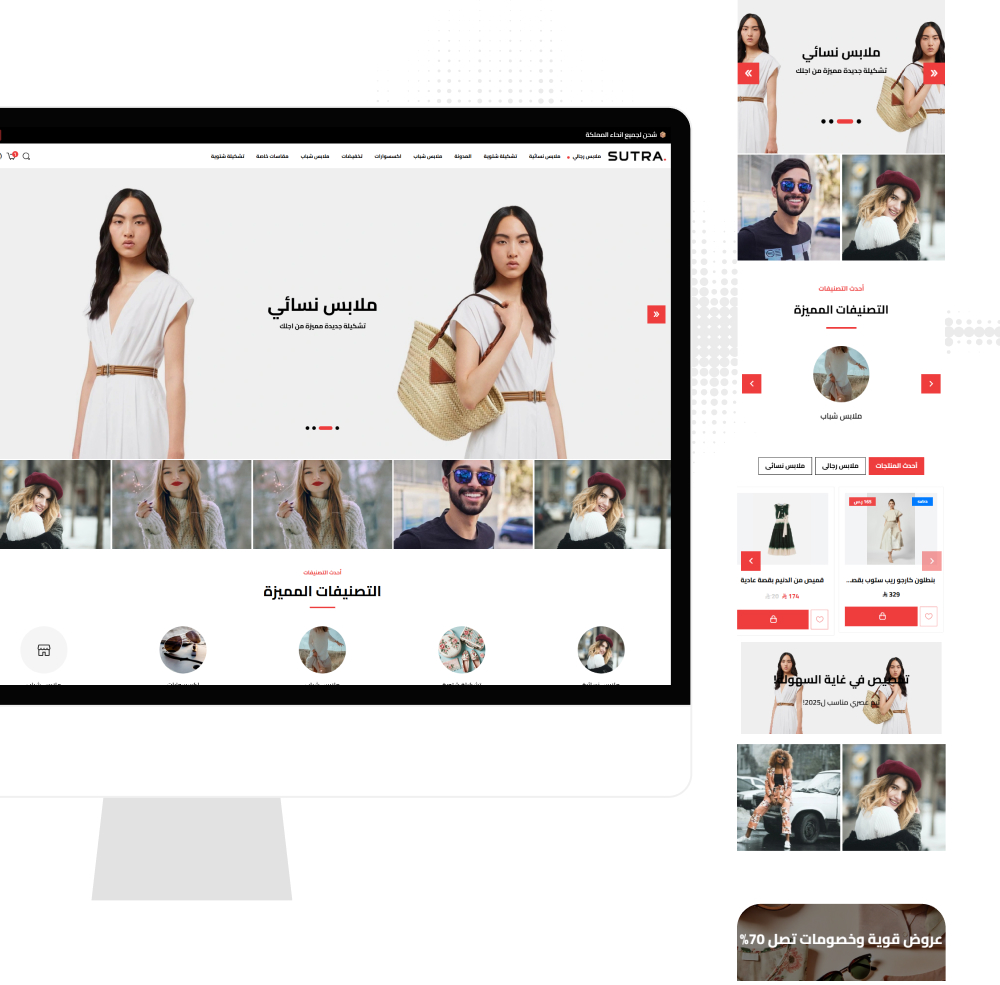
Salla is a leading e-commerce platform in the Arab region, having successfully built a strong reputation as an ideal solution for merchants targeting the local market, especially in the GCC countries. Salla was designed from the ground up to meet the needs of Arab merchants, with a focus on ease of use, seamless integration with local services, and providing technical support in Arabic. This approach has made it an attractive option for beginners and small to medium-sized businesses who want to launch their online stores quickly and affordably, without extensive technical expertise. Platforms like Salla and Zid have truly changed the game in the local market.
One of Salla's most prominent strengths is its intuitive and user-friendly interface, which enables anyone to create a professional online store in a matter of minutes. It also provides pre-integrations with major local payment gateways such as Mada, STC Pay, Apple Pay, in addition to installment solutions like Tamara and Tabby, making it easy for merchants to accept payments from their customers. It's not just about payments; Salla also offers robust integrations with leading local shipping companies, simplifying the product delivery process and reducing logistical complexities, which is a significant competitive advantage in the regional market. This simplicity and efficiency make Salla an excellent choice for stores focusing specifically on the Saudi and GCC markets.
Despite its numerous advantages, Salla faces some challenges that may not suit all types of businesses. Salla's customization and design options, while sufficient for most stores, can be limited compared to Shopify's flexibility. Also, Salla's app marketplace, though continuously growing and focusing on local solutions, is still significantly smaller than Shopify's global app store. This might mean that stores requiring very advanced functionalities or highly customized solutions may find themselves somewhat restricted. Nevertheless, for the vast majority of merchants targeting the Arab market, Salla remains a strong and effective option.
Key Advantages of Salla:
- Ease of Use and Quick Start: Salla features an extremely simple and intuitive user interface, allowing merchants to launch their online store in minutes without any prior technical expertise. This makes it ideal for beginners and small businesses.
- Integration with Local Services: Salla offers robust and pre-built integrations with major local payment gateways (e.g., Mada, STC Pay, Apple Pay, Tamara, Tabby) and leading shipping companies in the region. This provides a seamless experience for both merchants and customers.
- Arabic Technical Support: Salla provides responsive and fully available technical support in Arabic, removing language barriers and offering effective assistance to merchants in the region.
- Competitive Pricing and Diverse Plans: Salla offers various subscription packages to suit different budgets and business needs, with competitive prices suitable for the local market.
- Integrated Local Marketing Solutions: Salla provides basic integrated marketing tools, as well as integrations with popular local marketing solutions, making it easier for merchants to promote their products within the Arab market.
Challenges of Salla:
- Limited Customization Options: Although there are multiple templates, customization options in Salla may be limited compared to Shopify, which might not suit stores looking for a very unique and complex design.
- Smaller App Marketplace: Salla's app marketplace is growing, but it is still much smaller than Shopify's. This means some advanced functionalities might not be available as ready-made apps or may require alternative solutions.
- International Scalability: While Salla excels in the local market, stores aspiring for global expansion might face some limitations in fully supporting multiple languages and international currencies like Shopify.
- Reliance on the Local Ecosystem: While an advantage in the local market, heavy reliance on local integrations can make it difficult for stores to transition to international markets requiring different payment gateways or shipping companies.
- Less Backend Flexibility: Developers or merchants who prefer full control over the store's code and backend might find Salla offers less flexibility in this regard compared to platforms like Shopify.
Detailed Comparison: Key Aspects for Selection
After reviewing the advantages and challenges of both Shopify and Salla individually, it's time to delve into comparing the most important aspects that every merchant should consider when making their decision. This comparison will help us understand the scenarios in which each platform excels and determine which one best meets your store's requirements. From ease of use and costs to customization options and technical support, each of these points plays a crucial role in the success of your online store and its ability to grow and adapt to market challenges. Let's start by comparing each aspect individually.
The purpose of this comparison is not only to highlight differences but to provide practical insights that help you align the platform's capabilities with your business goals. For example, focusing on the local market might be a top priority for some merchants, while others might prefer global flexibility and deep customization. All these factors must be taken into account to ensure that the platform you choose not only meets your current needs but also supports your future vision. Let's delve into the details to discover which is better for your store.
Remember that the final decision should be based on a comprehensive evaluation of your specific needs, available resources, and future plans. There is no one-size-fits-all solution in the world of e-commerce, and what might be ideal for one store may not be for another. So, continue reading this detailed comparison to gather all the necessary information that enables you to make a confident and informed decision, paving the way for the success of your online store in any competitive environment you operate in, whether local or global.
Ease of Use and User Interface (UX)
Ease of use is a crucial factor, especially for beginners in e-commerce or small business owners who may not have extensive technical experience. In this aspect, Salla clearly stands out as an excellent choice. Its interface is designed to be extremely intuitive and simple, allowing merchants to create a store, add products, and manage orders with exceptional speed and ease. Anyone, even without a technical background, can launch their store on Salla within minutes, which reduces the learning curve and accelerates the process of starting and achieving initial sales, making it an ideal choice for those seeking quick and straightforward solutions.
In contrast, Shopify offers a professional and powerful interface, but it may require some time to learn and get used to, especially for new users. While Shopify provides deeper customization tools and more advanced features, accessing and leveraging these features may require some effort and technical expertise. Beginners might find themselves needing to watch tutorials or read lengthy guides to understand all available options, which could delay the store launch process. However, once accustomed to the interface, Shopify becomes a very powerful and effective tool for managing a professional and globally scalable online store.
Overall, if the top priority is a quick start and absolute simplicity, Salla is the better choice. However, if you are looking for a platform that offers maximum flexibility and deep customization, and you are willing to invest some time in learning or have technical experience, Shopify will be an excellent choice in the long run. Both platforms offer a good user experience, but the difference lies in the learning curve and the functional depth each provides, and how that impacts the speed at which you can launch your store and achieve your initial business goals.
Costs and Pricing Plans
Costs are a crucial factor in platform selection, especially for nascent stores with limited budgets. Shopify follows a subscription-based pricing model, with various plans starting at relatively affordable prices and increasing with the required features. However, it is important to consider that the total cost can significantly increase when adding paid applications necessary to expand store functionalities, in addition to transaction fees imposed by Shopify on sales made through external payment gateways, which must be taken into account when calculating profit margins. These fees can be very impactful for high-volume stores.
In contrast, Salla offers more transparent and comprehensive pricing packages, with a focus on delivering high value for money in the local market. Salla's packages are usually lower in total cost for stores focusing on the Arab market, as they include many essential features and local integrations without the need for additional fees for apps or payment gateways. This makes it an economical and attractive option for small and medium-sized stores looking for an integrated and cost-effective solution, without surprises in monthly bills. Pricing transparency is a significant strength for Salla in this aspect.
In summary, if your budget is limited and you are looking for a comprehensive solution with clear costs suitable for the local market, Salla is often the better choice. However, if you are willing to invest more and have a vision for deeply customizing your store and expanding its reach globally, Shopify offers more flexible options, but at potentially higher overall costs. It is essential to accurately calculate the expected costs for both platforms, including subscription fees, apps, and payment gateways, to determine the most economically viable option for your store in the long term.
Customization and Design
In the world of e-commerce, an attractive and unique design for your online store is an essential element for building customer trust and differentiating your brand. In this regard, Shopify clearly excels in terms of customization and design options. The platform offers a very wide range of professional themes, both free and paid, which can be deeply modified to suit any visual identity. Additionally, Shopify allows developers access to the store's core code (using Liquid language), which opens the door to limitless customizations and the creation of entirely unique designs that meet the most precise requirements, making it preferred by major brands and businesses that require high design flexibility.
On the other hand, Salla offers good and acceptable design templates, but its customization options are considered limited compared to Shopify. While you can change colors, fonts, and the arrangement of some elements, the ability to make deep modifications to the store's structure or add custom design features is less. This means that stores using Salla may appear somewhat similar in their basic structure, despite the possibility of changing the visual identity. This limitation in customization may be sufficient for many small and medium-sized stores that prioritize simplicity and speed, but it may not meet the aspirations of brands seeking to create a unique and innovative visual experience. Nevertheless, the templates available in Salla are carefully designed to be attractive and modern.
If building a unique visual identity and a highly customized user experience is your top priority, and you have the budget and technical expertise required, Shopify is undoubtedly the better choice. However, if you are looking for a professional and attractive design sufficient for a successful store without the need for complex customizations, and prefer simplicity and a quick start, Salla offers a practical and suitable solution. The decision ultimately depends on the importance of design uniqueness for your brand and the amount of resources you are willing to invest in this aspect for your store.
Core Features and Advanced Functionalities
When evaluating e-commerce platforms, core features and advanced functionalities play a vital role in determining a store's ability to meet increasing business needs. Shopify, thanks to its robust architecture and vast app marketplace, offers a comprehensive set of essential features such as product management, order processing, customer relationship management (CRM), and sales reports. However, its true strength lies in its ability to expand through thousands of apps that add highly advanced functionalities, such as marketing automation, complex data analytics, sophisticated CRM, and even point-of-sale (POS) solutions for physical stores. This flexibility makes Shopify capable of supporting any type of business, regardless of its complexities or future aspirations, including complex inventory management.
On the other hand, Salla provides all the essential features any online store needs to operate efficiently, such as product management, order tracking, invoice management, and a discount coupon system. Salla focuses on providing an integrated and effective solution for stores operating in the Arab market, with built-in features that meet most daily needs. However, very advanced functionalities, such as complex multi-dimensional analytics or highly customized marketing automation, may be limited or require seeking external solutions. This does not mean that Salla is incapable of meeting the needs of large stores, but it may require some adaptation in how these functions are managed compared to the flexibility Shopify offers through its vast app marketplace.
In general, if your business requires very advanced functionalities, deep customization of every aspect of the store, and you are willing to invest in apps and extensions, Shopify is the optimal choice. However, if your needs are centered around strong and effective core features, focusing on the local market, and preferring a comprehensive and simple solution, Salla offers excellent value. The decision here depends on the complexity of your store's operations, the volume and type of products you sell, and the level of automation and analytics you need to support your business growth in the long term.
Integrations and Applications (App Stores)
The ability to integrate your store with external tools and services is vital for expanding its functionality and improving operational efficiency. In this regard, Shopify is unparalleled thanks to its Shopify App Store, which features thousands of apps and extensions. These applications cover almost every aspect of e-commerce: from marketing and analytics to inventory management, customer service, and even accounting solutions. This marketplace allows merchants to deeply customize their store and add any functionality they need, making Shopify a flexible platform adaptable to any business requirements, regardless of their complexity or specialization, and also effectively supports search engine optimization.
On the other hand, Salla has a growing app marketplace (Salla App Store) that primarily focuses on meeting the needs of the Arab market. While the number of available apps in Salla is still significantly less than Shopify, it offers essential and important integrations with local services, payment gateways, and shipping companies, making it highly effective for stores operating in the region. These local apps greatly simplify operations for Arab merchants but may not offer the same level of variety and depth in advanced functionalities provided by global Shopify apps. Nevertheless, Salla is continuously working on developing its app marketplace and adding more solutions that meet the needs of local merchants.
In general, if you are looking for maximum flexibility and the ability to add any function you can think of to your store, and you are willing to research and pay for apps, Shopify is the better choice. However, if your priority is seamless integration with local services, and you prefer a solution that includes most of your basic needs without having to search for a large number of external apps, Salla provides an effective and suitable solution. The decision depends on the complexity of your integration needs and the importance of focusing on local solutions in your business strategy.
Technical Support and Language
Technical support is a vital factor, as online stores operate around the clock, and any technical issue can affect sales and customer trust. In this regard, Shopify offers 24/7 global technical support via live chat, email, and phone. It also boasts a vast knowledge base and active community forums with millions of users and developers worldwide. However, basic support is mostly in English, and Arab merchants may face challenges in effective communication or in obtaining solutions that perfectly align with local market specificities, which may require some additional effort on their part.
In contrast, Salla excels by providing excellent technical support in Arabic, which is a major competitive advantage for merchants in the region. Salla's support team is fully aware of local market challenges, payment gateways, shipping companies, and the purchasing habits of Arab consumers, ensuring quick, effective, and appropriate solutions. The ease of communication in the native language removes many barriers and makes the problem-solving process smoother and more comfortable for merchants. This feature makes Salla a particularly attractive option for beginners or those who prefer to receive technical support in their native language.
If your top priority is to receive technical support in Arabic, with a deep understanding of the local market and its challenges, Salla is undoubtedly the better choice. However, if you are fluent in English and don't mind dealing with global technical support, or if you rely on a vast community of developers and educational resources, Shopify offers strong and globally available support. The decision here depends on your personal preference for the support language and the importance of local expertise in solving technical and administrative issues your online store may face.
Payment and Shipping Solutions
Payment gateways and shipping companies are among the most important pillars for any successful online store, as they directly impact the customer experience and the store's ability to generate sales. In this regard, Shopify offers integrations with a wide range of global payment gateways such as Stripe, PayPal, and others, in addition to its own Shopify Payments option which eliminates transaction fees. Shopify also supports many global and local shipping companies through its apps. This flexibility makes it suitable for stores targeting global or multi-market audiences and provides customers with diverse payment and shipping options. However, setting up some local payment gateways in the Arab region may require additional effort or searching for specific applications.
On the other hand, Salla significantly excels in providing seamless and pre-built integrations with the most prominent local payment gateways in the Arab region, such as Mada, STC Pay, Apple Pay, in addition to installment solutions like Tamara and Tabby, making it easy for merchants to accept payments from their Arab customers. Salla also provides robust and direct integrations with leading local shipping companies in Saudi Arabia and the GCC countries, simplifying the product delivery process and reducing logistical complexities that stores focusing on the regional market might face. These ready-made integrations make Salla an ideal choice for those focusing on the local market and interested in providing a familiar and convenient payment and shipping experience for their customers. You can check our guide to choosing the best in Salla and Zid for more details.
If your top priority is to provide local and familiar payment and shipping options for your customers in the Arab market, and you prefer ready-made integrations that require minimal effort, Salla is undoubtedly the better choice. However, if you are targeting a global market and require flexibility in dealing with various payment gateways and shipping companies worldwide, and you are willing to set them up, Shopify provides you with that capability. The decision largely depends on the geographical scope of your customers and the importance of local integrations in your store's strategy.
Search Engine Optimization (SEO) and Marketing
Search Engine Optimization (SEO) and digital marketing are essential components for increasing your store's visibility and attracting more potential customers. In this regard, Shopify offers powerful SEO tools and flexible features that allow merchants full control over page titles, meta descriptions, URL slugs, and automatic sitemap generation. The Shopify App Store also includes many specialized SEO apps that help analyze keywords, improve store speed, and monitor keyword rankings, giving merchants significant ability to compete in global and local search results. You can benefit from our comprehensive guide to SEO to achieve the best results.
On the other hand, Salla provides good and basic SEO tools, which are sufficient for most small and medium-sized stores focusing on the local market. Merchants in Salla can modify titles and meta descriptions and control URL slugs. Salla also offers integrations with popular local marketing tools, making it easier for merchants to run advertising campaigns on platforms like Snapchat, Instagram, and Facebook Pixel. However, the flexibility and customization capabilities in advanced SEO aspects may be less compared to Shopify, and it may require some workarounds to implement very complex SEO strategies. Nevertheless, the tools available in Salla are very sufficient for achieving good results in the Arab market.
If your marketing strategy heavily relies on advanced SEO and competing in global markets, and you need full flexibility in modification and control, Shopify is the better choice. However, if you focus on the local market and are looking for basic and effective SEO tools, and prefer seamless integrations with local marketing platforms, Salla offers a suitable and effective solution. The decision here depends on the complexity of your marketing strategy, the geographical scope targeted by your advertising campaigns, and the resources you can allocate to your store's search engine optimization efforts.
Who is Shopify best for? And who is Salla best for?
After this comprehensive comparison, it has become clear that both Shopify and Salla offer powerful and effective solutions for building online stores, but they serve different segments of merchants based on their needs and goals. Determining the most suitable platform for your store largely depends on your deep understanding of your business type, size, budget, technical expertise, and most importantly, your future vision. There is no one-size-fits-all option, but rather the best option specifically for you. Let's summarize these points to help you make a decisive choice.
Whether you are starting a small store from scratch or managing an established brand looking to expand, choosing the right platform is key to success. You should consider where you see your store in one year, in five years, and how the chosen platform will support this growth. Do you need ready-made and quick solutions, or are you willing to invest time and effort in building a customized platform? These questions will help guide your decision towards the platform that aligns with your business aspirations.
Finally, remember that the world of e-commerce is constantly evolving. The platform you choose today must be able to adapt to future changes in the market and in your business requirements. Don't be afraid to re-evaluate your options after a period, as flexibility is key to survival and growth in this field. Use trial versions, consult experts, and take your time to research to make a confident and informed decision that supports your journey in the world of e-commerce, and remember that excellent customer service is always crucial. Here are the main tips:
Shopify is Best If:
- You target a global or multilingual market: If you have plans to expand beyond the Arab market and target customers from different countries with various languages and currencies, Shopify provides the necessary infrastructure and flexibility.
- You need deep customization and a unique design: If your visual identity and unique user experience are a top priority for you, and you have a vision to design a unique store that requires access to the core code or the use of advanced design applications, Shopify is the optimal choice.
- You have a larger budget and technical expertise or a willingness to learn: If you are willing to invest in paid subscriptions, apps, and extensions, and you have some technical expertise or a willingness to learn how to manage a more complex platform, Shopify gives you the power.
- You plan for very significant future expansions: If you anticipate tremendous growth for your store and expect to serve thousands or millions of customers, Shopify is designed to handle this volume of operations and expansion.
- You need complex integrations and advanced functionalities: Whether you need advanced marketing automation, deep data analytics, or integration with large ERP systems, the Shopify App Store provides solutions for these needs.
Salla is Best If:
- You focus on the Arab market (especially the GCC): If your target audience is concentrated in the GCC countries or the Arab region in general, Salla offers ideal integrations with local payment gateways and shipping companies, and Arabic technical support.
- You are looking for an easy and quick solution to get started: If you are a beginner in e-commerce and want to launch your store quickly with minimal technical effort, Salla's intuitive interface makes it the optimal choice.
- You have a limited budget and are looking for comprehensive solutions: Salla offers competitive pricing packages that include many essential features without the need for significant additional costs for apps, making it cost-effective.
- You prefer local integrated support and services: If you prefer to receive technical support in Arabic from a team fully aware of the local market's specificities, Salla provides this valuable feature.
- You do not need complex design customization or very advanced functionalities: If the available templates and core features in Salla are sufficient for your store, and your business does not require unique design customizations or very advanced functionalities, then it is an excellent choice.
Practical Tips for Making Your Final Decision
After all this detailed information, you might feel a bit confused. Don't worry, this is normal when making such a significant decision. To make it easier for you, here are some practical tips that will help you finalize your decision and ensure you choose the platform that perfectly aligns with your vision and business goals. Remember that the goal is to build a successful and sustainable store, not just to pick a random platform. Every step should be carefully considered and based on a deep understanding of your current and future needs.
One of the most important aspects to focus on is prior planning. Before you even think about the platform, clearly define your products, target audience, business model, and budget. Will you sell only physical products or also include digital services? Will you target only the local market or look globally? What volume of inventory will you manage? Answering these questions will provide a clear framework for evaluating any platform and will make the selection process more systematic and effective. Do not rush this stage, as good planning is the foundation of success.
Finally, remember that the world of e-commerce is constantly evolving. The platform you choose today must be able to adapt to future changes in the market and in your business requirements. Don't be afraid to re-evaluate your options after a period, as flexibility is key to survival and growth in this field. Use trial versions, consult experts, and take your time to research to make a confident and informed decision that supports your journey in the world of e-commerce. Here are the most important tips:
- Clearly define your goals and budget: Before starting, ask yourself: What are my short-term and long-term goals? Who is my target audience? What is my monthly budget for operations and marketing? Answering these questions will help you narrow down the options.
- Try the trial versions of both platforms: Both Shopify and Salla offer free trial versions. Take this opportunity to experience the user interface, add products, manage orders, and test the purchasing process as a customer. This will give you a real feel for the platform.
- Consider future scalability: Don't choose a platform based only on your current needs. Think about where you see your store in 3 or 5 years. Will you expand globally? Will you add thousands of products? Choose a platform that can grow with you.
- Consult e-commerce experts: Don't hesitate to seek advice from e-commerce experts or entrepreneurs who have experience with both platforms. Their practical insights can provide valuable perspective.
- Don't hesitate to change platforms later: Although changing platforms can be a complex process, it is not impossible. If you discover after a while that the platform you chose no longer meets your needs, don't be afraid to look for an alternative.