


Shopify or Salla: Which is Better for Your Store?
In the fast-paced world of e-commerce, entrepreneurs and store owners face a significant challenge when choosing the right platform to launch or expand their businesses. This decision is not merely a technical choice; it is a strategic investment that determines the trajectory of your store's growth and long-term success. With an increasing number of available options, especially in the thriving Arab market, understanding the fundamental differences between various platforms has become paramount.
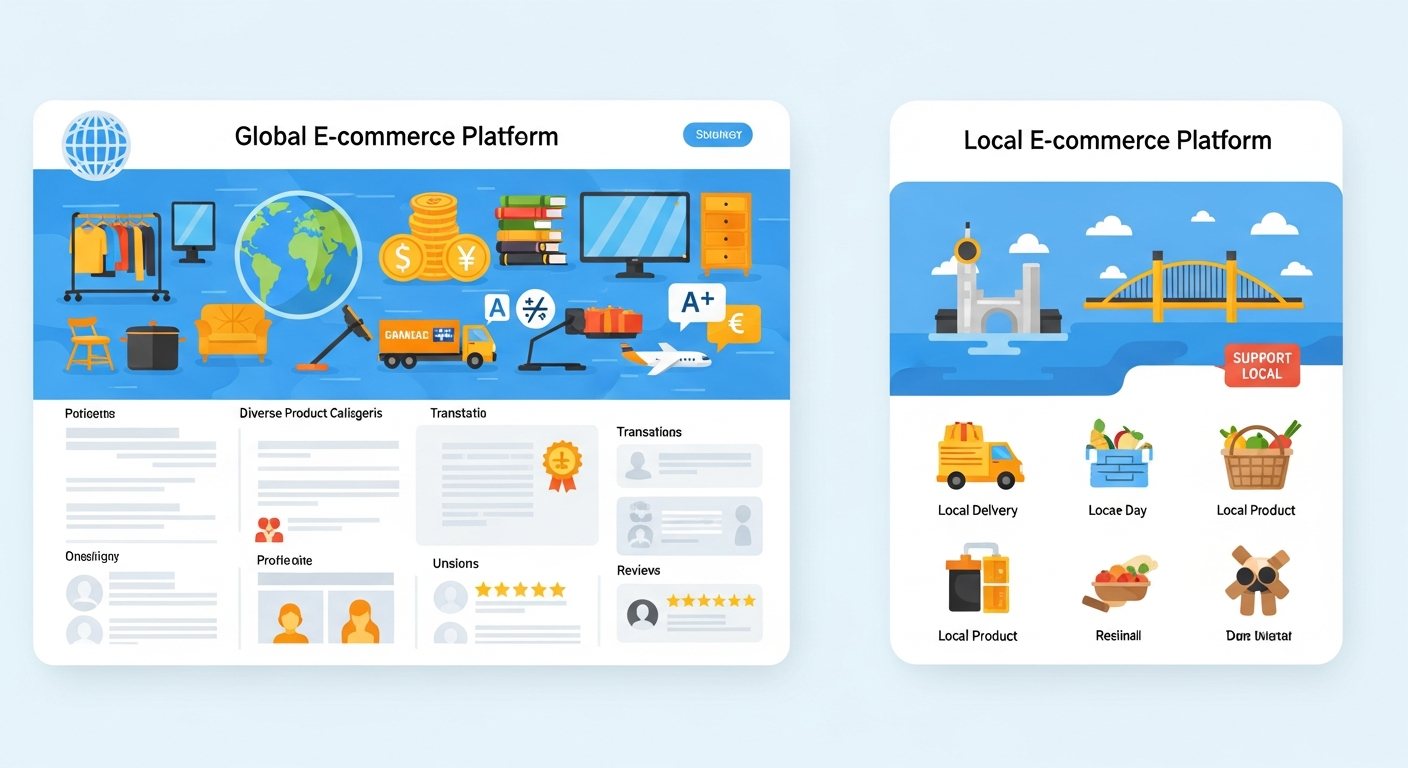
Shopify and Salla are two prominent players in this field, each with strengths and features that make them attractive to different categories of merchants. While Shopify enjoys a global reputation as a powerful and flexible platform suitable for stores of all sizes and types, Salla stands out as a local solution specifically designed to meet the needs of the Saudi and GCC markets, focusing on ease of use and Arabic language support. This article aims to provide a comprehensive and detailed comparison between these two platforms to help you make an informed decision that best serves your business objectives.
Introduction to the World of E-commerce Platforms
E-commerce has witnessed a tremendous boom in the last decade, driven by technological advancements and changing consumer behavior. Owning an online store is no longer a luxury but has become an essential necessity for every business striving to survive and compete in the modern market. With this expansion, dozens of platforms have emerged, promising to simplify the process of creating and managing an online store, but not all of them are equal in efficiency or ability to meet the diverse requirements of businesses.
Platforms like Shopify, Salla, and even Zid offer integrated solutions ranging from store interface design to payment processing and shipping. However, these platforms differ in their infrastructure, pricing models, customization capabilities, and the type of support they provide. Understanding these differences is key to choosing the platform that perfectly aligns with your vision for your store, whether you are starting a small project or managing a large brand looking to expand.
Choosing the right platform can save you a lot of time, effort, and costs in the long run. A powerful and flexible platform will allow you to expand and add new features without having to rebuild your store from scratch. Moreover, good technical support and an active user community can significantly impact your ability to solve problems and maximize the platform's potential. Let's now delve into the specific details of both Shopify and Salla.
Shopify: The Global E-commerce Giant
Shopify is known as one of the largest and most famous e-commerce platforms globally, hosting millions of stores of various sizes and sectors. The platform was founded in 2006, and since then, it has solidified its position as a preferred choice for many entrepreneurs due to its great flexibility, wide range of features, and scalability. Shopify offers not just an online store, but a complete ecosystem that supports all aspects of managing an online business.
Shopify features an intuitive and user-friendly interface, even for beginners. The platform provides professional and attractive design templates that can be easily customized to suit your brand identity, without requiring deep coding knowledge. This allows merchants to focus on their products and marketing strategies rather than worrying about complex technical aspects. However, taking full advantage of advanced customization capabilities may require some expertise or the assistance of developers.
Furthermore, Shopify has a vast App Store with thousands of applications and extensions that significantly expand store functionalities. Whether you need tools for SEO, email marketing, inventory management, or data analytics, you are likely to find an app that meets your needs. This flexibility makes Shopify an excellent choice for stores looking to expand and offer a unique customer experience. You can also check out Increasing Conversions: 5 Secrets for Your E-commerce Store for more ideas on optimizing your store's performance.
Ease of Use and Setup
Ease of initiation and setup is one of the most important points merchants look for when choosing an e-commerce platform. Shopify is characterized by a simplified setup process that enables users to launch their store within a few hours. The process begins with selecting the appropriate subscription plan, then choosing a store name and a suitable template. Shopify's control panel provides clear instructions for uploading products, configuring shipping options, and setting up payment gateways, making the experience smooth and straightforward even for new users.
Shopify does not require any basic programming knowledge to create a functional and beautiful store. The available drag-and-drop tools in the template editor allow for easy design modifications, changing colors, fonts, and page layouts. This level of ease makes it an ideal choice for small business owners or individuals who do not have a large budget to hire web developers or designers, thus reducing the barrier to entry into the e-commerce world.
However, to fully leverage Shopify and deeply customize your store, you might need to understand some basic concepts in Liquid (Shopify's templating language) or hire a developer. This is especially true for stores with unique design requirements or custom functionalities not offered by ready-made apps. But generally, a standard store can be fully operational with relatively little effort initially.
Customization and Scalability
Customization capability and scalability are fundamental pillars upon which Shopify builds its reputation. Whether you are selling a single product or thousands, Shopify is designed to adapt to your growing business needs. You can start with a basic plan and upgrade to advanced plans like Shopify Plus, which offers tailored solutions for large enterprises with complex requirements and high sales volumes. This flexibility ensures that your store can grow with your business without needing to migrate to another platform.
In terms of customization, Shopify offers a wide range of free and paid templates that can be extensively modified to suit your brand. Additionally, access to the theme code allows you to make deep modifications to the design and functionality if you have the necessary programming expertise. This gives you the freedom to design a unique store that reflects your identity and provides a distinctive user experience. You can also leverage Shopify's vast community to find specialized developers and designers to assist you with any required customization.
As for scalability, Shopify's infrastructure is capable of handling any volume of traffic and sales. There is no need to worry about website crashes during peak periods or major marketing campaigns. The seamless integration with many third-party tools for marketing, inventory management, and customer service adds another layer of scalability. For example, you can integrate powerful SEO tools as explained in Search Engine Optimization: How to Rank on Google with Zid and Salla, ensuring your store grows continuously.
Payment Gateways and Shipping Solutions
Payment gateways and shipping solutions are among the most critical factors influencing customer experience and purchase decisions. Shopify understands this well, which is why it offers extensive integration with a wide range of global and local payment gateways. Stores can use Shopify Payments, the platform's own payment gateway, which offers competitive fees and an easy setup process. Additionally, Shopify supports popular payment gateways such as PayPal, Stripe, and even important regional payment gateways like PayTabs, giving customers multiple convenient payment options.
Regarding shipping, Shopify offers flexible solutions to meet the needs of various merchants. You can set up flat shipping rates, calculated rates based on weight or value, or even offer free shipping. Shopify also integrates with a large number of global and local shipping companies, making it easier to manage and track shipments. Merchants can choose the shipping companies that suit them based on geographical region and shipment volume, ensuring efficient and fast delivery of products to customers.
This flexibility in payment and shipping options is a strong competitive advantage for Shopify, ensuring that merchants can meet their diverse customer expectations. The presence of multiple payment options also enhances customer trust and reduces cart abandonment rates. You can explore Our Guide to Choosing the Best Payment Gateways for Salla, Zid, and Shopify stores to ensure your optimal choice.
Salla: The Leading Saudi Platform
Salla is a Saudi-origin e-commerce platform that has gained significant popularity in Saudi Arabia and GCC countries due to its focus on meeting the needs of the local market. Since its launch, Salla has worked to simplify the process of creating online stores for Arab merchants, offering integrated solutions that align with the region's culture and purchasing habits. If you are primarily targeting the Saudi market, Salla offers competitive advantages that you might not find with the same strength in global platforms.
Salla's strength lies in its ease of use and integrated Arabic language support. The user interface is entirely designed in Arabic, removing any language barrier that merchants might encounter on other platforms. Furthermore, the technical support team speaks fluent Arabic and provides quick and effective assistance in resolving any issues that may arise. This focus on the local market makes Salla an excellent choice for beginners and small to medium-sized businesses in the region.
Salla also offers a range of ready-to-use templates that can be easily customized, and integrations with popular local payment gateways like Mada and Apple Pay, in addition to local shipping companies such as Aramex and SMSA. This local integration ensures a smooth experience for both the merchant and the customer, and reduces complexities that might arise when using global platforms in a local context. Zid also offers similar solutions and strongly competes with Salla in this market.
Ease of Use and Local Support
Ease of use is considered one of Salla's most prominent strengths. Its intuitive and organized user interface design enables even individuals with no technical background to create a professional online store in record time. Through a few simple steps, merchants can upload products, set prices, and activate shipping and payment options. This simplification reduces the learning curve and accelerates entry into the e-commerce market, which is crucial for small project owners who need to launch their stores quickly and at low cost.
Local support is a major competitive advantage for Salla. Technical support is available in Arabic, making it easier for merchants to communicate and resolve issues without any language barriers. The support team is also fully aware of the specificities of the Saudi and GCC markets, including local regulations, popular payment gateways, and preferred shipping companies. This dedicated support gives merchants peace of mind, knowing that a local team is ready to assist them at any time.
In addition to direct technical support, Salla also provides a rich knowledge base and educational articles in Arabic, as well as an active community of merchants where experiences and information can be exchanged. These resources help merchants understand how to use the platform efficiently and apply best practices in e-commerce. This focus on local support makes Salla an attractive option for any merchant in the region looking for an integrated and easy-to-use solution.
Customization and Local Integrations
While Salla may not offer the same deep level of customization as Shopify, it provides sufficient flexibility for small and medium-sized stores to design an attractive and functional interface. Merchants can choose from a range of ready-made templates and modify them to suit their brand in terms of colors, fonts, and section layout. These templates are designed to be responsive across various devices, ensuring an excellent shopping experience for customers on smartphones and tablets.
Local integrations are a key strength for Salla. The platform is designed to seamlessly integrate with the most commonly used local payment gateways in Saudi Arabia and GCC countries, such as Mada, Visa, Mastercard, and Apple Pay. This ensures that customers can pay easily and securely using their preferred methods. Salla also integrates with leading local shipping companies like Aramex, SMSA, and Naqel, making it easier for merchants to manage shipping operations efficiently and offer diverse delivery options to their customers.
In addition to payment gateways and shipping, Salla integrates with many other services and tools relevant to the local market, such as accounting software, marketing tools, and customer relationship management platforms. These integrations, specifically designed for the Arab market, save merchants a lot of time and effort in finding compatible solutions and ensure a comprehensive and interconnected store management experience. For the best shipping strategies, feel free to read our article on Your Guide to Choosing the Best Shipping Companies in Zid and Salla.
Costs and Pricing Models
The pricing models between Shopify and Salla differ significantly, and this can be a decisive factor in your decision. Both platforms rely on a monthly subscription model, but the details vary. Shopify offers multiple plans starting from Basic Shopify at around $39 per month, going up to Shopify Advanced at $399 per month, in addition to Shopify Plus for large enterprises. These prices do not include transaction fees (if you don't use Shopify Payments) or the cost of paid apps and premium themes.
In contrast, Salla offers plans that are more suited to local budgets. Salla's plans typically start at a much lower price, with limited free options or plans starting from approximately 99 Saudi Riyals per month (around $26 USD), and extending to professional plans at affordable rates as well. These plans often include some essential features that might require additional paid apps on Shopify. Salla does not impose additional transaction fees on sales, which is a significant advantage for many merchants.
When comparing costs, it's important to look at the complete picture: monthly subscription price, transaction fees, cost of apps and extensions, and the cost of paid themes. Shopify might seem more expensive initially, but thanks to its vast app marketplace, you can often find more cost-effective solutions in the long run if you need advanced functionalities. Salla, on the other hand, offers a more comprehensive solution at a lower initial cost, making it ideal for limited budgets or stores that do not require complex customizations.
Detailed Comparison: Shopify vs Salla
To make an informed decision, we must analyze each platform based on several key criteria. These criteria will help highlight the strengths and weaknesses of each in different business contexts. It is essential to remember that the best choice largely depends on your specific needs, budget, target business size, and the audience you aim to serve.
Here, we will evaluate each platform based on ease of use, customization options, scalability, costs, payment gateways and shipping, technical support, and finally, geographical focus. These aspects combined will provide you with a comprehensive overview to help you determine which of the two platforms best aligns with your business goals. Remember that the goal is to find the platform that enables you to maximize profits with minimal complications.
It is also important to consider the future of your business. Do you plan to expand globally? Do you need to integrate a comprehensive inventory and order management system? Does your product require significant customization on the product page? Answering these questions will guide you towards the most suitable platform. Let's start with the detailed comparison.
Ease of Use and Getting Started
- Shopify: Features a world-class, highly intuitive user interface. The setup process is simple and guided, and the platform offers drag-and-drop tools for page creation. Beginners can get started easily, but advanced customization may require some expertise. Support is available in multiple languages, but Arabic support might not be as good as Salla's local support.
- Salla: Designed specifically for the Arab market, with its interface entirely in Arabic. The setup process is extremely easy and simplified, allowing merchants to launch their stores very quickly. Technical support in Arabic is excellent and specialized in meeting the needs of the local market. Ideal for beginners in the region looking for a ready-made and easy solution.
Customization and Design Options
- Shopify: Offers immense flexibility in customization. A vast app marketplace includes thousands of applications and extensions for every imaginable function. Allows access to theme code for deep modifications, making it ideal for stores requiring unique designs and custom functionalities. A large number of high-quality free and paid themes are available.
- Salla: Provides good customization options for small to medium-sized stores, with a range of ready-made templates that can be modified. However, the flexibility of customization may not be at the same level as Shopify, especially for stores requiring very unique designs or highly complex functionalities. Integrations primarily focus on local services.
Scalability and Growth Potential
- Shopify: Designed to grow from a small store to a large enterprise. Its infrastructure is robust and capable of handling any volume of traffic and sales. Offers advanced plans like Shopify Plus that cater to the needs of large companies with complex requirements. Its app marketplace supports continuous growth and the addition of new functionalities.
- Salla: Very suitable for small and medium-sized stores in the local market. Provides good scalability within its scope, but you might face some challenges if you plan to expand globally or require complex enterprise functionalities. Its primary focus is efficiently serving the Saudi and GCC markets.
Costs and Fees
- Shopify: Subscription plans start from approximately $39 per month and increase with features. Additional transaction fees may apply if you do not use Shopify Payments. The cost of paid apps and themes can significantly increase the total cost. Suitable for stores with a larger budget and expecting high returns.
- Salla: Subscription plans start at much lower prices, with limited free options or plans starting from approximately 99 Saudi Riyals per month. It does not impose additional transaction fees on sales. The total cost is usually lower, making it an excellent economic option for beginners and those with limited budgets in the region.
Payment Gateways and Shipping
- Shopify: Integrates with hundreds of global and local payment gateways, including Shopify Payments, PayPal, Stripe, and PayTabs. Offers flexible shipping options and integrates with a large number of global and local shipping companies. Provides customers with diverse payment and shipping choices.
- Salla: Seamlessly integrates with the most common local payment gateways in Saudi Arabia and GCC countries such as Mada and Apple Pay, in addition to Visa and Mastercard. It also integrates with leading local shipping companies like Aramex, SMSA, and Naqel. Ensures a smooth payment and shipping experience for customers in the local market.
Who Should Choose Shopify and Who Should Choose Salla?
After this comprehensive comparison, it becomes clear that both platforms offer a unique set of features that make them suitable for different types of stores. There isn't a single answer that fits all regarding which is better; rather, the optimal choice depends on several factors related to your business nature, future goals, and budget.
If you plan to launch an e-commerce store with the goal of global expansion, or if you require a very high level of customization and flexibility in design and functionality, then Shopify is likely the better choice. It is ideal for brands looking to build a unique identity, provide an advanced shopping experience, and reach an international customer base. It is also suitable for businesses with a larger budget to invest in apps and extensions that enhance store capabilities.
However, if your primary focus is on the Saudi or GCC market, and you are looking for an easy-to-use solution, fully supported in Arabic, and at an affordable cost, then Salla will be your optimal choice. It is ideal for beginners, small to medium-sized businesses, and companies that prefer local integrations and dedicated support. Salla provides everything you need to launch a successful store quickly and efficiently in the regional market.
Practical Tips for Choosing the Right Platform
- Define Your Goals: Do you plan to sell locally or globally? What is the volume of products you will offer? What is your available budget? Answering these questions will help you narrow down the options.
- Try Free Trials: Both Shopify and Salla offer free trial periods. Take advantage of this opportunity to test the control panel, upload products, and customize the store to see which platform suits you best in terms of ease of use.
- Consider Hidden Costs: Don't just look at the monthly subscription price. Calculate the cost of apps and extensions, transaction fees, and paid themes you might need.
- Think About Technical Support: Do you prefer local support in Arabic, or is global multi-language support sufficient? Ensure the platform provides reliable support channels you can count on.
- Don't Neglect Scalability: Even if you start small, think about where you see your business in 3-5 years. Will the platform you choose be able to meet your growing needs without requiring a complete overhaul?
Conclusion
In conclusion of this comprehensive comparison between Shopify and Salla, it is clear that both platforms offer powerful and reliable solutions for creating and managing e-commerce stores, but each has its unique advantages that make it suitable for different segments of merchants. Shopify, as a global giant, provides unparalleled flexibility, immense scalability, and a variety of applications, making it the ideal choice for ambitious projects targeting global reach and desiring deep customization. Meanwhile, Salla, as a leading local platform, excels in ease of use, integrated Arabic language support, and local integrations, making it the best option for stores focusing on the Saudi and GCC markets with a reasonable budget.
The final decision depends directly on your deep understanding of your store's needs and your future goals. Do not hesitate to invest time in research and experimentation, and do not be afraid to start small and expand later. The most important thing is to choose the platform that provides you with the necessary tools to achieve your vision and supports the growth of your business in today's competitive market. Remember that the platform is just a tool; your store's success ultimately depends on the quality of your products, the effectiveness of your marketing strategies, and the excellence of the customer service you provide.
Whether you choose Shopify or Salla, product passion, a deep understanding of customers, and a commitment to excellence will remain the fundamental pillars of any e-commerce store's success. We hope this guide has provided you with valuable insights to help you make the right decision for the future of your online store, and we wish you all the best in your entrepreneurial journey.