


In today's highly competitive e-commerce world, merely having an online store is no longer enough to achieve desired success. With the increasing number of stores launched daily on platforms like Shopify, Zid, and Salla, differentiation and providing an exceptional shopping experience have become imperative to ensure continuous growth and increased sales. It's not just about displaying products; it extends to building strong customer relationships, improving their purchasing journey, and offering added value that keeps them coming back repeatedly. This requires integrated strategies and effective tools that enable store owners to maximize their platform's potential.
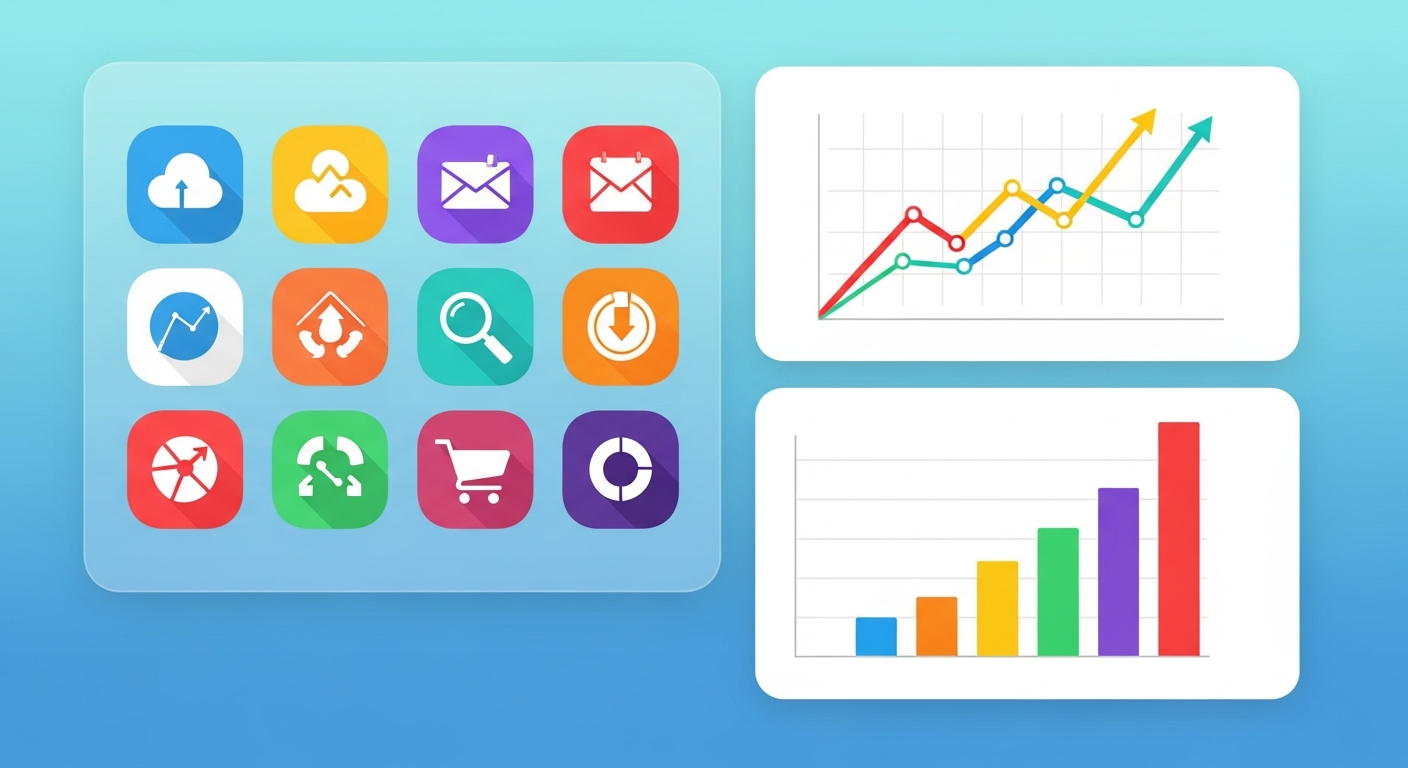
Shopify apps are a powerful and essential addition for any store aiming to excel in this field. They act as a hidden engine that powers and supports multiple aspects of business operations, from marketing and sales to enhancing user experience, inventory management, and customer service. These applications are designed to fill gaps, automate tasks, and provide valuable insights that aid in making informed decisions. Choosing the right add-ons can transform your store from a mere display window into a highly efficient sales machine, increasing average order value, improving conversion rates, and building long-term customer loyalty. In this article, we will delve into five key types of Shopify apps that have proven effective in driving growth and significantly boosting sales.
Utilizing the right applications isn't just about adding new functionalities to your store; it extends to optimizing every detail of the customer journey, from the moment they discover your product to completing their purchase and beyond. It's an opportunity for store owners to streamline complex operations, reduce human error, and free up valuable time to focus on strategic aspects of business growth. Whether you manage a small startup store or an established brand, investing in the appropriate Shopify apps will give you an indispensable competitive advantage in the rapidly evolving e-commerce market.
1. Email Marketing and Automation Apps
Email marketing remains one of the most powerful and effective tools for achieving repeat sales and building strong customer relationships. In an era of digital distraction, email still holds its ground as a direct and personal communication channel that reaches the customer's inbox. Automation apps on Shopify allow store owners to create targeted email campaigns, welcome messages, new product announcements, and abandoned cart reminders with high efficiency, ensuring the right message reaches the right person at the ideal time.
These applications go beyond merely sending individual messages, offering the ability to segment customers based on their purchasing behavior, browsing history, and preferences, enabling the sending of highly personalized promotional offers that increase conversion probability. For instance, a special discount can be sent to customers who purchased a specific product after a certain period, or a reminder to those who browsed a particular product category without making a purchase. This level of personalization not only boosts sales but also builds a sense of appreciation and loyalty among customers, making them feel that your store understands their needs.
Popular apps in this domain include Klaviyo and Omnisend, which offer ready-to-use templates and ease of use, along with detailed analytics for campaign performance. These tools not only help in direct sales increases but also contribute to recovering lost leads and nurturing long-term relationships, making them a vital investment for any e-commerce store striving for sustainable growth. Understanding how to best leverage these tools is key to transforming visitors into loyal, repeat buyers.
Targeting Abandoned Carts
Abandoned carts are one of the biggest challenges facing e-commerce stores, as many shoppers add products to their carts but then leave the store without completing the purchase. This is where email and automation apps excel in specifically targeting these carts. These apps can send automated reminders to customers who have left items in their carts, whether after a few hours or a full day, reminding them of the products they showed interest in and encouraging them to return to complete the purchase. This feature is crucial not only for Shopify stores but also for platforms like Zid and Salla, where similar strategies can be applied to recover lost sales.
Abandoned cart recovery messages often include additional incentives such as a small discount, free shipping, or a reminder of limited product availability, to increase urgency and prompt the customer to make a decision. Statistics show that abandoned cart recovery emails have high open and click-through rates, making them among the most effective marketing strategies for reclaiming lost revenue. Remember, the goal is not just to remind, but to provide a genuine and compelling incentive for the customer to complete what they started.
These apps allow for the customization of abandoned cart email sequences, meaning you can send a first reminder message, then a second message after a certain period with an incentive, and perhaps a final message before the offer expires. This multi-step approach increases the chances of recovering the customer without annoying them, and ensures you're maximizing every visitor who showed interest in your products. It's a smart strategy to convert intentions into actual sales.
Building Customer Lists and Segments
Email marketing apps do not only serve to recover lost sales but also extend to building a robust database of potential and existing customers. By integrating newsletter subscription forms or discount offers in exchange for signing up, store owners can collect email addresses from interested visitors. These lists represent valuable assets for the store, as they can be used for launching future marketing campaigns, new product releases, or even gathering feedback and surveys to improve products and services. Building a strong email list is the foundation of successful digital marketing.
These applications allow for the segmentation of these lists into precise groups based on various criteria such as purchase history, order value, viewed products, and even geographical location. This segmentation enables store owners to send more relevant and personalized content to each segment, thereby increasing engagement and conversion rates. For example, special offers on children's products can be sent to customers who previously purchased children's items, or luxury product announcements can be sent to high-value customers. This targeted approach reduces the likelihood of annoying customers with irrelevant messages and increases the effectiveness of your marketing efforts.
The ability to analyze the performance of each email campaign, from open rates to click-through and conversion rates, provides store owners with valuable insights into what works and what doesn't. This data can be used to refine future campaigns, test different subject lines, and adjust content, thereby improving the return on investment from email marketing. This continuous analysis is the essence of continuous improvement that distinguishes successful stores, and you can learn more about the importance of analyzing your store's data through our article on how to read your store's reports in Salla and Zid.
2. Product Review and Rating Apps
In the era of digital shopping, customer reviews and product ratings have become indispensable social proof for building trust and credibility. Before making a purchase decision, the vast majority of shoppers turn to read other customers' opinions about a product or service. Review apps on Shopify allow stores to easily collect and display these ratings, providing potential customers with conclusive evidence of product quality and store reliability. These apps transform your satisfied customers into marketers for your brand.
These applications are not limited to displaying text reviews; they can also support video and photo reviews, adding an extra layer of credibility and appeal. Imagine a potential customer seeing your product in real photos taken by other customers, or watching a video demonstrating their usage experience. This type of user-generated content (UGC) is far more powerful than any paid marketing campaign, as it comes from a neutral source that shoppers trust more. Apps like Loox, Yotpo, and Judge.me are leading examples in this field.
In addition to building trust, these reviews also help improve your store's search engine optimization (SEO). The new and fresh content added by reviews helps Google and other search engines better understand the content of your product pages, thereby improving their ranking in search results. This means more organic traffic to your store, which in turn increases sales opportunities. It's a positive cycle that starts with customer satisfaction and ends with increased visibility and store profitability.
Enhancing Trust and Credibility
Trust is the cornerstone of any successful business relationship, and in e-commerce, where there is no direct physical interaction, trust becomes even more critical. Review apps act as a bridge between the store and the potential customer, providing visual and tangible evidence that others have tried the product and were satisfied with it. When a visitor sees a large number of positive reviews, they feel reassured and confident in the product's quality and the store's reliability, which reduces their perceived risk and encourages them to proceed with the purchase. This psychological aspect significantly impacts buying decisions.
The role of reviews is not limited to positive feedback only; the presence of some neutral or even negative reviews (with a thoughtful response from the store) can increase the store's credibility. This shows that the store is transparent and has nothing to hide, and that it is willing to address any issues that may arise. The key is how the store responds to these negative reviews, as turning a negative experience into a positive one can significantly boost loyalty. Listening to customers and seriously addressing their feedback is crucial for continuous success.
Reviews also contribute to building the brand image as a whole. When customers see that a store invests in collecting and displaying reviews, and that they care about their customers' opinions, it enhances the brand's value in their minds. This not only affects direct sales but also contributes to building a strong reputation in the long run, attracting more customers through word-of-mouth and referrals. It is a comprehensive strategy that serves multiple objectives.
Increasing Conversion Rates
Positive reviews are a powerful motivator for increasing conversion rates in your store. When a customer browses a product page and has two options: a product with no reviews, and another product with hundreds of positive reviews, the second option will often be preferred. This psychological effect, known as social proof, drives customers to make purchase decisions with greater confidence, reducing purchase hesitation and increasing the chances of completing a transaction. Review apps make this social proof visible and readily available.
Additionally, review apps can allow customers to filter products based on ratings, making it easier for them to find top-rated products and reducing search time. This improvement in user experience directly contributes to increasing the likelihood of purchase. Some apps also allow reviews to be displayed on category pages and even in search results, making them visible at earlier stages of the customer journey. To maximize the benefit of these add-ons, you can check out 5 secrets to increasing conversions in your online store.
It is also important for these apps to provide a feature that reminds customers to leave a review after a purchase, often after a certain period to ensure they have used the product. These automated reminders significantly increase the number of reviews collected, thereby enhancing the effectiveness of social proof. Investing in these apps is not just about beautifying your store; it is a direct investment in increasing your sales and strengthening customer trust.
3. Cross-sell and Upsell Apps
Cross-selling and upselling strategies are among the most powerful ways to increase the Average Order Value (AOV) and thus boost the store's total revenue without needing to attract more new customers. Instead of focusing on increasing the number of sales, these strategies focus on increasing the value of each purchase. Shopify apps specialized in this area make implementing these strategies easy and automated, freeing store owners from the need for manual intervention every time. It's a golden opportunity to improve profit margins.
Cross-selling means offering complementary products to the product the customer intends to buy or has already bought. For example, if a customer is buying a smartphone, a protective case, a wireless charger, or earbuds can be offered as cross-sell products. Upselling, on the other hand, means offering a higher-priced or more feature-rich version of the product the customer intends to buy. Instead of the basic phone, a newer model with additional features can be offered at a slightly higher price. These apps use smart algorithms to analyze customer behavior and suggest the most suitable products.
Apps like ReConvert and Bold Upsell are leading tools in this field, allowing store owners to set up cross-sell and upsell offers at different stages of the customer journey: on the product page, in the shopping cart, on the checkout page, and even after the order is completed as "post-purchase" offers. This flexibility ensures that customers see offers at the right moment, increasing the likelihood of acceptance. Effectively using these apps can turn every sale into an opportunity to multiply value.
Increasing Average Order Value (AOV)
The primary goal of cross-sell and upsell apps is to increase the Average Order Value (AOV), a vital metric reflecting how effectively a store maximizes each customer. When a customer purchases additional products or opts for an upgraded version of a product, the AOV directly increases. This not only impacts revenue but can also improve overall profit margins, especially since the cost of acquiring a new customer is often much higher than the cost of selling an additional product to an existing customer. It is an economic strategy for business growth.
Statistics show that customers who have already completed a purchase are more likely to accept cross-sell or upsell offers, especially if these offers are relevant and provide real value. Shopify apps provide analytical tools to track the performance of each offer, enabling store owners to understand which offers perform best and adjust their strategies based on data. This continuous optimization ensures that the offers presented are always attractive and compelling to customers.
Additionally, these apps can be used to create product bundles where several related products are grouped and sold at a discounted price as a single package. This encourages customers to buy more products at once and effectively increases AOV. For example, a "complete skincare bundle" can be offered instead of selling each product individually. These strategies not only increase sales but also enhance the customer experience by providing integrated solutions to their needs.
Providing Personalized Offers
The secret to the success of cross-sell and upsell strategies lies in the relevance of the offers presented to the customer. Advanced Shopify apps use artificial intelligence and machine learning technologies to analyze customer data, including browsing history, products added to the cart, and previous purchases, to provide highly personalized product recommendations. This personalization makes the offers appear as if they were tailored specifically for each individual, significantly increasing the likelihood of acceptance and reducing the customer's feeling that it's just a sales attempt. It's a transformation from mass marketing to personal interaction.
These apps can also adapt offers based on the customer's current cart size or the products within it. For example, if a customer has added a product of a certain value, a complementary product of similar value can be offered. Or if a customer has added several products from a specific brand, additional products from the same brand can be suggested. This precision in targeting is what distinguishes effective cross-sell and upsell apps from merely displaying random products.
The ability to A/B test different offers is a fundamental feature provided by these applications. Store owners can test various headlines, different product images, and even different display placements for offers to see which performs best. This data-driven approach ensures that the store is constantly optimizing its strategies to achieve maximum sales and continuously increase the average order value. It is a continuous improvement process that ensures every customer finds the most suitable offer for them.
4. Loyalty and Rewards Program Apps
In the crowded e-commerce market, retaining existing customers has become more crucial than ever, and more cost-effective compared to acquiring new ones. Shopify loyalty and rewards program apps are powerful tools designed to encourage customers to return and make repeat purchases, building long-term relationships and transforming ordinary customers into loyal brand advocates. These apps provide stores with a structured way to reward customers for their loyalty, whether through points, discounts, or exclusive access.
These apps typically operate through a points system, where customers earn points for every purchase, and can redeem these points for discounts, free products, or other benefits. Customers can also be rewarded for non-purchase behaviors, such as signing up for a newsletter, following the store on social media, or even celebrating their birthday. This comprehensive approach to rewards encourages continuous interaction with the store and enhances the customer's sense of belonging and appreciation. Apps like Smile.io and LoyaltyLion are popular examples in this field.
The impact of loyalty programs is not limited to increasing direct sales; it extends to building a community around your brand and encouraging customers to spread positive word-of-mouth about your store. A loyal customer not only buys from you but also becomes an ambassador for your brand, recommending it to friends and family, which leads to attracting new customers at a much lower cost. It's a long-term investment strategy in your customer base.
Encouraging Repeat Purchases
The primary goal of loyalty programs is to convert one-time buyers into repeat purchasers. By offering tangible incentives to return, such as redeemable loyalty points or membership tiers that unlock exclusive benefits, these apps give customers a compelling reason to come back to your store instead of seeking alternatives. The more a customer purchases, the more points they accumulate, and thus the greater the value of the rewards they can receive, creating a positive cycle of purchase and loyalty. This cycle is the main driver of sustainable growth.
These apps can also integrate gamification elements into loyalty programs, such as levels that customers can climb (e.g., silver, gold, platinum members), with each level unlocking additional benefits. This adds an element of fun and challenge, making customers more engaged with the program. For example, platinum members might receive permanent free shipping, early access to new products, or exclusive discounts. These features not only encourage repeat purchases but also deepen the relationship between the customer and the store.
Additionally, these programs can be used to identify the most loyal customers (those who spend more and purchase frequently) and offer them special deals or VIP treatment. This not only encourages them to continue purchasing but also makes them feel special and appreciated, further strengthening their loyalty. Targeting this segment of customers and providing them with an exceptional experience is key to ensuring a continuous flow of revenue and growing a loyal customer base over time.
Building a Community Around Your Brand
Loyalty programs go beyond merely offering discounts, becoming a tool for building a community around your brand. When customers feel they are part of an exclusive program, or that they are being rewarded for their loyalty, they develop a sense of belonging to the brand. Loyalty apps can allow customers to share their points or rewards with friends, encouraging referrals and organically increasing your brand's reach. This social aspect enhances the store's value in the eyes of customers.
Loyalty programs can also be used to gather customer opinions and feedback on new products or services. Loyal customers are often the most interested in helping the brand improve, and offering rewards for this feedback can encourage them to participate actively. This provides the store with valuable insights for product development and improving the customer experience, benefiting everyone. Involving customers in the brand's evolution journey significantly strengthens connections.
Furthermore, loyalty programs can create an emotional connection between the customer and the store. When a customer feels valued and rewarded for their loyalty, they tend to develop an emotional attachment to the store, making them more forgiving of any potential mistakes and more willing to defend the brand. This emotional loyalty is the utmost aspiration for any brand, and it is the foundation of long-term success in any competitive market. These programs contribute to achieving this through continuous interaction and meaningful rewards.
5. Conversion Rate Optimization (CRO) and Pop-up Apps
Conversion Rate Optimization (CRO) is a vital process aimed at increasing the percentage of store visitors who take a specific action, such as making a purchase, signing up for an email list, or adding a product to their cart. Shopify apps specialized in CRO, especially those utilizing pop-ups and exit-intent offers, are highly effective tools for achieving these goals. They aim not only to attract visitors but to convert them into actual customers in the most efficient ways. These apps allow you to interact intelligently with every visitor.
Pop-ups are used to present special offers, exclusive discounts, or invitations to subscribe to newsletters. These pop-ups can be customized to appear based on visitor behavior: after spending a certain amount of time in the store, when browsing specific pages, or when attempting to leave the store (exit-intent offers). This customization ensures that the offer appears at the most opportune moment for the customer, increasing the likelihood of interaction. Apps like OptiMonk and Privy are excellent examples that offer extensive customization options.
In addition to pop-ups, these apps also offer features such as notification bars, sales countdown timers, and social proof tools (e.g., "someone is buying this product now"). All these elements work together to create a sense of urgency, provide additional incentives, or build trust, all of which contribute to pushing the customer toward completing a purchase. These add-ons act as a smart salesperson working around the clock.
Lead Generation
One of the most important uses of CRO apps is lead generation. Not every visitor will be ready to buy on their first visit, but these visitors can be converted into leads by obtaining their email address. Pop-ups are effectively used to offer an incentive, such as a 10% discount on the first order or a free e-book, in exchange for subscribing to the email list. This allows the store to continue communicating with these visitors and nurturing them with content and offers until they are ready to purchase. It is a strategy to build a strong database of interested individuals.
Once the lead's email address is obtained, the store can begin sending automated email sequences (drip campaigns) containing information about products, customer success stories, or helpful tips. This sequence aims to build a relationship with the lead, provide them with value, and ultimately encourage them to make a purchase. This approach is not only effective in increasing sales but also contributes to building long-term customer loyalty, as the customer feels that the store provides them with value even before a purchase.
These apps also allow tracking of lead behavior on the website after they register, providing valuable insights into their interests. This data can be used to further personalize future offers and messages, increasing conversion opportunities. Understanding the customer journey from being just a visitor to a lead and then a loyal customer is key to success, and CRO apps provide the necessary tools to achieve this understanding and act upon it effectively.
Exit-Intent Offers and Re-engagement
Exit-intent pop-ups are one of the most powerful features offered by conversion rate optimization apps. When the app detects that a visitor is about to leave the store (usually by moving the mouse cursor towards the address bar or close button), it displays a pop-up with a special offer. This offer could be an additional discount, free shipping, or another incentive aimed at persuading the customer to stay and reconsider leaving. This technique acts as a "last chance" to recover a potential customer and convert them before they leave permanently.
Exit offers can be used not only to provide discounts but also to direct visitors to specific pages, such as the best-selling products page, the FAQ page, or even invite them to subscribe to the newsletter. This ensures that the store doesn't completely lose the visitor but attempts to guide them towards another path that could lead to future engagement or conversion. It's a smart way to turn a potential lost moment into an opportunity to gain a lead or even a sale.
The high effectiveness of exit offers lies in their perfect timing. They do not appear to annoy the visitor while browsing the site but only when they are about to leave, making them less intrusive and more acceptable. With the analytics available in these apps, store owners can test different exit offers to see which performs best, thereby continuously optimizing their strategy. This tool is invaluable for recovering lost sales and significantly increasing conversion rates in your Shopify store, and its principles can also be applied to other platforms like Zid and Salla to enhance user experience and indirectly achieve search engine optimization by reducing bounce rates.
Conclusion
In conclusion, Shopify apps are indispensable tools for any e-commerce store aspiring to achieve sustainable growth and increase sales in a rapidly evolving e-commerce landscape. In this article, we have covered five key types of add-ons that can make a fundamental difference in your store's performance: email marketing and automation apps, product review apps, cross-sell and upsell apps, loyalty and rewards program apps, and conversion rate optimization and pop-up apps. Each type of app offers a unique set of benefits that contribute to enhancing the customer experience, increasing average order value, and building long-term relationships with shoppers.
Investing in these applications is not merely about adding new functionalities; it is a strategic investment in the future of your store. They enable you to automate complex tasks, accurately analyze customer data, and deliver highly personalized shopping experiences that exceed expectations. Whether you are operating on Shopify, or even drawing inspiration from these ideas to apply them to platforms like Zid and Salla, the goal remains the same: transforming visitors into loyal customers and maximizing revenue. Remember that the key to success lies in choosing apps that align with your store's unique needs and goals, and then integrating them intelligently into a comprehensive marketing strategy.
To get the most out of these add-ons, it is essential to regularly monitor their performance, analyze the data they provide, and adjust your strategies based on the results. The world of e-commerce is constantly changing, and the ability to adapt and innovate using the right tools is what distinguishes leading stores. Therefore, do not hesitate to explore the Shopify app store, experiment with different add-ons, and leverage their inherent power to transform your store into an inspiring success story.