



The checkout page is the final gateway a customer passes through before completing a purchase, representing the critical moment where purchase intent transforms into actual revenue for your e-commerce store. In the rapidly evolving world of e-commerce, with increasing competition, merely having good products or an attractive store is no longer enough to guarantee success. The customer's experience at this final stage can determine whether they complete the purchase or abandon their cart, directly impacting conversion rates and profits.
Cart abandonment is a significant challenge faced by store owners on platforms like Salla, Zid, and Shopify, with statistics indicating that a large percentage of customers leave a store upon reaching the checkout page for various reasons, ranging from complexity, hidden fees, slow loading times, or a lack of payment options. Therefore, understanding these challenges and implementing effective strategies to optimize the checkout page is not a luxury, but a critical necessity to maximize conversion opportunities and boost revenue.
The Importance and Challenges of the Checkout Page in E-commerce
The checkout page serves as the final point of contact between the customer and your products, a crucial moment where the customer decides whether to proceed with the purchase or abandon it. Studies show that the average cart abandonment rate exceeds 70% in many industries, meaning that most customers who reach this stage do not complete their purchase. This high figure underscores the paramount importance of optimizing this page, as every additional conversion translates into a direct increase in your store's revenue.
The main challenges on the checkout page stem from several interconnected factors, starting from page design and user experience, extending through available payment options, and culminating in transparency and credibility. Your storefront might be appealing, and your products high-quality, but if the checkout page is complex or untrustworthy, all previous marketing efforts will be in vain. Therefore, store owners on platforms like Zid, Salla, and Shopify must pay special attention to this vital stage.
Focusing on checkout page optimization is not just about increasing sales; it also extends to building customer trust and loyalty. When a customer finds an easy, clear, and secure checkout process, they are more likely to return for future purchases and recommend your store to others. Conversely, a poor experience can drive them away from your store forever, even if they were interested in your products, making investment in this page a long-term investment in your store's reputation and success.
Optimizing User Experience: Streamlining the Payment Process
Streamlining the payment process is one of the most crucial strategies for reducing cart abandonment rates and increasing conversions. The shorter and clearer the checkout process, the higher the likelihood of the customer completing their purchase. You should aim to minimize the number of required fields and remove any unnecessary steps that might distract the customer or increase their sense of tediousness, focusing only on the essential information needed to fulfill the order and shipping.
Platforms like Salla, Zid, and Shopify offer great flexibility in customizing checkout pages, giving you the opportunity to simplify the process. For example, you can enable guest checkout instead of forcing customers to create an account, which many prefer for saving time and effort, especially first-time buyers. You can also consolidate multiple steps into a single page or use a clear progress bar to show customers where they are in the checkout process, reducing anxiety and increasing transparency.
In addition to reducing steps, the checkout page design should be clean and free of distractions. Avoid adding promotional elements or ads that might divert the customer's attention from their primary task of completing the purchase. Use clear fonts and comfortable colors, and ensure that key buttons, such as "Complete Purchase," are prominent and easy to click, especially on mobile devices. All these small details contribute to a smooth and efficient user experience.
Transparency and Trust: Building a Bridge of Credibility
Transparency in displaying all costs is a crucial factor in building trust with customers, and it is essential to ensure they do not abandon the checkout page at the last minute. The product price, along with details of shipping fees, taxes, and any applied discounts, should be clearly displayed from the beginning of the checkout process or even earlier in the shopping cart page. Unpleasant surprises regarding additional costs are one of the main reasons for cart abandonment, so absolute clarity removes any doubts or hesitation.
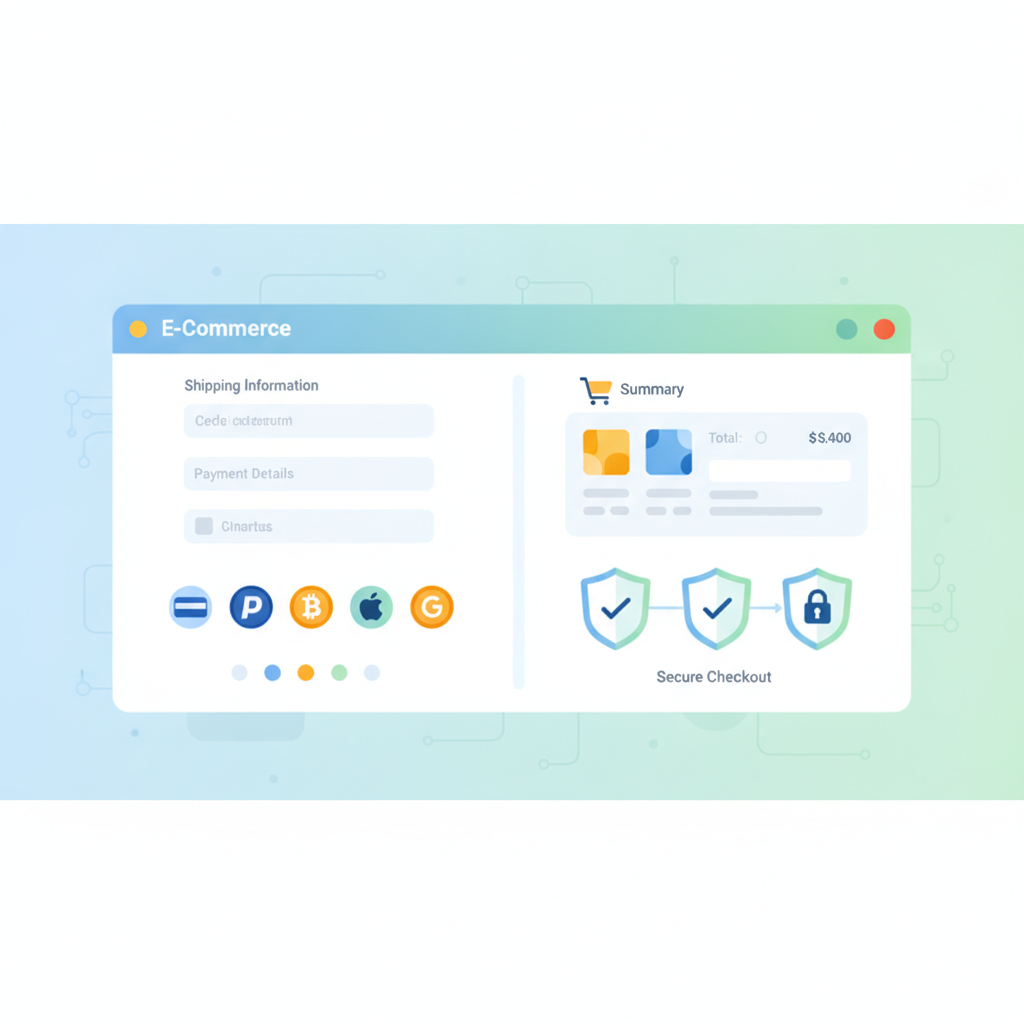
To enhance trust, it is vital to visibly display security certificates and logos of trusted payment gateways (such as Visa, MasterCard, Apple Pay, Mada) on the checkout page. These logos serve as a visual indicator to the customer that their financial information is safe and protected, reassuring them to enter their credit card details without worry. Furthermore, highlighting clear and applicable return and exchange policies boosts the store's credibility and gives the customer a sense of security about their purchase decision. You can read more about Free Shipping strategies that enhance transparency.
Building trust is not limited to technical and financial aspects but extends to legal and social considerations. Ensuring your store complies with local and international consumer protection regulations and clearly displaying technical support contact information contributes to building a trustworthy store image. These combined measures enhance the customer's sense of security and comfort, encouraging them to complete their purchase with full confidence that your store cares about their experience and satisfaction.
Advanced Payment Strategies to Boost Conversions
Advanced payment strategies are the cornerstone of increasing conversion rates, as providing diverse and suitable payment options for all customer segments has become an indispensable necessity in modern e-commerce. Limiting to one or two payment methods is no longer sufficient to meet diverse market preferences. Store owners on platforms like Zid, Salla, and Shopify must recognize that each customer may have a preferred payment method, and offering these options removes a significant barrier to completing a purchase.
The importance of multiple payment options extends beyond mere convenience; it is about targeting different customer segments, whether local or international, or those with varying purchasing power. For example, in some regions, cash on delivery is still the preferred option, while in others, credit cards or digital wallets dominate. Furthermore, offering installment payment options, such as Tabby and Tamara, can open doors to new customers with limited budgets, significantly increasing purchasing power and average order value.
To maximize the benefits of advanced payment strategies, customer data should be analyzed to understand the most popular payment options in your target market, and available options should be customized based on this data. It is also crucial to ensure that all integrated payment gateways operate smoothly and securely, providing a consistent user experience. Investing in this aspect brings significant benefits to the store, not only in increasing conversions but also in enhancing customer satisfaction and building a good reputation for the store.
Multiple Payment Options: Meeting Customer Preferences
Providing a wide range of payment options is vital to meet diverse customer preferences and reduce cart abandonment rates. In the Arab region, payment preferences vary significantly; while some prefer cash on delivery, others rely on credit cards or Mada cards. The adoption of digital wallets like Apple Pay and Google Pay is also rapidly increasing, requiring stores to keep pace with these changes to ensure they reach the widest possible customer segment.
Installment payment services, such as Tabby and Tamara, are a powerful addition that increases payment flexibility and enables customers to purchase high-value products without needing to pay the full amount upfront. These options encourage purchases and reduce price barriers, leading to an increase in average order value and overall conversion rates. Platforms like Zid, Salla, and Shopify offer easy integrations with these services, making their activation simple and accessible for store owners.
Furthermore, stores should consider customizing payment options based on geographical region or product type. Some payment options may be more popular in a specific country, while they may not be available or preferred in another. By analyzing customer data and preferences, stores can provide optimized payment options that suit their target audience, contributing to an enhanced overall shopping experience and increasing the likelihood of customers completing their transactions.
Speed and Security of Payment Processing: A Seamless Experience
The speed and security of payment processing are critical factors that directly impact customer experience and their trust in your store. Any delay in the payment process or a feeling of insecurity can prompt customers to abandon their shopping carts. Therefore, e-commerce store owners on platforms like Zid, Salla, and Shopify must choose reliable payment gateways known for their fast transaction processing, ensuring a smooth and hassle-free payment experience.
Security is the cornerstone of any electronic payment process. All customer financial and personal data must be encrypted and protected with the latest security technologies. Using SSL certificates for all store pages, especially the checkout page, is imperative, as it ensures the encryption of data transmitted between the browser and the server. Additionally, employing advanced security solutions like 3D Secure, which requires an extra verification step from the customer, enhances transaction security and reduces fraud risks, reassuring both the customer and the store.
Security is not limited to encryption and verification; it also includes adherence to international data protection standards, such as PCI DSS. Store owners must ensure that the payment gateways they use are compliant with these standards. Providing a secure and fast payment environment not only enhances customer trust and satisfaction but also contributes to building a strong reputation for the store as a reliable online shopping destination, supporting long-term growth and success.
Upselling and Cross-selling on the Checkout Page
The checkout page offers a golden opportunity for store owners to increase the Average Order Value (AOV) through upselling and cross-selling strategies. Once the customer has made a purchase decision, they are in a receptive mindset for additional suggestions that could enhance their experience or complement their primary product. Smartly leveraging this moment can add significant value to both the customer and the store, without hindering the main checkout process.
Upselling can be implemented by offering a simple upgrade to the product the customer has chosen, such as upgrading product size, adding an extended warranty, a premium service package, or even offering a similar product at a slightly higher price that provides noticeable added value. Cross-selling, on the other hand, involves displaying complementary products related to the items already in the shopping cart. For example, if a customer buys a smartphone, you could suggest a protective case, earbuds, or a wireless charger. These suggestions should be relevant and logical to avoid annoying the customer.
Platforms like Zid, Salla, and Shopify provide tools and features that enable you to effectively implement these strategies. You can set up automatic rules to display specific products based on cart contents, or use specialized add-on applications for upselling and cross-selling. The key is for these offers to be clear, easy to add to the cart, and not to obstruct the checkout flow. For more details, you can refer to our article on Upselling to Increase Your Store's Profits in Salla and Zid, which provides practical strategies in this regard.
Continuous Improvement and Analytics for the Checkout Page
The process of optimizing the checkout page does not stop at implementing initial strategies; it is an ongoing process that requires meticulous monitoring, data analysis, and regular testing. Customer purchasing behaviors are constantly changing, new technologies emerge, and platforms like Zid, Salla, and Shopify regularly update their features. Therefore, store owners must adopt a continuous improvement approach to ensure their checkout page operates at the highest possible efficiency and achieves the best conversion rates.
The analytics tools available on most e-commerce platforms, in addition to tools like Google Analytics, are invaluable in this process. These tools enable you to track customer behavior on the checkout page, identify the points where they abandon their cart, and understand the potential reasons behind it. Through this data, you can make informed decisions about the changes that need to be made to improve performance, rather than relying on guesswork or assumptions.
A/B testing is one of the most important continuous improvement methods, allowing you to test different versions of the checkout page or specific elements within it (such as button color, field placement, text phrasing) to see which performs better. This cyclical process of tracking, analyzing, and testing enables you to progressively refine your checkout page and sustainably increase conversion rates, ensuring your store remains competitive and effective in attracting customers and converting them into actual buyers.
Tracking Cart Abandonment Rates: Identifying Weaknesses
Accurately tracking cart abandonment rates is the first and most fundamental step towards optimizing your checkout page. Without knowing where and why customers are leaving, it will be very difficult to make effective improvement decisions. Platforms like Salla, Zid, and Shopify provide analytical dashboards that show this data, in addition to the ability to integrate external analytics tools like Google Analytics, which offer deeper insights into user behavior in the payment funnel.
By analyzing the checkout funnel step by step, you can pinpoint the exact points where customers encounter difficulties or decide to leave. Do they abandon at the shipping information stage? Or when choosing a payment method? Or after seeing shipping fees? Understanding these points helps you focus your optimization efforts on the most impactful issues. For example, if abandonment is high at the shipping stage, you might need to review your shipping options, costs, or free shipping strategies.
Analysis is not limited to numbers; you must also try to understand the underlying reasons behind these figures. This can be done by reading customer feedback, conducting short surveys after cart abandonment, or even using session recording tools that show how users interact with the checkout page. All this data provides a comprehensive picture that enables you to take informed and targeted corrective actions to solve the actual problems your customers are facing.
A/B Testing: Continuous Improvement of Elements
A/B testing is an indispensable tool for continuous improvement of the checkout page, as it allows you to compare the performance of two different versions of a specific element or the entire page design to see which achieves the best results. Instead of making random changes, you can systematically test your hypotheses, ensuring that every modification you make is based on real data and contributes to increasing conversion rates. This type of testing is essential for all stores, whether on Zid, Salla, or Shopify.
You can test a wide range of elements on the checkout page. For instance, you can test different colors and designs for the "Complete Purchase" button, experiment with different phrasings for explanatory texts, or change the order of data entry fields. You can also test the impact of adding or removing trust badges, or displaying specific payment options. Even minor changes, such as changing a single word in a heading, can have a noticeable impact on customer behavior and conversion rates.
To get the most out of A/B testing, you should focus on testing only one element at a time to ensure you understand the impact of each change individually. The test sample should be large enough to achieve statistically significant results, and the test should run for a sufficient period to cover different purchasing cycles. Through this systematic process, you can identify elements that improve user experience and encourage purchase completion, thereby achieving continuous growth in your store's profits.
Optimizing the Checkout Page for Mobile Devices
With the increasing use of smartphones for online shopping, optimizing the checkout page for mobile devices has become extremely important and cannot be overlooked under any circumstances. The majority of customers browse and purchase through their phones, and if the checkout page is unresponsive or difficult to use on a small screen, it will inevitably lead to high cart abandonment rates and lost potential sales. The checkout experience must be smooth and convenient on any device.
Optimizing the checkout page for mobile devices includes ensuring that the design is fully responsive, adapting to different screen sizes without the need for zooming or pinching. Data entry fields should be large, clear, and easy to tap, using specialized keyboards (such as a numeric keypad for entering card numbers) to facilitate the input process. Additionally, using features like autofill can significantly reduce the effort required from the customer.
Beyond design, the loading speed of the checkout page on mobile devices is a critical factor. Mobile networks can be slower than home internet connections, and any delay in loading can frustrate customers and cause them to leave. Therefore, page images should be optimized, and the number of loaded files reduced to ensure maximum speed. Platforms like Zid, Salla, and Shopify typically provide responsive and mobile-optimized templates, but actual performance should always be verified and tested on different devices to ensure the best possible experience.
Additional Tips to Boost Checkout Page Conversions
In addition to the core strategies for optimizing the checkout page, there are a set of supplementary tips that can make a significant difference in boosting conversion rates. These tips focus on aspects such as customer service, abandoned cart recovery, and offering last-minute incentives, all aimed at reassuring the customer and overcoming any obstacles that might prevent them from completing the purchase. Integrating these tips with the main strategies will form a comprehensive approach to improving performance.
Providing excellent customer support on the checkout page is a crucial factor in building trust and resolving immediate issues. Some customers may encounter inquiries or technical problems during the payment process, and having a quick and clear communication channel (such as live chat or a support phone number) can save a potential sale. Furthermore, abandoned cart recovery strategies address the issue of customers who left the store, allowing you to re-engage them and offer incentives to complete their purchase.
Finally, offering small, enticing last-minute incentives can have a significant impact on hesitant customers. This could be a small discount, free shipping, or a free gift with the order. These incentives provide an additional push that encourages the customer to make an immediate purchase decision, especially if they are tied to a limited time frame. Implementing these tips will enhance the effectiveness of your checkout page and help you maximize the value from every visitor who reaches this critical stage.
Customer Service and Technical Support: Reassuring the Buyer
Effective customer service and technical support are an integral part of a successful checkout page experience. Even with the best design and the easiest process, some customers may encounter unexpected questions or issues. Therefore, the availability of direct and clear contact options, such as a Live Chat icon or a technical support phone number, reassures the customer that they will not be left alone if they face any difficulty. This human presence can make a significant difference in a customer's decision to complete a purchase.
In addition to direct communication channels, a frequently asked questions (FAQ) section should be available in a prominent and easily accessible location from the checkout page. This section should answer the most common inquiries related to the payment process, shipping options, return policies, and security. Providing this information proactively reduces the need for support contact and enhances customer confidence that the store prioritizes their comfort. Also, clear information about shipment tracking after purchase adds another layer of trust.
The technical support team should be well-trained to handle checkout page inquiries quickly and effectively. Prompt and professional responses to customer inquiries demonstrate professionalism and enhance the store's credibility. Investing in excellent customer service not only saves potential sales but also contributes to building long-term relationships with customers, turning them into loyal buyers and advocates for your store on platforms like Zid, Salla, and Shopify.
Abandoned Cart Recovery: Effective Strategies
Abandoned cart recovery is one of the most important strategies that can significantly contribute to increasing checkout page conversions, as it targets customers who have shown interest in your products and reached the payment stage but did not complete the purchase. This strategy allows you to recover a significant portion of lost revenue and is effectively implemented on platforms like Zid, Salla, and Shopify through available automation tools.
The cornerstone of this strategy is automating reminder emails. A series of emails should be sent to customers who left their carts, reminding them of the products they left behind and providing a direct link to return to the shopping cart to complete the purchase. These emails can include simple incentives, such as a small discount, a free shipping offer, or a hint about product scarcity, to motivate them to complete the purchase.
The timing of sending these messages is crucial. It is usually recommended to send the first email one to two hours after cart abandonment, followed by a second email after 24 hours, and a third and final email after 48 or 72 hours. The messages should be personalized and engaging, focusing on the value the customer will gain from completing the purchase. By effectively targeting these customers, you can convert a significant percentage of them into actual buyers and significantly increase your store's profits.
Offering Last-Minute Incentives: Encouraging Purchase
Last-minute incentives are a powerful tool to motivate hesitant customers to complete a purchase, especially when they are about to abandon their shopping cart. These incentives, offered on the checkout page or immediately before it, add tangible value to the transaction and reduce any remaining hesitation the customer might have, contributing to an immediate increase in conversion rates. These strategies can be effectively implemented on platforms like Zid, Salla, and Shopify.
These incentives can take various forms, such as a small discount on the total order, an offer of free shipping if not already available, or adding a small free gift with the order. It is important that the incentives are attractive and relevant to the products the customer is buying. Countdown timers can also be used to enhance urgency, indicating that the offer will expire within a specified time frame, prompting the customer to make a purchase decision quickly.
There must be a balance between offering incentives and maintaining the store's profitability. Incentives should not be so large that they unsustainably reduce profit margins; rather, they should be carefully calculated to increase the overall customer lifetime value. By experimenting with different types of incentives and monitoring their impact on conversion rates and average order value, store owners can determine what is most suitable for their products and customers, maximizing the benefits of this effective strategy.
In conclusion, the checkout page is more than just a final step in the purchase journey; it is a pivotal point that determines the success of your e-commerce store. By implementing the strategies mentioned, starting from streamlining the user experience, through providing multiple and secure payment options, to building trust and transparency, store owners on platforms like Zid, Salla, and Shopify can convert more visitors into loyal customers. Focusing on this critical stage not only boosts immediate conversion rates but also contributes to building a strong reputation for your store in the long run.
The importance of continuous improvement cannot be overstressed. The market changes, customer preferences evolve, and new technologies constantly emerge. Therefore, store owners must adopt a mindset of continuous growth and refinement, using analytics tools and A/B testing to identify weaknesses and opportunities for improvement. Every small, well-thought-out change on the checkout page can make a significant difference in your store's overall performance, enabling you to maximize your marketing efforts.
Ultimately, the goal is to create a seamless, secure, and enjoyable checkout experience that encourages customers to complete their purchase with confidence and satisfaction. Every element on the checkout page, from design to payment options to technical support, plays a role in shaping this experience. By investing in checkout page optimization, you are not only increasing your sales but also building strong relationships with your customers, ensuring sustainable growth and continued success for your e-commerce store in the competitive world of online commerce.