





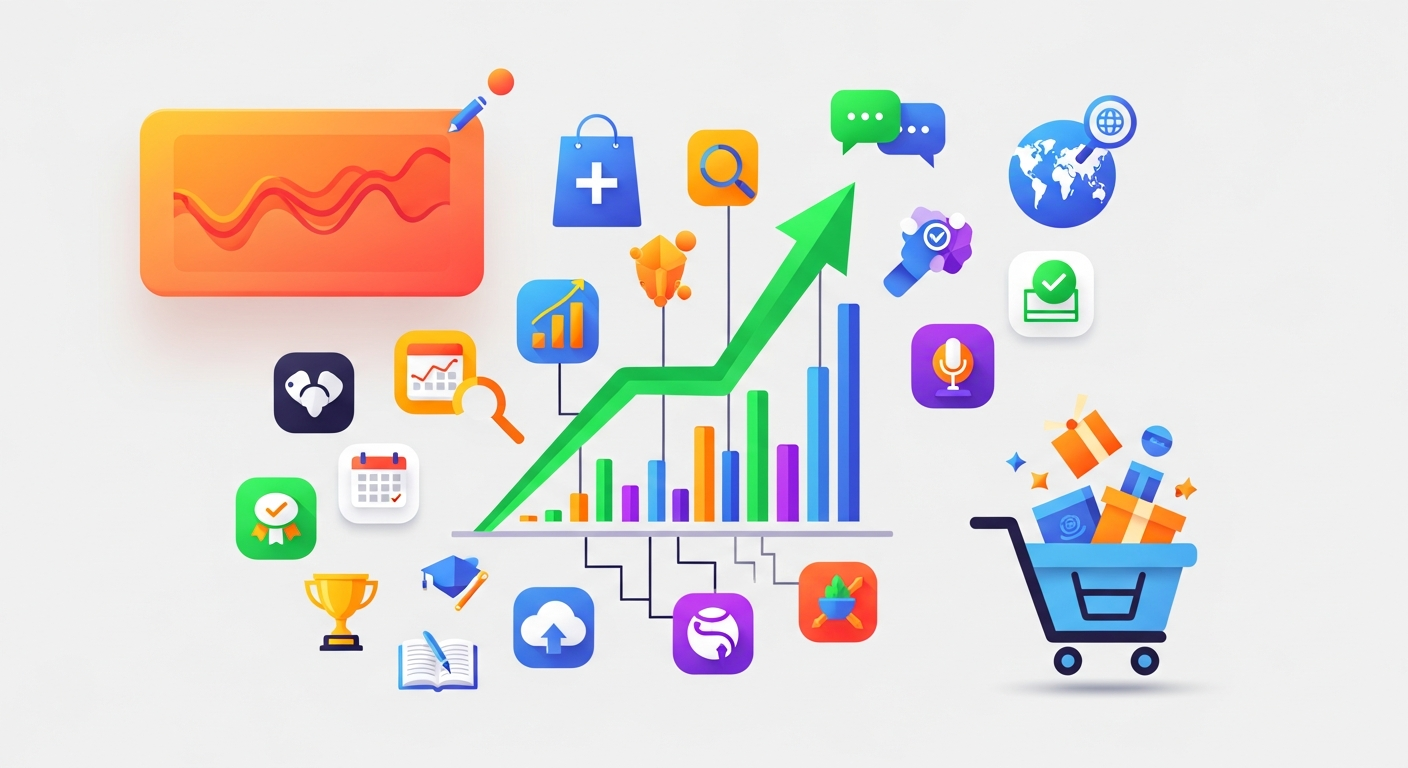
Introduction: The Era of E-commerce and Sales Boosting Apps
In today's rapidly evolving digital landscape, e-commerce has become the backbone of many businesses, especially in the Middle East and North Africa region, which is witnessing tremendous growth. With the increasing number of online stores and the diversity of products and services offered, differentiation and boosting sales and conversions have become imperative for staying competitive. It's no longer just about creating an attractive store; it extends to leveraging every possible tool and technology to enhance customer experience and improve overall store performance. This is where the auxiliary apps offered by platforms like Salla, Zid, and Shopify come into play.
E-commerce platforms such as Salla, Zid, and Shopify serve as the infrastructure that store owners rely on to create and manage their businesses. However, the core capabilities of these platforms, despite their robustness, may not meet all specialized needs or ambitious desires to maximize sales and conversions. This is where additional applications shine, acting as bridges to fill functional gaps and provide advanced features that enable merchants to optimize every aspect of their store, from marketing and customer service to inventory management and data analysis, ultimately leading to the achievement of desired sales goals.
Why Are Apps Essential for Boosting Sales and Conversion?
Applications are the cornerstone of a growth strategy for any modern e-commerce store. They not only add new features but also significantly enhance operational efficiency and radically improve the customer experience. In a competitive e-commerce environment, where customers expect a seamless and personalized shopping experience, apps stand out as indispensable tools for increasing conversion rates and achieving sustainable growth. Without these tools, a merchant might find themselves limited by the platform's basic functionalities, thus restricting their ability to adapt to changing market demands and effectively seize new sales opportunities.
These applications empower store owners to automate repetitive tasks, such as sending marketing emails or updating inventory, thereby freeing up valuable time that can be invested in focusing on broader growth strategies. They also provide valuable insights into customer behavior and product performance, allowing for data-driven decisions to optimize marketing campaigns and personalize offers. By intelligently leveraging these apps, stores on platforms like Salla, Zid, and Shopify can achieve significant leaps in sales and increase customer loyalty, positioning them ahead in the market.
Furthermore, apps contribute to building a unique and personalized shopping experience for each customer, which significantly boosts conversion chances. For instance, product recommendation apps can suggest relevant items based on a customer's browsing history or past purchases, while live chat apps help provide quick and effective support. These small, integrated improvements accumulate to form an exceptional customer experience, encouraging repeat purchases and increasing customer lifetime value, which represents the essence of modern e-commerce sales and conversion strategies.
Enhancing Customer Experience and Increasing Loyalty
Customer experience is the primary driver for boosting sales and conversion in any online store, and apps play a pivotal role in refining this experience and making it unforgettable. When a customer feels comfortable, confident, and valued while shopping, they are more likely to complete a purchase and return to the store repeatedly. Salla, Zid, and Shopify apps offer a wide range of solutions aimed at personalizing customer interaction, providing instant support, and facilitating the purchasing process, leaving a lasting positive impression that translates into increased brand loyalty. This customer-centric focus is not just a luxury; it's a strategic investment that yields long-term benefits for sales.
A prime example of this is loyalty program apps, which reward customers for their repeated purchases or engagement with the store. These programs incentivize customers to return and buy from the same store instead of seeking alternatives, thereby increasing customer lifetime value and boosting sales over time. You can refer to our article on Loyalty Programs: Boosting Conversion on Salla and Zid for more details on how to successfully build these programs. Similarly, live chat and customer service apps contribute to providing instant support to answer customer inquiries and resolve their issues, reducing the likelihood of cart abandonment and increasing their trust in the store.
Apps also help personalize the entire customer journey, from the moment they enter the store until checkout and beyond. Personalization apps can display product recommendations based on the customer's browsing history and previous purchases, making them feel that the store understands and caters to their individual needs. This personalized experience is not only enjoyable for the customer, but it also significantly increases the chances of adding more products to the cart and thus increasing the average order value. Investing in these apps reflects the store's commitment to providing exceptional service, which distinguishes it from competitors and strengthens its relationship with customers.
Streamlining Operational Processes and Saving Time
The benefit of e-commerce apps extends beyond merely enhancing customer experience; they also simplify complex operational processes that store owners face daily. Managing an online store requires significant effort in various aspects such as inventory management, shipment tracking, order fulfillment, accounting, and marketing. These tasks can be time-consuming and resource-intensive if done manually, reducing efficiency and limiting a merchant's ability to focus on strategic growth. This is where apps come in as powerful automation tools that significantly reduce the operational burden.
For instance, specialized inventory management apps automatically update available quantities with each sale or return, and alert the merchant when a specific product reaches a minimum threshold, preventing stockouts or overselling. This automation ensures data accuracy and saves valuable time and effort that would otherwise be spent on manual inventory processes. Similarly, shipping apps streamline the creation of shipping labels, track packages, and facilitate communication with various shipping carriers, making the product delivery process smoother and faster for customers, which is a crucial factor in customer satisfaction.
Additionally, accounting apps integrate with platforms like Salla, Zid, and Shopify to automatically record sales and expenses, and generate accurate financial reports, simplifying the accounting process and reducing human errors. These apps not only save time and effort but also provide the merchant with a clear view of their store's financial status, helping them make sound financial decisions. Streamlining these operations frees up the merchant to focus on marketing strategies, product development, and business expansion, which are activities that directly contribute to increasing sales and conversion in the long run.
Key App Categories for Boosting Sales and Conversion
To maximize the benefits of online stores on platforms like Salla, Zid, and Shopify, store owners must strategically consider the types of apps they choose. It's not enough to simply install any app; each app must be carefully selected to align with specific business goals, whether it's increasing visitor numbers, improving conversion rates, boosting average order value, or enhancing customer loyalty. Apps beneficial for increasing sales and conversion fall into several main categories, each serving a specific aspect of the customer journey or store operation, contributing to a comprehensive ecosystem that supports growth.
It is crucial to understand that focusing on sales and conversion does not only mean bringing in more customers, but also improving the efficiency of every step in the current sales funnel. This includes attracting potential customers, converting them into buyers, and then transforming buyers into loyal, repeat customers. Different apps contribute to each of these stages, starting with marketing tools that grab attention, moving through user experience optimization tools that encourage purchases, and finally to after-sales service tools that foster loyalty. Investing in a comprehensive suite of these apps can make a tremendous difference in a store's performance and profitability.
The app stores for Salla, Zid, and Shopify offer a wide array of options that meet these diverse needs. While Shopify boasts a massive global app marketplace with thousands of solutions, Salla and Zid excel in providing apps specifically designed to cater to the needs of the Arab and local markets, focusing on integration with local payment and shipping services. This diversity gives merchants great flexibility in choosing the most suitable tools for their businesses, always keeping in mind that the ultimate goal is to enhance customer experience and increase profits.
Marketing and Promotion Apps
Marketing and promotion apps are among the most effective tools for increasing store awareness, attracting potential customers, and then converting them into actual buyers. In a crowded e-commerce environment, a store needs innovative and diverse marketing strategies to stand out and capture attention. These apps offer a wide range of functionalities that help execute targeted marketing campaigns, improve product visibility, and encourage customers to make a purchase decision. These apps range from email and social media marketing tools to attractive offers and discount tools.
For example, email marketing apps allow store owners to send newsletters, new product announcements, and special offers to their customer lists. These apps can automate email campaigns based on customer behavior, such as sending abandoned cart reminders or offering discounts to new customers. Similarly, pop-up apps can be used to collect email addresses or offer instant discounts to new visitors, increasing conversion opportunities on the first visit. These tools significantly contribute to building a customer database that can be targeted in the future.
Furthermore, affiliate marketing and referral program apps help expand the store's reach by encouraging existing customers or influencers to promote products in exchange for a commission, which is an effective way to reach new audiences at a low cost. Discount and offer apps also enable merchants to create discount coupons, buy-one-get-one-free offers, or shipping discounts, all of which are powerful incentives to encourage customers to complete a purchase and increase the average order value. Strategically leveraging these apps can make a significant difference in the store's overall sales volume.
Conversion Optimization Apps
Conversion optimization apps directly focus on increasing the percentage of visitors who complete a purchase, thus making them some of the most crucial tools for boosting sales. It's not enough to attract visitors to your store; they must be converted into actual customers, and this is the challenge addressed by this category of apps. They work to remove obstacles a customer might face during their shopping journey, build trust, and offer additional incentives to close the deal. Investing in these apps means converting existing traffic into greater revenue, which represents a smart investment for any e-commerce store.
One of the most prominent examples of conversion optimization apps is abandoned cart recovery tools. Many customers add products to their cart and then leave the store without completing the purchase for various reasons. These apps send automatic reminders via email or SMS to customers, sometimes offering additional discounts to encourage them to return and complete their purchase. You can read more about these strategies in our article on Abandoned Carts: Recovery Strategies for Salla and Zid. These tools effectively contribute to recovering lost revenue and improving the store's overall conversion rate.
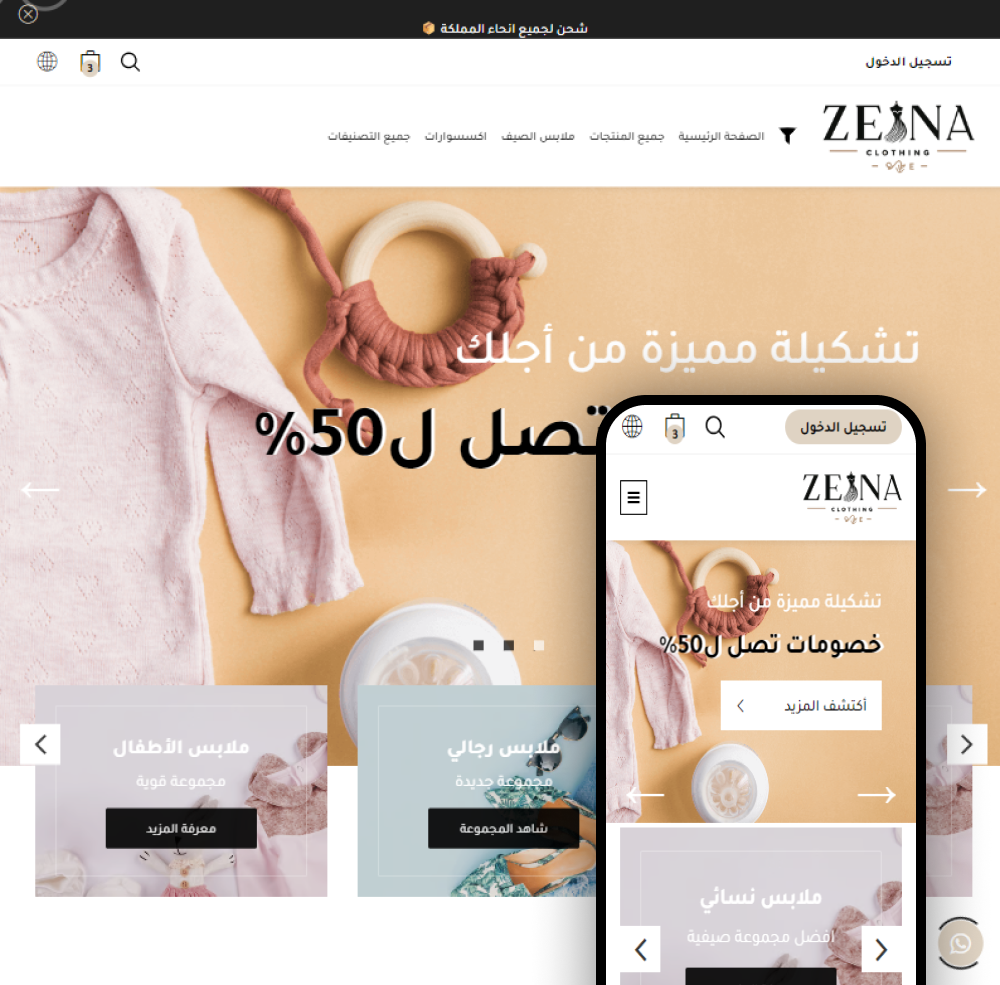
Additionally, product review and rating apps help build trust and credibility. When potential customers see positive reviews from previous buyers, they feel more confident in the product's quality and their purchasing decision. Upselling and cross-selling apps also encourage customers to buy more expensive or related additional products, increasing the average order value. These apps, whether integrated into Shopify or available for Salla and Zid, effectively work to transform a mere visitor into a satisfied customer who spends more money.
Payment and Shipping Apps
The payment and shipping process is a critical stage in the online purchasing journey, and any obstacles within it can lead to cart abandonment, negatively impacting sales and conversions. Therefore, providing flexible, reliable, and user-friendly payment and shipping options is paramount. Payment and shipping apps available on platforms like Salla, Zid, and Shopify aim to simplify these processes, offer diverse options to customers, and provide transparency, directly contributing to increased checkout completion rates and enhanced customer satisfaction.
Payment gateway apps enable the store to accept a wide range of payment methods, such as credit cards, local and international electronic payment services (like Mada, Apple Pay, Google Pay), and even cash-on-delivery options. Prominent examples include installment payment apps like Tabby and Tamara, which allow customers to split their purchases into interest-free installments, removing the barrier of a large upfront cost and encouraging purchases, especially for high-value products. To learn more about this topic, you can read our article on Tabby and Tamara: How to Boost Your Store's Sales on Salla and Zid.
Regarding shipping, apps offer integrated solutions for shipment management, from connecting the store with various shipping companies, through automatic generation of shipping labels, tracking parcel status, to sending updates to customers. These apps reduce manual effort and increase the efficiency of the shipping process, also giving customers peace of mind by knowing the whereabouts of their orders. Providing multiple shipping options, such as expedited shipping or free shipping for certain orders, can be a significant incentive to complete a purchase. Overall, these apps contribute to a seamless and efficient buying experience, positively reflecting on sales and conversions.
Customer Service and Engagement Apps
Excellent customer service is the cornerstone of building strong customer relationships and fostering loyalty, which in turn reflects on increased sales and conversions in the long run. In the world of e-commerce, where face-to-face interaction is absent, digital customer service tools become essential for providing quick and effective support, answering customer inquiries, and resolving their issues before they turn into obstacles to purchase. Customer service and engagement apps available on Salla, Zid, and Shopify platforms empower stores to build open and effective communication channels with their customers.
Among the most prominent of these apps are live chat and chatbot tools, which enable customers to get instant answers to their questions about products, order status, or store policies. Live chat provides personal human interaction, while chatbots reduce the need for human intervention to answer frequently asked questions, saving time and ensuring 24/7 support availability. This instant interaction boosts customer confidence and reduces the likelihood of cart abandonment due to a lack of clear answers.
Additionally, Customer Relationship Management (CRM) apps help track customer interactions with the store, their purchase history, and their preferences. This information enables the store to provide personalized and tailored service, better understand customer needs, and identify potential sales opportunities. Feedback and survey collection apps also contribute to gathering customer opinions about their experience, allowing the store to improve weaknesses and enhance strengths. Investing in these apps shows customers that the store cares about their experience, which fosters loyalty and encourages repeat purchases, thereby continuously increasing sales.
Analytics and Reporting Apps
Analytics and reporting apps serve as the compass that guides store owners toward making informed, data-driven decisions, which is vital for boosting sales and conversions in the constantly changing e-commerce landscape. Without a deep understanding of store performance and customer behavior, a merchant might find themselves making arbitrary decisions that do not lead to desired results. These apps provide valuable insights into every aspect of the store, from traffic and its sources to conversion rates and purchasing behavior, allowing for continuous strategy optimization.
These apps enable store owners to track key performance indicators (KPIs) such as visitor count, bounce rate, average order value, and conversion rate. By regularly monitoring these indicators, a merchant can identify strengths and weaknesses in their store, pinpoint best-selling products, and understand the most effective marketing channels. For example, if analytics show a very low conversion rate on specific product pages, the merchant can then take action to improve those pages, such as enhancing images or adding more compelling descriptions. To learn more about the importance of these tools, you can refer to our article on Data Analysis: Improving Your Store's Performance on Salla and Zid.
In addition to tracking overall performance, some analytics apps provide detailed reports on customer behavior within the store, such as browsing paths, products viewed, and points at which they leave the store. This information helps in understanding the customer journey and discovering any obstacles they may face, enabling targeted improvements to the store's design or checkout process. They also help analyze the effectiveness of marketing campaigns and determine the return on investment (ROI) for each campaign, contributing to more efficient allocation of marketing budgets. Ultimately, these insights translate into better decisions that directly lead to increased sales and conversions.
Best Practices for Integrating and Using Apps
Integrating apps into your online store is not just an installation process; it's a strategy that requires careful planning and conscious selection to ensure maximum benefit without harming store performance or complicating operations. Unwise use of apps can lead to counterproductive results, such as slow page loading, conflicting functionalities, or even unjustified cost increases. Therefore, it is essential to follow best practices when choosing, integrating, and using apps on Salla, Zid, and Shopify platforms to ensure they effectively contribute to boosting sales and conversions.
First, you must start by clearly defining your needs and goals. Before searching for apps, ask yourself: What problem am I trying to solve? Or what goal do I want to achieve? Do I need to improve marketing, reduce abandoned carts, or enhance customer service? Clearly defining goals will narrow down your search and help you choose the most relevant apps. For example, if your goal is to reduce abandoned carts, you will look for specialized apps in this area rather than general marketing apps. This strategic approach prevents you from wasting time and money on unnecessary applications.
Second, research and compare the available options. Each platform (Salla, Zid, Shopify) has its own app store, and the available apps and their features may vary. Read reviews, check ratings, and look at compatibility with your current store. Look for apps that offer a free trial period to test them before committing to a subscription. Do not hesitate to contact the app's customer support to ask questions and ensure they will meet your needs. Choose apps that have a good reputation and reliable technical support, as these factors are crucial to ensuring a smooth and problem-free experience.
Third, thoroughly test apps before fully activating them on your live store. After installing the app, make sure it works correctly and does not conflict with any other store functionalities. Test all possible scenarios, such as adding products to the cart, completing a purchase, and using discount coupons, to ensure everything works smoothly. Monitor store performance after activating the app, and ensure that page loading speed has not been negatively affected. Finally, do not overdo the number of apps. Too many apps can complicate store management, slow down performance, and increase costs. Choose only the essential apps that provide real value and directly contribute to your goals.
Conclusion: A Continuous Journey Towards Growth and Excellence
In the ever-evolving world of e-commerce, Salla, Zid, and Shopify apps are the hidden engines driving sales and conversions forward. These tools have become indispensable for any store aspiring to excel in a highly competitive market, as they not only add new features and functionalities but also contribute to streamlining operations, enhancing customer experience, and providing valuable insights for informed decision-making. A deep understanding of how to effectively select, integrate, and utilize these apps is what distinguishes successful stores from those struggling to survive.
We have explored how various categories of apps – from marketing and promotion, through conversion optimization, to facilitating payments, shipping, customer support, and analytics – contribute to building an integrated operational ecosystem that supports growth. Each app, when intelligently chosen and carefully integrated, represents an investment in the store's future, enabling it to meet increasing customer expectations, adapt to market trends, and achieve its maximum profitability potential. The journey toward increasing sales and conversion is a continuous one of learning, experimenting, and improving, and e-commerce apps are the ideal partner on this journey.
Therefore, we urge store owners on platforms like Salla, Zid, and Shopify to carefully explore their respective app marketplaces, identify their store's strengths and weaknesses, and then choose the apps that offer the most suitable solutions. Always remember that the goal is not just to add as many apps as possible, but to select the right tools that provide genuine value and directly contribute to achieving your business objectives. With optimal use of these apps, every online store can achieve significant leaps in its performance and strengthen its position in the digital market, becoming an inspiring success story.