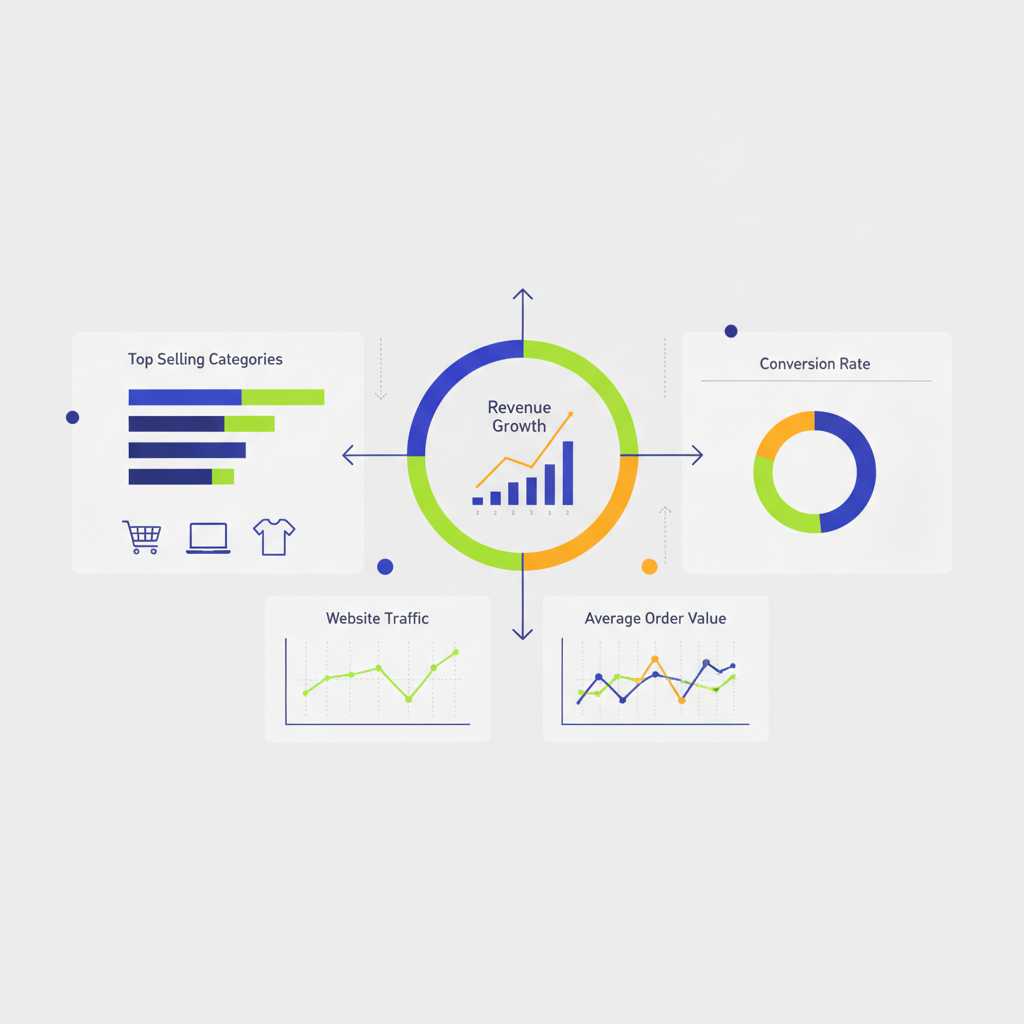




A/B Testing: Boost Your Salla & Shopify Store Conversions
In the rapidly evolving world of e-commerce, merely launching a store is no longer sufficient for achieving desired success. Competition is fierce, and customers have become more demanding and discerning, making every detail in your digital store of utmost importance. To ensure your store stays ahead and maximizes profits, you must adopt a data-driven approach of continuous improvement. This is where A/B testing comes in as an indispensable tool for any ambitious store owner seeking to increase conversions and enhance customer experience, whether their store is built on platforms like Salla, Zid, or Shopify.
Understanding your customers' behavior and optimizing every step of their journey within your store is not just a luxury, but an absolute necessity for sustainable growth. Without A/B testing, you might miss tremendous opportunities to increase your sales and profits, and you might continue making design or marketing decisions based on guesswork or personal opinions instead of tangible facts. This testing provides you with the ability to experiment with small yet impactful changes, and accurately measure their effect on key performance indicators such as conversion rate, average order value, add-to-cart rate, and other vital metrics for your store's success in the Arab and global e-commerce environment.
What is A/B Testing?
A/B testing, also known as split testing or comparative testing, is a methodical approach to comparing two versions of a webpage or a specific element (such as a button, headline, image) to determine which one performs better. This is done by showing the original version (A) to one group of visitors and the modified version (B) to another group of visitors simultaneously and randomly. The main goal is to measure which version leads to better results based on a predefined objective, such as increasing clicks, form submissions, or completing purchases.
The power of A/B testing lies in its ability to provide objective and measurable data about the effectiveness of changes you make to your store. Instead of relying on intuition or general best practices, you can learn what *truly* works for your specific audience. This means that every decision you make to improve your store, whether on Salla, Zid, or Shopify, will be backed by strong evidence, reducing risks and increasing chances of success. For example, you might think a red 'Buy Now' button is better than a blue one, but A/B testing might prove the opposite for your audience.
A/B testing allows you to experiment with almost anything on your store, from minor text adjustments to radical changes in page design. The core idea is to isolate a single variable and change it between the two versions to directly test its impact. For instance, if you test button color and font size simultaneously, you won't be able to determine which change was responsible for any improvement or decline in performance. This scientific methodology is what makes A/B testing a powerful and effective tool for optimizing digital performance.
Why Is A/B Testing Crucial for Boosting Your Store's Conversions?
A/B testing is a critical tool for increasing your store's conversions because it shifts decision-making from guesswork to precise data. In the fast-paced e-commerce environment, subtle differences can be what separates a highly successful store from one struggling to survive. A/B testing allows you to uncover these nuances and implement improvements that your customers actually prefer, leading to increased conversion rates and an overall enhanced user experience.
Furthermore, A/B testing helps mitigate the risks associated with major changes. Instead of completely redesigning your store or launching a costly new feature without knowing its impact, you can test these changes on a small segment of your audience first. If the new version proves effective, you can confidently roll it out to all visitors. This strategy not only protects your investments but also ensures you are constantly moving towards improvement, continuously boosting your store's performance on Salla, Zid, or Shopify. You might also discover through these tests that some changes you thought would improve performance could have a negative impact, thus avoiding costly mistakes.
Finally, A/B testing contributes to building a deeper understanding of your target customers. By observing how they interact with different variables, you begin to identify their preferences, pain points, and what motivates them to purchase. This rich understanding not only helps you optimize your current store but also guides future marketing strategies and product development. It's an investment in knowledge that continues to yield profits in the long run, making your store more responsive to market needs and more competitive. You can read more about general strategies for Conversion Optimization: Boosting Sales for Your Salla and Zid Store for deeper insights.
Key Elements You Can A/B Test to Boost Your Store's Conversions
The opportunities to optimize your store through A/B testing are endless, as almost every element that affects user experience and purchase decisions can be tested. It is important to start with elements that have the highest potential impact on your main goals, such as conversion rate or average order value. Focusing on these elements ensures that your testing efforts will be directed towards achieving the maximum return on investment of time and effort.
These tests can be applied to any e-commerce store, whether on Salla, Zid, or Shopify, taking into account the tools and capabilities available for each platform. Understanding which elements are most sensitive to change and how they affect customer behavior is at the core of continuous improvement. Let's explore the most prominent of these elements that should be among your priorities in A/B testing.
Product Pages: The Beating Heart of Your Store
The product page is where the customer makes their final purchase decision, so optimizing it is crucial. You can test many elements here. For example, try different product images: are high-quality images showing the product from multiple angles better, or lifestyle images showing the product in use? Short product videos can also be tested instead of static images, to see if they increase customer engagement and trust in the product. Platforms like Shopify and Salla offer great flexibility in customizing product pages, making these tests easy to implement.
The product description text also plays a pivotal role. Should the description be long and detailed, or short and direct with a focus on benefits? Experiment with different tones of voice in the description (e.g., a detailed technical description versus an emotional one focusing on feelings). You can also test the placement and design of Add to Cart buttons; is red better than green? Does a larger size get more clicks? Is the text 'Add to Cart' better than 'Buy Now'? All these variables can have a significant impact on the conversion rate.
Don't forget to experiment with customer reviews and ratings. Is displaying ratings at the top of the page more effective, or integrating them within the description? Try showing only the number of positive reviews, or prominently displaying the average star rating. Even the way shipping and return information is presented can affect; should this information be clearly visible near the product price, or can it be placed in a separate section? Thinking about every detail from the customer's perspective is key to effectively testing these elements. To learn more about abandoned carts, you can check our article on Strategies for Recovering Customers in Salla and Zid.
Homepage Layout and Navigation: First Impressions Last
The homepage is your digital store's interface, and the first impression it creates plays a crucial role in whether a visitor stays or leaves. You can test several aspects of homepage design. For example, try different hero banners; does a banner showcasing a special offer perform better than one featuring a new product or brand story? You can also test different locations for navigation menus; is a top menu better than a side menu? Does adding icons facilitate navigation?
Content layout on the homepage also has a significant impact. Should best-selling products be displayed first, or new products, or product categories? Experiment with different arrangements for homepage sections, such as a reviews section, a blog section, or a 'Why Choose Us' section. Every change in layout can affect how visitors explore your store and their path towards purchase. Platforms like Shopify offer highly customizable themes, making these changes and tests easier to conduct.
Additionally, you can test the design and placement of the search bar. Should it be permanently visible, or can it appear when an icon is clicked? Try different colors for the search bar or different placeholder text. Even the presence of trust badges or secure payment logos on the homepage can be tested to see if they increase visitor confidence. Remember that the goal is to make the customer journey as smooth and enjoyable as possible, encouraging them to explore more and move to product pages. If you're wondering about the most suitable platform, you can read our article on Shopify vs. Salla vs. Zid: Which is Best for Your GCC Store?.
Checkout Process: Reducing Friction and Increasing Completion
The checkout process is one of the most critical stages where a store can lose a customer, making its optimization vital. A/B testing can help you simplify this process and reduce cart abandonment rates. Experiment with the number of checkout steps; is a one-page checkout better than a multi-step one? Reducing the required fields in the checkout form can significantly impact the completion rate. For example, can some fields be made optional or combined?
The displayed payment options and their design are also worth testing. Should all available payment options be clearly displayed at the beginning of the process, or should they appear in a later step? Try a different order for payment options (e.g., Cash on Delivery first, then credit card). You can also test adding trust and security badges near payment information to increase customer confidence. Ensure all payment platforms work smoothly, and their icons are clear and trustworthy.
Don't overlook testing error messages or explanations that appear during the checkout process. Are they clear and helpful or confusing? Try different wordings for confirmation messages or alerts. You can also test displaying an order summary at each step of the checkout, with thumbnail images of products, to ensure the customer feels in control and transparency. The goal is to make the process as smooth and convenient as possible, reducing any friction points that might cause the customer to abandon the purchase.
Pricing and Promotions: The Art of Smart Enticement
Pricing and promotional offers are among the strongest motivators for purchase, and A/B testing can uncover the most effective strategies for your audience. You can experiment with different pricing strategies for products; is a price ending in .99 better than a round number? Try various promotional offers; is a percentage discount (e.g., 20% off) better than a fixed amount discount (e.g., 50 SAR off)? Free shipping offers versus a direct product discount can also be tested.
The placement and design of promotional offers have a significant impact. Should offers appear in a large banner on the homepage, in a pop-up, or as a notification bar at the top of the page? Try different colors and fonts for offers to attract attention. You can also test the effectiveness of time-limited or quantity-limited offers (scarcity tactics) by displaying a countdown timer or a 'limited stock' notification.
Don't hesitate to test bundle offers or multi-buy deals. Is 'Buy One Get One Half Price' better than 'Buy Two Get One Free'? This can significantly impact the average order value. Remember that understanding your customers' price sensitivity is key to success. For more details on pricing, you can refer to Smart Product Pricing Strategies for Salla and Zid Stores.
Call-to-Action (CTA) Buttons: The Key to the Next Step
Call-to-Action (CTA) buttons are crucial decision points in the customer journey, and optimizing them can lead to significant conversion increases. You can test different texts on these buttons; is 'Add to Cart' better than 'Order Now'? Is 'Discover More' better than 'View Products'? Try wordings that focus on benefit or urgency. The words used can motivate the customer to take the next step or cause hesitation.
The button's color, size, and placement are also important factors to test. Does orange attract more attention than green? Does a larger button get more clicks? Should the button be in the middle of the screen, or on the side? Ensure the color contrasts clearly with the page background to stand out. You can also test adding small icons next to the text on the button, such as a shopping cart icon next to 'Add to Cart'.
Finally, you can test the impact of secondary or alternative buttons. Should there be a 'Add to Wishlist' option next to 'Add to Cart'? Does the presence of a 'Compare Products' button encourage consideration or delay the purchase process? Remember that the goal of a CTA button is to clearly guide the customer to the next step in the conversion funnel, and any ambiguity or distraction can lead to losing them. Continuous experimentation with these elements is the best way to discover what motivates your audience.
How to Conduct Effective A/B Testing on Salla and Shopify
Conducting effective A/B testing requires careful planning and a clear methodology to ensure reliable and actionable results. Whether you are using Salla, Zid, or Shopify, the basic steps remain similar, with differences in the tools available for implementation. You should always start with a clear hypothesis, then create variations, distribute traffic, and then carefully analyze the results. This structured approach is key to success in the world of continuous optimization.
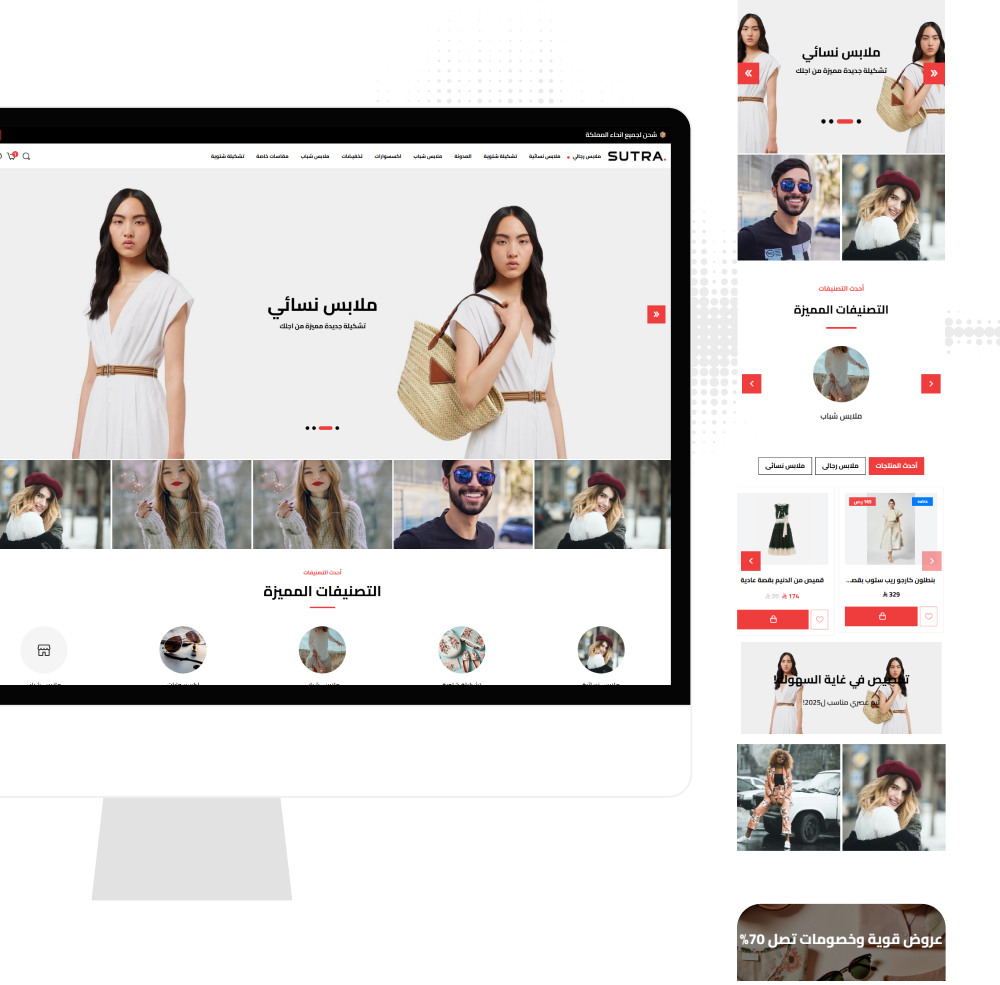
Platforms like Shopify offer a wide range of apps that facilitate the A/B testing process, while on Salla and Zid, you might need to integrate external tools or rely more on built-in tracking and analytics capabilities. Regardless of the platform, adhering to methodical steps will ensure that your decisions are based on real data, not just guesses. Remember that the goal is not just to conduct the test, but to leverage its results for the sustainable growth of your store.
Formulating the Hypothesis: The Starting Point for Any Test
Before starting any A/B test, you must clearly define what you want to test and why. This process begins by formulating a clear and testable hypothesis. A good hypothesis usually consists of three parts: the proposed change, the expected outcome, and the reason for that expectation. For example: 'If we change the color of the 'Add to Cart' button from blue to green (proposed change), we expect a 10% increase in click-through rate (expected outcome), because green suggests positivity and growth in a purchasing context (reason)'.
To formulate a strong hypothesis, start by analyzing your store's current data. Which pages experience high bounce rates? Where do customers drop off in the purchase funnel? Which elements seem unclear or outdated? Use analytics tools like Google Analytics (or its equivalent on your platform) and heatmaps and session recordings to identify potential pain points. The more your hypothesis is based on real data, the greater the chances of the test succeeding in providing valuable insights.
Remember to focus on testing only one variable at a time. If you change both the button color and button text in the same test, you won't be able to determine which of the two changes was responsible for the outcome. This golden rule is essential for maintaining the accuracy of test results. After formulating the hypothesis, you are ready to move on to the stage of setting up the test and designing alternative versions.
Setting Up the Test and Designing Variants
After formulating your hypothesis, it's time to set up the test and create the alternative version (Variant B) that you will compare to the original version (Control A). On the Shopify platform, you can use dedicated A/B testing apps such as Optimizely or VWO, or even some page builder apps like Shogun or GemPages that allow you to create and test multiple versions of pages. These apps provide user-friendly interfaces to create variants and specify the percentage of visitors who will see each version.
For Salla and Zid stores, built-in A/B testing options may be less direct. In this case, you can use external A/B testing tools like VWO or Optimizely (which may require some technical integration), or you can conduct tests manually by changing an element for a certain period, then reverting the change and recording data, but this method is less accurate because it does not display both versions simultaneously. It is always preferable to use tools that ensure visitors are split randomly and within the same time frame to avoid the influence of external factors.
When designing Variant B, make sure it differs from Variant A only in the element you identified in your hypothesis. For example, if your hypothesis is about button color, change only the button color and keep everything else the same (text, size, position). This ensures that any difference in performance can be confidently attributed to the change you made. Determining the test duration and the number of visitors required to achieve statistical significance is also an essential part of this stage.
Analyzing Results and Implementing Improvements
Once the testing period is over and enough data has been collected, it's time to analyze the results to determine which version performed better. A/B testing tools typically provide detailed reports showing the performance of each version based on the key performance indicators you defined (such as conversion rate, click-through rate, etc.). More important than just looking at the numbers is understanding whether the differences are statistically significant. Statistical significance means that the results you obtained are not just a coincidence, but a real outcome of the change you made.
If the results show that Version B significantly outperformed Version A, it means your hypothesis was correct, and you should apply this change to all visitors to your store. Update your Salla, Shopify, or Zid store with the winning version. If there are no statistically significant differences, it means the change did not have a significant impact, and you should either re-evaluate your hypothesis, try a completely different variable, or move on to testing another element. Failure to achieve improvement does not mean failure of the test, but rather discovering what doesn't work.
Don't stop at one successful test. Continuous improvement is an ongoing process. Every successful test opens the door to new tests, and every failed test provides valuable lessons. Document the results of all your tests, whether successful or not, to build a knowledge base about what works and what doesn't for your specific audience. This ensures that your store constantly evolves to provide the best possible customer experience and achieve maximum conversions.
Best Practices for Successful A/B Testing
To ensure your A/B testing efforts are fruitful and effective, there are a set of best practices that should be adhered to. These practices not only increase the accuracy of the results but also ensure that you get the most out of every test you conduct. Applying these principles will make the continuous optimization process for your store on Salla, Zid, or Shopify more effective and less prone to common errors.
Adhering to these practices prevents you from wasting time and effort on tests that do not provide clear insights, and helps you focus on changes that make a real difference in your store's performance. From defining a single variable to test to ensuring statistical significance, each point contributes to building a strong and reliable testing strategy.
Focus on One Variable Per Test
This is the golden rule of A/B testing. To be able to pinpoint the true reason behind any change in performance, you must change only one element between the original and alternative versions. If you change the button color, text, and font size at the same time, you won't be able to determine which of these changes was responsible for any improvement or deterioration. Was it the color? Or the text? Or the size?
Adhering to changing only one variable ensures that the results are clear and direct. This allows you to understand the impact of each element separately and how it contributes to user behavior. Initially, this approach may seem slow, but in the long run, it will provide you with more accurate and valuable insights, accelerating the overall optimization process for your Salla or Shopify store. Remember that the goal is to isolate cause and effect.
If you have many ideas for changes on one page, schedule them in a series of consecutive tests. Start with the element you believe will have the biggest impact, and after the first test is complete and the winner implemented, move on to the next element. This systematic methodology ensures that every improvement made is backed by clear and reliable data, leading to sustainable and continuous growth in your sales.
Ensure Statistical Significance
It's not enough to see that one version performed better; you must be certain that this difference isn't just a fluke. This is where statistical significance comes in. Statistical significance is a measure of the probability that the results you obtained are real and not due to random chance. Testers typically aim for a statistical significance level of 95% or 99%, meaning there is only a 5% or 1% chance that the results occurred by chance.
To achieve statistical significance, you need to collect a sufficient amount of data (enough visitors and interactions) and run the test for a sufficient duration. Running the test for too short a period or with too few visitors can lead to unreliable results and may prompt you to make wrong decisions. Modern A/B testing tools often include statistical significance calculators and recommend the necessary test duration based on your traffic volume and baseline conversion rate.
Avoid ending the test prematurely as soon as you see one version outperforming the other, as these might just be random fluctuations in the data. Allow the test to run for the recommended period, and ensure that both versions are exposed to a similar audience on weekdays and weekends to avoid seasonal or behavioral biases. This ensures that the decisions you make are based on strong and reliable evidence, enhancing the efficiency of your Salla or Shopify store.
Leverage Platform Tools and Dedicated Apps
To get the most out of A/B testing, take advantage of the tools available on the e-commerce platform you are using. Shopify, for example, offers a rich marketplace of apps that support A/B testing, such as Optimizely and VWO, in addition to page builder apps that include testing features. These apps make it easy for you to create variants, split traffic, and analyze results without needing deep technical knowledge.
For platforms like Salla and Zid, built-in A/B testing options may be less sophisticated. In this case, you can look for external tools that offer integration via tracking code, or leverage available customization features to manually create alternative pages and direct a portion of traffic to them via marketing tools. Although this approach may be more complex, it is still possible to achieve valuable results.
Regardless of the platform, ensure that the tools you use integrate seamlessly with your store's analytics (such as Google Analytics) so you can accurately track goals and key performance indicators. Choosing the right tool for your needs and budget is crucial for simplifying the testing process and enabling you to focus on analyzing insights rather than technical complexities, thereby increasing your chances of effectively boosting your store's conversions.
Conclusion
In the midst of fierce competition in the e-commerce world, A/B testing has become an indispensable tool for any store owner seeking sustainable growth and increased conversions. By adopting a data-driven approach to continuous improvement, your store on Salla, Zid, or Shopify can move beyond guesswork and personal opinions, adopting design and marketing decisions backed by strong evidence from actual customer behavior. This tool empowers you to understand what truly motivates your audience, identify the most effective elements in the purchase journey, and thus optimize every detail of your digital store.
We have seen how A/B testing can make a radical difference in your store's performance, from optimizing product pages and homepage design, through simplifying the checkout process, to refining pricing strategies and call-to-action buttons. Adhering to best practices, such as focusing on one variable per test, ensuring statistical significance, and leveraging platform tools and dedicated apps, ensures that your testing efforts are fruitful and provide actionable insights. Remember that every test, whether successful or not, is an opportunity to learn and evolve.
Therefore, do not hesitate to embark on your A/B testing journey. Start small, test one variable at a time, and carefully monitor the results. With every test you conduct, you will gain a deeper understanding of your customers and their preferences, enabling you to make smarter decisions that lead to increased conversions and unlock the full potential of your online store. Make A/B testing an integral part of your store's growth strategy, and you will see how small changes transform into significant gains in profits and brand loyalty.