




Product Optimization: SEO for Your Salla and Zid Store
In the burgeoning era of e-commerce, where thousands of stores compete to capture consumers' attention, merely showcasing products is no longer sufficient for success. It has become essential to possess a robust strategy to ensure these products reach the target audience at the right moment. Simply creating an online store on leading platforms like Salla, Zid, and Shopify is the first step, but the real challenge lies in making it visible and competitive amidst the infinite sea of search results. This is where the importance of Product Search Engine Optimization (SEO) comes to the forefront.
Product SEO is not just a fancy marketing term; it is a fundamental set of practices that ensures your products appear prominently when potential customers search for them. Imagine having the best quality and most competitively priced products, yet they remain hidden on the latter pages of search results – no one would be able to discover or purchase them. Therefore, investing time and effort in optimizing product SEO on platforms such as Salla, Zid, and Shopify is not a luxury but an absolute necessity to transform your store from a mere showroom into an efficient and sustainable sales machine. This article will unveil the secrets and strategies to achieve just that.
The Importance of Product SEO in the Digital Commerce Era
In the face of intense competition within the digital space, product visibility has become the primary key to the success of any e-commerce store. The more visible your products are in search engine results, the greater the chances of attracting visitors to your store. This visibility is not limited to the homepage or general categories; it extends to each product page individually, as customers often search for specific products with precise criteria. Therefore, optimizing each product individually ensures you capture this highly transactional search intent.
Product SEO acts as a silent engine that drives free organic traffic to your store, significantly reducing reliance on costly paid advertisements. When your products are effectively optimized, search engines like Google begin to understand their content and present them to users searching for similar solutions or goods. These types of visitors are typically more ready to make a purchase because they initiated the search themselves, indicating they are in an advanced stage of the buying journey. Thus, product SEO transforms from a mere attention-grabbing tool into a strategy for cost reduction and increased profitability.
There is a direct and close relationship between the quality of product SEO and conversion rates. Optimized product pages not only attract visitors but also provide them with a better, more trustworthy experience. When a customer finds clear information, high-quality images, and a comprehensive, compelling product description, they are more inclined to make a purchase decision. Furthermore, appearing at the top of search results grants your store greater credibility and authority in the eyes of consumers, bolstering their trust in your brand and encouraging them to complete the purchase. This increased trust often leads to repeat purchases and long-term customer loyalty.
Building an Effective Keyword Strategy
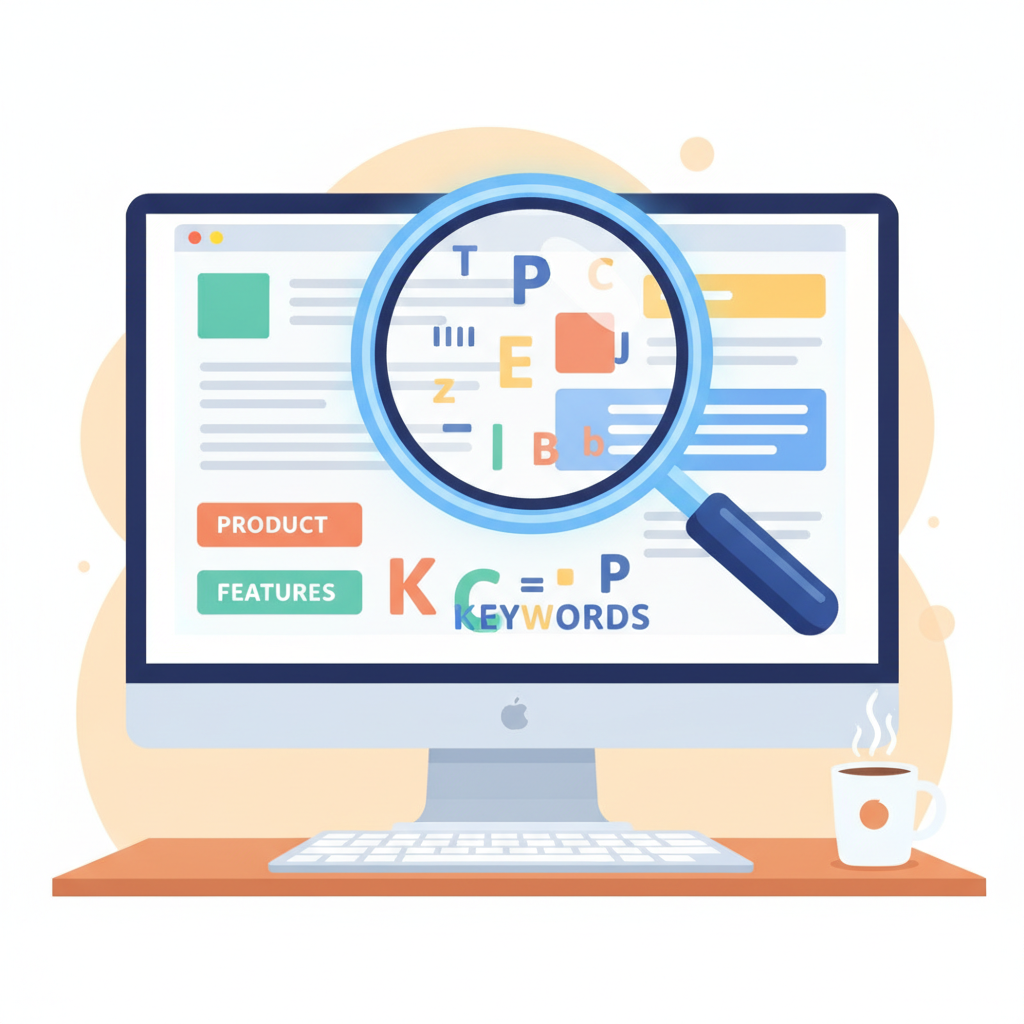
Keywords are the backbone of any successful SEO strategy, and without meticulous research, your product optimization efforts would be like shooting an arrow in the dark. You must start by identifying the terms your potential customers use to search for your products. This doesn't just mean general words but also includes long-tail keywords that express specific purchase intent, such as: 'comfortable men's running shoes size 42'. Utilizing tools like Google Keyword Planner, Semrush, Ahrefs, or even Google's search suggestions, can provide you with a treasure trove of keywords relevant to your products, helping you understand precisely what your audience is looking for.
When analyzing keywords, you should focus on a mix of short, general keywords with high search volume and more specific, longer-tail phrases with less competition. Short keywords might bring a large number of visitors, but the purchase intent may not be clear. Long-tail phrases, however, target customers who know exactly what they want, increasing the likelihood of conversion. It's also important to consider keywords related to product attributes, such as color, size, material, or brand. Remember that the goal is to cover as many search scenarios as possible that your potential customers might use. You can read more about choosing the most suitable platform for your store in our comprehensive article Salla, Zid, and Shopify: Which is Best for Your Store?, as platform choice affects the SEO tools available to you.
Understanding customer search intent is crucial for identifying the correct keywords. Is the customer looking for information? Are they comparing products? Or are they ready to buy? For example, if they are searching for 'review of the new Samsung phone,' they are in the information-gathering stage, whereas if they are searching for 'buy blue Samsung S23 256GB phone,' they are in an advanced stage of purchase. Your keywords must match this search intent. By using the right keywords in product titles and descriptions, you can attract visitors most likely to convert into buyers, thereby boosting your store's overall performance on platforms like Salla, Zid, and Shopify.
Optimizing Product Pages: From Title to Description
After identifying suitable keywords, the most crucial step is to intelligently apply these keywords within the product pages themselves. On-Page SEO is the foundation upon which any product SEO strategy is built, encompassing every visible and invisible element on the product page. This starts from the product title, extends through the detailed description, and includes images, videos, and structured data. The goal is to give search engines a complete and accurate understanding of what the product contains, while simultaneously providing an excellent user experience that encourages purchases. Achieving a balance between search engine requirements and user experience is key to success here.
The product title is one of the most critical elements to optimize, as it is the first thing customers see in search results and the first thing search engine crawlers read. The title should be attractive, descriptive, and naturally incorporate the main keyword for the product. Don't just settle for the product name; add essential characteristics that distinguish it, such as color, size, brand, or the most important feature. For example, instead of 'Men's Shirt,' use 'Men's Cotton Blue Shirt Size L from Brand X.' This provides both the customer and search engines with more precise information and improves visibility in specific searches. Platforms like Salla, Zid, and Shopify offer dedicated fields for product titles; utilize them to their fullest potential.
As for the product description, it is your golden opportunity to persuade the customer to buy and provide valuable information to search engines. The description should be comprehensive, rich in relevant keywords, and focus on the benefits the customer will gain from the product, not just its features. Use clear and engaging language, and divide the description into short paragraphs for easy readability. You can also use bullet points to highlight key features or specifications. Remember that the goal is to answer all potential questions a customer might have before purchasing, and the more detailed and accurate the description, the greater the customer's confidence and the higher the chances of conversion. Avoid excessive keyword stuffing and focus on delivering genuine value.
Tips for the Optimal Product Title
To craft an optimal product title, you must combine several essential elements to ensure its effectiveness for both search engines and customers. Always start with the most important keyword for the product, then add the brand name if applicable, followed by distinguishing characteristics such as color, size, material, or any competitive advantage. For instance, instead of just 'Bluetooth Headphones,' the title could be 'SoundPro Wireless Bluetooth Headphones with Noise Cancellation Technology.' This title not only clarifies the product type but also highlights its key features and brand, increasing its attractiveness in search results and helping customers quickly understand the product's nature.
The title should be as concise and direct as possible, while retaining the maximum amount of essential information. Most search engines and e-commerce platforms like Salla, Zid, and Shopify truncate long titles after a certain character count, so ensure that the most important keywords and descriptive terms appear at the beginning of the title. The goal is for the customer to understand the product and what distinguishes it with a quick glance, even before clicking the link. Avoid using unnecessary words or filler that doesn't add real value to the title, as simplicity and clarity are key to an effective and search engine-optimized product title.
To maximize the impact of your product title, consider how customers search. Are they looking for the exact product name? Or a product category combined with a specific feature? Try to integrate these approaches into your title crafting. For example, if you're selling a product like a 'smart robot vacuum,' don't just stop there; add 'Smart Robot Vacuum with Obstacle Detection and Mobile App Control.' These details make the title more appealing and increase its chances of appearing in more specific searches. Here are some examples to illustrate the concept:
- Bad Title: Perfume
- Good Title: Luxurious Men's Oud and Woody Scent Perfume 100ml by Al-Faris Brand
- Bad Title: Evening Dress
- Good Title: Elegant Women's Long Evening Dress with Hand Embroidery and Navy Blue Color Size M
Crafting Professional and Engaging Product Descriptions
A product description is more than just a list of features; it's an opportunity to tell your product's story and highlight its true value to the customer. Start by focusing on the benefits the customer will receive, rather than just the technical specifications. For example, instead of saying '20-megapixel camera,' say 'Capture professional, high-resolution photos of your cherished memories with a 20-megapixel camera.' Use persuasive and impactful language, imagining you're speaking directly to your customer. The description should be rich in the keywords you've researched, but in a natural way that doesn't feel like stuffing. The goal is to enrich the content that search engines see and provide valuable information to the customer.
To ensure the product description is easy to read and understand, it must be well-structured. Use subheadings within the description (e.g., Key Features, How to Use, What Makes This Product Unique?) and bullet points to highlight important details. This not only makes the description more visually appealing but also helps search engines understand and categorize the content better. Divide the description into short paragraphs, avoiding large blocks of text that might overwhelm the reader. The aim is to present information in an organized and engaging manner, encouraging the customer to read the entire description and make a purchase decision with confidence. Equally important to optimizing descriptions is Product Pricing: Smart Strategies for Salla and Zid Stores, as a good description complements a well-thought-out pricing strategy to enhance your products' competitive appeal.
Completely avoid keyword stuffing in your product description. This practice was common in the past but now harms your store's reputation with search engines and can lead to penalties. Instead, focus on using relevant keywords naturally and within a logical context. You can also use Latent Semantic Indexing (LSI) keywords to increase keyword density without excessive repetition. For example, if the main keyword is 'evening dress,' you can use 'formal dresses,' 'occasion wear,' or 'elegant women's fashion' in the description. This shows search engines that your page offers rich and diverse content around the topic, boosting its ranking in search results.
Images and Videos: A Crucial Visual Factor in Product SEO
In the world of e-commerce, images and videos serve as the silent salesperson, speaking volumes about your products. Their importance cannot be overstated; they are not only visually appealing but also play a critical role in product SEO. High-quality images and explanatory videos can significantly enhance user experience, reduce bounce rates, and increase the time visitors spend on a product page, all of which are positive factors influencing your store's search engine ranking. Today's customer wants to see the product from all angles, how it looks in reality, and its actual size, and this is where visual media comes into play.
To get the most out of images and videos from an SEO perspective, you must optimize them correctly. First, ensure you name image files with descriptive keywords instead of generic names like 'IMG_1234.jpg.' For example, use 'navy-blue-women-evening-dress.jpg.' Second, and most importantly, use descriptive, keyword-rich alt text for each image. Alt text is what search engines 'see' instead of the image, and it's also crucial for visually impaired users. Don't just put a single keyword; describe what the image contains accurately while including the keyword, such as 'Long navy blue women's evening dress with hand embroidery suitable for special occasions.' These simple practices can make a significant difference in the visibility of your product images in image search results.
The quality of images and videos not only affects SEO but also reflects your store's professionalism and confidence in your products. Use high-resolution, clear, well-lit images that showcase the product from various angles. If possible, include images of the product in use or with a model to give customers a better idea of its size and appearance. As for videos, they offer an opportunity to explain the product in greater depth, demonstrate its use, or highlight its unique features. Videos can be hosted on platforms like YouTube or Vimeo and linked to the product page, making sure to optimize the video title, description, and keywords to increase its visibility in video search as well. These visual strategies are essential for improving product SEO on Salla, Zid, and Shopify.
Optimizing Media for Enhanced Visibility
In addition to image quality and video content, technical aspects play a vital role in optimizing media for enhanced visibility in search engines. Attention must be paid to the file size of images and videos; excessively large files can significantly slow down product page loading, negatively impacting user experience and SEO ranking, as page load speed is a crucial factor in Google's evaluation. Use image compression tools to reduce file size without sacrificing quality, and choose appropriate file formats such as JPG for photographic images and PNG for transparent graphics. For videos, ensure they are in web-compatible formats and compressed to guarantee fast loading without affecting playback quality.
Alt text and image descriptions are not mere secondary details; they are vital elements for enhancing the visibility of your product images in image search results. When writing alt text, imagine you are describing the image to someone who cannot see it. Be precise and descriptive, and make sure to naturally include relevant product keywords. For example, instead of 'shoe image,' write 'comfortable blue men's running shoes from Nike brand.' This not only helps search engines understand the image content but also improves your store's accessibility. Furthermore, some e-commerce platforms allow adding captions below images; utilize this space to add additional information or keywords.
For videos, optimization extends beyond mere visual quality. The video title and description should include strong, relevant keywords. Use primary keywords in the title, and clearly describe the video in the first one or two sentences. Also, add relevant tags related to the video and product. If you're hosting the video on YouTube, make sure to include a link to your store's product page within the video description. Creating an attractive and clear thumbnail for the video can also increase its click-through rate (CTR). All these steps contribute to improving video SEO and driving more traffic to your product pages on Salla, Zid, and Shopify.
Structured Data (Schema Markup) and Reviews: Building Trust and Authority
In the world of SEO, it's not enough for your store's content to be visible; it must be deeply understood by search engines. This is where Structured Data (Schema Markup) comes in. These are code snippets that add additional context to your product pages, helping search engines understand the product's nature, price, availability, and ratings. Implementing Schema Markup correctly can lead to the appearance of 'Rich Snippets' in search results, such as displaying star ratings or the price directly below the title. These snippets not only make your listing stand out but also significantly increase the click-through rate (CTR), meaning more qualified visitors to your store.
Implementing product Schema Markup on platforms like Salla, Zid, and Shopify has become easier than ever. Most of these platforms provide ready-made templates or plugins that allow you to embed this data without deep coding knowledge. For example, you can specify the product type, offer price, aggregate rating, in-stock status, and other properties. You must ensure that all structured data you add is accurate and matches the information displayed on the product page. Using Google's Structured Data Testing Tool can help you verify the correctness of your code implementation and ensure it will appear correctly in search results.
The power of customer reviews and their impact on product SEO cannot be overstated. Positive reviews not only build trust and credibility with potential customers but also provide fresh, keyword-rich content for search engines. When customers leave reviews, they often use their natural language, including keywords you might not have thought of. This User-Generated Content is highly valuable to search engines, as it indicates that the product page is active and relevant. Additionally, the star ratings visible in search results thanks to Schema Markup attract attention and increase the likelihood of clicking on your store's link.
Leveraging the Power of Reviews and Ratings
To maximize the benefit of customer reviews, you must implement an effective strategy to encourage them to leave ratings. You can send automated emails after a purchase to request a review, or offer small incentives such as minor discounts on future purchases. Most importantly, make the review process as easy as possible on platforms like Salla, Zid, and Shopify. The simpler and faster the process, the more likely you are to receive reviews. Remember that reviews are not just numbers; they are live testimonials about the quality of your products and your store's customer service, directly contributing to product SEO by providing fresh and relevant content.
Reviews directly influence your store's ranking in search results. Search engines consider the number and quality of reviews as significant factors in determining a product's reliability and popularity. Products with high ratings and numerous reviews tend to appear higher. Additionally, reviews contribute to building buyer trust. Before making a purchase decision, 90% of consumers look for product reviews. When a potential customer sees that others have tried the product and were satisfied, it removes many doubts and encourages them to complete the purchase. This increased trust is not only beneficial for SEO but is also a foundation for your store's long-term growth.
Engage with reviews, whether positive or negative. Responding to positive reviews shows customers that you appreciate their support, while responding to negative reviews demonstrates your commitment to resolving issues and improving service. This interaction builds stronger relationships with customers and enhances your store's reputation. When responding to a negative review, be professional, offer solutions, and try to turn a negative experience into a positive one. Remember that your responses are visible to everyone and can influence potential customers' impressions. Transparent and effective management of reviews is a powerful strategy for improving product SEO and building a strong, trustworthy brand.
Internal and External Links: Boosting Product Page Authority
Internal and external links are the lifeblood that nourishes your store's pages with authority and value in the eyes of search engines. Internal links, which connect different pages within your store, not only help search engines discover and index all your products but also distribute what's called 'link juice' or 'link power' among your pages. When you link your product page to other relevant pages within your store (such as blog articles, category pages, or related products), you tell search engines that these pages are important and interconnected, which enhances the authority of the product page itself and improves its ranking in search results. This ensures that both customers and search engines can easily navigate and discover more relevant content.
To get the most out of internal links, they must be strategic and relevant. Don't just place links randomly; consider the context. For example, if you have a blog article discussing 'Top 10 Gifts for Men,' you can link relevant products in your store from that article. Or if you have a product that requires specific accessories, you can link these accessories to the main product page. Use descriptive, keyword-rich anchor text instead of 'click here.' For instance, instead of 'Click here to buy,' use 'Discover our latest collection of athletic shoes.' These practices not only improve SEO but also enhance the user experience by guiding them to useful and relevant content within your Salla, Zid, and Shopify store.
External links (backlinks) that point to your product pages from other websites are a very strong indicator of your store's authority and trustworthiness in the eyes of search engines. Acquiring high-quality backlinks can significantly boost your product rankings. However, obtaining direct links to product pages can be challenging compared to blog articles or main pages. Therefore, focus on building links to category pages or product-related blog articles, then use an internal linking strategy to pass that authority to your product pages. You can also try to get product reviews from influencers or bloggers who might link to your products. When considering the best internal and external linking strategies, you might find that some platforms offer more flexibility than others, which we discuss in detail in our article Shopify, Salla, or Zid: Which is Best for Your Gulf Store?.
Conclusion
In conclusion of this comprehensive guide, it is clear that optimizing products in your e-commerce store on platforms like Salla, Zid, and Shopify is not merely an optional extra, but a vital investment and an absolute necessity for success in the competitive e-commerce landscape. We have covered many crucial aspects, starting from keyword strategy, moving through optimizing product titles and descriptions, and extending to the importance of images and videos, structured data, reviews, and internal and external links. All these elements work together to form a holistic SEO strategy that ensures your products achieve optimal visibility in search engine results.
Always remember that product SEO is not a one-time process; it is an ongoing effort that requires continuous monitoring, analysis, and periodic adjustment. You should track your keyword performance, review customer feedback, update product descriptions regularly, and monitor competitors' performance. Utilize the analytics tools available on your platforms or Google's tools to assess the effectiveness of your efforts and identify areas that need further improvement. Persistence and commitment to continuously applying these strategies are what will guarantee you sustainable results and remarkable growth in your store's sales.
Therefore, as an ambitious e-commerce store owner on Salla, Zid, or Shopify, we urge you to start implementing these tips and strategies today. Do not let your valuable products get lost in the depths of late search pages. Give them the opportunity they deserve to reach their audience, and watch how your efforts in product SEO transform into tangible increases in traffic, conversion rates, and ultimately, sustainable profits. The future belongs to stores that understand the power of SEO and invest in it wisely.