





In the fast-paced e-commerce world, success no longer depends only on having a good product and displaying it online — it now radically depends on your ability to understand the market and customers through the language of numbers. Owning an online store on leading platforms like Salla and Zid gives you a huge competitive advantage, not only for ease of use, but for the enormous data volume collected daily about every visitor and customer entering your store. This data, if ignored, becomes just silent numbers, but if properly analyzed, transforms into a precise compass guiding you toward making the right decisions multiplying your profits and reducing your marketing and operational losses.
Many online store owners suffer from a common problem represented in spending huge amounts on advertising campaigns and bringing thousands of visits to the store, but without achieving sales matching this spending. When you ask them why, you find they don't have a clear answer because they don't read their store reports. The Salla and Zid dashboard isn't just a screen displaying daily total sales — it's a deep window showing you customer behavior in detail, from the moment they enter the store, through products they browsed, all the way to the moment they decided to buy or retreat and leave the store without completing the order.
In this comprehensive and detailed guide, we'll take you on a practical step-by-step journey to learn how to read and analyze your store data on Salla and Zid platforms. We'll learn about vital metrics you should monitor daily and weekly, and how to extract these reports, and most importantly, how to convert these silent numbers and data into successful marketing strategies and operational decisions ensuring your store sustainable growth and clear superiority over competitors in a market becoming fiercer day by day.
The Importance of Data Analysis on Salla and Zid Platforms to Build Sustainable Commerce
Data analysis represents the cornerstone on which any successful and sustainable e-commerce is built, moving you from the circle of guessing and random decisions to the circle of certainty and decisions based on clear evidence. In the past, the traditional merchant relied on their intuition in knowing the most demanded products, but today, with the technical development of platforms like Salla and Zid, you can know the finest details about your customers. This digital transformation means that every click the visitor makes inside your store is recorded, and analyzing these clicks gives you deep understanding of what your audience prefers and what annoys them, allowing you to adapt your offers and products to precisely meet their needs, thereby increasing customer loyalty and raising repeat purchase rates.
Alongside understanding customers, data analysis plays a pivotal role in inventory management and effectively reducing operational costs. By reading periodic sales reports in your store dashboard, you can identify fast-turnover products needing continuous replenishment before depletion, and slow-turnover products consuming storage space and freezing capital. This understanding allows you to launch smart clearance campaigns for stagnant products, and direct the purchasing budget toward products generating real profits, improving the store's cash flow and protecting you from liquidity shortage crises many emerging projects face due to poor inventory management.
Moreover, data directly affects how your store is displayed and designed to suit the ideal user experience. If reports indicate that a large percentage of visitors leave the store from the home page immediately upon entry, this is an alarm bell indicating a defect in design, load speed, or marketing message clarity. In this case, it becomes essential to review and update the store interface based on actual visitor behavior. You can use specialized articles like Store Design: Your Guide to a Professional Interface on Zid and Salla to understand how simple design modifications, inspired by data reading, can double visitor stay duration and raise the likelihood of converting them into an actual paying customer.
Key Metrics You Should Monitor in Your Store Dashboard
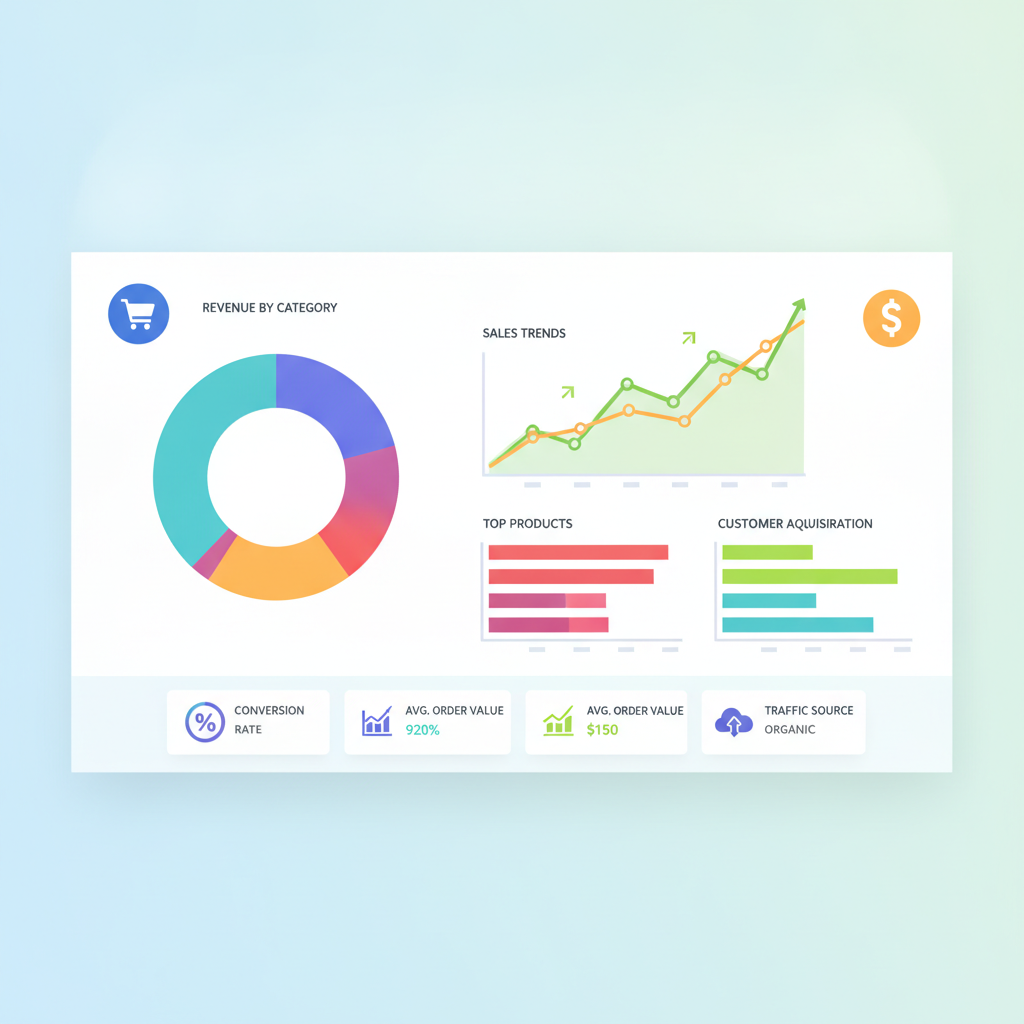
The first and most important metric every Salla and Zid merchant should monitor is the "Conversion Rate," representing the percentage of visitors who made an actual purchase out of the total store visitors. For example, if a thousand people visited your store and only ten bought, your conversion rate is one percent. This metric is the real indicator of your store's health and offer strength — increasing visit numbers without increasing conversion rate means you're burning your advertising budget pointlessly. To improve this rate, you should examine product image quality, description clarity, price competitiveness, plus ensuring smoothness of the payment process inside the platform.
The second extremely important metric is "Average Order Value (AOV)," telling you the average amount the customer pays in each purchase from your store. Raising this indicator is one of the smartest strategies to increase revenue without needing to spend more money on bringing new customers. You can achieve this by offering bundle deals, free shipping when the cart exceeds a certain amount, or using upselling techniques. To dive deeper into these strategies and apply them professionally, we recommend reviewing Cross-Selling: Double Order Value on Salla and Zid, where you'll find practical ideas to motivate the customer to add more products to their cart before completing payment.
The third metric many overlook is "Customer Acquisition Cost (CAC)" and comparing it with "Customer Lifetime Value (CLV)." You should know exactly how much it costs you to bring one customer through paid ads, and what total profits you expect this customer to bring to your store in the long term through repeat purchases. If acquisition cost is higher than lifetime value, your store is bleeding money and this bleeding must be stopped immediately by improving product quality and customer service to ensure buyer return. Successful stores on Salla and Zid are those focusing on building a long-term relationship with the customer instead of focusing on one passing sale.
Understanding Sales Reports and Customer Behavior in Detail
When entering sales reports in your store dashboard, you shouldn't suffice with looking at the final revenue number, but should disassemble this number to understand where it came from, when, and why. Analyze sales based on time periods — do your sales increase at the beginning of the month with salary release? Are there certain days in the week witnessing greater demand? Do evening hours achieve higher conversions than morning hours? Answers to these questions will enable you to schedule your advertising campaigns on social media platforms to launch at the specified peak times for your audience, raising advertising spending efficiency and ensuring your message reaches the customer when they're in full psychological readiness to buy.
Customer behavior analysis also requires precise monitoring of the purchase path inside the store, what's known as the Sales Funnel. You should track the customer's journey from the product page, to adding the product to cart, then moving to the shipping page, and finally the checkout page. Identify exactly at which stage the largest percentage of customers withdraw. If the biggest withdrawal happens on the shipping page, this often means shipping costs are surprising or very high for the customer. To address this stubborn problem facing most stores, you can apply the steps mentioned in the guide Abandoned Carts: Recovery Strategies on Zid and Salla, which offers innovative solutions to bring back these hesitant customers and convince them to complete payment via smart reminder messages or temporary discounts.
Finally, your understanding of sales reports must include accurate analysis of individual product performance. Classify your products into categories based on data: "Star" products which bring the highest sales and attract visitors, "Opportunity" products that get high visits but their sales are low requiring description or price improvement, and "Stagnant" products that get neither visits nor sales. This classification based on Salla and Zid reports helps you rearrange your store interface to spotlight winning products, and develop a marketing strategy customized for each product category to ensure maximum benefit from your entire available inventory.
Practical Steps to Extract and Read Reports on Salla and Zid
For Salla platform users, the data extraction process starts by going to the "Reports" section in the dashboard's side menu. Salla provides an advanced and clearly divided interface including sales reports, product reports, customer reports, and financial and tax reports. The first practical step is determining the correct time range for analysis — don't rely on just one day's data, export a full month or quarter's data in Excel files to be able to make precise comparisons. Use filtering tools available in Salla to know sales coming via discount coupons compared to organic sales, helping you evaluate the success of affiliate marketing campaigns or seasonal offers you recently launched.
On "Zid" platform, the dashboard is designed to give you a comprehensive visual view via interactive charts that facilitate reading the store's general trends. To dive deeper, you can enter the "Zid Analytics" section offering precise data about traffic sources, whether from Google search, social media platforms, or direct visits. It's very important on Zid to track the "Payment Gateway Performance" report to know the preferred method for your customers (Mada, credit cards, Apple Pay, or cash on delivery). If you notice that a high percentage of canceled orders are linked to the cash-on-delivery option, this is a strong indicator requiring you to reconsider this option's policy or impose additional fees on it to reduce operational losses.
To achieve a professional advanced level in data analysis, you shouldn't suffice with platforms' internal reports only — it's essential to link your Salla or Zid store with "Google Analytics 4" tool. This linking, easily provided by both platforms via specialized apps, opens wider horizons to understand your store visitors' demographics, like their ages, interests, and geographic areas they're in with extreme precision. It also provides advanced metrics like "Bounce Rate" and average page stay time, indispensable data for any merchant seeking to improve search engine optimization (SEO) for their store and top the first results in Google to ensure continuous flow of high-quality free visits.
Converting Data and Numbers Into Successful Marketing Decisions
Data itself doesn't make success — the ability to convert this data into actionable decisions is what distinguishes leading stores. When reports tell you that a certain advertising platform, like Snapchat or TikTok, brings you a huge number of visits but with almost-zero conversion rate, the right marketing decision here is to immediately stop those campaigns and redirect the budget toward platforms achieving actual sales even if their visits are fewer. And if data shows there's a large segment of visitors browsing products and leaving without buying, you should activate Retargeting: How to Bring Visitors Back to Your Salla and Zid Store strategies, to display customized ads to these visitors reminding them of products they saw and encouraging them to return to complete the purchase via offering an additional incentive.
On the product pricing front, data plays a decisive role in finding the ideal price point that maximizes profits without turning customers away. If you follow product reports and notice that a certain product gets thousands of views and cart additions but is finally abandoned, this often indicates price sensitivity. You can use this information to conduct A/B Tests, where you reduce the price by a small percentage for a limited period and monitor how conversion rate changes. Often, a slight price reduction can double total sales volume in a way that compensates for the reduction and increases the store's final net profit.
Data-driven decisions extend to include improving logistics operations and customer service. By analyzing shipping and delivery reports and customer ratings available in the Salla or Zid dashboard, you can discover gaps in your supply chain. If data shows that a large percentage of complaints and negative ratings come due to delayed delivery in certain cities, this calls for a firm administrative decision to change the shipping company responsible for those areas or negotiate with them to improve service level. Always remember that the post-sale experience is what ensures the customer's return, and data is the only tool measuring this experience's quality objectively away from personal impressions.
Conclusion: Continuity in Data Analysis Is the Key to Success
In closing this detailed guide, we must emphasize that data analysis in online stores isn't a task you do once then forget, but a continuous commitment and daily or weekly habit you should adopt as a business owner. The e-commerce market is characterized by dynamism and rapid change, and what succeeds today may not be effective tomorrow. So continuous monitoring of your Salla and Zid store reports is the only way to stay constantly aware of the market pulse, discover new trends early, and respond to changes in consumer behavior before they negatively affect your sales and profits.
We've reviewed together how every number appearing in the dashboard actually represents a real human who visited your store, interacted with your products, and made a decision based on what they saw. When you look at these numbers as stories and human behaviors, reading reports becomes an enjoyable and innovation-motivating process. Don't let the many metrics and technical terms frustrate you at the beginning — start by focusing on two or three of the basic metrics we explained, like conversion rate and average order value, and watch how these numbers improve when you start applying strategic changes based on your data reading.
Finally, we invite you to take a practical step immediately after finishing reading this article. Open your store dashboard on Salla or Zid, go to the reports section, and extract the sales report for last month. Look for one piece of information you weren't aware of before, whether a product achieving surprising sales in a certain geographic area, or a high percentage of abandoned carts on a specific day of the week. Take this simple information, and build on it one marketing decision to try this week. The accumulation of these small and thoughtful decisions is what finally makes an inspiring success story for your online store in the digital commerce world.