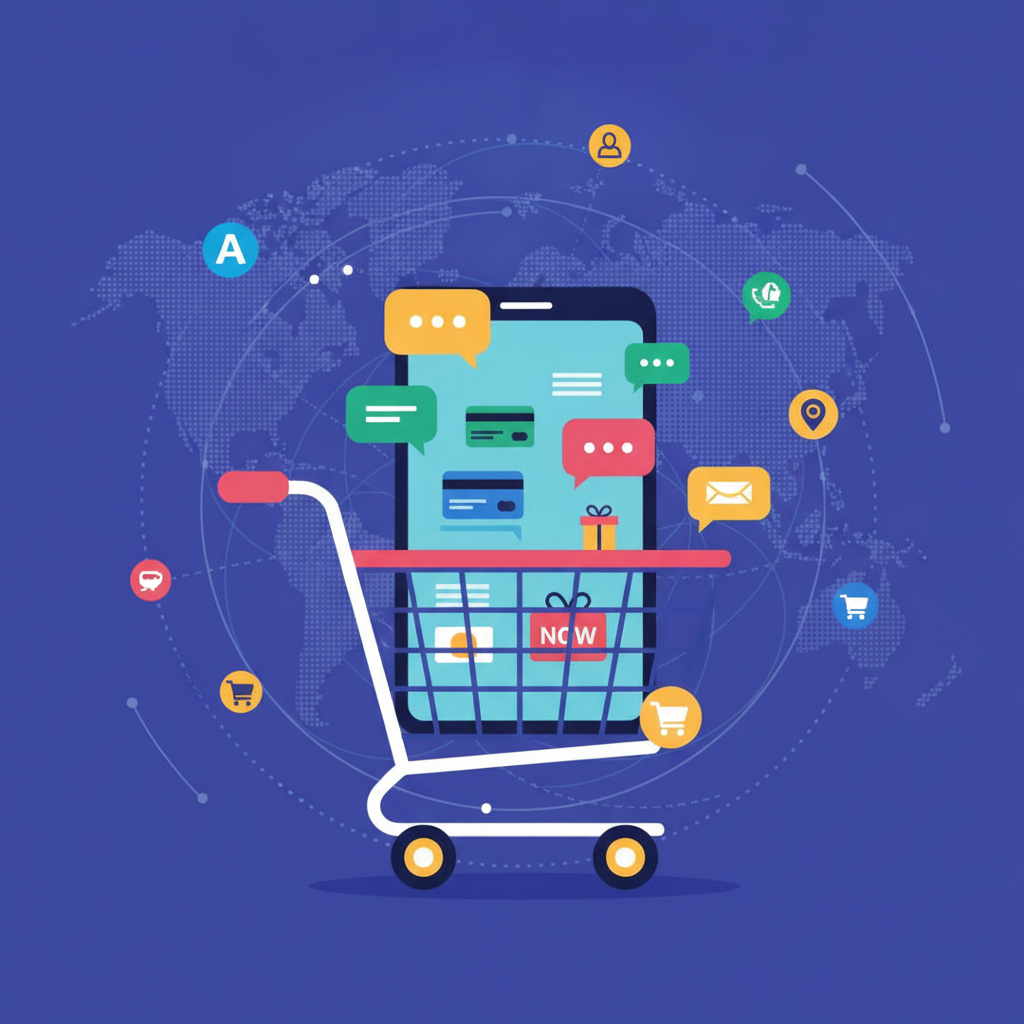



In the rapidly evolving world of e-commerce, merely showcasing products is no longer sufficient to attract customers and convert them into buyers. The modern consumer expects a seamless, personalized, and instant shopping experience, where they can get answers to their questions and resolve issues without delay. This is where Live Chat emerges as an essential and indispensable tool for any online store aspiring for success and increased sales, whether operating on Salla, Zid, or Shopify platforms.
Live chat serves as the bridge connecting your store with your customers in real-time, offering a golden opportunity to build trust, provide immediate support, and guide customers through their purchasing journey. Imagine a hesitant customer on the verge of abandoning their shopping cart due to a simple query about shipping or product specifications; at this critical moment, a live chat agent can intervene, answer the question, and alleviate concerns, thereby transforming a potential visitor into a happy buyer. This article will deeply explore how live chat can be a powerful driver for boosting your store's conversions on leading e-commerce platforms.
What is Live Chat and Why is it Essential for Your Store?
Live chat is a communication system that enables online store owners to interact with their visitors in real-time via a small chat window displayed on the store's pages. Instead of having to send an email and wait hours or even days for a reply, customers can ask their questions and get instant answers, providing a smooth and efficient experience. This tool is not limited to problem-solving; it extends to proactive assistance and personalized guidance that enhances the chances of completing a purchase.
The importance of live chat lies in its ability to build bridges of trust and credibility between the store and the customer. When a customer knows that a real person is available to answer their inquiries, they feel comfortable and secure interacting with the store. This trust directly translates into reducing doubts and fears that might lead a customer to abandon their shopping cart, which means an increase in conversion rates. Furthermore, human interaction adds a personal touch to the digital shopping experience, making it more appealing and less isolated.
Moreover, live chat gives your store a crucial competitive advantage in the crowded e-commerce market. With the growing number of stores on platforms like Salla, Zid, and Shopify, excellence in customer service becomes a decisive factor. A store that provides instant and effective support via live chat stands out among competitors, leaving a lasting positive impression on customers. This tool not only serves new customers but also strengthens the loyalty of existing ones, encouraging them to return and make more purchases.
How Does Live Chat Contribute to Conversion Increase?
Live chat is a powerful tool for increasing conversions because it intervenes at critical moments in the customer's journey. Customers often have inquiries about product details, shipping options, or payment methods while browsing the store. If they cannot find answers quickly, they often leave the store. Live chat allows them to get these answers immediately, removing obstacles and encouraging them to proceed with the purchase process.
Live chat's contribution is not limited to answering questions but extends to guiding customers and providing personalized recommendations. A chat agent can interact with the customer, understand their needs, suggest suitable products, and even offer special deals or discounts to encourage them to complete the purchase. This proactive approach reduces customer indecision and provides a customized shopping experience, significantly increasing the likelihood of conversion. You can read more about building customer loyalty in our article on Customer Service: Building Loyalty for Your Salla and Zid Store.
Furthermore, live chat plays a vital role in addressing objections and reducing cart abandonment rates. Often, customers abandon their carts due to concerns about trust, return policies, or even minor technical difficulties. A live chat agent can intervene at this critical stage, provide reassurances, clearly explain policies, or help resolve any technical issue, thereby recovering a sale that was about to be lost. For more tips on recovering sales, we recommend checking out the article Abandoned Carts: Strategies to Recover Sales in Salla and Zid.
The Impact of Live Chat on Reducing Cart Abandonment
Abandoned shopping carts are one of the biggest challenges facing e-commerce store owners, with statistics indicating that a significant percentage of customers add products to their carts and then leave without completing the purchase. Live chat acts as a last line of defense against this behavior. Through proactive messages that appear to customers who show hesitation or spend a long time on the cart page, the store can offer assistance before it's too late. This timely intervention can clarify any confusion about shipping fees or delivery times, which are common reasons for cart abandonment.
Live chat also helps build trust during the checkout process. Some customers may be concerned about the security of their financial information or the reliability of the store. When someone is available to respond immediately to these concerns, it enhances the customer's sense of security and encourages them to complete the purchase. A chat agent can emphasize the security protocols used, clarify available payment options, or even provide a direct link to the FAQ page, removing any psychological barriers that might prevent the customer from clicking the "confirm order" button.
The ability to provide instant solutions to minor technical issues that a customer might encounter during the checkout process is another invaluable advantage of live chat. A customer might struggle with entering credit card details, or a discount coupon might not work correctly. Instead of becoming frustrated and leaving the store, they can communicate directly with the support team who can guide them step-by-step to resolve the issue, or even manually apply the discount if necessary, ensuring a smooth purchasing experience and preventing potential lost sales.
Enhancing Customer Trust and Loyalty
Live chat is not just a tool for immediate conversion increases; it is a long-term investment in building customer trust and loyalty. When a customer receives quick, efficient, and personalized support, they form a positive experience that stays in their mind. This positive experience strengthens the relationship between the customer and the store, making them feel valued and cared for. This feeling of care is what drives customers to return repeatedly and even encourages them to recommend the store to their friends and acquaintances, generating powerful word-of-mouth marketing.
Live chat also provides the store with an opportunity to gather valuable feedback from customers. Through direct interactions, support agents can identify weaknesses in the store, products customers prefer, or recurring issues. This information can be used to improve the overall shopping experience, whether by adjusting product descriptions, optimizing the shipping process, or adding new payment options. This continuous improvement contributes to building long-term customer loyalty, as customers see that the store listens to them and responds to their needs.
Ultimately, live chat transforms transient interactions into lasting relationships. Customers who are satisfied with the support they receive are more likely to become loyal customers, preferring your store over competitors even if prices are similar. This loyalty is not just a feeling; it is a real economic value that contributes to the store's growth and sustainability. It is an investment in the store's reputation and brand, enhancing its position as a reliable destination for online shopping, whether on Zid, Salla, or Shopify platforms.
Best Practices for Activating Live Chat in Salla, Zid, and Shopify
To maximize the benefits of live chat, online store owners must follow a set of best practices that ensure an effective experience for both customers and the support team. First and foremost, it requires choosing a live chat tool that seamlessly integrates with your store's platform (Salla, Zid, Shopify) and provides essential features such as proactive messages, visitor tracking, and reporting. The interface should be user-friendly for both customers and staff to ensure smooth and efficient information exchange.
Second, training the support team to effectively use the tool and provide excellent customer service is paramount. Agents must be fully knowledgeable about products and policies, possess strong communication skills, and have the ability to empathize with customers and resolve their issues quickly and efficiently. Clear guidelines should also be established for handling various scenarios, such as common inquiries, complaints, or cart abandonment cases. This continuous training ensures consistent and high-quality support, reflecting your store's professionalism.
Third, live chat operating hours must be clearly defined, and alternative options should be provided when live support is unavailable, such as a contact form or an FAQ section. Chatbots can also be utilized to handle repetitive inquiries outside of working hours or to filter inquiries before escalating them to a human agent. Carefully designed proactive messages, which appear based on visitor behavior (such as spending a long time on a specific page or reaching the shopping cart), can be highly effective in converting hesitant visitors into buyers. You can also leverage other channels like WhatsApp for marketing automation and sales growth, as detailed in our article WhatsApp: Marketing Automation and Sales Growth in Salla and Zid.
Personalizing the Experience and Providing Proactive Support
Personalization is key to live chat success. When a customer feels that the interaction is tailored specifically for them, their likelihood of responding and completing a purchase increases. This can be achieved by using the customer's name, referring to products they have browsed, or offering recommendations based on their past purchase history. Many live chat tools allow for collecting visitor information, such as their geographical location, pages visited, and even shopping cart contents, enabling agents to provide more accurate and personalized support.
Proactive support means not waiting for the customer to ask for help, but offering it before they even realize they need it. For example, if a customer is browsing a complex product page, a live chat message can automatically pop up to offer assistance or answer common questions about that product. This approach not only reduces potential customer frustration but also shows that the store cares about their experience and wants to make the purchasing process as easy as possible. These messages should be polite and non-intrusive, offering real value to the customer.
For stores targeting multiple markets or customers speaking different languages, providing multi-language live chat support is a strong competitive advantage. Modern live chat tools can support real-time translation or allow for assigning agents who speak different languages. This ensures that all customers can receive support in their native language, enhancing their experience and trust in the store. Personalization, proactive support, and multi-languages all contribute to elevating customer service and significantly increasing conversions.
Intelligent Use of Chatbots
While human interaction is the core of effective live chat, chatbots can play a crucial and complementary role, especially for stores operating on platforms like Salla, Zid, and Shopify that need to manage a large volume of inquiries. Chatbots can efficiently handle repetitive and routine questions around the clock, freeing up human agents' time to focus on more complex inquiries that require personal intervention and innovative solutions.
Chatbots can perform tasks such as guiding customers to the correct product pages, answering questions about order status or return policies, and even collecting basic information from the customer before escalating them to a human agent. This not only reduces customer waiting times but also ensures that the human agent already has the necessary context to provide immediate assistance, enhancing support efficiency and improving the overall customer experience. The chatbot should be designed to be user-friendly and friendly, with a clear option to speak to a human agent at any time.
To maximize the benefits of chatbots, it is essential to regularly update their knowledge base and analyze interactions to improve their performance. Questions that the bot fails to answer should be monitored, and the bot should be trained to understand more inquiries. Integration with CRM systems or inventory management systems can make the chatbot smarter and more capable of providing accurate real-time information. Intelligently using chatbots not only reduces operational costs but also ensures continuous and high-quality customer support, contributing to increased conversion rates.
Recommended Live Chat Tools for E-commerce Stores
Many live chat tools are available in the market, varying in features, pricing, and integration capabilities with e-commerce platforms like Salla, Zid, and Shopify. Choosing the right tool depends on your store's size, budget, and required features. Among the popular and recommended tools is Tawk.to, a completely free tool that offers powerful features such as visitor tracking, proactive messages, and easy integration with most platforms. It is an excellent choice for small and medium-sized stores just starting with live chat.
Other tools like LiveChat and Zendesk Chat offer more advanced features and are suitable for larger stores or those with more complex support needs. These tools provide deeper interface customization, detailed analytical reports, integration with CRM systems, and advanced automation features. Although they come with a monthly cost, the investment can pay off through improved customer service and significantly increased conversions. These tools integrate excellently with Shopify, and most also offer ways to integrate with Salla and Zid via HTML codes or external plugins.
For stores looking for integrated solutions that include live chat, email marketing, and CRM, tools like Intercom and Crisp offer comprehensive packages. These tools not only provide advanced live chat but also enable you to send targeted emails, build customer databases, and even manage in-app marketing campaigns. These comprehensive solutions can be a significant investment, but they provide a complete customer experience and help build strong relationships with customers in the long run. When choosing a tool, you should consider Platform Costs: Comparing Salla, Zid, and Shopify for Your Store as well as live chat tool costs to ensure they align with your overall budget.
Measuring Performance and Optimizing Live Chat Strategy
To ensure that live chat achieves its goals of increasing conversions, it is essential to regularly measure its performance and analyze available data. Several key metrics should be tracked, including Average Response Time, which indicates how quickly your team responds to customer inquiries. The shorter the response time, the higher customer satisfaction. Another important metric is the First Contact Resolution Rate, which reflects the efficiency of the support team in resolving a customer's issue on the first interaction without the need for multiple follow-ups.
Customer Satisfaction Score (CSAT) is equally important and can be measured through short surveys displayed to the customer after the chat session ends. These surveys provide valuable insights into the quality of support provided and help identify areas for improvement. Most importantly, the Live Chat Conversion Rate should be tracked, which is the percentage of visitors who made a purchase after interacting with live chat. This metric directly links chat efforts to sales growth and helps evaluate the return on investment.
Based on the data and reports, store owners on Salla, Zid, and Shopify platforms should make continuous improvements to their live chat strategy. This may include additional training for agents, modifying proactive messages, improving the chatbot's knowledge base, or even adjusting support availability hours. A/B testing can also be conducted on chat window placements or message wording to see what is most effective. Continuous analysis and adaptation are key to successfully transforming live chat into a powerful engine for increasing conversions.
Conclusion
In conclusion, the role of live chat in boosting conversions for any modern e-commerce store, especially those operating on robust platforms like Salla, Zid, and Shopify, cannot be overstated. It is not merely an additional support channel; it is an effective marketing and sales tool that places the customer at the heart of the experience, providing them with the instant and personalized support they crave in a rapidly changing digital world. By reducing cart abandonment, building trust, and offering tailored recommendations, live chat proves to be a wise investment that benefits both the store and the customer.
Adopting best practices in activating live chat, from choosing the right tool and effectively training the team to personalizing the experience and intelligently utilizing chatbots, will ensure you gain maximum benefit from this technology. Remember that the goal is not just to answer questions, but to build strong and lasting relationships with customers, turning hesitant visitors into loyal buyers. This comprehensive approach will enhance customer loyalty and increase the lifetime value of each customer, ensuring sustainable growth for your store.
Therefore, if you are looking to elevate your online store and significantly increase conversion rates, integrating a carefully considered live chat strategy is not an option, but an urgent necessity. Start implementing these tips today and witness how live chat transforms into one of your strongest assets in the journey of digital commercial success, positioning your store at the forefront of competition and ensuring its prosperity in the Saudi and broader Gulf markets.