


Introduction: Discounts and Offers as a Critical Element for E-commerce Success
In today's fiercely competitive and rapidly evolving e-commerce landscape, merely listing products is no longer sufficient to attract customers and achieve desired sales. Online shopping has transformed into a dynamic experience, where customers constantly seek added value and opportunities that make them feel satisfied with their purchasing decisions. This is where discounts and promotional offers come into play as an indispensable tool for any online store aiming for growth and distinction, whether operating on platforms like Salla, Zid, or Shopify.
Discounts and offers are not just a means of reducing prices; they are a powerful marketing strategy that directly influences consumer behavior, stimulates purchasing decisions, and contributes to building long-term customer loyalty. They act as a bridge between the store and the customer, providing tangible value and creating a sense of urgency or an opportunity not to be missed. Through proper planning and smart execution, discounts can transform casual visitors into loyal buyers, increase average order value, help clear old inventory, and even contribute to successful new product launches.
The Importance of Discounts and Offers in E-commerce
Discounts and offers are an integral part of any successful e-commerce store's strategy due to their exceptional ability to achieve a wide range of business objectives. They are not merely a temporary tactic to boost sales, but rather a multifaceted tool that can be used to enhance overall store performance. Initially, discounts play a pivotal role in attracting new customers who might not be familiar with your store or products. They act as a bait to draw them in for a first-time experience, significantly expanding the potential customer base.
Furthermore, promotional offers help increase the Average Order Value (AOV) by encouraging customers to purchase more products to qualify for a specific discount or free shipping, which benefits the store's revenue. They are also an effective tool for clearing stagnant or old inventory that occupies warehouse space and incurs additional costs for the store, thus freeing up capital and making room for new products. This logistical aspect of discounts is often overlooked but is vital for efficient inventory management.
Finally, discounts and offers contribute to building customer loyalty and strengthening their relationship with the store. When customers feel they are getting a good deal or added value, they are more likely to return and make repeat purchases, and even recommend the store to their friends and acquaintances. This loyalty is just as important as acquiring new customers, if not more valuable in the long run, as the cost of retaining a customer is significantly lower than the cost of acquiring a new one.
The Psychological Impact of Discounts
The effectiveness of discounts and offers cannot be fully understood without delving into their deep psychological impact on consumers. The decision to purchase is not always purely rational; it is heavily influenced by emotions and psychological triggers. When a customer sees a discount, they interpret it as an opportunity to get more value for their money, which evokes a positive feeling that enhances their desire to buy. This sense of added value can sometimes be stronger than the actual need for the product.
One of the most powerful psychological motivators is the principle of 'scarcity and urgency.' When an offer is for a limited time or quantity, customers develop a 'Fear Of Missing Out' (FOMO). This feeling drives them to make a quick purchase decision to avoid regretting not taking advantage of the deal. This technique plays a significant role in increasing conversion rates, especially in flash sales or daily deals adopted by many large and small stores alike.
Additionally, discounts contribute to simplifying the purchasing decision process. Instead of focusing on the original price, which might seem high, customers focus on the savings made and the feeling of smartness for getting a good deal. This reduces the barrier of hesitation and makes the purchase process more appealing. It also enhances the store's image as an entity that cares about providing value to its customers, building trust and fostering brand loyalty in the long run.
Effective Discount and Offer Types for Your Store
There are numerous forms of discounts and promotional offers that e-commerce stores can utilize, and each type has its specific purpose and target audience. Understanding these types and how to apply them cleverly can make a significant difference in achieving your marketing and financial goals. It is crucial not to limit yourself to a single type of discount but to diversify them to meet the needs and desires of different customer segments, as well as to achieve various store objectives such as clearing inventory or increasing average order value.
The optimal strategy is to mix different types of discounts at various times of the year or for specific product groups. For example, general percentage discounts can be used to attract new customers, while free shipping offers can be reserved for customers who reach a certain purchase threshold to increase the average basket value. Free gifts can also be provided as an additional incentive for large purchases or as part of a loyalty program.
The correct choice of discount type depends on several factors, including the nature of your products, available profit margins, your target audience, and the objectives of the marketing campaign. Discounts should be carefully designed to align with these factors to ensure their effectiveness and avoid negatively impacting profitability. Always remember that the goal is not just to sell, but to sell profitably while building a sustainable relationship with the customer.
Percentage Discounts
Percentage discounts are among the most common and effective types of discounts, where a percentage of the original price is offered as a discount to the customer. Examples include '10% off all products' or '25% off a specific category.' These discounts are characterized by their clarity and ease of understanding for customers, and they have a strong psychological impact, especially when the discount percentage is large or when applied to high-priced products, where the amount saved appears significant and enticing.
Percentage discounts are widely used in clearance campaigns, major seasonal sales like White Friday, or as part of new product launch offers to attract initial attention. They can be applied across the entire store, to specific product categories, or even to individual products. On platforms like Salla, Zid, and Shopify, these discounts are easy to set up, allowing for conditions such as minimum order value or expiration dates, giving merchants great flexibility in designing their offers.
It is crucial when using percentage discounts to carefully calculate the profit margin to ensure that the discount does not negatively impact the store's profits. These discounts can be an excellent tool for rapidly increasing sales volume, but they require careful planning to avoid profit loss. It is also important to clearly display both the original price and the discounted price to highlight the value the customer receives, enhancing the attractiveness of the offer.
Fixed Amount Discounts
Unlike percentage discounts, fixed amount discounts offer a specific sum deducted from the total order value, such as '50 SAR off your purchase' or 'Get $10 off when you spend $100.' This type of discount is particularly effective for stores selling relatively low-priced products, where a percentage discount (e.g., 10%) might not seem appealing on a product priced at 20 SAR, while a 5 SAR discount (25%) could be more attractive and stimulate a purchase.
Fixed amount discounts are often used to increase the Average Order Value by linking them to a minimum spending threshold. For instance, offering '50 SAR off when you purchase 300 SAR or more.' This strategy encourages customers to add more products to their cart to reach the minimum and benefit from the discount, thereby increasing the total revenue for the store. They are also useful for providing welcome offers to new customers or as compensation to customers in specific situations.
This type of discount can be easily set up on e-commerce platforms like Salla, Zid, and Shopify, with the ability to precisely define usage conditions. Store owners must carefully evaluate the profit margin of each product when determining the fixed discount amount to ensure the offer remains profitable. The psychological benefit here lies in the clarity of the amount saved by the customer, making them feel immediate satisfaction with the deal they received.
Buy One Get One (BOGO) Offers
Buy One Get One (BOGO) offers are powerful strategies for effectively increasing sales volume and clearing inventory. These offers include various forms such as 'Buy One Get One Free' (BOGO Free) or 'Buy One Get One Half Price' (BOGO Half Price). Their effectiveness lies in the fact that they do not offer a direct price discount, but rather increase the overall value of the deal by providing an additional product, making them very attractive to customers.
BOGO offers are excellently used to encourage customers to purchase larger quantities of a specific product, or to try a new product they might not have considered buying before. They are also ideal for clearing excess inventory or products nearing their expiration date, as the store can offer the additional product from stock it wishes to liquidate. This helps free up warehouse space and reduce potential losses.
When implementing BOGO offers on platforms like Salla, Zid, or Shopify, the store must be careful in calculating costs to ensure profitability. Offering a free product essentially means a 50% discount on each unit if the two products are identical in price. Therefore, these offers should be applied to products with a good profit margin or products that need to be cleared quickly. The psychological benefit lies in the customer's feeling of receiving a 'gift' or a 'double deal,' which enhances their shopping experience.
Free Shipping
Free shipping is one of the most powerful incentives to complete an online purchase, and numerous studies have shown that unexpected shipping costs are the primary reason for cart abandonment. Therefore, offering free shipping can significantly boost conversion rates and reduce the number of abandoned carts, making it an indispensable strategy for many stores using platforms like Salla, Zid, and Shopify.
To maximize the benefits of free shipping without negatively impacting profit margins, stores can implement several strategies. One common approach is to link free shipping to a minimum order value. For example, 'Free shipping for orders over 200 SAR.' This strategy not only encourages customers to add more products to their cart to reach the minimum but also ensures that the store covers part or all of the shipping cost through the increased total order value.
Free shipping can also be offered as part of a loyalty program, where regular customers or subscribers to a specific service receive it. It can also be provided during short promotional periods to quickly boost sales. In all cases, the cost of free shipping must be factored into the overall product pricing strategy to ensure its sustainability. The clear display of free shipping on the product page and in the shopping cart enhances trust and encourages a smooth checkout process.
Free Gifts
Free gifts are an excellent marketing strategy to add tangible value to a purchase without compromising the original product price. They create a sense of delight and surprise for the customer, enhancing their shopping experience and leaving a positive impression of the store. This type of offer can be particularly effective in building customer loyalty and encouraging repeat purchases, in addition to increasing the average order value.
Free gifts can be used in several strategic ways. For instance, a free gift can be offered to customers who spend a certain amount, encouraging them to add more products to their cart to reach the required threshold. They can also be provided as an incentive to purchase specific high-margin products, or to encourage trying new products by offering a free sample with every order. On special occasions, free gifts can be offered as part of a celebration to increase engagement and sales.
When implementing a free gift strategy on platforms like Salla, Zid, and Shopify, gifts should be carefully chosen to be relevant to the products sold and valuable to the customer, without being overly costly for the store. Gifts can be small products, samples, or even discount cards for future purchases. The goal is to add perceived value to the customer and enhance their brand loyalty in an innovative and enjoyable way.
Loyalty and Repeat Customer Discounts
Retaining existing customers is a more cost-effective and profitable strategy in the long run than acquiring new ones. To achieve this, loyalty and repeat customer discounts are extremely powerful tools. These discounts not only increase customer loyalty but also encourage them to make repeat purchases and increase their purchase value over time. They foster a sense of appreciation in the customer, making them feel part of the store's exclusive community, thereby creating an emotional bond with the brand.
Loyalty discounts take various forms, including offering exclusive discount codes to customers who have made previous purchases, or points programs that allow customers to collect points with each purchase and redeem them for discounts or gifts. Loyalty tiers (such as Silver, Gold, and Platinum) can also be created, where customers in higher tiers receive larger discounts and exclusive benefits like free shipping or early access to new products. Loyalty applications can be very useful in this context, as they offer many advanced features for effectively managing loyalty programs. You can check out our guide on the best loyalty apps for your store on Salla and Zid.
By personalizing these discounts, customers feel special and valued, which strengthens their connection to the store. Platforms like Salla, Zid, and Shopify can provide built-in tools or additional apps to efficiently manage these loyalty programs, allowing merchants to track customer purchases and offer appropriate deals at the right time. Investing in loyalty programs is not just an expense; it is a strategic investment in the store's future.
Smart Strategies for Implementing Discounts
Merely offering a discount is not enough to guarantee success; what matters most is how that discount is implemented within a comprehensive and well-thought-out strategy. It requires meticulous planning and a deep understanding of customer behavior and market dynamics to ensure that discounts achieve their intended goals without negatively impacting profit margins or brand value. Haphazard discount application can lead to counterproductive results, such as training customers to only buy during sale periods, or diminishing the perceived value of your products.
A smart strategy for implementing discounts goes beyond simply setting a percentage or a fixed amount. It involves clearly defining objectives, understanding your target audience, choosing the right timing, and effectively marketing the offers. Discounts should be part of a broader marketing plan, aiming to achieve specific goals such as increasing sales during a particular period, clearing specific inventory, or attracting a new customer segment. The balance between the attractiveness of the offer and its profitability is key to success here.
It is crucial for stores, whether on Salla, Zid, or Shopify, to constantly analyze their data to evaluate the performance of discounts and adjust their strategies based on the results. This data-driven approach ensures that discounts are not just a random operation but a calculated investment that benefits the store. Our guide on smart pricing strategies for Salla and Zid stores can help you understand how to set prices that effectively support discounts.
Clearly Defining Objectives
Before launching any discount campaign, store owners must define clear, specific, and measurable objectives. Is the goal to increase overall sales by 20% within a specific month? Or to clear 50% of old inventory? Or to attract 1000 new customers? Precisely defining these objectives will help in choosing the appropriate type of discount, setting the offer duration, and allocating marketing resources effectively. Without clear objectives, it becomes very difficult to evaluate the campaign's success and determine whether it has achieved the desired return.
For example, if the goal is to clear specific product inventory, a 'Buy One Get One' offer or large percentage discounts on those products might be the best option. If the goal is to increase the average order value, free shipping at a certain minimum or a fixed amount discount when spending a larger sum might be most effective. Platforms like Salla, Zid, and Shopify all require merchants to define these objectives to enable them to use the available tools efficiently.
Furthermore, objectives should be realistic and achievable based on historical data and current market conditions. Clearly defining objectives not only ensures that your marketing efforts are correctly directed but also facilitates the analysis of results after the campaign ends, allowing you to learn lessons and improve future strategies. It is an essential step to ensure that every dollar spent on discounts benefits the store.
Understanding Your Target Audience
The key to the success of any marketing campaign, including discount offers, lies in a deep understanding of your target audience. Who are your customers? What are their interests? What is their purchasing power? What factors influence their buying decisions? Answering these questions will help you design discounts and offers that resonate with them and motivate them to make a purchase. Offers that attract a young demographic may not be effective with an older demographic, and offers aimed at budget-conscious shoppers differ from those targeting higher-spending shoppers.
You can use the data analytics tools available on platforms like Salla, Zid, and Shopify, in addition to tools like Google Analytics, to gather valuable information about your customers' demographics and purchasing behavior. Do they prefer monetary discounts or free gifts? Are they influenced by free shipping offers? Do they respond to time-limited offers? All these details will help you tailor your offers to suit different customer segments, increasing their effectiveness.
For example, you might target new customers with a one-time welcome discount, while offering exclusive discounts to repeat customers as part of a loyalty program. Understanding your audience allows you to create offers that are not only attractive but also relevant to their needs and preferences, increasing the likelihood of conversion and fostering brand loyalty. It is a continuous process that requires listening to customers and constantly analyzing their data.
Timing is Everything
Timing is a crucial factor in the effectiveness of discount and promotional campaigns. Offering the right discount at the right time can significantly boost conversion rates and achieve sales targets, while incorrect timing can lead to wasted resources or even damage brand reputation. Discounts should be strategic, not random, and linked to specific occasions or time periods to maximize their impact.
Seasonal events and holidays are golden opportunities for offering discounts. For example, White Friday, Eid al-Fitr, Eid al-Adha, National Day, or New Year's, are all periods that see increased purchasing activity. Stores can also leverage their own special occasions, such as the store's anniversary or a new product launch. The concept of 'Flash Sales' can also be used to create a sense of urgency and boost sales in a very short period, but they should be used cautiously to avoid customer fatigue.
Furthermore, excessive and continuous discounting should be avoided, as it can accustom customers to only buying during sale periods, thereby diminishing the perceived value of your products during regular times. There must be a balance between offering attractive deals and maintaining brand value. This balance requires careful planning of the offer schedule throughout the year, taking into account product cycles and customer purchasing cycles.
Effective Marketing of Discounts
Creating a great discount is not enough if no one knows about it. Therefore, effective marketing of discounts is vital to ensure your message reaches the target audience and maximizes the benefits of your promotional campaigns. The discount marketing strategy must be well-thought-out and integrated, using multiple channels to raise awareness and motivate customers to take action.
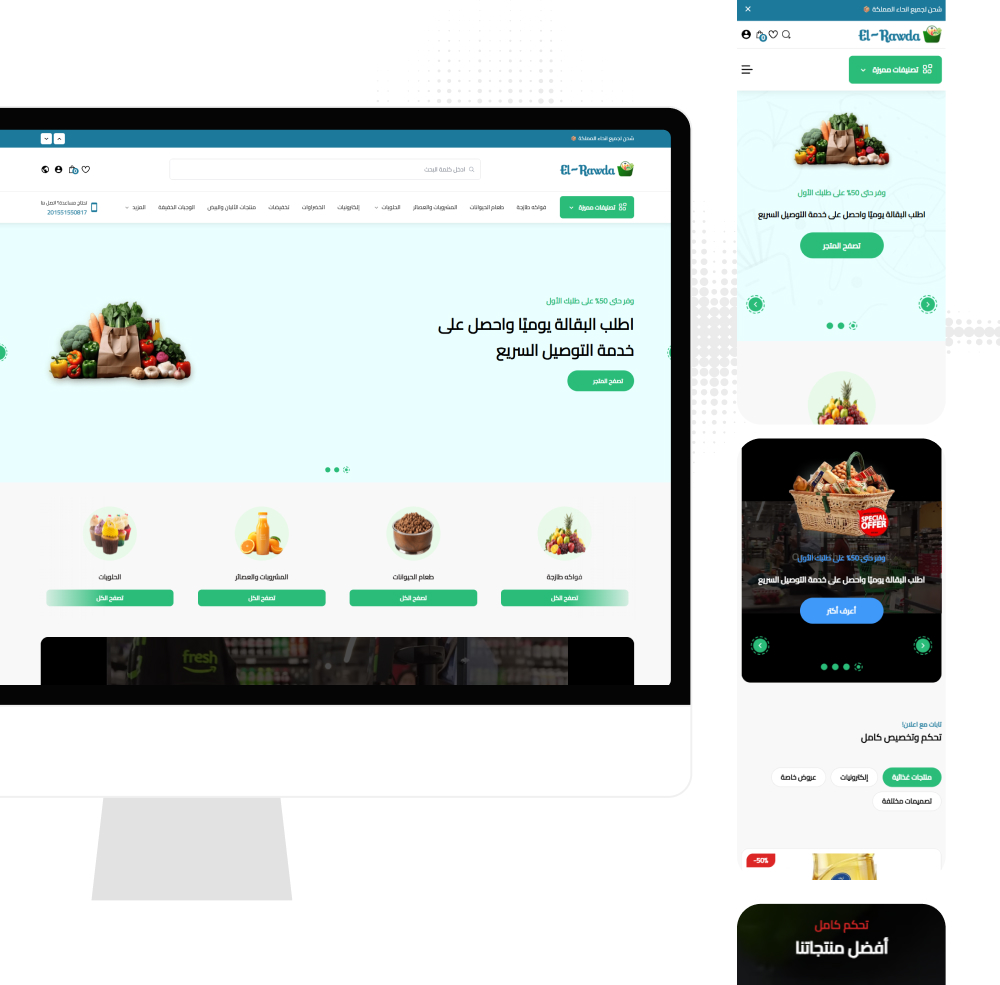
One of the most important marketing channels is email marketing. Attractive emails can be sent to existing customers and subscribers to inform them about new offers, including direct links to discounted products. Social media also plays a significant role in spreading awareness about discounts, where creative posts and contests can be created to reach a wider audience. Stores on platforms like Salla, Zid, and Shopify can benefit from integration tools with these channels to streamline the process.
Don't forget the importance of paid advertising on platforms like Google, Facebook, and Instagram, which allow you to precisely target specific audience segments. The marketing message should be clear, enticing, and highlight the value the customer will receive. Using phrases like 'Unmissable opportunity,' 'Limited time offer,' or 'Save now' can enhance urgency and encourage purchases. Clearly displaying discounts on the store's homepage and product pages also increases the chances of them being seen and utilized by shoppers.
Setting Up and Managing Discounts on E-commerce Platforms
Modern e-commerce platforms like Salla, Zid, and Shopify are distinguished by providing powerful and user-friendly tools for setting up and managing discounts and promotional offers. These tools are designed to enable merchants to launch their campaigns quickly and efficiently, without the need for complex programming expertise. The ability to customize discount types, define their conditions, and track their performance makes these platforms an ideal choice for any online store seeking to effectively boost its sales.
These platforms allow merchants to create various types of discounts, such as percentage discounts, fixed amount discounts, free shipping offers, and BOGO discounts. They also enable them to define the conditions for applying these discounts, such as a minimum order value, applying the discount to specific products or categories, or setting a start and end date for the offer. This flexibility gives merchants the ability to design promotional campaigns that perfectly align with their marketing and financial goals.
Managing discounts is not limited to setting them up but also includes monitoring their performance and adjusting them as needed. These platforms provide analytical dashboards that allow merchants to track the number of times each discount has been used, the revenue generated from it, and its impact on the average order value. This data is vital for making informed decisions about future campaigns and optimizing discount strategies to ensure maximum efficiency and profitability.
Salla Platform
Salla platform is known as one of the leading e-commerce platforms in the Arab region, offering robust and flexible tools for managing discounts and promotional offers. Store owners on Salla can easily create a wide range of discounts from their control panel. These discounts include percentage discounts on the total order or specific products, fixed amount discounts, free shipping offers, in addition to the ability to create special discount coupons for customers or specific marketing campaigns.
To create a discount in Salla, the merchant navigates to the 'Discounts and Coupons' section in the control panel, where they can choose the discount type and define its value. They can also set specific conditions for applying the discount, such as a minimum shopping cart value, the number of allowed uses per customer, or applying the discount to specific products or categories. Salla also allows setting a start and end date for the discount, which facilitates managing temporary offers and creates a sense of urgency for customers.
Furthermore, Salla provides detailed reports on the performance of each discount, including the number of uses and the revenue generated. This data helps merchants understand the effectiveness of their campaigns and make informed decisions to improve their future strategies. The ease of use and flexibility in managing discounts make Salla an excellent choice for stores looking to increase their sales through promotional offers.
Zid Platform
Zid platform is another popular choice for online stores in the region, also offering a comprehensive set of tools for efficiently managing discounts and promotional offers. Zid aims to simplify the process of creating and applying discounts, giving merchants the ability to launch attractive marketing campaigns to boost sales and attract customers. Stores on Zid can create discounts at the store level, for specific products and categories, or even for particular customers.
Zid's control panel allows merchants to create various types of discounts, including percentage discounts, fixed amount discounts, free shipping offers, in addition to the ability to issue unique or general discount coupons. Merchants can define the conditions for applying these discounts, such as a minimum order value, the number of coupon uses, or setting a specific time period for the offer to be valid. This flexibility helps in designing targeted and effective campaigns that align with the store's objectives.
Zid also stands out for its ability to integrate with various marketing tools, which facilitates the dissemination of promotional offers across multiple channels. It also provides reports and analytical tools to monitor discount performance, helping merchants understand the success of each campaign and its impact on sales and revenue. The ease of setting up and tracking discounts in Zid makes it a powerful platform for merchants who wish to use offers as a primary tool for growth.
Shopify Platform
Shopify is one of the most famous e-commerce platforms globally, renowned for offering a wide and sophisticated range of discount and promotional tools. Shopify merchants can leverage these tools to create complex and effective discount campaigns, whether simple like a percentage discount, or more intricate like multi-tier BOGO offers, or cart-conditional discounts.
In the Shopify admin panel, merchants can create discounts manually or automatically. Manual discounts require the customer to enter a discount code at checkout, while automatic discounts are applied directly when the customer meets the specified conditions (e.g., adding a certain number of products to the cart). Different discount types can be defined, such as a percentage off the price, a fixed amount off the order, free shipping, or a BOGO discount. Discount application conditions can also be precisely customized, such as minimum amount or quantity, applying the discount to specific products or collections, or to specific customers.
Shopify also excels in its ability to integrate with third-party apps that extend discount capabilities, such as loyalty apps, upselling and cross-selling apps, and promotional gamification apps. These apps allow for the creation of more interactive and engaging discount experiences. Additionally, Shopify provides detailed analytics for each discount's performance, enabling merchants to accurately measure the ROI of each campaign and continuously optimize their strategies.
Measuring and Analyzing Discount Performance
Launching a discount campaign without measuring and analyzing its performance is like shooting an arrow in the dark; it may hit the target or it may not. To ensure that discounts and promotional offers achieve their intended goals and effectively contribute to your store's growth, a data-driven approach must be adopted. Measuring discount performance allows you to understand what works and what doesn't, enabling you to refine your future strategies and make informed decisions that increase profitability and efficiency.
The measurement and analysis process goes beyond merely knowing how many times a discount was used. It requires delving into Key Performance Indicators (KPIs) to understand the campaign's true impact on various aspects of the store. Did overall sales increase? Did the average order value go up? Did the cart abandonment rate decrease? Were new customers acquired at a reasonable cost? Answering these questions provides valuable insights into the offer's effectiveness.
Platforms like Salla, Zid, and Shopify offer built-in analytical tools that assist in this process, in addition to the possibility of integrating with external analytics tools like Google Analytics. Effectively using these tools ensures that every discount campaign is an opportunity for learning and improvement, not just a random attempt to increase sales. Do not hesitate to use our comprehensive guide on data analysis to boost your profits on Salla and Zid.
Key Performance Indicators (KPIs)
To evaluate the effectiveness of discounts, a set of Key Performance Indicators (KPIs) must be focused on, which provide a comprehensive picture of the campaign's impact. One of the most important of these indicators is the conversion rate, which measures the percentage of visitors who made a purchase after seeing the discount. A high conversion rate indicates that the discount was attractive and effective in converting interest into action.
Another vital indicator is the Average Order Value (AOV), which measures the average amount a customer spends per purchase. If the discount's goal is to increase AOV (such as free shipping at a minimum threshold), it's important to track whether customers are adding more products to their cart. Also, the total revenue generated by the campaign and the profit margin after applying the discount must be tracked to ensure the offer is profitable and not just a superficial sales boost. Indicators like Customer Acquisition Cost (CAC) and Customer Lifetime Value (CLTV) can provide deeper insights into the long-term impact of discounts on the customer base.
Additionally, the cart abandonment rate can be tracked before and after the discount application to assess the discount's effectiveness in reducing this rate. Understanding and regularly tracking these indicators will enable you to make data-driven decisions to improve your future campaigns, whether you are using Salla, Zid, or Shopify, and ensure that every discount you launch effectively contributes to the store's growth and profitability.
Available Analytics Tools
Fortunately, you don't need to be a data analytics expert to evaluate your discount performance. Most modern e-commerce platforms, such as Salla, Zid, and Shopify, provide powerful and user-friendly built-in analytics tools. These tools allow you to access detailed reports on the performance of each discount, including the number of uses, revenue generated, best-selling products within the offer, and its impact on conversion rates.
In addition to the built-in tools on the platforms, you can benefit from external analytics tools like Google Analytics, which provides deeper insights into visitor behavior on your site, traffic sources, and how they interact with product pages and offers. Your store on Salla, Zid, or Shopify can be easily linked to Google Analytics to get a comprehensive picture of your store's performance and promotional campaigns.
A/B Testing tools can also be used to experiment with different versions of offers or discount display methods to see which performs best. For example, you can test whether a 15% discount is better than a 50 SAR discount on the same product. These tools enable you to make decisions based on real data rather than guesswork, ensuring that you invest your time and resources in the most effective strategies.
Continuous Improvement
Measuring and analyzing discount performance is not a one-time process but a continuous cycle of learning, adaptation, and improvement. After each discount campaign, you should carefully review the data and reports to identify what worked and what didn't, and understand the reasons behind it. These lessons learned should be used to modify and improve your strategies for future campaigns, ensuring better results over time.
Continuous improvement involves several aspects. First, you should be prepared to experiment with different types of discounts and different timings to see what resonates best with your target audience. Second, you should pay special attention to customer feedback, whether direct or inferred from their behavior on the store. Do they feel the offer was clear? Did they find it appealing? Did they encounter any difficulties using it?
Third, you should monitor your competitors' performance and market movements to remain competitive. The world of e-commerce is constantly changing, and what was effective yesterday might not be effective today. Therefore, you must be flexible and willing to adapt your strategies. This iterative approach to continuous improvement ensures that your store's discount campaigns on Salla, Zid, or Shopify remain effective and profitable in the long run, and effectively contribute to achieving the store's growth objectives.
Common Mistakes to Avoid When Offering Discounts
Despite the significant benefits that discounts and promotional offers can bring, there are some common mistakes that store owners make, which can lead to negative outcomes affecting profitability or even brand reputation. Avoiding these mistakes requires careful planning and a deep understanding of the impact of discounts on both customers and businesses. The goal is to strike a balance between attracting customers and maintaining product value and profit margins.
One of the most prominent mistakes is excessive discounting, which can lead to a reduction in the perceived value of products and train customers to wait for sales. Another mistake is a lack of clarity in terms and conditions, which causes customer frustration and negatively impacts their shopping experience. Also, failure to correctly calculate costs before launching a discount can lead to unexpected losses that affect the store's sustainability.
Avoiding these mistakes requires a strategic and thoughtful approach. Discounts should be part of a broader marketing plan, and their financial and psychological impact should be carefully evaluated. By learning from the mistakes of others and applying best practices, store owners on Salla, Zid, and Shopify can maximize the benefits of discount campaigns while protecting their business interests.
Excessive Discounting
Excessive discounting is one of the most dangerous mistakes e-commerce store owners can make. While discounts can be a powerful sales driver, overdoing them can lead to devastating counterproductive results. First, excessive discounting can diminish the perceived value of your products and brand. When customers see your products constantly on sale, they begin to associate your brand with low prices and may not be willing to pay full price in the future.
Second, excessive discounting can train customers to wait for sales rather than purchasing at the regular price. This creates an endless cycle of reliance on discounts to achieve sales, leading to eroded profit margins and making it difficult to achieve sustainable revenue. In the long run, this can put the store in a difficult financial position, especially since platforms like Salla, Zid, and Shopify charge fees on sales, which further reduces the available profit margin.
Therefore, it is essential to strike a balance between offering attractive deals and maintaining the value of your products. This can be achieved by offering discounts strategically and sparingly, linking them to specific occasions, for short periods, or to specific customers. Use discounts as a powerful tool but wisely, and avoid making them a core part of your brand identity. Quality and value should remain at the core of what you offer, and discounts are merely an additional incentive.
Lack of Clear Terms and Conditions
Lack of clarity in discount terms and conditions is a common and costly mistake that can negatively impact customer experience and store reputation. When discount terms are unclear, customers may feel confused or deceived, leading to frustration, and sometimes, to cart abandonment or leaving negative reviews. This can damage trust between the store and the customer, which is difficult to regain.
All discount terms must be perfectly clear and accessible to the customer before they attempt to use the discount. This includes the expiration date, minimum purchase value, eligible products or categories, and whether the discount can be combined with other offers. For example, if the discount applies to specific products, it must be clearly stated in the discount advertisement and on the product page. To maximize benefits, optimize your product page to increase sales on Salla and Zid, and ensure discounts are prominently displayed.
E-commerce platforms like Salla, Zid, and Shopify facilitate defining these terms clearly when setting up the discount, and allow them to be displayed in the discount description or in order confirmation messages. Store owners must ensure that this information is visible and easy to understand. Transparency in discount terms not only prevents misunderstandings but also builds trust and enhances a positive customer experience, leading to long-term loyalty and greater store satisfaction.
Incorrect Cost Calculation
One of the critical mistakes store owners can make when offering discounts is failing to calculate costs correctly. A discount might look attractive on paper, but if all associated costs are not taken into account, it could lead to unexpected losses that negatively impact profit margins and even the store's survival. It's not just about the direct price reduction, but also other hidden costs that might be affected by the discount.
When calculating the cost of a discount, several factors must be considered. First, the Cost of Goods Sold (COGS): what is the actual cost of the product being sold at a reduced price? Second, shipping fees: if the offer includes free shipping, who will bear this cost? Third, payment gateway fees: payment gateways often charge a percentage of the transaction value, meaning the discount reduces this amount, but doesn't eliminate it. Fourth, marketing costs: what is the cost of promoting the discount itself?
Store owners on Salla, Zid, and Shopify should conduct a comprehensive financial analysis before launching any discount campaign to ensure it remains profitable. This includes understanding the profit margin for each product, determining the break-even point for the discount, and estimating the expected sales volume. Failing to do so can lead to unintended profit erosion, harming the store in the long run. Accurate financial planning is the foundation for the success of any discount strategy.
Conclusion
In conclusion, it is clear that discounts and promotional offers are not just a simple tool to boost sales, but a complex and vital strategic element for the success of any online store in the current competitive landscape. From attracting new customers to increasing average order value, clearing inventory, and building customer loyalty, discounts offer a wide range of benefits that can propel your store towards growth and prosperity. However, realizing these benefits requires careful planning, smart execution, and continuous analysis.
We have seen how understanding the different types of discounts, from percentage-based to free shipping and gifts, can empower store owners to design offers that align with their specific goals and target audience. Furthermore, intelligently implementing discounts through clearly defining objectives, understanding customers, choosing the right timing, and effective marketing, is key to transforming these offers into powerful growth drivers. Platforms like Salla, Zid, and Shopify provide the necessary tools to simplify these processes, making them accessible to all merchants.
Most importantly, a data-driven approach and continuous improvement are essential. Measuring key performance indicators, utilizing available analytical tools, and learning from common mistakes are all fundamental elements to ensure that discounts not only increase sales but also enhance profitability and preserve brand value in the long term. By adopting this comprehensive approach, your store on Salla, Zid, or Shopify can fully leverage the power of discounts and offers, achieving sustainable success in the world of e-commerce.