



Introduction: The Key to Success in the E-commerce World
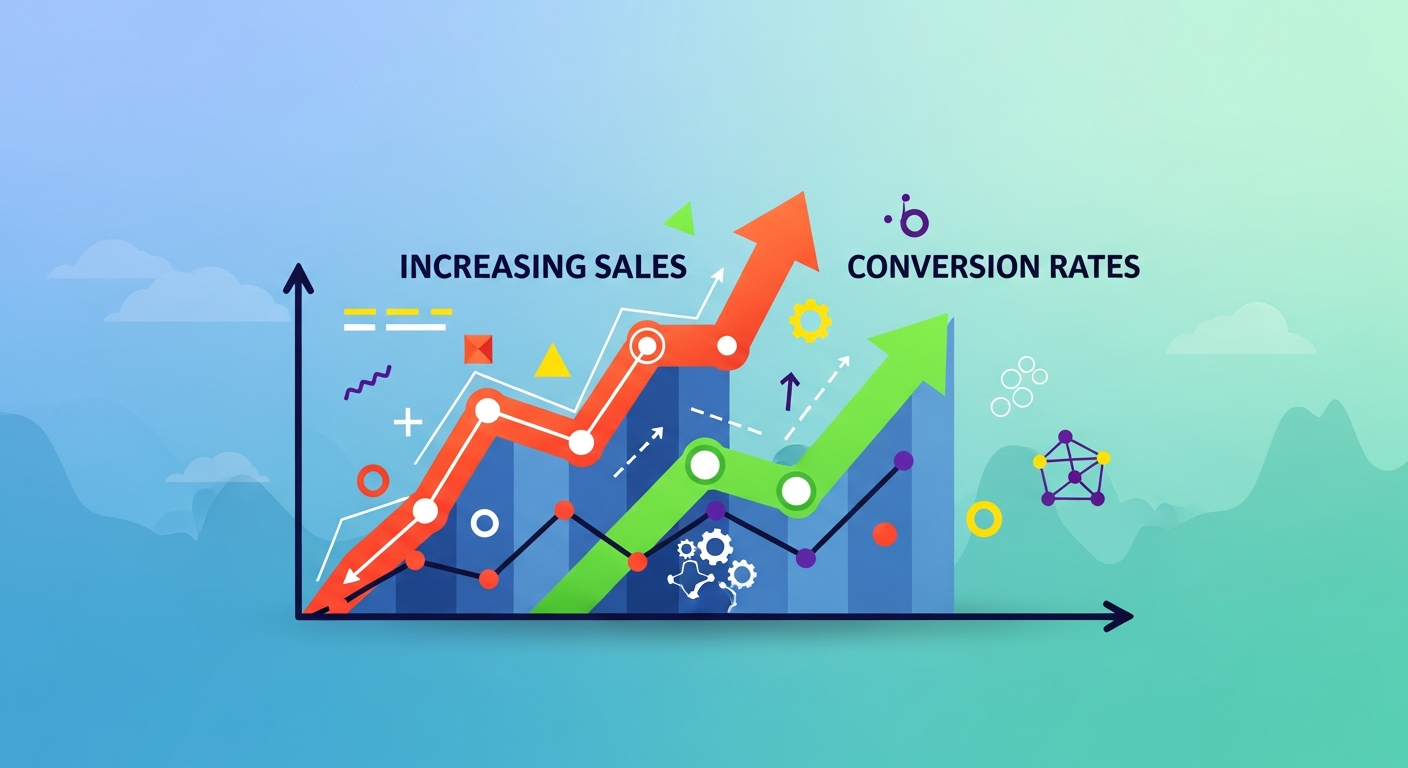
In the rapidly evolving world of e-commerce, merely attracting visitors to your store is no longer enough to achieve desired success. With increasing competition and a variety of options available to consumers, the focus has shifted to converting these visitors into actual customers. This has become the biggest challenge and ultimate goal for any online store owner. The conversion rate is the true measure of the effectiveness of your marketing, design, and operational strategies, and it determines the extent of your success in achieving desired profits and sustainable business growth.
Conversion Rate Optimization (CRO) represents the cornerstone of building a thriving online store, especially on leading platforms in the Arab market like Salla and Zid, as well as the global platform Shopify. It involves understanding your customers' behavior, identifying friction points in their journey within your store, and then making informed, data-driven adjustments to streamline this journey and encourage them to complete a purchase or take a desired action. Conversion is not limited to direct sales; it also includes visitors signing up for mailing lists, adding products to their shopping cart, or even interacting with specific content, all of which pave the way for increased sales in the long run.
What is Conversion Rate Optimization (CRO) and Why is it Important?
Conversion Rate Optimization (CRO) is a systematic process of increasing the percentage of visitors who perform a specific action on your website, such as making a purchase, filling out a form, or clicking a button. Instead of solely focusing on driving more traffic to your store, CRO focuses on maximizing the value of your existing visitors. This means you don't necessarily need to invest more in advertising to acquire new customers; you can simply improve their current experience to increase the likelihood of converting them into actual buyers, significantly boosting your profits.
The importance of conversion optimization lies in its ability to increase your revenue without the need to escalate marketing budgets. Every visitor who converts into a customer represents a successful investment, and every improvement in the conversion rate means a higher return on investment (ROI) for your marketing efforts. In the long term, CRO leads to a deeper understanding of your target audience, their preferences, and their behaviors, enabling you to design a more attractive and efficient shopping experience, thereby building a stronger relationship with your customers and increasing their loyalty to your brand.
Beyond simply increasing sales, conversion optimization also helps reduce customer acquisition cost (CAC) and improves the scalability of your business. When your store is optimized for conversions, every dollar you spend on marketing brings you a larger number of customers, which reduces the overall cost of acquiring each new customer. This allows your store, whether it operates on Salla, Zid, or Shopify, to grow more sustainably and profitably, and to compete effectively in the crowded e-commerce market.
Understanding the Customer Journey
To effectively optimize conversions, you must start with a deep understanding of the customer journey within your store. This journey begins the moment a potential customer discovers your store (whether through search engines, social media, or advertisements), continues through their browsing of products, to adding products to the shopping cart, then completing the payment process, and even extends to the post-purchase stage. Every step in this journey represents a critical touchpoint that can positively or negatively influence the customer's decision to convert.
Understanding the customer journey involves identifying potential friction points that might cause visitors to backtrack or abandon their purchase. Do they struggle to find the desired product? Is the product description unclear or unconvincing? Is the checkout process overly complicated? By analyzing visitor flow and using tools like heatmaps or session recordings, you can accurately pinpoint these obstacles and develop plans to improve them. This continuous process of monitoring and analysis is the foundation of any successful conversion optimization strategy.
Mapping the customer journey helps you think from the customer's perspective, anticipate their needs, and provide appropriate solutions at the right time. For example, if you notice a high percentage of visitors leaving a product page without adding anything to their cart, it might indicate an issue with product images, descriptions, pricing, or a lack of sufficient social proof. When you can clearly identify these problems, you can focus on improving them to increase the likelihood of converting a visitor into a customer, regardless of whether your store operates on Salla, Zid, or Shopify.
Key Performance Indicators (KPIs)
Key Performance Indicators (KPIs) serve as the compass guiding your conversion optimization efforts. Without regularly tracking these indicators, your efforts will be like shooting in the dark. One of the most important of these indicators is the conversion rate itself, which is calculated by dividing the total number of conversions by the total number of visitors and multiplying the result by 100. For example, if 1000 people visited your store and 20 made a purchase, your conversion rate is 2%.
In addition to the overall conversion rate, other vital indicators must be closely monitored. These include the Bounce Rate, which indicates the percentage of visitors who leave your site after viewing only one page, and a high rate may suggest unsuitable content or a poor user experience. Also, the Average Order Value (AOV), which measures the average amount a customer spends per purchase, is an important indicator for upselling and cross-selling efforts. Finally, the Cart Abandonment Rate, which is the percentage of customers who add products to their shopping cart but leave before completing the purchase, is one of the most critical points to focus on in any conversion optimization strategy.
E-commerce platforms such as Salla, Zid, and Shopify provide built-in analytical tools that help you track these indicators easily. Through your store's control panels on these platforms, you can access detailed reports on your store's performance, identify most visited pages, best-selling products, and even user behavior. Effectively using this data can reveal tremendous opportunities to improve performance and increase sales, helping you make data-driven decisions rather than relying on guesswork.
Conversion Optimization Strategies for Your Salla and Zid Store
To maximize the conversion of visitors into loyal customers, a comprehensive set of strategies targeting each stage of the customer journey must be applied. These strategies are not just fleeting tips but proven practices that can make a significant difference in your online store's performance. By focusing on user experience, streamlining the purchase process, and providing engaging content, you can build a store that not only attracts visitors but also converts them into recurring buyers.
The approach to conversion optimization must be holistic, combining technical, marketing, and psychological aspects. It is not enough to focus on one aspect while neglecting others, as every element in your store works as part of an integrated system that influences the customer's decision. For example, you might have a great product at a competitive price, but if the checkout process is complicated or the store's design is unappealing, you are likely to lose many potential customers. For this reason, conversion optimization requires a comprehensive view and a multifaceted application.
In the following sections, we will review the most prominent practical strategies you can implement in your store on platforms like Salla, Zid, and Shopify to significantly boost your conversion rate and increase your sales. These strategies are designed to be applicable and flexible, allowing you to adapt them to the nature of your store, products, and target audience, keeping in mind that continuous improvement is the key to lasting success in this field.
Optimizing User Experience (UX) and Website Design
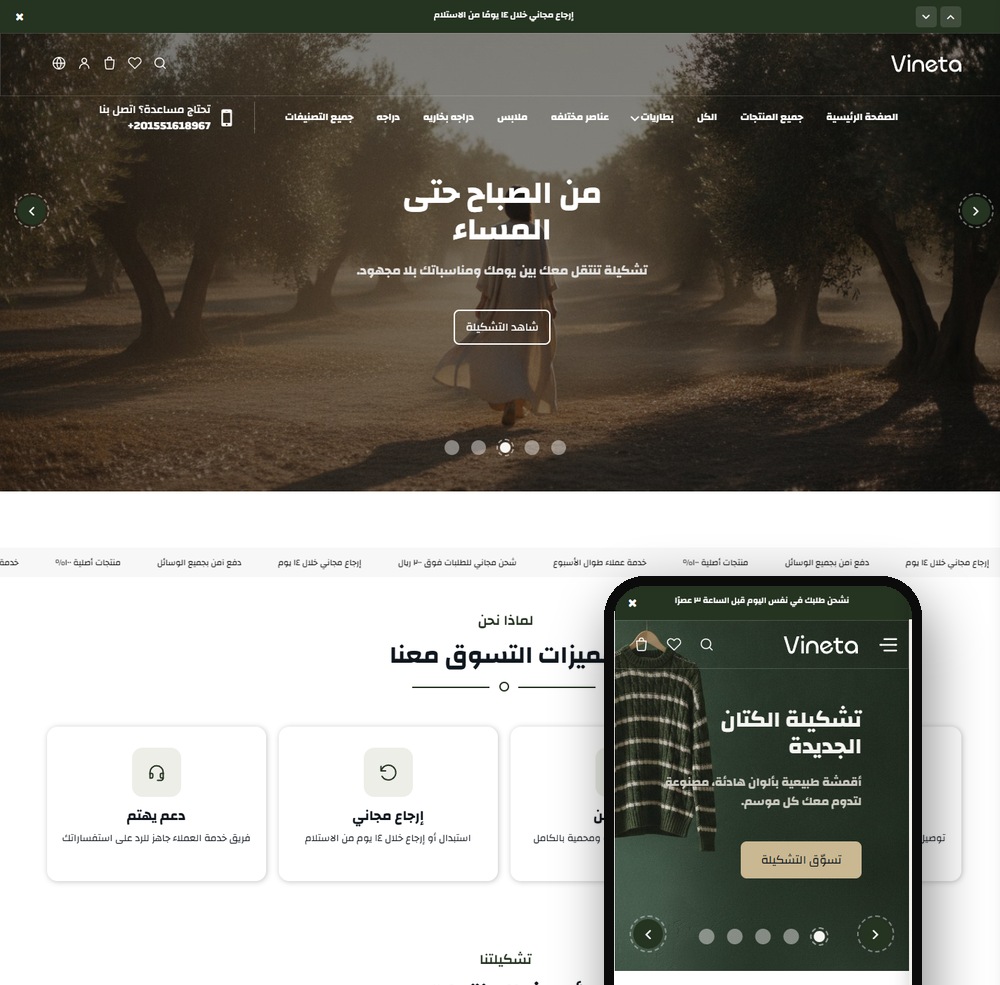
User experience (UX) and website design are among the most critical factors that directly impact the conversion rate. An attractive and easy-to-use store encourages visitors to stay longer and explore more products, while a complex or slow store quickly drives them away. Your store's design should be clean and simple, focusing on easy navigation, fast page loading times, and full compatibility with all devices, especially mobile phones, which currently account for a significant portion of traffic. Remember that first impressions last, and your store's design is the first thing a customer sees.
To improve the user experience, ensure that your navigation menu is clear and organized, and that the search function is effective and provides accurate results. Use high-quality product images from multiple angles, preferably accompanied by explanatory videos. Call-to-action (CTAs) buttons such as "Add to Cart" or "Buy Now" should be clear, visually distinct, and placed in easily visible and clickable locations. Furthermore, optimizing your store's search engine presence significantly helps in attracting the right visitors, which boosts conversion opportunities. You can read more about this aspect in our article: Store SEO: Ranking Higher in Salla and Zid Search Results.
User experience is not limited to aesthetics; it also includes easy access to important information such as shipping and return policies, and contact information. This information should be readily and clearly available to avoid any frustration a customer might feel. On platforms like Salla, Zid, and Shopify, ready-made templates and designs are available that you can customize to reflect your brand identity while adhering to best UX practices. Regular design updates based on customer feedback and performance analytics can also lead to continuous improvements in the conversion rate.
Streamlining the Checkout Process and Reducing Cart Abandonment
Abandoned shopping carts are one of the biggest challenges facing e-commerce store owners, with rates ranging between 60% and 80%. To reduce this percentage, the checkout process must be simple, fast, and free of any complexities. Avoid asking for unnecessary information, and offer a guest checkout option for unregistered users. Use progress indicators to show the remaining steps to complete the purchase, which reduces customer frustration.
Providing multiple payment options is also a crucial factor. These options should include credit and debit cards, popular local payment services, as well as deferred payment options like Tabby and Tamara if available in your region. Remember that each customer prefers a different payment method, and offering diverse options increases the likelihood of completing a purchase. For more details on this topic, you can refer to our article: E-payment Gateways: Comparing Fees and Choosing the Best.
It is also essential to display all costs, including shipping fees and taxes, clearly from the outset to avoid any surprises at the end of the checkout process. Include security badges and trusted payment gateway logos to increase customer confidence. After all these measures, don't forget to set up targeted campaigns for abandoned carts via email or SMS, to provide an additional incentive or reminder to complete the purchase, which can recover a significant portion of these lost sales.
Using Compelling Content and High-Quality Images
Content is king, and when it comes to your products, compelling content and high-quality images are key to persuading the customer. Product descriptions should be detailed and clear, focusing on the benefits the customer will gain rather than just listing features. Use engaging language tailored to your target audience, and answer all potential questions the customer might have. For example, instead of saying "powerful processor," say "enjoy superior performance and unparalleled smoothness in all your daily tasks."
As for images, do not hesitate to invest in professional photography for your products. Use high-resolution images from multiple angles, preferably accompanied by short videos to showcase the product more interactively. Remember that images are the first thing that catches a customer's attention, and they build trust and help them visualize the product clearly. Platforms like Salla, Zid, and Shopify provide ample space to upload multiple high-quality images for each product.
Do not underestimate user-generated content (UGC), such as customer reviews and testimonials. Encourage your customers to leave reviews and photos of their products after purchase, and display them prominently on product pages. These reviews serve as powerful social proof that enhances credibility and increases the trust of new customers in your products. A single positive review can have a much greater impact than any product description you write yourself because it comes from a real and trusted experience.
Optimizing Pricing Strategies and Promotions
Pricing is not just about setting a number; it's an art and science that significantly impacts purchasing decisions. Your pricing strategies should be flexible and well-thought-out, taking into account the perceived value of the product, competitor prices, and desired profit margins. You can use psychological pricing strategies, such as ending prices with the number 9 (e.g., 99 SAR instead of 100 SAR), or offering product bundles that seem more attractive than buying individual products. For more ideas, you can review our comprehensive article on Pricing Strategies: Maximizing Profits in Salla and Zid.
Promotions and discounts can be a powerful conversion driver, but they must be used wisely. Create limited-time offers or scarcity offers (low stock) to create a sense of urgency. You can also offer free shipping when a certain order value is exceeded, which encourages customers to add more products to their cart to increase the average order value. The most important thing is that these offers are clear and easy to understand, and that the customer feels their true value.
Promotions are not limited to monetary discounts only; you can also offer free gifts with every purchase, redeemable loyalty points, or "buy one, get one free" deals. The key is to experiment with different types of offers and analyze which ones achieve the best response from your customers. Remember that the goal is not just to sell products, but to build a long-term relationship with the customer and encourage them to return for repeat purchases.
Building Trust and Credibility
In the world of e-commerce, where there is no physical contact between seller and buyer, trust and credibility play a crucial role in persuading the customer to complete a purchase. The customer must feel secure and confident when dealing with your store. Start by including security badges (SSL Certificates) that indicate your site is safe for payment transactions. Clearly display your privacy, shipping, and return/exchange policies, and make them easily accessible from any page in the store.
Showcase customer testimonials and positive reviews prominently in your store. These reviews, whether text, images, or even videos, can serve as powerful social proof of the quality of your products and the reliability of your services. If you have any quality certifications or accreditations from third parties, do not hesitate to display their logos. Providing clear contact information, such as a phone number, email address, and live chat options, also enhances customer confidence that a real team stands behind the store and is ready to assist.
Transparency is key to building trust. Be honest about estimated shipping times and any additional fees that may apply. Avoid over-promising what you might not be able to deliver. The more clarity and transparency the customer feels in their interactions with your store, the more their trust and desire to complete a purchase will increase, and they will even return to buy again. Platforms like Salla, Zid, and Shopify provide secure infrastructure, but the responsibility of building this trust lies with you as a store owner through the content and policies you provide.
Personalized Marketing and Loyalty Programs
Personalized marketing is one of the most powerful conversion optimization tools, allowing you to provide a unique experience for each customer based on their behavior and preferences. Analyze customer data to provide customized product recommendations, whether on the store's homepage, in marketing emails, or even in shopping cart notifications. For example, if a customer buys a smartphone, you can suggest compatible accessories or complementary products in a follow-up message. This type of personalization makes the customer feel that your store understands their needs, which increases the likelihood of purchase.
In addition to personalization, loyalty programs play a crucial role in retaining customers and encouraging repeat purchases. Create a loyalty program that rewards customers for every purchase, such as a points system that can be redeemed for discounts or free products. Offer exclusive benefits to loyalty program members, such as early access to new products, special offers, or free shipping. These programs not only increase the conversion rate but also build a loyal customer base for your brand. To learn more about this aspect, you can refer to our article: Loyalty Program: Increasing Your Store Sales on Salla and Zid.
Personalized marketing and loyalty programs are not limited to increasing direct sales; they also contribute to building a strong and lasting relationship with the customer. When a customer feels valued and appreciated, they are more likely to return to your store and recommend it to friends and family. Utilize the tools available in Salla, Zid, and Shopify to segment your customers based on their purchasing behavior and send targeted marketing messages, which enhances the effectiveness of your marketing campaigns and continuously contributes to increasing conversion rates.
Analysis and Tracking: The Foundation of Continuous Improvement
Conversion optimization is not a one-time process; it is a continuous cycle of analysis, experimentation, and refinement. To ensure the best results, you must rely on data to make your decisions and be prepared to experiment with new ideas and accurately measure their impact. Lack of tracking means you are working in the dark, and you will not be able to know whether the changes you make are achieving the desired goals or not.
Continuous analysis of your store's performance helps you identify weaknesses and improvement opportunities that may not be immediately obvious. For example, you might notice that a particular page has an unusually high bounce rate, or that a large percentage of customers abandon at a certain step in the checkout process. These observations are the starting point for forming hypotheses about the cause of the problem, and then designing experiments to test potential solutions.
In short, analysis and tracking are the backbone of any successful conversion optimization strategy. By gaining a deeper understanding of your customers' behavior, defining the right metrics, and using the appropriate tools, you can transform your store into a highly efficient sales machine, achieving sustainable growth in the long term, whether you are using Salla, Zid, or Shopify.
Available Analytics Tools in Salla, Zid, and Shopify
E-commerce platforms like Salla, Zid, and Shopify offer a robust set of built-in analytics tools that help you monitor your store's performance. The control panels on these platforms contain detailed reports on sales, most popular products, traffic sources, and even customer behavior on the site. These reports are an excellent starting point for understanding what's happening in your store and identifying areas that need improvement.
In addition to built-in tools, you can integrate your store with more powerful external analytics tools such as Google Analytics. Google Analytics gives you deep insights into user flow, which pages they visit, how long they spend on them, and even conversion rates for each stage of the purchase funnel. Tools like Hotjar or Microsoft Clarity can also be used to generate heatmaps and user session recordings, allowing you to see exactly what visitors are doing on your pages and identify visual or interactive friction points.
Using these tools together provides you with a comprehensive picture of your store's performance. By analyzing the data obtained from these sources, you can identify pages that need improvement, elements that distract customers, and steps that lead to cart abandonment. This deep understanding of visitor behavior is what enables you to make informed decisions to design a more efficient and attractive shopping experience, thereby increasing conversion rates.
A/B Testing and Iterative Optimization
Once you have hypotheses about how to improve your store's performance, it's time for A/B Testing. A/B testing allows you to compare two different versions of a page or a specific element (such as a button, headline, image) to see which one performs better. For example, you can create two versions of a product page, one with a green "Add to Cart" button and the other with an orange one, then direct 50% of visitors to each version and measure which one achieves a higher conversion rate.
The goal of A/B testing is to make small, systematic changes and measure the impact of each change individually. This way, you avoid making large changes that could negatively affect performance without knowing why. This process requires patience and commitment to Iterative Optimization, where you conduct multiple tests over time, learn from each result, and apply improvements step by step. Platforms like Shopify offer apps and plugins that facilitate A/B testing, while Salla and Zid stores can leverage external tools like Google Optimize (even if discontinued as a standalone service, other alternatives exist).
Remember that iterative optimization is the key to sustainable success in conversion optimization. Do not expect immediate results or magical solutions. Instead, adopt a mindset of continuous experimentation and learning from data. Every test, whether successful or failed, provides you with valuable information about your audience and what they respond to. Over time, you will find that these small, cumulative improvements lead to significant and noticeable increases in your conversion rate and store revenue.
Conclusion: A Never-Ending Journey Towards Success
In conclusion of this comprehensive article, it is clear that conversion optimization is not just a marketing term, but a vital and essential strategy for the growth and prosperity of any e-commerce store in the current competitive landscape. By focusing on understanding the customer journey, improving their in-store experience, and simplifying every step from browsing to purchase, you can transform transient visitors into loyal, recurring customers for your brand. Investing in CRO is an investment in your store's efficiency and long-term profitability.
We have reviewed a wide range of practical strategies that can be applied to platforms such as Salla, Zid, and Shopify, starting from optimizing website design and user experience, moving through streamlining the checkout process and reducing abandoned carts, all the way to using compelling content, smart pricing strategies, building trust, and providing personalized experiences and effective loyalty programs. Each of these elements works as part of an integrated system aimed at enhancing the customer experience and encouraging them to make a purchase decision.
Most importantly, remember that conversion optimization is an ongoing journey, not a destination. It requires rigorous data analysis, continuous experimentation with new ideas, and a commitment to iterative improvement. Utilize the tools available to you on Salla, Zid, and Shopify, conduct A/B tests, learn from every outcome, and you will find that your efforts will bear fruit in the form of a significant increase in conversion rates and sales, thereby achieving the sustainable success you aspire to for your online store.