




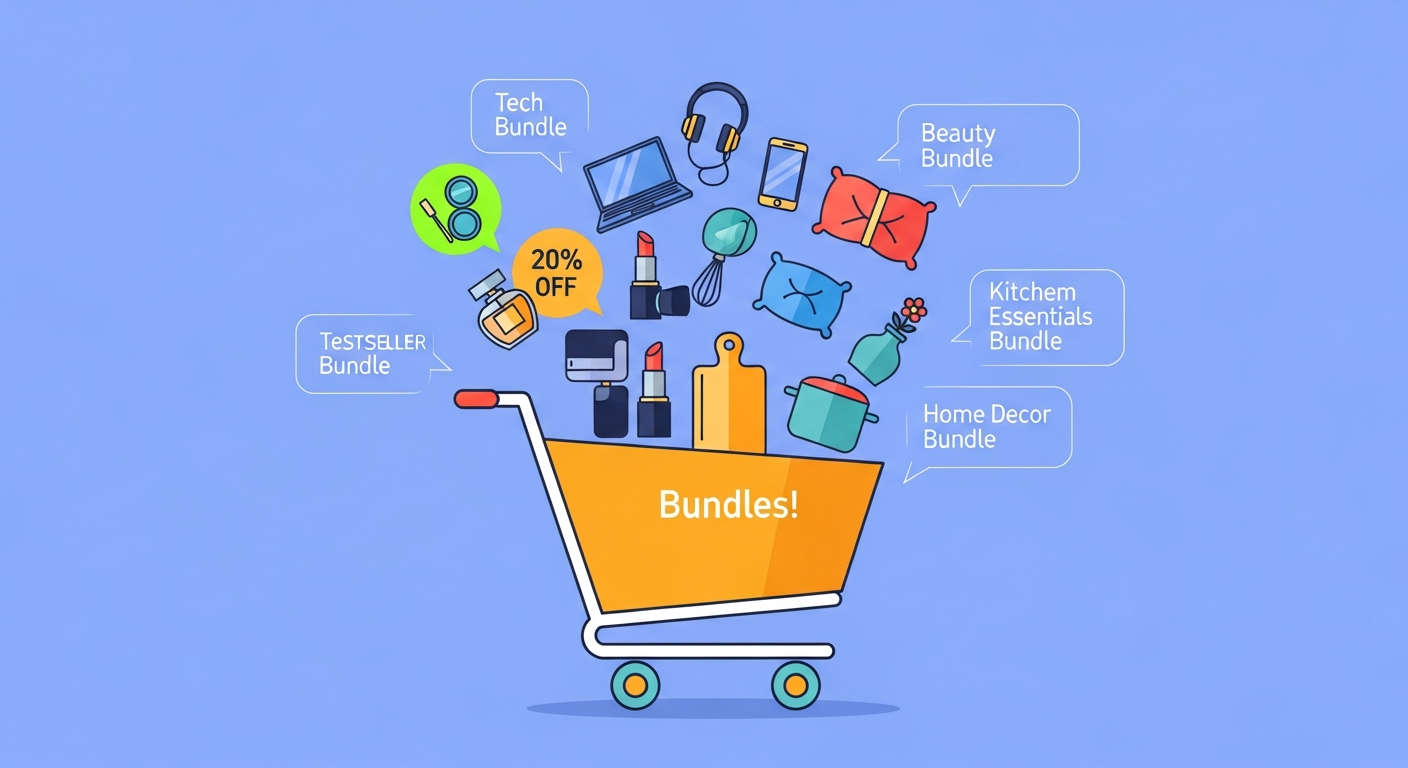
In the rapidly evolving world of e-commerce, store owners are constantly seeking innovative strategies not only to attract customers but also to encourage them to increase their shopping cart value. Average Order Value (AOV) is one of the most critical metrics reflecting a store's success in achieving this; the higher this average, the greater the revenue without needing to double marketing efforts to acquire new customers. This economic philosophy forms the cornerstone of building sustainable and profitable businesses, especially on platforms like Salla, Zid, and Shopify, which provide powerful tools to accomplish this.
Product bundling is one of the most powerful and effective of these strategies. Simply put, product bundling means selling a group of products together as a single, attractive offer at a special price, rather than selling each product individually. This method doesn't just result in immediate financial gains; it also extends to enhancing the customer's shopping experience, simplifying decision-making, and even helping with inventory management more effectively. In this comprehensive article, we will delve into product bundling strategies and explore how store owners on Salla, Zid, and Shopify can maximize their benefits to increase average order value and achieve sustainable growth for their businesses.
What is Product Bundling and Why is it Important?
Product bundling is a marketing strategy that involves selling two or more products together as a single package, often at a lower price than if each product were purchased separately. These products can be complementary (such as a camera, lens, and bag), similar items (like multiple colors of the same shirt), or even entirely different products bundled together to create a unique value proposition. The main goal of this strategy is to increase the perceived value for the buyer, encourage them to spend more on each order, and thereby raise the average order value.
The product bundling strategy has become critically important in today's competitive e-commerce environment, where every store strives to stand out and offer exceptional value to its customers. It is not merely a means of increasing sales but also an effective tool for improving profit margins and reducing customer acquisition costs. When a customer purchases a product bundle, they often feel they are getting a better deal, which enhances their loyalty to the store and increases the likelihood of repeat purchases in the future. This sense of added value is what distinguishes successful stores on platforms like Salla, Zid, and Shopify.
Furthermore, product bundling helps in managing inventory more effectively. It can be used to sell slow-moving products by combining them with more popular items, or to clear excess inventory before the end of a season. It also reduces shipping and packaging costs, as multiple products are shipped in one package instead of several. These manifold benefits make product bundling an indispensable strategy for any e-commerce store aiming for growth and profitability, regardless of its size or the type of products it sells.
Types of Effective Product Bundling Strategies
Product bundling methods are diverse, and each type is designed to achieve specific goals and meet different customer needs. Understanding these types and choosing the most suitable ones for your products and target audience is key to success. These strategies can be flexibly applied on platforms like Salla, Zid, and Shopify, leveraging each platform's features to customize and present offers in the best possible way.
1. Complementary Bundling
This type of bundling involves combining products that naturally complement each other and enhance the experience of using the main product. The idea is to provide a complete solution to the customer, making the purchase process easier and saving them the hassle of searching for accessories or related products. For example, if your store sells cameras, you can bundle it with an extra lens, a carrying bag, and a spare battery. This not only increases the order value but also ensures that the customer gets everything they need to start using the product immediately.
Complementary bundles are ideal for stores selling electronics, hobby supplies, or even personal care products. In a coffee specialty store on Salla or Zid, you could bundle a coffee machine with a selection of premium beans, elegant mugs, and filters. This not only encourages customers to buy more but also offers them a comprehensive and enjoyable experience. This can also be applied in fashion stores by offering a complete outfit that includes a core clothing item with matching accessories and a bag.
The key tip here is to analyze your customers' purchase data to identify products that are frequently bought together. Use this data to create logical and appealing bundles. Ensure that the bundled price offers a clear and tangible discount compared to buying each item separately, encouraging customers to seize the opportunity and feel they are getting an excellent deal. Shopify stores can use bundling apps to facilitate the display and efficient management of these packages.
2. Mixed Bundling
This type of bundling relies on combining a high-demand, popular product with another product that might be less popular or new to the market. The goal is to leverage the appeal of the trending product to boost sales of the lesser-known item, or to clear excess inventory of certain products. It's a clever strategy to offer additional value to the customer while achieving the store's goals in inventory management and sales diversification.
For instance, a cosmetics store on Zid or Salla could bundle a popular and desirable perfume with a free or travel-sized sample of a new skincare product. Or, in a bookstore, a best-selling novel could be bundled with a lesser-known book by the same author or in the same genre. This way, the customer discovers a new product they might like, and the store increases its chances of selling that product in the future.
To maximize the benefits of mixed bundling, store owners should analyze sales data to identify best-selling products and those that need a boost. The discount on the bundled package must be attractive enough to justify purchasing the less popular item. This strategy is particularly effective for products with high-profit margins, allowing for larger discounts without negatively impacting overall profitability.
3. Pure Bundling
In this type of bundling, individual products are not available for separate sale; they are only sold as part of a package. This strategy creates a sense of exclusivity and unique value that can only be obtained by purchasing the complete bundle. It is often used for limited-edition products, subscription boxes, or exclusive collections specially designed to offer a holistic experience.
Common examples of pure bundling include monthly subscription boxes that offer a variety of products (such as beauty products, healthy snacks, or children's toys) for a fixed price. Also, a clothing store might offer a complete fashion collection for a specific season, where individual pieces are not sold separately. This method increases the perceived value for the customer and creates a unique experience, making them feel they are getting something special.
Pure product bundling requires careful planning and creative marketing. The products within the bundle must be cohesive and offer real value to the customer. It is also important for the price to be attractive enough to justify the overall purchase, and for the exclusivity of the offer to be highlighted. Shopify stores can use specific subscription box apps to facilitate the management of this type of product, while Salla and Zid might require manual solutions or third-party apps if native features are insufficient.
4. Quantity Bundling
Quantity bundling is a simple and straightforward strategy that encourages customers to buy larger quantities of the same product by offering a discount on the total price. It's also known as "buy more, save more" or "buy 2, get 1 free" offers. This strategy is particularly effective for daily consumables or products customers use regularly, where they see clear value in buying more at a better price.
For example, a store selling shampoo, soap, or coffee on Salla or Zid could offer a 15% discount when purchasing three units instead of one. This encourages customers to stock up and significantly increases the average order value. It is also beneficial for products with a long shelf life or those that do not spoil quickly, ensuring that customers will not hesitate to buy larger quantities.
To maximize the benefits of quantity bundling, the savings customers receive when purchasing the bundled quantity should be clearly highlighted. Attractive banners or clear messages on the product page can be used to emphasize the offer. It is also important to ensure that the discounted unit price does not significantly impact the store's overall profit margins. Stores on Shopify, Zid, and Salla can easily set up these offers through discount options or coupons.
5. Service Bundling
Bundling is not limited to physical products; it can also include services associated with products. This strategy adds significant value to the product, especially if the service complements the product and provides additional convenience or protection to the customer. Service bundling can be a powerful competitive advantage, especially in saturated markets.
For example, a store selling furniture on Salla or Zid could offer assembly and installation services as part of a bundle with a furniture piece. Or an electronics store could sell an electronic device with an extended warranty or free maintenance service for a certain period. This not only increases the value of the deal in the customer's eyes but also provides them with peace of mind and confidence in the purchase, enhancing the chances of completing the transaction with a higher average order.
This strategy requires a careful assessment of the added service costs to ensure they do not significantly reduce profit margins. The services must be of high quality to enhance the store's reputation. Shopify stores can use apps to offer additional service options at checkout, while Salla and Zid might require manual adjustments or custom fields to include these services in product descriptions and bundles.
Implementing Product Bundling Strategies on Salla, Zid, and Shopify
The ability of e-commerce platforms to support product bundling strategies varies, but all of them offer ways to achieve this to varying degrees. Understanding how each platform works will help you implement these strategies effectively and make the most of the available tools to increase your store's average order value.
Bundling Options in Salla
Salla is a popular choice for stores in the Arab region and offers some basic features that can be used for product bundling. You can create bundled products by adding a new product that represents the entire package, then clearly defining its components and description on the product page. Product options can also be used to add complementary products as optional extras at a specific price, giving customers flexibility to customize their bundles.
For more complex bundling, such as mixed or pure bundles, you might need some creative solutions. A single product can be created to represent the bundle, its combined price set, and then the bundle components managed manually in inventory. It is crucial for the product description to be clear and detailed for all items in the bundle, as well as highlighting the savings the customer receives. Salla is continuously evolving, and more advanced bundling features may be added in the future.
You can also leverage Salla's discounts and promotions feature to offer special deals on bundles. For example, you can create a specific discount code for the bundle or apply an automatic discount when the bundle is added to the cart. This makes it easier for customers to see the added value and encourages them to complete the purchase. Ensuring these bundles and their offers are easily discoverable on main product pages is a critical factor for their success.
Bundling Options in Zid
Zid, like its counterpart Salla, serves the Arab market excellently and offers powerful tools for product and inventory management, which can be adapted to support bundling strategies. Store owners on Zid can create product bundles by using multiple product options, allowing customers to choose a set of products associated with a main product, with a combined price set for these options.
To create a true product bundle in Zid, you can simply create a new product and name it "Bundle [Product Names]", then set the bundle price and describe all included products. Product images should be clear and showcase all components. Zid's inventory system can also be used to track individual products within the bundle, helping manage inventory and prevent selling out-of-stock items.
Zid also provides flexible options for discounts and promotions that can be applied to bundles. You can set up product-level discounts or use coupons to offer special deals. Remember that the goal is to make the offer attractive and clear to the customer. By leveraging Zid's capabilities in product display and inventory management, stores can design effective bundles that increase average order value.
Bundling Options in Shopify
Shopify is known for its flexibility and scalability through its rich app store, making it an ideal platform for implementing complex and diverse product bundling strategies. Unlike Salla and Zid, which may require some manual workarounds, Shopify offers a large number of dedicated bundling apps that simplify the process and add advanced features.
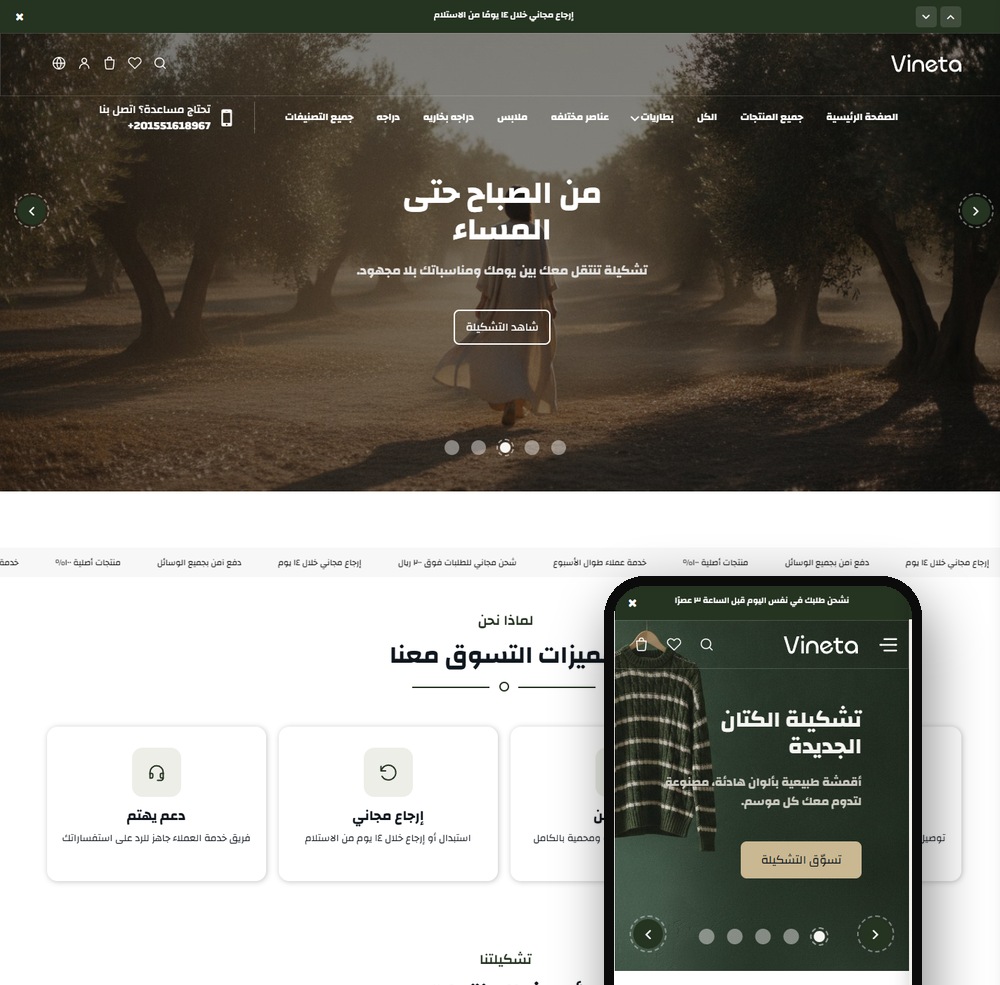
Apps such as "Bundle Products," "Zipify OneClickUpsell," or "Bold Bundles" allow you to easily create different types of bundles, whether complementary, mixed, or even quantity-based bundles. These apps can automate discount calculations, track inventory of individual products within the bundle, and display bundles attractively on product pages. This reduces manual effort and increases the effectiveness of the bundling strategy.
In addition to apps, Shopify's native features like variants can be used to create simple bundles. For example, if you sell a shirt, you can add a "Two-Shirt Bundle" variant at a discounted price. Discount codes can also be used to offer promotions on specific product sets. Shopify's flexibility makes it a strong choice for stores looking to implement advanced bundling strategies and maximize every purchase.
Best Practices and Tips for Successful Product Bundling
To maximize the benefits of a product bundling strategy and increase the average order value in your Salla, Zid, or Shopify store, it's not enough to simply offer products in packages. It requires implementing best practices and strategic thinking to ensure these bundles are attractive, profitable, and easily discoverable by customers. Here are some essential tips to help you achieve success.
1. Understand Your Customer and Purchase Data
The first and most crucial step is to understand your customer and what they buy. Analyze past sales data to identify products that are frequently purchased together, products that naturally complement each other, and products that might be slow-moving and need a boost. Utilize the analytics tools available in Salla, Zid, and Shopify dashboards, or third-party tools if necessary, to gain deep insights into purchasing behavior. Simple surveys or collecting customer feedback can also help in better understanding their needs and preferences.
For instance, if you notice that customers who buy a specific skincare product often also buy a moisturizer from the same brand, this is a clear indication to create a "skincare routine" bundle. This deep understanding of customer behavior not only helps in creating relevant bundles but also ensures that the bundles you offer meet real needs and provide clear value. Analyzing this data gives you a competitive edge and enables you to anticipate market demands.
Remember that customers are looking for solutions to their problems or ways to enhance their experiences. Consider how your product bundle can offer this solution comprehensively and conveniently. The more relevant the bundle is to the customer's needs and desires, the higher its chances of success. Your store can leverage this information to continuously refine its bundling strategies.
2. Smart Pricing and Effective Marketing
Pricing is the cornerstone of any successful bundling strategy. The bundle price must be attractive enough to encourage the customer to buy, offering clear savings compared to purchasing products individually. At the same time, the price must be profitable for your store. Don't over-discount to the point of harming profit margins, but be generous enough to make the offer irresistible. You can refer to Product Pricing: Smart Strategies for Salla and Zid Stores to learn more about effective pricing strategies.
In addition to pricing, marketing plays a crucial role in highlighting the bundle's value. Use high-quality images that attractively display all components of the bundle. Write compelling descriptions that emphasize the benefits customers will gain from purchasing the bundle, and how it solves a problem or fulfills a need. Use phrases like "Save Now," "Unmissable Deal," "Get Complete Solutions" to create a sense of urgency and value. Promote bundles on your homepage, relevant individual product pages, and through email campaigns.
Don't hesitate to use social media and paid advertising to promote your most attractive bundles. Bundles can be a great way to capture the attention of new customers who might not have discovered your individual products yet. Ensure that the purchase process is smooth and straightforward, and that customers can easily add the bundle to their cart without complications.
3. Easy Discovery and Clear Presentation
Even with the best and most attractive bundles, they won't succeed if customers cannot easily discover them. Bundles should be prominently displayed on your e-commerce store. They can be placed in a dedicated section on the homepage, as suggested products on relevant individual product pages, or even within category pages. Use attractive banners and clear titles to grab attention.
Furthermore, the bundle's presentation must be clear and detailed. The bundle's product page should include images of all included products, an accurate description of each, the total bundle price, and the amount of savings the customer will receive. Avoid any ambiguity that might confuse the customer or make them feel uncertain. The clearer and more transparent the information, the greater the customer's confidence in making a purchase.
Ensure a smooth user experience when adding bundles to the shopping cart. The purchasing process should be simple and straightforward. Any complexity can lead to customers abandoning their carts. Use user experience analytics tools to monitor how customers interact with bundle pages and optimize them based on feedback.
4. Continuous Testing and Optimization
No single strategy fits all, and product bundling is no exception. You should be prepared to test different types of bundles, various product compositions, and diverse price points. Conduct A/B tests to compare the performance of different bundles and monitor key metrics such as average order value, conversion rate, and profit margins. Use data to guide your decisions and continuously optimize your strategies.
For instance, you might discover that bundling different skincare products works better than bundling products from the same category but different brands. Or you might find that offering a 20% discount on a specific bundle yields significantly higher sales than a 15% discount, even if it means slightly lower profit margins in the short term. Flexibility and adaptability to customer preferences are key to long-term success.
Gather customer feedback on the bundles you offer. Do they find them attractive? Is the price right? Are there products they would prefer to see in bundles? Use this feedback to refine your offerings. Remember that the market is constantly changing, and what was successful yesterday may not be today. Therefore, maintain a flexible and data-driven approach to maximize the benefits of your product bundling strategy.
5. Effective Inventory Management
When implementing product bundling strategies, inventory management becomes more critical than ever. You must ensure that you have sufficient stock of all component products within a bundle to avoid stockouts, which can lead to canceled orders and customer disappointment. Utilize the inventory management systems available in Salla, Zid, and Shopify to track stock levels for each individual product and for bundles as a whole.
Consider that selling a bundle means selling multiple products in one transaction, which can impact inventory levels faster. Plan your inventory ahead, especially for best-selling products included in bundles. Avoid bundling products that might quickly run out with products that have large stock, unless this is the specific goal of the bundling (to clear inventory).
In the case of pure bundling, where products are not available individually, inventory management must be particularly precise to ensure all components are available. Choosing the right platform for your store can help you manage these challenges, such as knowing Salla, Zid, and Shopify: Which is Best for Your Store? will help you understand each platform's inventory management capabilities.
6. Integrate Flexible Payment Methods
When you increase the average order value through product bundling, customers might find themselves with a shopping cart value higher than they are used to. This is where flexible payment methods come into play to enable them to complete the purchase without financial obstacles. Offering installment payment options like Tabby and Tamara can be a crucial factor in converting hesitant customers into buyers. These services allow customers to split large purchase values into smaller, convenient payments, making high-value bundles more accessible.
You should prominently display these options on bundled product pages, in the shopping cart, and at checkout. When a customer sees that they can purchase a bundle worth 500 SAR and split it into four interest-free payments, they are more likely to complete the purchase rather than abandon the cart. This not only increases the conversion rate but also fosters trust between the customer and your store. For more information, you can read Tabby and Tamara: How to Increase Sales in Your Salla and Zid Store.
This strategy is particularly beneficial for luxury products, high-value bundles, or when targeting customers who might be price-sensitive when buying in bulk. Integrating flexible payment options is an investment that benefits the store, not only in increasing sales but also in building a loyal customer base that appreciates the flexibility you offer.
7. Utilize Coupons and Promotional Offers
Coupons and promotional offers can be powerful tools to enhance the attractiveness of product bundles. Instead of just offering a discounted price on the bundle, you can add an extra layer of incentive through special discount coupons or limited-time offers. This creates a sense of urgency and encourages customers to make a purchase decision quickly before it's too late. For example, an additional 10% discount coupon could be offered on any bundle purchased during a weekend promotion.
Coupons are particularly effective when launching new bundles to raise awareness and encourage initial trials. They can also be used to target specific customer segments, such as new customers or returning customers, to offer them special incentives to purchase bundles. For more details on how to use coupons smartly, we recommend checking out Discount Coupons: How to Use Them Smartly to Boost Sales?.
Remember that the goal is to make the offer irresistible. The more attractive the incentives, the higher the likelihood that the customer will complete the purchase with a higher average order. Track the performance of different coupons and promotions to see which ones yield the best results, then optimize your strategies based on this data to achieve maximum return on investment.
Conclusion
In conclusion, product bundling represents a powerful and multifaceted strategy that can make a significant difference in the performance of your e-commerce store on platforms like Salla, Zid, and Shopify. By understanding the different types of bundling, and by applying best practices in pricing, marketing, and inventory management, you can not only increase your average order value but also enhance customer experience and foster loyalty to your brand. It's an opportunity to provide additional value to the customer, simplify purchasing decisions, and achieve sustainable growth for your business in the thriving e-commerce market.
Remember that success in product bundling does not come from applying a one-size-fits-all solution, but rather from continuous experimentation and careful analysis of customer data and bundle performance. Be flexible in your offerings, listen to your customers' feedback, and be prepared to adapt to changes in market preferences. Whether you are using Salla, Zid, or Shopify, the available tools and features will support you on your journey to making the most of this effective strategy.
Do not hesitate to explore the creative possibilities of product bundling. Think outside the box about how to combine products and services in new and innovative ways that create unique value for your customers. By focusing on delivering enticing and relevant offers, you will transform your store from just a place to sell into a preferred destination for customers, ensuring your superiority in the competitive world of e-commerce.