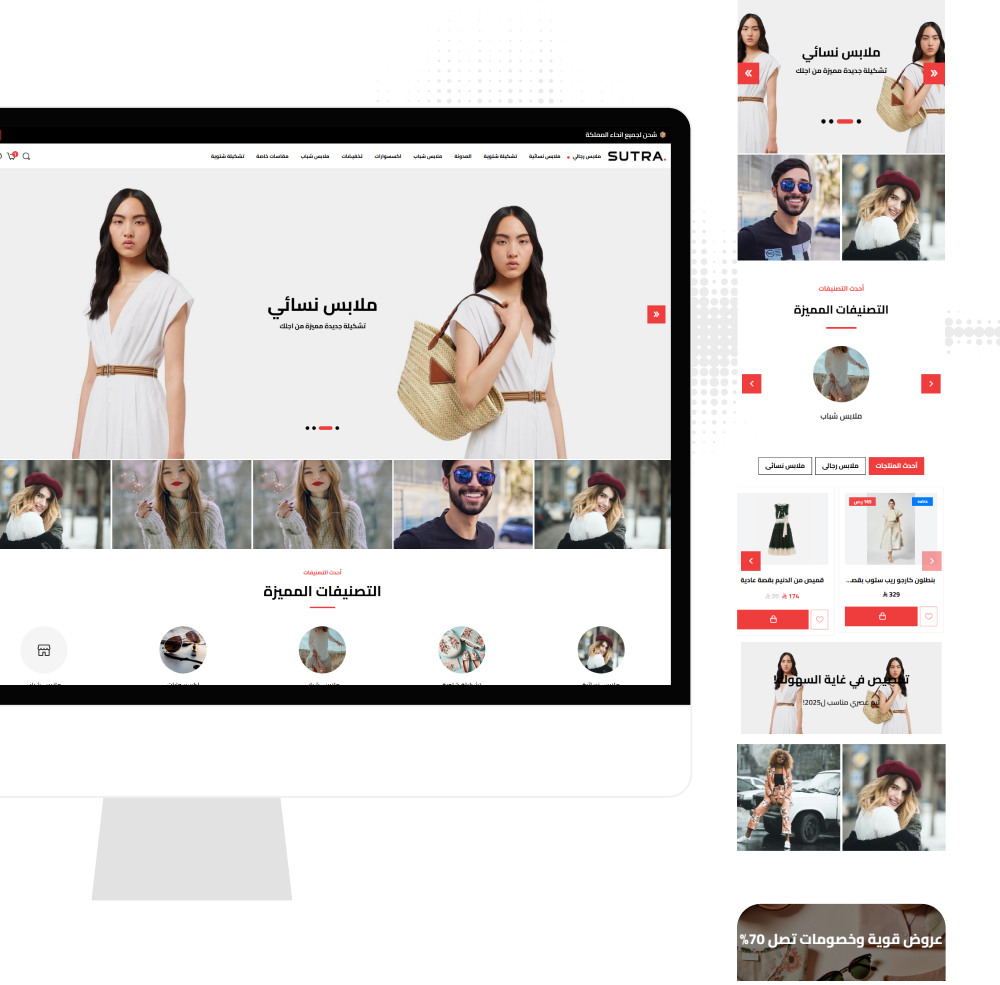



In the rapidly evolving world of e-commerce, choosing the right suppliers is the cornerstone upon which the success of any online store is built. A supplier is not merely an entity that provides you with products; rather, they are a strategic partner who directly influences the quality of what you offer your customers, the efficiency of your operational processes, and ultimately, your store's profitability and reputation. Whether you manage your store on Salla, Zid, or Shopify, your ability to build strong, sustainable relationships with reliable suppliers is key to excelling in a competitive market.
The importance of this partnership is amplified amidst the growing challenges faced by online retailers, from global supply chain fluctuations to evolving customer expectations regarding quality, speed, and reasonable pricing. Therefore, understanding how to research, evaluate, and select the best suppliers is not just a procedural step; it is a vital strategy that must be mastered to ensure a smooth flow of products, maintain optimal inventory levels, and deliver an exceptional shopping experience to your customers. This article aims to provide a comprehensive and detailed guide to help you make informed decisions in your journey of selecting suppliers for your store.

The Importance of Choosing the Right Suppliers for Your E-commerce Store's Success
Suppliers are the lifeblood that fuels your online store with products, and thus their quality and reliability directly impact every aspect of your business. A good supplier ensures you receive high-quality products that meet your customers' expectations, thereby enhancing their trust in your store and encouraging repeat purchases. Conversely, an unreliable supplier can lead to countless problems, such as delayed shipments, poor product quality, or sudden inventory shortages, all of which can damage your store's reputation and lead to customer loss.
The supplier's role extends beyond merely providing products; it also influences the efficiency of your operational processes and your bottom line. A supplier who offers competitive prices and flexible payment terms can significantly improve your profit margins, while one who provides excellent customer service and responds quickly to issues can reduce your operational stress. This comprehensive impact makes the supplier selection process a strategic decision that must be handled with utmost care, regardless of whether you use Salla, Zid, or Shopify as your store's platform.
Choosing the right suppliers gives your store a strong competitive advantage. When you can offer unique products, higher quality, better prices, or faster shipping than your competitors, you position your store ahead in the market. This not only attracts more customers but also helps build long-term customer loyalty, ensuring the sustainability and continuous growth of your business in the ever-changing world of e-commerce. Therefore, invest your time and effort wisely in this crucial process.
Types of Suppliers and Available Business Models
Before embarking on the search for suppliers, it is essential to understand the different supplier models and business models that can align with your store's strategy. Each model has its advantages and disadvantages, and choosing the most suitable one will depend on the type of products you sell, your capital, the level of risk you are willing to undertake, and the degree of control you desire over the entire process. Whether you are launching a new store on Salla, expanding your operations on Zid, or targeting a global market via Shopify, understanding these models will help you make an informed decision.
Wholesale Suppliers
Wholesale suppliers operate by selling products in large quantities (wholesale) to retailers at a price lower than the retail price, allowing you to achieve a profit margin when selling products to your customers. These suppliers are often official distributors for manufacturers or manufacturers themselves. When dealing with a wholesale supplier, you typically purchase inventory in advance and store it in your warehouses or a third-party warehouse, then handle the shipping and delivery to your customers directly.
The advantages of dealing with wholesale suppliers include the ability to obtain low unit prices, which increases your profit margins. This model also gives you complete control over product quality before shipping to the customer, as well as over packaging and shipping speed. This control enhances the customer experience and allows you to build a strong brand. This model can be ideal for stores with sufficient capital to invest in inventory and who wish to build a distinctive brand on platforms like Salla, Zid, or Shopify.
Despite the advantages, dealing with wholesale suppliers comes with some challenges. This model requires a significant upfront investment in purchasing inventory, in addition to the need for adequate storage space, whether in your own warehouse or through third-party fulfillment services. You also bear the risks of unsold inventory and potential losses. Therefore, market research and demand forecasting must be very accurate before committing to large quantities of products.
Dropshipping
The dropshipping model is an e-commerce business model that does not require the store owner to hold any physical inventory of products. Instead, when a customer places an order on your Salla, Zid, or Shopify store, you pass the order and shipping details to the dropshipping supplier, who then packs and ships the product directly to the customer on your behalf. You act as an intermediary between the customer and the supplier.
The most prominent advantages of dropshipping are low startup costs and risks. You do not need to invest significant capital in purchasing inventory or managing warehouses, making it an attractive option for beginners or those who want to test new products quickly. This model also allows you to offer a very wide range of products without worrying about storage space. The flexibility provided by dropshipping enables you to manage your store from anywhere in the world.
However, dropshipping faces significant challenges. Profit margins are often lower compared to the wholesale model, as you do not benefit from economies of scale. You also have less control over product quality, packaging, and shipping speed, as all these aspects are handled by the supplier. This can negatively impact the customer experience and complicate customer service when issues arise. Therefore, choosing a reliable dropshipping supplier is crucial for the success of this model.
Private Labeling / Manufacturing
The private labeling model involves working directly with a manufacturer to create unique products under your own brand. This means you have complete control over product design, quality, specifications, and packaging. This can include modifying existing products or developing entirely new products from scratch. This model typically requires a significant investment and more effort initially, but it allows you to build a distinctive brand completely different from competitors.
The main advantage of private labeling is the ability to offer exclusive products that cannot be found anywhere else, giving your store a unique identity and a strong competitive edge. You have full control over product quality, ensuring you deliver the best experience to your customers and enhance your brand's reputation on platforms like Salla, Zid, or Shopify. Moreover, profit margins can be significantly higher in the long run, especially as customer loyalty to your brand grows.
Conversely, private labeling requires a substantial upfront investment and often high Minimum Order Quantities (MOQs) from the manufacturer. The development and manufacturing process can also be time-consuming and require expertise in supply chain management and quality control. Risks are higher in this model, as you are responsible for the entire product lifecycle. However, for ambitious store owners looking to build a strong and sustainable brand, this model offers significant rewards.
Local and International Suppliers
When searching for suppliers, you will face two main options: local suppliers and international suppliers. Each option offers a different set of advantages and challenges that must be carefully considered to determine the most suitable for your Salla, Zid, or Shopify store. The decision ultimately depends on your product type, target market, budget, and operational priorities.
Local suppliers (within your country or region) typically offer faster shipping, which reduces delivery times for your customers and enhances their satisfaction. Shipping costs are often lower, and customs and import complexities are reduced. Communication with local suppliers is easier due to the absence of language barriers or time zone differences, facilitating problem-solving and building strong relationships. Supporting the local economy can also be a positive marketing point for your store.
International suppliers, on the other hand, open wider doors to access a very diverse range of unique or specialized products that may not be available locally. They often offer lower product prices due to economies of scale in manufacturing, which can increase your profit margins. However, dealing with international suppliers involves challenges such as longer shipping times, complex shipping and customs costs, currency differences, and language barriers. This option requires careful planning and robust management of logistical risks.
Key Criteria for Choosing the Best Supplier
The process of selecting suppliers is not limited to finding the cheapest price; it is a multifaceted operation that requires careful evaluation of a set of vital criteria to ensure your store's long-term success. The supplier you choose must align with your store's vision and goals and be a reliable partner in achieving growth and distinction. Here, we will review the most important criteria to consider when evaluating potential suppliers for your Salla, Zid, or Shopify store.
Product Quality and Reliability
Product quality is by far the most important criterion when choosing a supplier. High-quality products build trust between you and your customers, encouraging them to return to your store repeatedly. You must ensure that the supplier adheres to the quality standards you specify and that the products they provide exactly match the description and images you display in your store. Any compromise on quality can lead to negative reviews, product returns, and ultimately, a loss of reputation and customers.
Reliability in quality means that the supplier consistently delivers the same quality level across all shipments. It is not enough for the first batch to be of high quality; this quality must persist in every subsequent order. To assess this, request samples from potential suppliers, meticulously inspect them, and even test them yourself or ask a small group of trusted customers for feedback. Inquire about quality certifications or manufacturing standards the supplier adheres to, to ensure you receive reliable products.
Remember that the quality of your products is a direct reflection of your brand. If your products are substandard, this impression will be associated with your store as a whole, regardless of how well your Salla, Zid, or Shopify website is designed, or how effective your marketing campaigns are. Invest in suppliers who share your commitment to quality to ensure customer satisfaction and build an excellent reputation for your store.
Pricing and Payment Terms
The prices offered by suppliers directly impact your store's profit margins, but it is important that price is not the sole criterion for selection. Look for a supplier who offers competitive prices that align with the product quality and service provided. Do not hesitate to negotiate prices, especially if you plan large volume orders or a long-term relationship. Remember that a lower price may sometimes mean lower quality or poor customer service, which could cost you more in the long run.
Payment terms are a vital aspect to consider, as they significantly affect your store's cash flow. Does the supplier require full upfront payment? Do they offer credit terms? What is the payment deadline? Flexible payment terms, such as payment after 30 or 60 days, can provide your store with necessary cash flow to manage daily operations or invest in marketing. You can review our article on Product Pricing Strategies: Smart Tactics for Salla & Zid Stores to understand how supplier choice affects your final product pricing.
When evaluating prices, do not forget to include all potential hidden costs, such as shipping costs, customs duties, taxes, and packaging costs. Request detailed and transparent quotes from potential suppliers and compare them carefully to ensure you are getting the best value for money, not just the lowest price. Transparency in pricing and payment terms is the foundation of a healthy and sustainable relationship with a supplier.
Supply Capacity and Shipping Speed
A supplier's ability to meet demand and deliver products on time is crucial for maintaining customer satisfaction and avoiding lost sales. The supplier must be able to provide you with sufficient inventory, especially during peak seasons or when launching new products. Inquire about their production capacity, typical lead times, and how they handle large or unexpected orders.
Shipping speed is a critical competitive factor in today's e-commerce. Customers expect to receive their orders quickly, and any delay can lead to frustration and order cancellations. Therefore, you must ensure that the supplier has efficient logistical operations and is capable of shipping products within a reasonable timeframe. Discuss available shipping options, their costs, and the reliability of their shipping partners. You can also compare this information with what you learned from Shipping Companies: Price and Service Comparison for Salla & Zid to ensure the best shipping options for your store.
The supplier must also be flexible and able to adapt to changes in demand. For example, if your Salla, Zid, or Shopify store is experiencing rapid growth, the supplier must be able to increase supplies without affecting quality or lead times. Discuss emergency plans and how they handle any potential disruptions in the supply chain to ensure the continuity of your store's operations.
Customer Service and Technical Support
Dealing with a supplier is not merely an exchange of products for money; it is a business relationship that requires effective communication and continuous support. The supplier must be accessible and responsive to your inquiries and issues. Can they be easily reached by phone or email? What is their average response time? These factors determine how easy it will be to deal with them when a problem arises or when additional information is needed.
The ability to resolve problems effectively and quickly is a strong indicator of a supplier's customer service quality. In any business, errors or unexpected issues may occur, and what matters is how they are handled. Does the supplier offer practical solutions? Are they willing to take responsibility when an error occurs on their part? A supplier who adopts a cooperative attitude and helps you overcome challenges will be a valuable asset to your store, whether it operates on Salla, Zid, or Shopify.
Remember that a good relationship with a supplier can save you a lot of time and effort and prevent many headaches. Choose a supplier who provides good technical support, is willing to offer assistance when needed, and demonstrates a commitment to building a long-term partnership. This strong partnership will be a foundation for mutual growth and success.
Flexibility and Adaptability
In the constantly changing e-commerce market, flexibility and adaptability are essential qualities you should look for in a supplier. Markets change, customer preferences evolve, and you may need to adjust your product assortment or order quantities suddenly. A flexible supplier is one who can adapt to these changes without disrupting your operations.
For example, you may need to modify a specific order, quickly add new products in response to a new market trend, or even discontinue a product that is no longer selling well. A sufficiently flexible supplier will be able to accommodate these changes, whether by adjusting production schedules, offering different shipping options, or even helping to source alternative products. This adaptability gives your store a significant competitive advantage, as you can respond quickly to market demands.
Look for a supplier willing to work with you as a partner and provide customized solutions when needed. Discuss with them the possibility of fulfilling special orders, custom packaging, or even adjusted payment terms under certain circumstances. A supplier who demonstrates this level of flexibility will have a significant positive impact on your store's ability to grow and thrive in the dynamic e-commerce environment, whether you use Salla, Zid, or Shopify as your platform.
Practical Steps to Find and Evaluate Suppliers
After understanding the importance of supplier selection and the key criteria for evaluating them, it is time to move on to the practical steps that will enable you to find the best partners for your online store. This process requires careful research, effective communication, and systematic evaluation to ensure you make the right decision that supports your business goals. Whether you are looking for a supplier for a single product or a wide assortment, following these steps will set you on the right path.
Precisely Define Your Store's Needs
Before starting any supplier search, you must have a clear and detailed vision of your store's needs. Begin by defining the type of products you wish to sell, their exact characteristics, and the quality level you are targeting. What volume of inventory do you anticipate needing initially and in the long term? What is your available budget for purchasing products? The more specific you are, the more efficient your supplier search will be.
Consider your business model. Are you planning a dropshipping model, or will you buy wholesale and manage your own inventory? Do you have specific packaging or branding requirements? Defining these details will help you narrow down your search and eliminate suppliers who do not fit your core requirements. Don't forget to identify your target audience and their expectations regarding quality and price.
You should also take into account the platform you use for your store. Salla, Zid, and Shopify each have different features and integrations that may affect how you work with suppliers. For example, you may need a supplier who provides product CSV files or supports specific integrations. Feel free to review our article on Salla, Zid, and Shopify: Which is Best for Your Store? to understand how platform choice can influence your supplier needs.
Searching for Potential Suppliers
Once you have defined your needs, it's time to start actively searching for potential suppliers. There are several channels you can use to discover suppliers. First, begin by searching online using specialized B2B search engines like Alibaba, Global Sources, TradeKey, or even a regular Google search with keywords such as "[product name] suppliers" or "[product name] wholesale." These platforms provide vast databases of suppliers from all over the world.
Second, trade shows specializing in your product niche can be an excellent source for meeting suppliers face-to-face, inspecting products directly, and building personal relationships. These shows are often invaluable opportunities to discover new suppliers and learn about the latest market trends. Even if you cannot attend a show, look for exhibitor lists on their websites.
Third, do not underestimate the power of networking and connections. Talk to other e-commerce store owners in non-competitive fields and ask for their recommendations. You can also analyze your competitors to see where they might be sourcing their products, though this can be challenging. Finally, specialized sourcing agents can help you find reliable suppliers, especially if you are looking for international suppliers or custom products.
Communicating with Suppliers and Requesting Quotes
Once you have identified a list of potential suppliers, it's time to contact them. Start by preparing a professional and concise inquiry message clearly stating your needs. The message should include details about the product type, expected quantities, quality standards, and any other specific requirements you have. Ask them to provide catalogs, price lists, Minimum Order Quantities (MOQ), payment terms, and shipping options.
Do not limit yourself to contacting just one supplier. Reach out to several suppliers to obtain diverse quotes and compare them. When receiving quotes, pay attention not only to the price but also to the promised quality, delivery time, payment terms, and return policies. This is the right time to ask detailed questions about their production process, quality control, and supply capacity. Be prepared to negotiate, especially if you plan large orders or a long-term partnership.
During this stage, observe the suppliers' responsiveness and the quality of their communication. Do they answer your questions quickly and clearly? Do they show genuine interest in your store? These early indicators can give you an idea of how easy it will be to work with them in the long run. Remember that building a good relationship with a supplier starts with the first contact, which is vital for your Salla, Zid, or Shopify store.
Evaluating Samples and Conducting Tests
After narrowing down your list and obtaining quotes, the most crucial step before committing to a large order is to request samples. Do not rely solely on images or descriptions; you must inspect the products yourself. Request samples from the final suppliers you are considering. This step is critical to ensure that product quality meets your expectations and those of your customers.
Upon receiving the samples, inspect them thoroughly. Do they match the specifications you requested? Are the materials used of high quality? Are there any manufacturing defects? Test the product yourself if possible, or ask friends or a small test group to provide honest feedback. Compare samples from different suppliers side-by-side to determine the best in terms of quality, durability, and appearance.
Do not hesitate to provide constructive feedback to suppliers about the samples. If there are aspects that need improvement, discuss them. How they respond to this feedback can reveal a lot about their flexibility and commitment to quality. Remember that these samples are your last chance to correct course before investing in a large inventory for your Salla, Zid, or Shopify store, so use them effectively.
Building Strong Relationships with Suppliers
Your relationship with a supplier should not end once the first purchase is complete; instead, it should be the beginning of a long-term partnership. Building strong and sustainable relationships with suppliers is vital for your store's long-term success. A good supplier is a reliable partner, not only for providing products but also for offering support and advice.
Maintain open and transparent communication with your suppliers. Provide them with feedback on their products' market performance, and share sales data if appropriate. Pay your invoices on time, and be professional in all your dealings. A relationship built on mutual trust and respect can open doors to better terms, special pricing, priority in order processing, and even access to new products before competitors.
Remember that suppliers are an integral part of your store's value chain. Invest in these relationships as you invest in your customers. A supplier who feels appreciated and loyal will be more willing to go the extra mile to help you in times of need and will be a key factor in the continuous growth and success of your store on platforms like Salla, Zid, or Shopify. These relationships are invaluable assets that cannot be dispensed with.
Conclusion
Amidst intense competition in the e-commerce world, supplier selection stands out as a pivotal strategic decision, no less important than brand building or developing marketing strategies. Suppliers are the backbone that supports the quality of your products, the efficiency of your operations, and ultimately, your customers' experience and satisfaction. Investing in thorough research, comprehensive evaluation, and building strong relationships with suppliers is not merely a luxury but an absolute necessity to ensure the continuity and success of your store, whether on Salla, Zid, or Shopify.
Remember that the supplier selection process is not a one-time task that ends. It is a dynamic process that requires continuous monitoring, periodic performance evaluation, and adaptation to market changes and your store's needs. Be prepared to re-evaluate your supplier relationships and seek alternatives if necessary, to always ensure you get the best quality, best service, and best value for your store.
By carefully choosing your suppliers and focusing on building strategic partnerships based on trust and transparency, you lay the foundation for a strong and flexible e-commerce store capable of facing challenges and seizing opportunities. This comprehensive guide aims to empower you to make informed decisions that ensure a smooth flow of products, enhance your brand's reputation, and achieve sustainable growth for your store in the digital market.