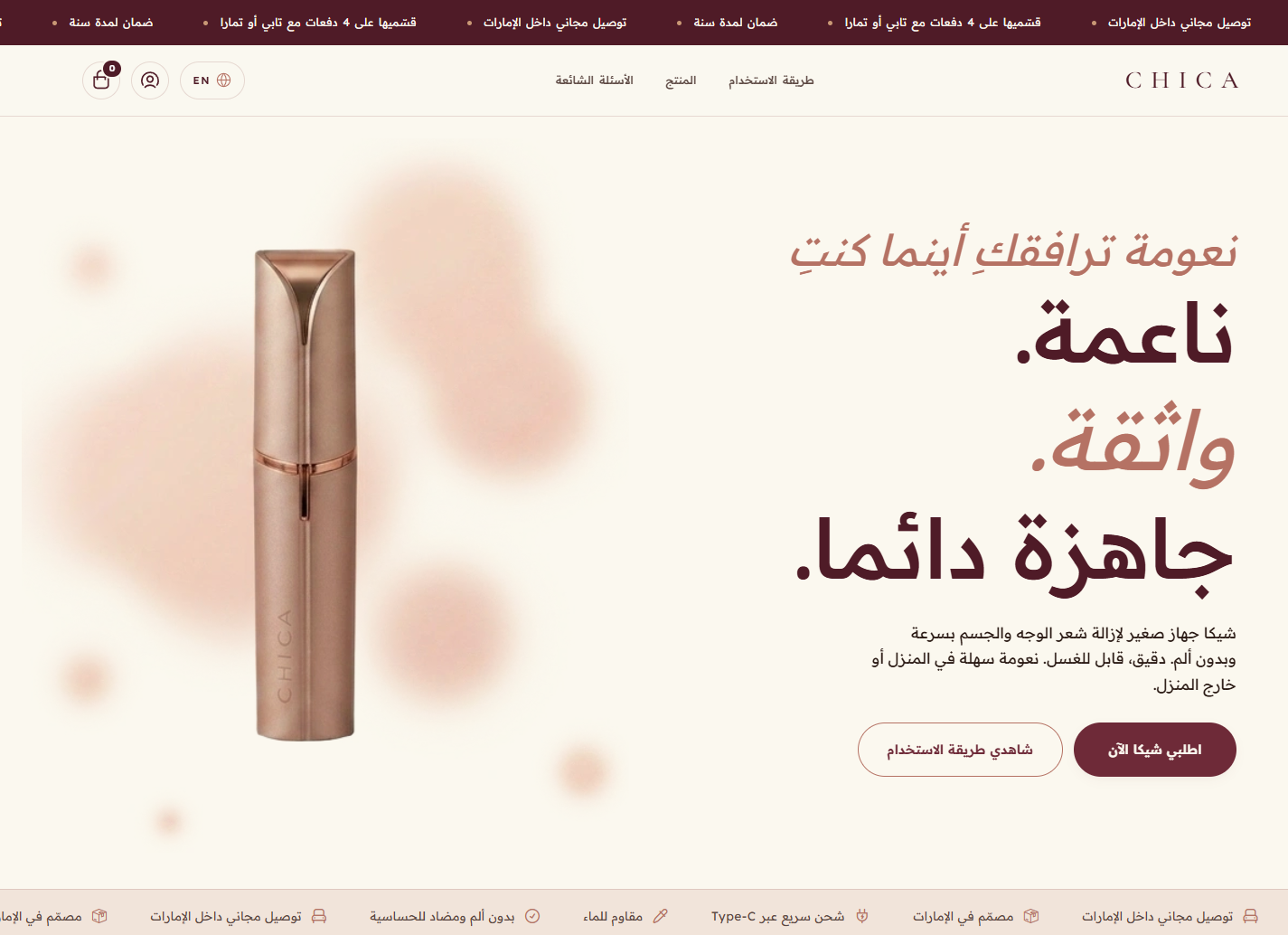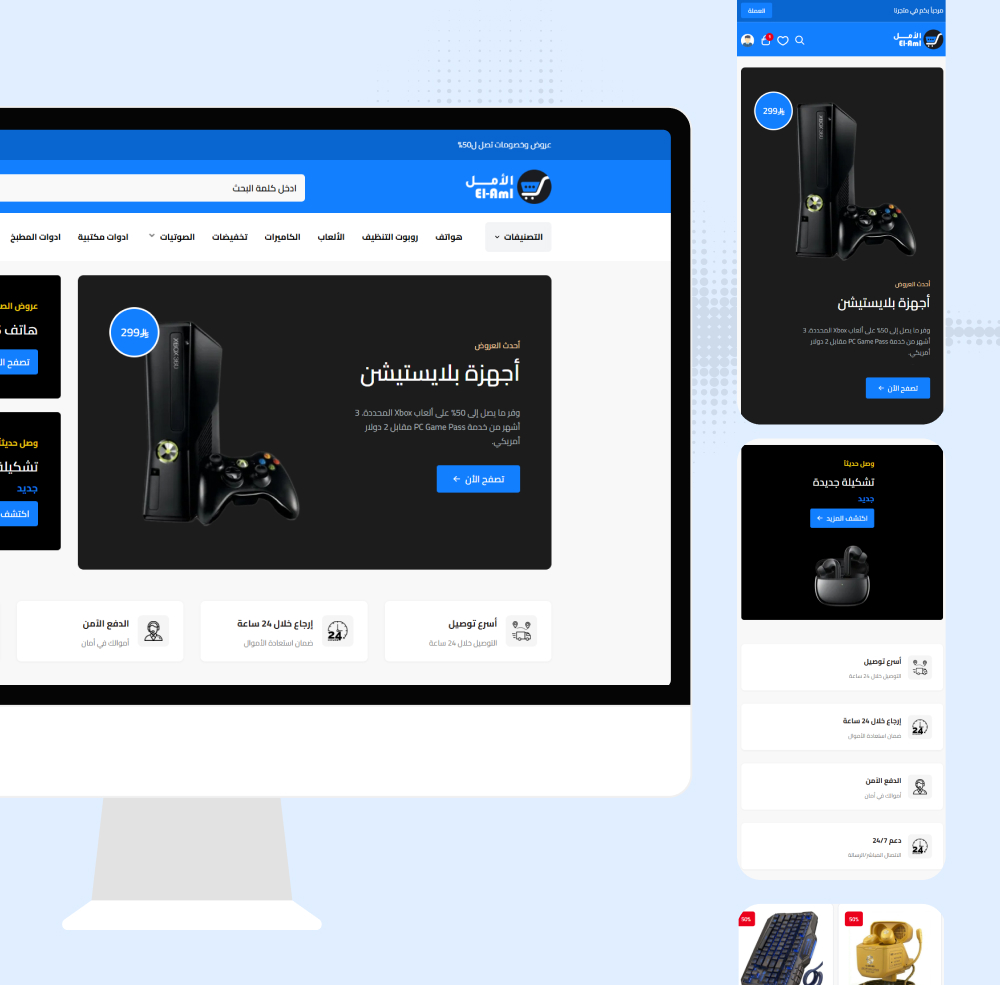




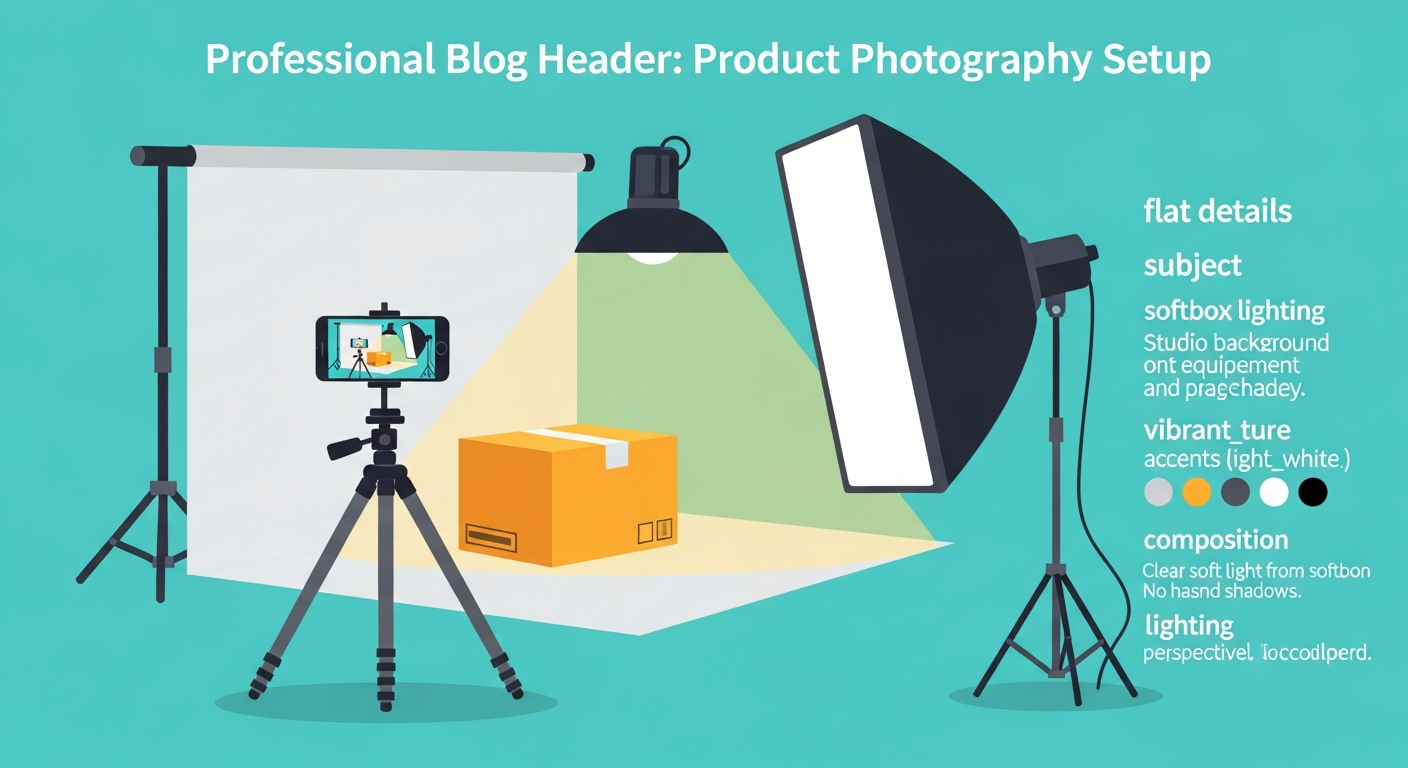
In the fast-paced world of e-commerce, an image is often the first and sometimes the only point of contact between the customer and the product before making a purchasing decision, as the customer cannot physically touch or try the product. This highlights the utmost importance of presenting professional photos that reflect the quality and intricate details of your products. If you run a store on the Zid or Salla platforms, your store's visual interface is your silent, round-the-clock salesperson. Many beginner store owners believe that obtaining professional photos requires expensive equipment or hiring specialized photography studios for exorbitant amounts. However, the amazing truth is that the smartphone currently in your pocket possesses immense technical capabilities sufficient to build a captivating visual identity for your store, which can multiply your sales if used correctly.
The tremendous advancement in smartphone cameras, their multiple lenses, and AI-powered processing technologies have made product photography incredibly easy and professional at the same time. It is no longer just about pressing the camera button; it goes beyond that to understanding the basics of lighting, image composition, and choosing the right angles that bring out the best in the product. When a customer visits your store on Salla or Zid, the first thing that catches their eye is the quality of the images. If the photos are dull or blurry, they will immediately sense a lack of professionalism, prompting them to leave the store and look for an alternative, even if your product is the best in the market in terms of quality and price.
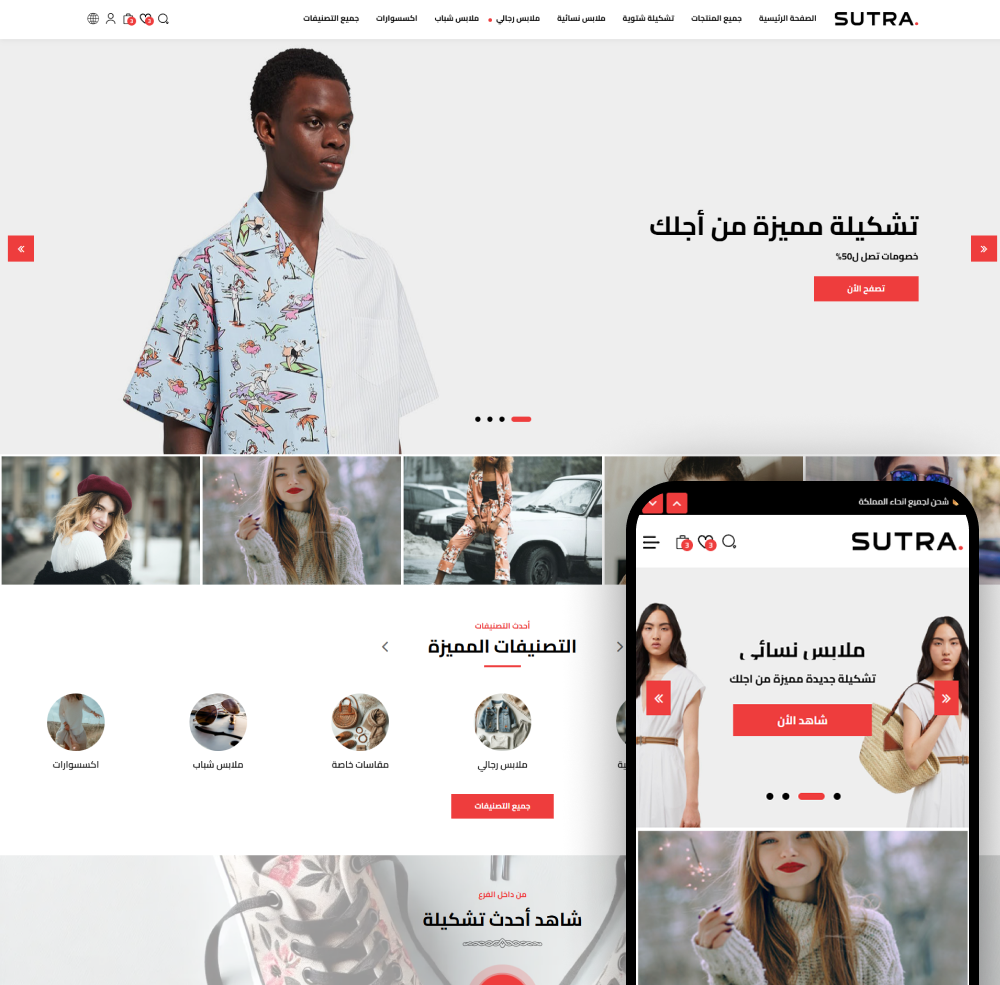
In this comprehensive and detailed guide, we will take you on a practical, step-by-step journey to learn the art of product photography using only a mobile phone. We will explore how to set up the ideal shooting environment at the lowest cost, how to leverage natural and artificial lighting to your advantage, go through the most important hidden settings in your phone's camera, and finally reach the final image editing stage using free applications. The goal of this article is to empower you to transform your ordinary product photos into marketing masterpieces that increase your customers' trust, boost conversion rates, and make your online store a preferred destination for shoppers seeking quality and credibility.
The Importance of Product Image Quality in Building Trust on Zid and Salla Platforms
Product image quality plays a profound psychological role in shaping the customer's impression of your brand and your level of professionalism. In traditional brick-and-mortar stores, buyers rely on their five senses to evaluate a product; they touch the fabric, smell the perfume, and inspect the packaging quality. In e-commerce, however, sight is the only sense the customer can rely on. A high-resolution image that shows the product's details, texture, and true colors sends a subtle message to the customer that this store cares about the smallest details, making it a reliable store that offers authentic, high-quality products. Conversely, poor or randomly taken photos raise doubts and concerns, making the customer hesitate significantly before entering their credit card details.
Leading local platforms like Zid and Salla provide highly elegant and professional templates and user interface designs, but these templates rely almost entirely on the visual content you upload as a merchant. No matter how beautiful the store's design is, inserting poor-quality product images will distort the overall appearance and make the store lose its appeal. Furthermore, clear, multi-angle photos directly contribute to reducing buyer hesitation, which is a radical solution to the problem of last-minute customer drop-offs. In this context, you can check out our specialized article on Abandoned Carts: Strategies to Recover Them in Zid and Salla to understand how the clarity of product details through images reduces the cart abandonment rate before checkout.
Competitive advantage in a crowded e-commerce market relies heavily on visual presentation. Imagine you are selling the exact same product as your competitor at the same price; the customer will automatically choose the store that displays the product in a more beautiful and clear way. Professional mobile photography allows you to show the real-life use case of the product (Lifestyle Photography), helping the customer imagine themselves owning and using this product in their daily life. This emotional connection created by attractive images is the primary driver of the purchasing process, which elevates your brand's value and allows you to price your products with excellent profit margins without customer complaints.
Essential Setup for Professional Product Photography Using a Mobile Phone
Before you start taking photos, you must prepare the surrounding environment and adjust your smartphone settings to ensure the best possible result. The first and most important step, which many overlook, is carefully cleaning the mobile camera lens using a soft cloth (like those used for cleaning glasses). Lenses often accumulate fingerprints and fine dust that cause image blur and light scattering. After cleaning the lens, you should go into the camera settings and enable the "Grid" feature, which are lines that divide the screen into nine squares. These lines incredibly help you apply the photographic "Rule of Thirds," where you can place the product at the intersection points of the lines to create a balanced and visually pleasing image.
Second, you must completely turn off the built-in flash on your mobile camera. The phone's flash produces harsh, direct lighting that leads to unwanted sharp shadows, alters the product's true colors, and creates annoying reflections, especially if the product contains plastic or glass parts. Instead, we will rely on external lighting sources, which we will discuss later. Additionally, make sure to manually adjust the camera's focus by tapping on the phone screen where the product is located, then adjust the exposure level by increasing or decreasing it by swiping up or down on the screen until you get balanced lighting that highlights the product's details without overexposing it.
Third, the background and stability are the secrets to a professional photo. You don't need a massive studio; you can use white or colored Bristol boards sold in stationery stores at low prices as a seamless background for your products. Secure the paper so that it covers the floor and curves up to cover the back wall to avoid a visible dividing line (Infinity Curve). As for stability, using a mobile tripod is an absolutely necessary investment. A tripod prevents micro-vibrations that cause image blur, especially in low-light conditions, and allows you to fix the shooting angle to photograph multiple products in the same style, creating wonderful consistency in your store on Zid or Salla.
- A flexible or fixed tripod to ensure the image does not shake and to maintain uniform angles for all products.
- White foam boards to use as inexpensive reflectors to direct lighting and soften harsh shadows on the product.
- Matte paper or plastic backgrounds in neutral colors like white, gray, or colors that align with your visual identity.
- Double-sided tape and small clips to accurately secure backgrounds and products in place during the photo shoot.
- Simple props such as wooden blocks, artificial leaves, or small marble pieces to add an aesthetic touch to lifestyle photos.
Lighting and Angle Secrets to Attractively Highlight Product Details
Lighting is the lifeblood of a photograph, and without proper lighting, even the best products lose their shine. Natural lighting is the best and most cost-effective option for beginner store owners. For best results, set up your shooting area next to a large window that allows indirect sunlight to enter. The best time to shoot is early in the morning or shortly before sunset (the Golden Hour), when the light is soft and diffused. Avoid shooting under harsh, direct sunlight as it will create deep black shadows and hide your product's details. If the light coming from the window is too strong, you can diffuse it using a sheer white curtain or parchment paper to transform it into soft light that smoothly wraps around the product.
If you rely on artificial lighting to be able to shoot at any time, you can use softboxes or even desk lamps equipped with white LED bulbs (color temperature around 5500 Kelvin to mimic daylight). To avoid harsh shadows from one side, use a white foam board and place it opposite the light source. This board will act as a reflector, bouncing the incident light back to illuminate the dark side of the product, providing balanced, three-dimensional lighting. Choosing the right angle for the product is just as important as lighting; angles vary depending on the nature of the product you are selling. For example, shooting clothes and accessories from above (Flat Lay) is excellent, while shooting perfumes and electronics requires an eye-level or 45-degree angle to highlight size and depth. To show the value of bundled products, we recommend reading our guide on Product Bundles: How to Smartly Increase Average Order Value?, where the overall shooting angle plays a major role in convincing the customer of the bundle's value.
Variety in angles and shots is what makes the difference on the product page within your store. Do not settle for a single photo of the product; instead, offer the customer a complete visual tour. Take a main photo with a pure white background to display the product clearly, then take macro shots that highlight the texture of the fabric, the quality of the stitching, or the details of the material the product is made of. After that, add a photo of the product in actual use to show its real size compared to other objects. This variety answers the customer's visual questions and dispels any doubts they may have, making the shopping experience in your store on Salla or Zid a rich and reliable one that pushes the buyer to complete the order with complete confidence.
- Flat Lay Angle: Ideal for arranging multiple products together, and widely used in photographing clothes, cosmetics, and stationery.
- Eye-Level Angle: Gives the customer a realistic impression as if they were standing in front of the product in the store, suitable for packaging and bottles.
- 45-Degree Angle: Highlights the three-dimensional aspects of the product and clarifies its overall size and shape, making it best for shoes and electronic devices.
- Macro Shots: Focus on intricate details such as engravings, stitching, or material quality to boost confidence in craftsmanship.
- Lifestyle Shots: Show the product in its natural environment during use, which triggers an emotional desire in the customer to own it.
The Editing Stage: Enhancing Images to Suit Different Marketing Channels
Taking the photo is only half the battle; the other half lies in the editing and digital processing stage. Editing does not mean faking the product's appearance or changing its true colors; rather, it means improving the lighting, highlighting details, and adjusting the white balance to ensure the product appears on screen exactly as it does in reality. Today, smartphones offer professional and free editing apps like Lightroom Mobile and Snapseed. Through these applications, you can increase image sharpness to make details clearer, adjust contrast to give the image more depth, and correct any colors that might have been affected by the type of lighting used during the shoot.
When preparing images to upload to your store on Zid or Salla, you must pay close attention to image dimensions and file size. E-commerce platforms often prefer square images (1:1 ratio) because they perfectly match the product display design on mobile screens, which most shoppers use. You must also compress the image size without affecting its quality (preferably keeping the image size under 500 KB) to ensure fast loading of store pages. A slow website kills sales instantly. The use of professional photos does not stop at the store alone; it extends to your advertising campaigns. If you plan to launch marketing campaigns, image quality is the most crucial element. You can utilize these images in designing effective landing pages, and as we explained in the article Landing Pages: How to Double the Results of Your Ad Campaigns?, an attractive and fast-loading image is the key to the success of any landing page. Integrating these images into short videos will also help you greatly if you review our guide on TikTok Ads: How to Successfully Launch Your First Campaign?.
To maintain a strong and distinct visual identity for your brand, it is absolutely essential to standardize the editing style for all your product photos. If your store displays products with randomly contrasting backgrounds, lighting, and colors, it will look like an unorganized shop or a flea market. Using apps like Lightroom, you can create custom presets and apply them with the click of a button to all your product photos. This ensures that all products displayed in your store on the Zid or Salla platform have the same brightness level, the same color balance, and the same visual style, reflecting high professionalism and making it comfortable and enjoyable for the eye to browse products, thereby increasing the likelihood of purchase.
Conclusion: Your Investment in Photography is an Investment in Your Store's Growth
At the conclusion of this detailed guide, we must emphasize an important truth: the effort and time you invest in learning and applying mobile product photography skills is not a mere luxury, but a direct investment in growing your sales and solidifying your brand's position in the market. We have proven that you do not need massive budgets to start; all you need is your smartphone, some simple, inexpensive tools, and an understanding of the basics of lighting and angles. By applying the rules we mentioned, you will be able to transform any ordinary product into a piece of art that arouses the customer's desire and drives them to make a purchasing decision with confidence and certainty, thereby overcoming the barrier of virtual shopping.
Always remember that your online store on the Zid or Salla platform is your storefront to the world, and images are the language this store speaks. Make sure to take care of cleaning your lens, using a tripod, and utilizing natural lighting or simple light reflectors, and never neglect the editing stage and standardizing your visual identity. Every photo you carefully take and edit acts as a professional salesperson convincing a new customer of the quality of your products. The variety of shots between white background photos and real-life use photos will build a bridge of trust and credibility between you and your target audience.
Finally, do not hesitate to start and experiment. Photography is a skill that develops with continuous practice. Take photos, analyze the results, compare them with competitors' photos, and observe how your sales figures and conversion rates in your store react to the improved image quality. Start today by applying these practical tips to one of your products, and notice the vast difference in appearance and professionalism. Your commitment to providing the best visual experience for your customers is the first and most important step towards building a sustainable and successful e-commerce business that excels in a market witnessing increasing competition day by day.