




Product pricing is considered one of the most important and complex decisions any merchant faces in the e-commerce world — it's not just a number placed next to the product image, but a direct message expressing your brand value and determining your target customer segment. In the rapidly growing Arab markets, especially for stores built on leading platforms like Salla and Zid, pricing plays a decisive role in the store's survival, growth, or complete exit from competition. Wrong pricing may lead to heavy losses even if your sales are high, while smart pricing guarantees you excellent profit margins and business sustainability in the long term.
Many beginner online store owners fall into the trap of random pricing, where they either blindly imitate competitor prices without knowing their real costs, or exaggerate lowering prices thinking that the lower price is the only attractive factor for the customer. This approach often leads to profit erosion and inability to cover operational and marketing expenses. The truth is that the customer seeks value for money, and if you can highlight this value through your store, packaging, and customer service, the price becomes a secondary factor in the purchase decision — and this is what distinguishes successful stores from others in the market.
In this comprehensive guide, we'll dive deep into product pricing strategies designed specifically to suit the e-commerce environment in Saudi Arabia and the Gulf. We'll discuss how you can accurately calculate your costs to avoid unpleasant surprises, and how to use psychological pricing science to influence purchase decisions of your store visitors. Whether you manage a small store at its beginning on Salla platform, or manage a growing brand with a huge volume of orders on Zid platform, the strategies we'll present here will give you the necessary tools to build a strong pricing structure ensuring you profitability and continuous growth in a fiercely competitive market.
1. The Basics of Product Pricing in E-commerce
The first and most important step in the product pricing journey is the deep understanding of the financial basics that any successful business is based on. Pricing doesn't start by looking at the market — it starts by looking inside your store and financial records. You must know the total cost of your product precisely before deciding the price you'll sell at. This cost isn't limited only to the product purchase price from the supplier or its manufacturing cost — it extends to include a series of accumulated expenses accompanying the product from the moment it leaves the factory until it reaches the customer's door. Complete ignoring of these costs or underestimating them is the first reason behind the failure of many promising stores.
To properly understand the cost structure, it should be divided into variable costs and fixed costs. Variable costs are those that change with sales volume changes, like the basic product purchase cost, packaging materials and cartons, thank-you cards, and commissions deducted on every payment operation. As for fixed costs, they are expenses you pay regardless of your sales volume, like monthly or yearly subscription fees in Salla or Zid platform packages, employee salaries if any, and costs of helper tools and apps. For your pricing to be correct, the product sale price must cover all variable costs, contribute enough to cover fixed costs, then leave you a net profit margin worth the effort exerted.
After calculating costs, we move to the concept of perceived product value, which is what the product means to the customer and not its real cost. For example, manufacturing a luxury scented candle may cost you a small amount, but the story you build around this candle, luxury packaging, and smooth shopping experience in your store, raise its perceived value and allow you to sell it at multiples of its cost. Building high perceived value requires investing in design, product images, and writing attractive content, justifying for the customer paying a higher price for your product compared to a similar product in another store not caring about these precise details.
Calculating Hidden Costs on Salla and Zid Platforms
One of the biggest traps merchants fall into is ignoring hidden costs associated with the technical and financial infrastructure of e-commerce. When selling via platforms like Salla and Zid, there are electronic payment gateway fees that must be accurately calculated within the variable cost of each product. Payment gateways deduct a percentage usually ranging between one and three percent plus a fixed amount on each operation, and this percentage differs whether payment is via Mada, credit cards like Visa and MasterCard, or Apple Pay. If your profit margin is very small, you may discover that payment gateway fees devour the largest part of your net profits without you feeling it.
Alongside payment fees, there are marketing costs and customer acquisition costs that must be included in the pricing strategy. There's no store that sells by itself — you need to launch advertising campaigns on social media platforms or pay influencers. Customer acquisition cost must be borne on product profit margins. To deeply understand these numbers and be able to track them, we recommend referring to the guide Sales Analysis: How to Read Your Zid and Salla Store Reports, where this guide will help you read the dashboard and understand where your money goes and how marketing costs affect your final profitability in detail.
The last aspect of hidden costs relates to returns and damages. In the e-commerce world, a certain percentage of orders will inevitably return to you, whether due to the customer not receiving the shipment or their desire to return it. These operations cost you shipping fees both ways, and may expose the product to damage. So the professional merchant calculates the average return rate they have and adds a simple safety margin in pricing all their products to cover these potential losses. Calculating the break-even point, the point where your revenue equals your total costs, is considered a mandatory step before launching your store or adding any new product to inventory.
2. Smart Pricing Strategies to Increase Sales
Once you understand your costs precisely, it's time to choose the appropriate pricing strategy for your store and products. There's no single strategy suiting everyone — the matter depends on your product type, market position, and target audience. The most common and simple strategy is cost-based pricing, where you calculate the total product cost and add a fixed profit percentage you predetermined, like adding fifty percent as profit share. This method ensures you don't lose and facilitates calculations for you, but conversely it may make you lose potential profits if the customer is ready to pay a larger amount for your product, or may exclude you from competition if your operational costs are much higher than competitors.
The second and more professional strategy is value-based pricing, which relies entirely on the extent of customer appreciation for your product and their need for it. This strategy is excellent for stores selling exclusive products, handmade products, or brands specialized in sectors like perfumes, jewelry, and fashion. In this case, you're not selling just assembled raw materials, but selling a feeling, social status, and a solution to a specific problem. Applying this strategy requires great marketing effort to build a strong visual identity for the store, using professional images, and writing product descriptions enhancing their value, justifying the high price and convincing the customer to buy with full confidence.
There's also the market penetration strategy, usually used when launching a new store or a completely new product. This strategy relies on placing a very low price initially to attract customer attention, gain rapid market share, and build a loyal customer base. After a period of time and after customers get used to the store's quality, prices are gradually raised to reach the natural and profitable level. Be very cautious when using this strategy on Salla and Zid, where you must have a clear and thoughtful plan to raise prices later without angering early customers or losing the trust you've built with them.
Psychological Pricing and Its Impact on Purchase Decision
Psychological pricing is the art of using numbers to influence the buyer's subconscious and direct them toward quickly making the purchase decision. One of the most famous of these tactics is the charm pricing strategy, relying on ending the price with the number nine. For example, pricing the product at ninety-nine riyals instead of one hundred riyals. Although the difference is just one riyal, the human mind reads the number from left to right, feeling the price is in the nineties range and not the hundreds, making it look like a better deal. This simple strategy has proven effective in increasing Conversion Rate: Secrets to Increasing Orders on Salla and Zid noticeably without sacrificing any mentioned profits.
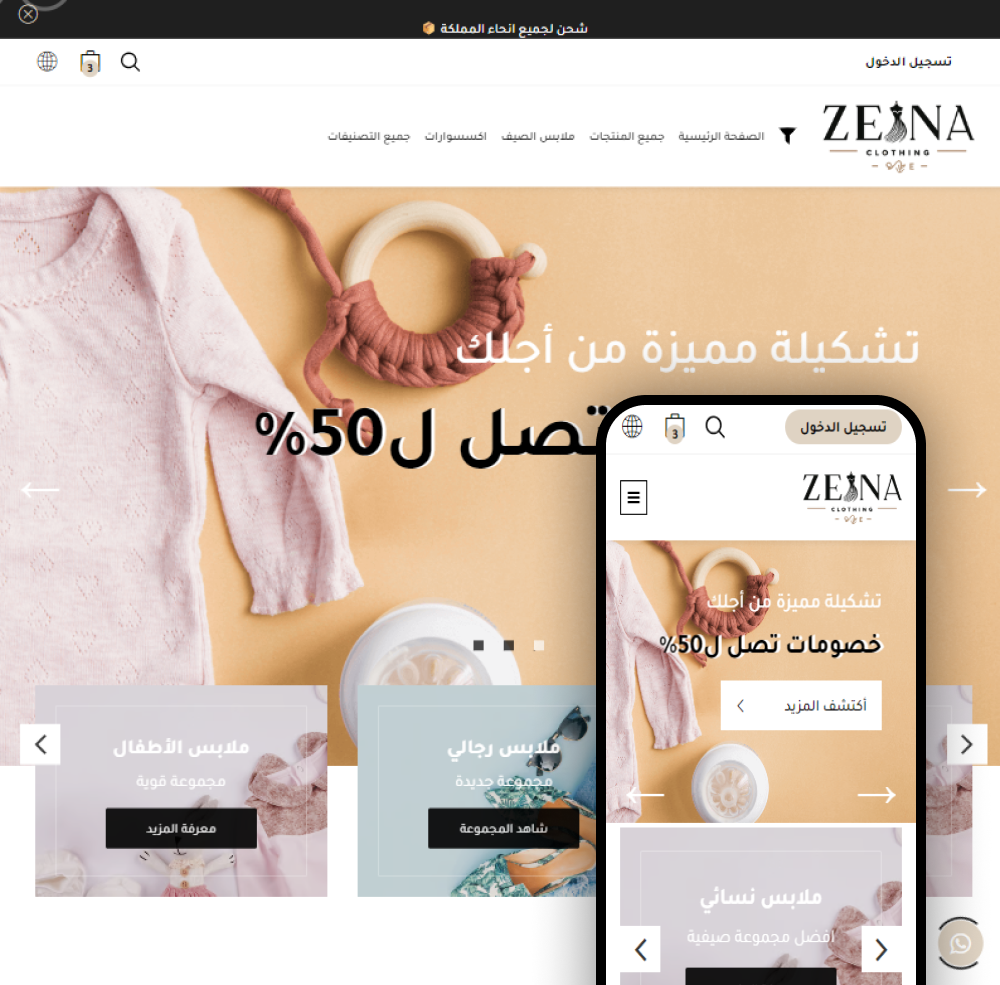
Another very powerful tactic easily available in Salla and Zid dashboards is bundle or group pricing. Instead of selling each product separately at full price, you combine three complementary products into one bundle and sell them at a total price slightly less than the sum of their individual prices. This tactic achieves two goals at once — it gives the customer a feeling that they got great value and excellent discount, while simultaneously raising the average order value for the store, reducing shipping and packaging cost as a percentage of the total order and increasing overall store profitability greatly and effectively.
The decoy effect is an advanced psychological tactic that can be used to direct customers toward buying the most profitable product for you. This tactic relies on offering three options to the customer — the first option cheap with few features, the second option what you want to sell at a medium price and excellent features, and the third option very expensive with features exceeding the customer's need. The existence of the third expensive option makes the middle option look very logical and an unmissable deal in the customer's eyes. You can apply this in your store by offering different sizes of the same product, facilitating for the customer making the purchase decision for the segment achieving you the best profit margin.
3. Dealing With Competition and Pricing Promotional Offers
In the open e-commerce world, customers can compare your prices with competitor prices with one button click. So competitor monitoring is a basic part of the pricing strategy, but must be done smartly. The biggest mistake you can make is entering a price war with your competitors, where each party reduces their price to become the cheapest. Price wars always lead to destroying everyone's profit margins, and in the end the only winner is the customer, while the merchant may be forced to close their store due to lack of liquidity. Instead, monitor competitor prices to know your position in the market, and try to excel in after-sales services, delivery speed, and packaging quality, to justify any slight increase in your prices.
Promotional offers and discounts are a very powerful tool to stimulate sales, and Salla and Zid platforms provide excellent tools to manage these offers with high flexibility. You can set up percentage discount coupons, fixed amount, or temporary discount offers appearing with a countdown timer to create a sense of urgency in the customer. It's important to use these offers strategically, like launching them in seasons and holidays, or as an incentive for new customers, or to reward loyal customers. Discounts should be pre-calculated within the basic pricing structure, so they don't lead to selling at a loss even in times of major discounts.
Be very cautious about overusing discounts, because that may harm your brand image in the long term. If your store offers discounts continuously and permanently, customers will get used to that and will never buy at the basic price — they'll always wait for the next offer. This behavior reduces the perceived value of your products and makes them look cheap. Balance is the key — use discounts as a tool to move stagnant inventory or recover customers who left their products without completing purchase. You can use the article Abandoned Carts: How to Recover Your Sales on Salla and Zid to learn how to smartly use coupons in reminder messages to complete orders.
Free Shipping Strategy and Its Relationship with Pricing
Shipping cost is the number one enemy of conversion rates in e-commerce, and is the main reason behind customers abandoning shopping carts at the last moments. The customer may be ready to pay two hundred riyals for a product, but they retreat from purchase if they find that the shipping cost is thirty riyals additional. The smart solution to this pricing problem is fully or partially integrating shipping cost inside the basic product price. For example, instead of selling a product at one hundred riyals with shipping at thirty riyals, you can price the product at one hundred and twenty-five riyals and offer discounted shipping, or at one hundred and thirty riyals and offer completely free shipping.
The most effective and successful strategy in Saudi stores is offering conditional free shipping at a certain cart value. You can easily set up this option through shipping settings on Salla and Zid, so the customer gets free shipping if their purchases exceed a specified amount, let's say two hundred ninety-nine riyals. This strategy plays a big psychological role, where the customer prefers adding another product to the shopping cart to reach the minimum for free shipping instead of paying shipping fees to the delivery company. This noticeably raises average order value and covers the shipping cost you'll bear as a merchant.
Pricing transparency is a decisive factor in building trust with your customers. Always ensure that your prices are clear and that shipping and tax policies are explicitly declared before the customer reaches the final checkout page. Unpleasant surprises on the checkout page, like adding unexpected taxes or packaging fees, lead to loss of trust and immediate customer escape. Your pricing should be comprehensive and clear from the first moment the customer browses your store, and this honest approach will make customers respect your brand and return to buy from you over and over again.
4. Conclusion: Your Next Steps Toward Successful Pricing
At the end of this guide, we must emphasize that product pricing isn't a process you do once and leave forever. The market changes, material costs change, and consumer behaviors continuously evolve, making it imperative for you as a merchant to be flexible and ready to periodically update your pricing strategy. Success on e-commerce platforms like Salla and Zid requires you to continuously monitor your profit margins, and ensure that your prices still cover your rising costs and provide you with the financial return ensuring your store's growth and expansion in the future.
Don't hesitate to test different prices for your products to know what the optimal price is that achieves you the highest revenue and best conversion rate. You can use the A/B Testing strategy by changing prices of some products for a specific period and monitoring customer interaction and sales volume. Benefit from the strong reports and analytics provided by Salla and Zid dashboards to understand your customer behaviors, identify the best-selling products, and products that need price modification or display method change to move sales for them.
Finally, remember that pricing is a reflection of your brand value. Don't fear placing prices reflecting the high quality and great effort you exert in choosing products, packaging them, and providing exceptional customer service. Today's Arab customer has become more aware and seeks the integrated experience and real value, not just the cheapest price. Apply the smart strategies we discussed in this article boldly, monitor your store results, and be certain that correct pricing is the magic key to convert your online store from just an idea into a prosperous and sustainable business.