



In the fast-paced world of e-commerce, store owners face a continuous challenge: the rising cost of acquiring new customers day by day. Relying solely on driving new traffic is no longer the most profitable strategy; instead, focusing on maximizing the value derived from existing customers has become the key to sustainable success. This is where the term "Average Order Value" (AOV) emerges as one of the most critical metrics that every merchant on the Zid and Salla platforms must monitor and strive to increase by all means. Increasing this average simply means that a single customer buys more products or more expensive items in a single transaction, which boosts profit margins and covers marketing and operational costs much more efficiently compared to selling to scattered customers.
The "Product Bundling" strategy is considered one of the smartest and most powerful tools to achieve this goal. It is not just about putting two products together and discounting the price; rather, it is an art and a science that requires a deep understanding of consumer behavior and needs. When you design a product bundle correctly, you are not just selling products, but offering a comprehensive solution or a unique experience to the customer. This makes them feel satisfied with the deal they got, and in return, your sales increase significantly. In this comprehensive article, we will dive deep into the product bundling strategy and explain how you can apply it professionally to your online store, whether you use the Zid or Salla platform, to ensure maximum return from every visit to your store.
The Concept of Product Bundles and Why They Are a Secret Weapon for Merchants
Product bundling is a marketing strategy that relies on grouping several products or services and selling them as a single unit, often at a price lower than the sum of the individual products if purchased separately. The core idea here lies in playing on the customer's perceived value; the buyer sees that getting a complete set at a discounted price represents a "winning deal" not to be missed. This approach reduces what behavioral psychology calls the "pain of paying," as the customer makes a single purchasing decision for a group of items instead of making multiple decisions for each product individually, which greatly facilitates and accelerates the checkout process.
From an operational and logistical standpoint, bundles are a true blessing for e-commerce store owners on platforms like Zid and Salla. Imagine that instead of preparing, packaging, and shipping three separate orders to three different customers, you ship one box containing three products to a single customer. This means massive savings in packaging material costs, order preparation time, and most importantly, the shipping cost itself if you bear part of it. Additionally, bundles help move stagnant inventory, as a high-demand product can be combined with a slower-selling (yet useful and complementary) product. This helps you clear your warehouses smartly without the need for massive discounts that could harm your brand image.
Moreover, product bundles indirectly contribute to improving the customer experience by saving them time and effort in searching for complementary products. When a customer buys a smartphone, they will often need a protective case, a charger, and headphones; offering these items in a single bundle under the name "Complete Protection Bundle" saves them the hassle of searching and comparing each piece. To ensure the success of this process, you must have the optimal inventory management system for Zid and Salla e-commerce stores, to ensure that all bundle components are available, and to avoid selling bundles containing out-of-stock items, which could cause embarrassment and customer service issues.
Bundle Design Strategies Customers Cannot Resist
The first and most common strategy is "Complementary Bundling," which relies on grouping products that complement each other and that the customer cannot do without when using the other. A classic example is selling a toothbrush with toothpaste, or selling a camera with a memory card and a bag. In specialty coffee stores, for example, a "V60 tool" can be bundled with "paper filters" and "specialty coffee beans" and named the "Professional Coffee Maker Bundle." The secret here lies in understanding the complete journey of using the main product and providing everything the customer needs to start using it immediately, which raises the added value and encourages the customer to pay a higher amount for convenience and completeness.
The second type is "Volume Bundling," and this strategy targets consumable products that the customer repeatedly buys on a regular basis, such as cleaning supplies, health foods, or personal care products. Instead of selling one bottle of shampoo, you can sell three bottles at a slightly discounted price, or offer a "Buy 2 Get 1 Free" deal. This type of bundle ensures customer loyalty for a longer period because they will have enough stock of your product to keep them from thinking about competitors for several months, and it instantly increases the shopping cart value. However, caution must be exercised regarding its impact on repeat visits, so a balance must be struck between the quantity sold and the expected consumption period.
The third and innovative strategy is "Discovery Bundling," which is excellent for stores selling products with multiple flavors or scents, such as perfumes, chocolates, or tea. Small samples or regular sizes of several different types are grouped into a single bundle to enable the customer to try everything at a reasonable price. This strategy reduces the purchasing risk for a hesitant customer who doesn't know which flavor they will like, while simultaneously introducing them to new products they might become addicted to in the future. To make the most of this strategy, you can leverage customer data and behavior analysis, and learn how to utilize artificial intelligence in developing your e-commerce store to determine which products are typically bought together, and suggest personalized bundles based on this precise data.
Practical Application of Product Bundles on Zid and Salla Platforms
When it comes to technical implementation, the "Salla" platform offers great flexibility for merchants through its app store or even through built-in options in some advanced plans. In Salla, you can create a new product and name it after the bundle, then list its contents in the product description. However, the more professional method is to use "Cross-selling" apps or bundling apps that automatically deduct inventory from individual products when the bundle is sold. This prevents inventory errors. You must ensure that the bundle images in your Salla store are highly attractive and clearly show all components, while prominently displaying the value the customer saves (e.g., "Save 50 SAR when buying this bundle").
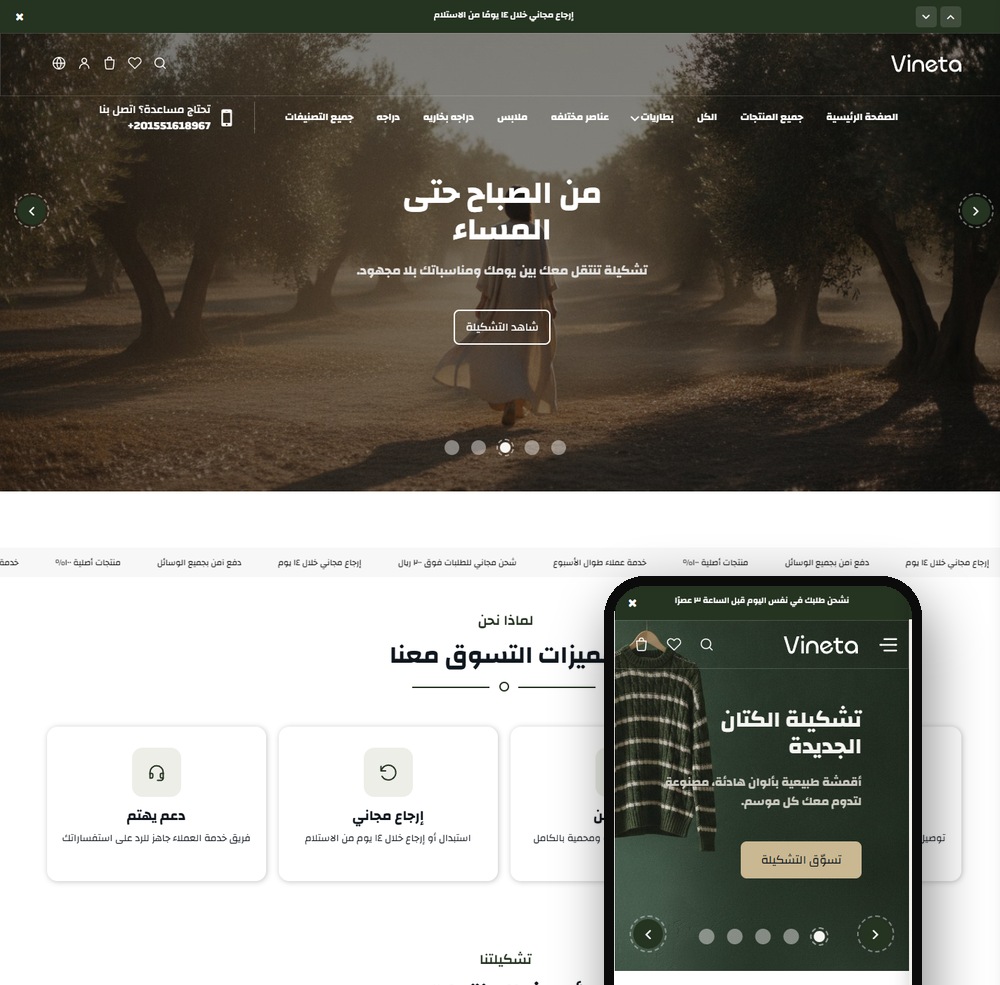
As for the "Zid" platform, it also boasts a robust technical ecosystem that supports this concept. You can take advantage of multiple product options or partner apps in the Zid App Store to create promotional offers based on volume or bundling. It is crucial when implementing bundles in Zid to pay attention to the user experience on the product page; the add-to-cart button for the bundle must be clear, and the customer should see the original price crossed out next to the bundle price to feel the extent of the savings. You can also use the "Related Products" feature to display the bundle as a better option on the individual product page, enticing the customer to upgrade their order.
A crucial point in the practical application on both platforms is where these bundles are displayed. Do not settle for just placing them in the products section; they must appear in strategic locations such as the homepage, related product pages, and most importantly, on the cart page before checkout. Imagine a customer adding a shirt to their cart, and a pop-up offer appears suggesting they add pants and shoes to complete the outfit at a 20% discount. This moment is the most opportune to increase the order value. For more details on optimizing this critical stage, we recommend reading our article on optimizing cart and checkout pages to reduce cart abandonment rates, where you will find golden tips to ensure the customer doesn't slip away at the last minute.
Common Mistakes When Creating Bundles and How to Avoid Them
One of the biggest mistakes merchants make is overcomplicating the offer, which strikes the customer with "Analysis Paralysis." When you present the customer with dozens of bundle options with complex combinations and vague conditions, they often choose not to buy at all for fear of making the wrong decision. The solution is simplicity; offer a maximum of three options (a basic bundle, a popular bundle, and a premium bundle) and make the differences between them crystal clear. Simplicity is the key to conversion, and the customer is looking for a quick solution to their problem, not a puzzle they need to solve before paying.
Another fatal mistake is "uncalculated pricing," which can lead to profit erosion or what is known as "Cannibalization." This happens when the bundle price is so low that it wipes out the profits of individual products the customer would have bought at full price anyway. The discount offered in the bundle must be carefully calculated so that it is enticing to the customer while maintaining a healthy profit margin for the merchant. Remember that the goal is to increase "gross profit" by increasing the order volume, not just increasing sales at the expense of profit margins.
Also, many merchants ignore the importance of data and continuous analysis of bundle performance. You might think that bundling Product A with Product B is a genius idea, but customers might not see any connection between them. Relying solely on intuition in e-commerce is a huge risk. You must test several bundle combinations and monitor which ones generate higher sales. Use the analytics tools in Zid and Salla to find out which bundles are viewed but not purchased, and which are immediately added to the cart. Calculated trial and error is the only way to reach the "perfect bundle."
Steps to Market Bundles to Ensure the Highest Conversion Rate
Once the bundles are designed and uploaded to the store, it's time to market them aggressively. Do not expect customers to discover the bundles on their own; you must put them right in front of their eyes everywhere. Start with email and SMS campaigns to your existing customer base, informing them about the new "exclusive offers." The message format should focus on the benefits and savings, such as: "Don't miss the chance to get the complete skincare set and save 20% - Limited quantity." Existing customers are the most likely to buy bundles because they already trust the quality of your products.
Influencer marketing is considered one of the most powerful channels for promoting bundles, especially if the bundle comes in special and distinctive packaging (Unboxing Experience). Influencers and followers love watching the unboxing of packages containing multiple products, as it gives a sense of abundance and richness. Ask the influencer to explain how the bundle's products complement each other to yield a better result than using a single product. If you are interested in learning more about how to manage these campaigns successfully, you can check out our guide on Influencer Marketing: Your Guide to Success on Salla and Zid, which will explain the steps to you in detail.
Finally, use the strategy of "scarcity" and "urgency" in marketing your bundles. Place a countdown timer for the expiration of the bundle offer, or mention that the available quantity of this set is very limited. This motivates the customer to make a purchasing decision immediately rather than postponing it. You can also create educational content (a video or a blog post) explaining why these products were grouped together and how the customer can make the most of them. Good content builds trust, justifies the price, and transforms the bundle from just a group of products into a "smart investment" in the eyes of the customer.
In conclusion, product bundles are a pivotal strategy for any e-commerce store aspiring to grow and increase profitability in a competitive environment like the Saudi and Gulf markets. It is not just a way to sell more; it is a tool to improve the customer experience, manage inventory efficiently, and raise the average order value in a smart and sustainable manner. Whether you are a merchant on the Zid or Salla platform, the tools are at your fingertips, and success depends on your ability to understand your customer and present the right offer to them at the right time.
Always remember that a successful bundle is one where the customer feels like the biggest winner, while you achieve your financial and operational goals in the background. Start today by reviewing your sales, identify products that are frequently sold together, and create your first bundle. Do not be afraid to experiment, and never stop optimizing, as finding the right formula for bundles might just be the quantum leap your e-commerce store is waiting for this year.
Start applying the tips provided in this article and monitor your performance indicators. Over time, you will notice that your customer acquisition cost hasn't changed, but the return from that customer has doubled, and this is the essence of smart e-commerce. Invest in designing, packaging, and marketing bundles, and you will reap the rewards in customer loyalty and soaring numbers in your monthly sales reports.