



Introduction: The Challenge of Abandoned Shopping Carts in E-commerce
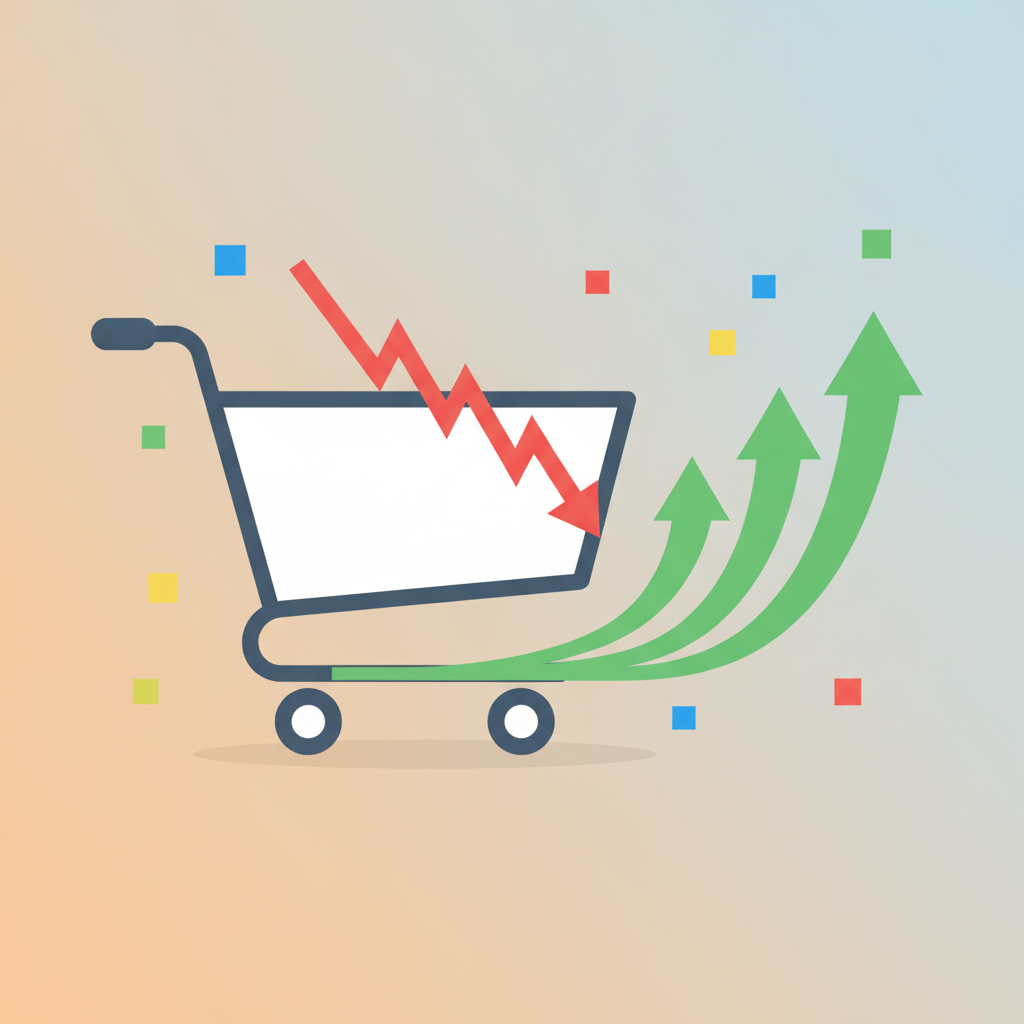
Abandoned shopping carts are a common and frustrating phenomenon in the world of e-commerce, where shoppers add products to their baskets but leave the store without completing the purchase. This phenomenon is not just a negative statistic; it represents a direct loss of potential revenue that could have been achieved if those purchases were completed. Global statistics indicate that the cart abandonment rate averages between 60% and 80%, shocking figures that show the magnitude of lost opportunities faced by online stores daily, whether they operate on platforms like Zid, Salla, or Shopify.
Understanding the underlying reasons why customers abandon carts is not merely about analyzing numbers; it is a crucial key to developing effective recovery strategies. These reasons vary between technical factors, such as slow website speed or complex checkout steps, and marketing factors, such as unexpectedly high shipping costs or the lack of preferred payment options, or even simple customer distraction or the desire to compare prices. Whatever the reasons, the ability to identify and effectively address these pain points can make a tremendous difference in conversion rates and increasing profits for an online store.
In this comprehensive article, we will delve into exploring abandoned cart recovery strategies, with a particular focus on how to effectively apply these strategies on leading e-commerce platforms in the Arab region such as Salla and Zid, in addition to mentioning Shopify as a global platform offering extensive capabilities. We will provide practical, actionable tips, real-world examples, and tools that can be used to convert hesitant customers into actual buyers, thereby maximizing your online store's revenue and reducing losses from neglected shopping carts.
Understanding the Main Reasons for Cart Abandonment
Before embarking on recovery strategies, it's essential to understand the root causes behind shopping cart abandonment. These reasons are not uniform and vary depending on the nature of the store, the target audience, and the type of products or services offered. However, they can be categorized into several key areas that help store owners on platforms like Zid, Salla, and Shopify identify weaknesses and address them proactively and effectively to reduce abandonment rates.
One common reason is unexpected additional costs, especially shipping fees, taxes, and other charges that appear at the end of the checkout process. Many customers feel frustrated when they discover that the final price is much higher than they anticipated, prompting them to abandon the purchase. Additionally, a complex or lengthy checkout process plays a significant role in deterring customers; if it requires multiple steps, mandatory account creation, or excessive data entry, it increases the likelihood of customer distraction or boredom.
Other factors include technical website issues or slow loading times, which raise doubts about the store's reliability and lead to a poor user experience. Also, lack of preferred payment options, a feeling of insecurity about entering credit card information, or even the absence of a clear and flexible return policy, all contribute to customer hesitation. Sometimes the reason is as simple as the customer merely browsing products or comparing prices without an immediate intention to buy, or even being distracted by a phone call or message. Understanding these multiple reasons is the first step towards building a robust and impactful recovery strategy.
Abandoned Cart Recovery Strategies via Email
Email campaigns for abandoned cart recovery are among the most effective and low-cost strategies, and they are perfectly applicable across all e-commerce platforms, including Zid, Salla, and Shopify. The idea is to send a series of reminder emails to customers who left products in their carts without completing the purchase. These messages must be carefully designed to be appealing and to motivate the customer to return and finalize their order, taking into account timing and content.
To maximize the effectiveness of this strategy, email messages should be as personalized and tailored as possible. Start by addressing the customer by name and mentioning the specific products they left in their shopping cart. Platforms like Shopify can provide advanced tools for automating this process, while Zid and Salla also offer good options through their integrated apps or core functionalities. The message should also include a clear Call to Action, such as a 'Return to Cart' or 'Complete Order Now' button, to facilitate the customer's return.
Do not rely on just one message. It is better to design a series of 2-3 emails sent at specific intervals. For example, the first email can be sent 1-2 hours after cart abandonment, serving as a gentle reminder. The second email can be sent after 24 hours, and might include a special offer or an additional incentive like a small discount or free shipping. The third email can be sent after 48-72 hours, with a touch of urgency or a reminder of low stock. Remember that analyzing shopper behavior can help you determine the optimal timings for your messages, and you can leverage Shopper Behavior Analytics: Understanding Your Customers in Salla and Zid to refine your strategies.
Examples of Effective Email Content
When crafting the content for abandoned cart recovery emails, messages should be concise, clear, and motivating. The first email should be friendly and a reminder, such as: "Hi [Customer Name], did you forget something?" along with displaying the products in the cart and a direct link to return. A lighthearted question like "Did you encounter any issues? We're here to help!" can also be added to open the door for communication.
For the second email, an additional incentive can be used. For example: "Don't miss out on [Product Name]! A 10% discount awaits you" or "Complete your order now and get free shipping!". These incentives are particularly effective in addressing the issue of high additional costs. Such offers can be combined with a countdown timer to create a sense of urgency and increase the response rate, a feature available in some advanced marketing apps on Shopify, and can be manually replicated or achieved through specialized apps in Salla and Zid.
The third email can have a stronger tone, focusing on scarcity or the impending expiration of the offer. "Last chance to save your cart! [Product Name] is almost out of stock" or "Your special offer is ending soon! Don't miss the chance to get your favorite products". It's also important to include links to customer service or an FAQ section in all messages, to provide assistance in case the customer has any inquiries or issues. This continuous and thoughtful communication significantly increases the chances of completing the purchase and converting an abandoned cart into a completed order.
Using SMS and WhatsApp Marketing for Cart Recovery
In addition to email, SMS (Short Message Service) and WhatsApp marketing are very powerful tools for recovering abandoned shopping carts, especially in the Arab region where mobile phone and WhatsApp usage rates are exceptionally high. These channels boast significantly higher open and read rates than email, making them ideal for urgent reminders and direct incentives. Store owners on Zid, Salla, and Shopify can leverage these channels to enhance the effectiveness of their recovery campaigns.
When using SMS, the message should be very concise and direct. Focus on reminding the customer about the items left in their cart and inviting them to complete the purchase with a direct link. For example: "Hi [Customer Name], your cart at [Your Store Name] is waiting! Complete your order now: [Cart Link]." A special, limited-time offer can also be included to increase urgency. Care should be taken not to over-send messages to avoid annoying customers, and to comply with local regulations regarding SMS marketing. Platforms like Salla and Zid offer integrations with SMS services to simplify this process.
WhatsApp marketing, on the other hand, offers greater flexibility in content and can be more personal and interactive. Abandoned cart reminders can be sent, product images can be showcased, incentives can be offered, and even customer inquiries can be answered directly through chat. Leveraging WhatsApp Marketing: Your Guide to Increasing Sales in Salla and Zid can greatly enhance this strategy. Many stores on Shopify, Zid, and Salla use specialized WhatsApp applications to automate sending abandoned cart reminders and providing instant support, contributing to building a stronger relationship with the customer and motivating them to complete the purchase. Make sure to obtain customer consent before sending marketing WhatsApp messages.
Implementing SMS and WhatsApp Strategies
To maximize the effectiveness of SMS and WhatsApp in abandoned cart recovery, careful planning of timing and content is crucial. For instance, the first SMS can be sent shortly after cart abandonment (e.g., 30 minutes to an hour) to serve as an immediate reminder. Given the high open rates of SMS messages, they can be particularly effective in recovering customers who were temporarily distracted.
For WhatsApp, a more detailed approach can be used. After the SMS or as an alternative a few hours later, a WhatsApp message can be sent including more details, such as product images in the cart, some positive product reviews, in addition to a strong incentive (e.g., a discount or free shipping). WhatsApp can also be used to provide immediate assistance. If a customer is facing an issue completing payment, they can reply to the WhatsApp message and receive direct support, quickly removing obstacles. Integrated instant chat applications with these platforms can further increase the effectiveness of this approach.
It is very important to integrate these strategies with performance analytics. Monitor open, click-through, and conversion rates for each SMS and WhatsApp campaign. Test different types of offers and incentives, sending times, and message wording to find out what is most effective for your audience. By using specialized applications in Zid, Salla, and Shopify, you can automate these processes and analyze them accurately, allowing you to continuously optimize your strategies to increase abandoned cart recovery rates and achieve maximum return on investment.
Advanced Tactics for Abandoned Cart Recovery and Conversion Optimization
Beyond email and SMS, there are a range of advanced tactics that e-commerce store owners on Zid, Salla, and Shopify can employ to boost abandoned cart recovery rates and enhance overall conversion. These tactics often require some technical integration or the use of specialized applications, but they offer significant returns in terms of recouping lost revenue and improving the customer experience.
One such tactic is Retargeting Ads. When a customer adds products to their cart and leaves the website, their behavior can be tracked using pixels from Facebook, Google, or Snapchat. This allows for the creation of targeted advertising campaigns that appear to the potential customer on social media platforms or other websites they visit, reminding them of the products they left in their shopping cart. These ads can include special incentives or limited-time offers to encourage them to return and complete the purchase. This strategy is highly effective in re-engaging customers who may have forgotten their cart or were distracted.
Another tactic is Exit-Intent Pop-ups, which appear when a customer attempts to leave the shopping cart page or the website in general. These pop-ups can offer an immediate discount, free shipping, or a special deal to encourage the customer to complete their purchase before leaving. This feature typically requires the use of specialized applications, which are widely available on Shopify and also have solutions in the Salla and Zid app marketplaces. Furthermore, Upsell and Cross-sell applications can be used to increase the order value when a customer returns to complete their purchase; you can find more details in Upsell Apps: Increasing Average Order Value in Salla and Zid.
Optimizing the Checkout Experience and Preventing Abandonment
Abandoned cart recovery strategies are not limited to merely trying to persuade a customer to return; they also encompass optimizing the checkout process itself to prevent abandonment in the first place. The checkout process should be as simple, fast, and transparent as possible. Reduce the number of required steps, enable a Guest Checkout option for unregistered users, and clearly display all costs (shipping and taxes) early in the process.
It is crucial to provide multiple payment options that are suitable for the target audience. In the Arab region, this includes Cash on Delivery, Mada cards, installment payment services like Tabby and Tamara, in addition to popular electronic payment gateways. The more convenient and diverse payment options available to the customer, the higher the likelihood of them completing their order. Best Salla and Zid Apps to Boost Your E-commerce Store Efficiency can provide you with integrated solutions to enhance the checkout experience and offer various payment gateways.
Don't forget the importance of displaying trust and security indicators during the checkout process. Trust badges, SSL certificates, and positive customer reviews can reassure the customer about the security of their data and transaction. Providing effective and accessible customer support via live chat during checkout can also resolve issues in real-time and reduce abandonment rates. Investing in improving the checkout experience not only reduces abandoned carts but also enhances customer loyalty and trust in your store.
Data Analysis and Continuous Improvement
Abandoned cart recovery strategies are not a one-time implementation but a continuous cycle of analysis, application, and refinement. For these strategies to be truly effective on platforms like Zid, Salla, and Shopify, store owners must commit to regularly monitoring and analyzing data to identify what works and what needs adjustment. The ability to understand customer behavioral patterns is the cornerstone of improving conversion rates.
Start by tracking key metrics related to abandoned carts. What is the overall abandonment rate? Which pages do customers frequently leave from? Which products are left in carts more often? Which channels (email, SMS, ads) achieve the best recovery rates? E-commerce platforms provide basic analytical tools to help you collect this data, and you can also use external analytical tools like Google Analytics to gain deeper insights. Using this data will help you understand exactly where the problem lies and direct your efforts towards the most effective solutions.
Based on the analytics, experiment with different strategies (A/B Testing). For example, try different sending times for emails, various types of incentives (percentage discount versus free shipping), or different wording for WhatsApp messages. Don't be afraid to experiment, as every store and audience is unique. What works for one store may not work for another. The goal is to find the optimal mix of tactics that resonate with your customers and increase the likelihood of them returning to complete their purchase. Continuous improvement ensures that your strategies remain relevant and effective as consumer behavior and market dynamics evolve.
The Importance of Personalization and Flexibility in Strategies
In the rapidly evolving world of e-commerce, generic strategies are no longer sufficient. Store owners need to adopt a personalized and flexible approach to dealing with abandoned shopping carts. Personalization means understanding the individual customer as much as possible and offering deals and messages that align with their interests and behavior. For example, if a customer has left a cart with high-value products, an email offering a significant discount might be more effective than one offering free shipping. Advanced systems in Shopify, and many Zid and Salla applications, allow you to segment customers based on their behavior and the value of their abandoned cart, enabling greater personalization of messages and incentives.
Flexibility means the ability to adapt to changes in the market and customer behavior. Have you noticed that abandonment rates increase during certain seasons? You might need to adjust your offers to suit these seasons. Do your customers prefer communicating via WhatsApp more than email? Focus your efforts on that channel. Your strategies should be dynamic and adjustable based on data and recent trends. This also requires staying updated with the latest tools and applications available on e-commerce platforms to help you automate and optimize these processes.
In conclusion, success in abandoned cart recovery lies in a combination of deep understanding of abandonment reasons, multi-channel strategy implementation, and a commitment to continuous analysis and optimization. By adopting a comprehensive approach that combines personalization and flexibility, Zid, Salla, and Shopify stores can not only reduce losses from abandoned carts but also turn these challenges into opportunities for sustainable growth and enhance their store's reputation as a reliable and distinctive e-commerce destination.
Conclusion: Turning Lost Opportunities into Sustainable Success
Abandoned shopping carts remain a significant challenge for any online store, regardless of its size or the platform it operates on. However, they should not be viewed as an end, but rather as an untapped opportunity to convert hesitant customers into loyal buyers. Investing in abandoned cart recovery strategies is not merely a short-term sales tactic; it is an integral part of building an excellent customer experience that fosters trust and loyalty in the long run. Successful stores on platforms like Zid, Salla, and Shopify are those that do not ignore these opportunities but strive to turn them into tangible successes.
In this article, we have explored a wide range of effective strategies, starting from personalized email campaigns, moving through direct marketing via SMS and WhatsApp, and extending to advanced tactics such as retargeting ads and exit-intent offers. Most importantly, we emphasized the importance of optimizing the checkout experience as a primary preventive measure, and the necessity of continuous data analysis and repeated experimentation to ensure the effectiveness of these strategies. All these elements work together to form a comprehensive approach that can make a significant difference in your online store's performance.
Ultimately, success in abandoned cart recovery requires a deep understanding of your customers, flexibility in strategy implementation, and a willingness to learn from data. By adopting these principles and utilizing the tools available on Zid, Salla, and Shopify platforms, store owners can not only reduce losses from abandoned carts but also transform these challenges into opportunities for sustainable growth, enhancing their store's reputation as a reliable and distinctive e-commerce destination. Don't let another abandoned shopping cart slip through your fingers; it's time to turn every lost opportunity into a success story.