

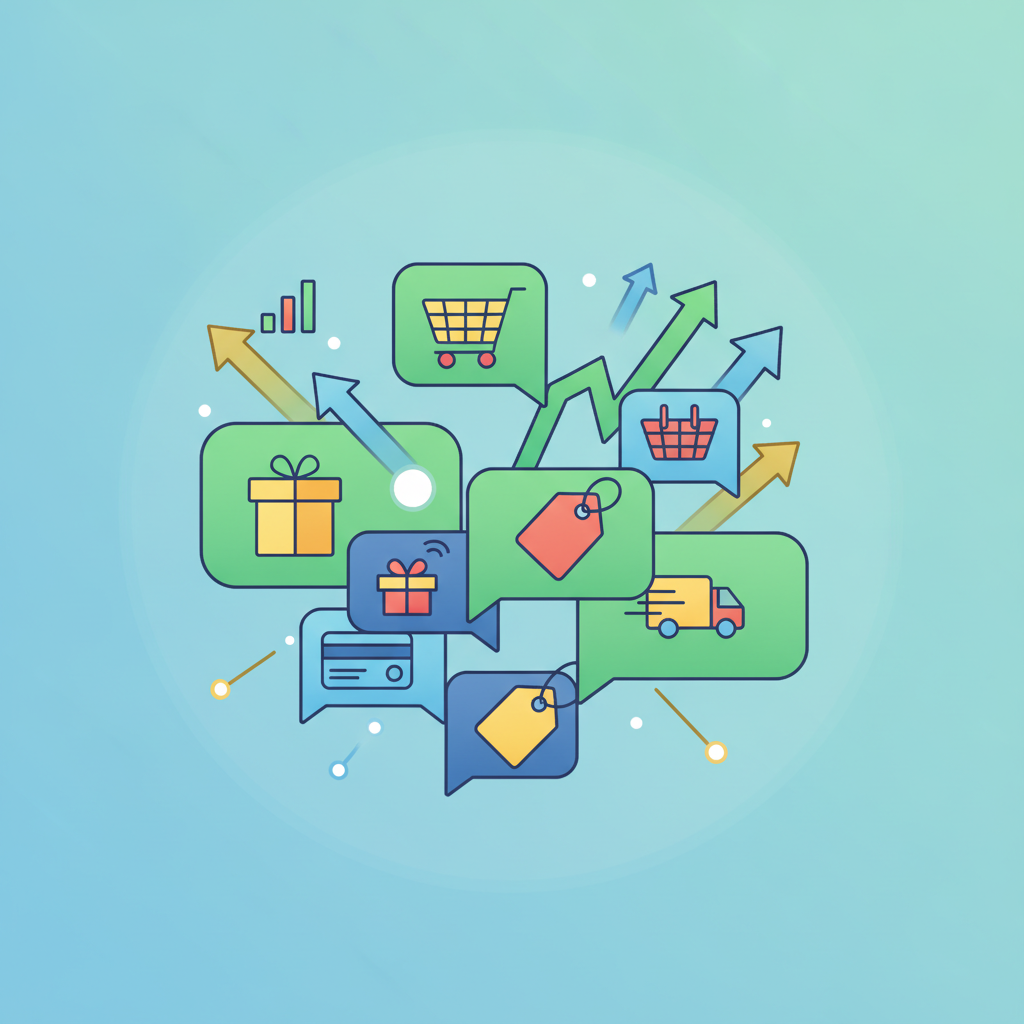
In the rapidly evolving world of e-commerce, where stores compete fiercely to capture customer attention and maintain loyalty, the search for effective and innovative marketing channels has become vital. With the increasing use of instant messaging applications in our daily lives, WhatsApp has emerged as one of the most powerful channels, not just for personal communication, but as a strategic marketing and sales tool indispensable for online stores, especially those operating on platforms like Salla, Zid, and Shopify in the Arab region.
WhatsApp marketing presents a golden opportunity for store owners to boost their sales and build strong relationships with their customers. At a time when email open rates are declining, and social media feeds are saturated with ads, WhatsApp provides a direct and highly personal communication channel that ensures your message reaches the target customer with greater efficiency and higher engagement. This article will reveal the secrets and effective strategies to maximize the benefits of WhatsApp marketing to increase sales for your store on Salla and Zid platforms, while also highlighting Shopify's capabilities.
The Importance of WhatsApp Marketing in Modern E-commerce
In the contemporary digital landscape, marketing is no longer limited to traditional advertisements or even routine email campaigns; it now requires a more personalized and interactive approach. This is where WhatsApp comes in, transforming from a mere chat application into a powerful marketing tool that allows e-commerce stores to communicate directly and instantly with their customer base. WhatsApp enables store owners to offer exclusive deals, launch new products, and provide immediate customer support, all in a way that makes the customer feel special and valued, significantly enhancing conversion rates and sales.
WhatsApp message open rates far exceed those of email or SMS, sometimes reaching over 90%, ensuring your message effectively reaches the target audience like never before. This direct channel allows you to build a relationship of trust and loyalty with customers by providing a personalized and unique shopping experience. When a customer feels that a store is communicating with them individually and offering genuine value, their likelihood of converting from a mere visitor to a regular customer increases, contributing to the store's growth and sustainability in a highly competitive market.
Furthermore, WhatsApp marketing gives e-commerce stores a strong competitive advantage, especially in markets where consumers heavily rely on this platform for daily communication. Stores that adopt this marketing approach can reach their customers at the right moment and through their preferred method, leading to increased interaction with products and offers, and accelerating the purchasing decision process. This strategy not only boosts sales but also extends to improving customer satisfaction and building a community around your brand, which is a long-term investment in your store's success.
Why WhatsApp is an Indispensable Marketing Channel for Your Store?
WhatsApp enjoys widespread adoption in the Arab region, where it has become an integral part of individuals' daily consumer behavior. This massive penetration means that your potential and existing customers use WhatsApp regularly for extended periods, making it an ideal contact point for your online store. When you communicate with your customers through a platform they prefer and already use, you remove traditional communication barriers and make reaching them more seamless and natural, increasing the likelihood of their positive and fruitful engagement with your messages and offers for your store on Salla, Zid, or Shopify.
WhatsApp provides instant and direct communication, allowing stores to offer quick and effective customer support, answer inquiries immediately, and resolve issues customers may face during the purchase process. This speed in response not only contributes to improving customer experience but also enhances their trust in the store, prompting them to complete purchases without hesitation. The ability to provide personalized assistance via WhatsApp can be a decisive factor in converting hesitant visitors into satisfied buyers, thereby directly increasing conversion rates.
Compared to many other marketing channels, WhatsApp marketing is often more cost-effective, especially when using the WhatsApp Business App or the WhatsApp Business API. Instead of investing in expensive advertising campaigns that may not yield the desired return, you can build a list of interested customers and communicate with them directly at significantly lower costs. This cost efficiency makes it an attractive option for small and medium-sized businesses looking for maximum return on their marketing investments, offering them an opportunity to compete effectively with larger stores.
Building an Effective WhatsApp Subscriber List
To maximize the benefits of WhatsApp marketing, you must start by building a strong list of subscribers who have explicitly opted-in to receive messages from you. This opt-in is not just a legal or ethical requirement; it is the cornerstone of any successful WhatsApp marketing campaign. Communicating with customers who have given you permission to do so ensures that your messages reach an audience genuinely interested in your products and services, significantly increasing engagement rates and reducing the likelihood of your messages being perceived as spam, thereby protecting your store's reputation and maintaining the quality of your customer relationships.
There are various methods for collecting interested customers' phone numbers, but the most important aspect is that these methods are transparent and clear to the customer, emphasizing the value they will receive in exchange for their subscription. You can integrate WhatsApp opt-in options at different points in the customer journey on your online store, such as the checkout page, product pages, or even through custom forms on your website. The easier and clearer the subscription process, the higher the likelihood of customers joining your list, providing you with a rich database that you can target with your future WhatsApp marketing campaigns.
Offering clear and enticing value to customers in exchange for subscribing to your store's WhatsApp list is paramount. Customers should feel that there is a real benefit for them from this subscription, such as receiving exclusive discounts, early access to new offers, or even receiving tips and products related to their interests. This added value is what will motivate customers to join your list and remain a part of it, ensuring you have an engaged audience ready to receive your marketing messages, and contributing to increased sales for your store on platforms like Salla, Zid, and Shopify.
Strategies to Attract Customers to Subscribe to WhatsApp Lists
You can use attractive pop-ups or banners on your e-commerce store's website, whether on Salla, Zid, or Shopify, to invite visitors to subscribe to your WhatsApp list. These pop-ups should be professionally designed and include a clear call to action (CTA) that encourages the visitor to enter their number. For example, you can display a pop-up to new visitors offering them a special discount on their first purchase if they subscribe to your WhatsApp list, combining a purchase incentive with a subscription incentive. You can also add a WhatsApp subscription option as an additional step during the checkout process, ensuring that subscribers are customers who have already made a purchase and have a genuine interest in your store.
Leverage the power of social media to direct followers to your store's WhatsApp list. You can post engaging content on platforms like Instagram, Twitter, and Facebook, inviting followers to join your WhatsApp list for exclusive content or special offers. Using QR codes in your physical store (if you have one) or on printed marketing materials can also be very effective. By simply scanning the code, the customer is automatically directed to a WhatsApp chat to begin the subscription process. These multiple methods ensure you reach a wider audience and convert them into active subscribers on your list.
Offering clear incentives is key to successfully attracting customers to subscribe. Consider providing instant discounts, free shipping, free gifts, or even early access to new products or exclusive collections for subscribers only. For instance, a clothing store on Zid could offer a 10% discount on the first order for new WhatsApp subscribers, while an electronics store on Salla could offer an extended warranty or special technical support. These incentives not only encourage subscription but also build positive expectations for the customer about the value they will receive through this channel. For more marketing ideas, you can check out our guide to increasing your store's sales in Salla and Zid via Instagram.
Customer Segmentation and Targeted Messaging
After building your subscriber list, the most crucial step is to segment these customers into different groups. A single message cannot suit all customers, as each customer has their own interests and purchasing behavior. Customer segmentation allows you to send targeted and relevant messages to each segment, significantly increasing engagement and conversion rates. When a customer receives a message that matches their needs and preferences, they feel valued and appreciated, which enhances their loyalty to your store and makes them more willing to respond to your offers and marketing messages.
There are multiple criteria that can be used for customer segmentation. They can be segmented based on previous purchase history, such as the type of products they bought, the value of their purchases, or the frequency of purchase. Segmentation can also be based on browsing behavior within the store, such as products they viewed but did not buy (abandoned carts), or categories they spent a long time browsing. Demographic data such as age, gender, and geographical location can also be used, if this information is available and relevant to your products. The more precise the segments, the more effective and impactful the messages will be on the purchasing decision.
Many tools and techniques are available to help you manage these segments and facilitate sending targeted messages. Platforms like Salla, Zid, and Shopify provide some basic segmentation capabilities, which can be integrated with external WhatsApp marketing tools that offer advanced segmentation features. Effectively using these tools ensures that every message reaches the right segment at the right time, reducing wasted resources and increasing the effectiveness of your marketing campaigns. For example, you can send special offers on children's products to customers who have previously purchased from the children's category, or remind customers about products they placed in their shopping cart but did not complete the purchase.
How to Personalize Messages to Increase Engagement and Sales
Message personalization is the essence of successful WhatsApp marketing. Personalization is not limited to mentioning the customer's name; it extends to offering products and deals that perfectly match their interests and purchasing behavior. For example, if a customer recently bought a smartphone from your Shopify store, you can send a WhatsApp message offering compatible accessories or a discount on screen protection. This type of personalization makes the message feel tailor-made for them, increasing the likelihood of interaction and conversion into a purchase, and reinforcing their feeling that the store understands their needs.
Abandoned cart reminder messages are a golden opportunity to increase sales via WhatsApp. When a customer places products in their shopping cart and then leaves the store without completing the purchase, you can send them a WhatsApp reminder message with the specific products they left in their cart, along with an additional incentive such as a small discount or free shipping to complete the purchase. These messages, when personalized and well-timed, are highly effective in recovering lost sales. Platforms like Salla and Zid provide tools to track abandoned carts, and these can be linked with WhatsApp solutions to automate such messages effectively.
You can also use WhatsApp to congratulate customers on their birthdays or special occasions, offering exclusive discounts as a gift. These personal touches strengthen the relationship between the customer and the store, making the customer feel valued. Additionally, updates about loyalty programs, such as earned reward points or special offers for program members, can be sent via WhatsApp. These strategies not only increase direct sales but also build long-term customer loyalty, turning them into brand ambassadors who repeatedly return to make purchases from you.
Practical Examples of Successful WhatsApp Marketing Campaigns
The types of WhatsApp marketing campaigns that e-commerce stores can implement to achieve different goals vary, ranging from increasing brand awareness to boosting sales and providing customer support. Promotional campaigns for new products or seasonal offers can be organized, where attractive messages containing product images and videos are sent, along with a direct link to the purchase page. Informational campaigns can also be launched to educate customers on how to use specific products or to provide tips related to the store's niche, enhancing content value and making customers look forward to your messages. Furthermore, WhatsApp can be dedicated to providing instant and effective customer support, quickly resolving customer issues and increasing their satisfaction.

Let's take an example of a clothing store on the Zid platform that wants to launch a flash sale. The store can send an exclusive WhatsApp message to its subscriber list an hour before the sale begins, containing details of the offers and attractive images of discounted products, with a direct link to the sale page. This sense of exclusivity and limited opportunity prompts customers to make quick purchasing decisions. Such campaigns have shown a significant increase in conversion rates over a short period, highlighting WhatsApp's effectiveness in generating urgent sales due to its instant and direct nature.
Another example could be an electronics store on the Salla platform launching an innovative new product. Instead of simply announcing it on social media, the store could offer its most loyal customers on the WhatsApp list early access to the product before its public release, along with a special discount or a free gift. This approach not only generates excitement around the new product but also rewards loyal customers and enhances their sense of belonging to the store. The store can also use WhatsApp to send explanatory videos of the new product or answers to frequently asked questions about it, increasing customer interest and encouraging purchases.
Best Practices for Designing Effective WhatsApp Campaigns
When designing WhatsApp campaigns, there should be a clear call to action (CTA) in every message, telling the customer exactly what you want them to do, whether it's "Shop Now," "Learn More," or "Chat with Us." Messages should be concise, clear, and easy to understand. Using rich media such as images, videos, and audio files can significantly increase the message's appeal and engagement rates. For example, a furniture store on Shopify could send a short video showcasing a new piece of furniture in a beautiful home setting, inspiring customers and prompting them to browse more.
Appropriate timing and reasonable message frequency are key to maintaining customer interest and avoiding annoyance. Avoid sending multiple messages in a short period, and try to send your messages at times when your customers are most active on WhatsApp. Every message should provide genuine value to the customer, whether it's useful information, an exclusive offer, or immediate assistance. Focusing on providing value ensures that customers view your messages as a positive addition rather than a nuisance, thereby strengthening their relationship with your store.
Don't stop once the campaign is launched; conduct A/B tests on different messages to see which performs best, and regularly monitor your campaign performance. Track open rates, click-through rates (CTR), and conversion rates for each campaign. This data will enable you to refine your future strategies and adapt them to better suit your customers' preferences. WhatsApp Business platforms provide analytical tools to help you track these metrics, giving you valuable insights to continuously improve your marketing campaigns and increase their effectiveness.
Integrating WhatsApp with E-commerce Platforms (Salla, Zid, Shopify)
To achieve maximum efficiency and automation in WhatsApp marketing, it is essential to integrate this channel with your e-commerce platform, whether it's Salla, Zid, or Shopify. These integrations allow you to automate many routine tasks, such as sending order confirmations, shipping updates, and abandoned cart reminders, saving time and effort for your team. Integration can be achieved through official WhatsApp Business APIs or via third-party applications and services that provide ready-made solutions for integration with these platforms. This integration allows for a seamless and integrated customer experience, where the customer receives all relevant information about their order directly on WhatsApp.
Salla and Zid platforms, being specifically designed for the Arab market, offer flexible integration solutions with WhatsApp services. Store owners on Salla and Zid can benefit from applications available in the platforms' app stores or work with developers to create custom integrations via API. For example, your Salla store settings can be configured to automatically send a WhatsApp message to the customer immediately after completing a purchase, containing the order number, product details, and a link to track the shipment. This type of instant communication enhances customer trust and reduces customer service inquiries, saving valuable time for your team. You can learn more about the most suitable platform for your store among Salla, Zid, and Shopify.
As for Shopify, it offers a wide range of applications in its app store that support WhatsApp integration for various marketing and customer service purposes. Shopify apps can automate welcome messages for new customers, shipping notifications, and even targeted marketing campaigns based on customer behavior within the store. These applications are often easy to set up and do not require programming expertise, making them accessible to a wide range of store owners. Choosing the right application and effective integration ensures that your WhatsApp marketing efforts are an integral part of your overall store strategy, enhancing efficiency and achieved results.
Tools and Applications to Facilitate WhatsApp Marketing
To simplify WhatsApp marketing and make it more effective, many tools and applications are available to help stores manage their campaigns efficiently. The first and most official option is to use the WhatsApp Business API, which provides large and small businesses with the ability to send bulk messages, automate responses, and integrate WhatsApp with their Customer Relationship Management (CRM) systems. This solution allows for high customization and scalability but requires some technical expertise or the assistance of developers. For small businesses, the free WhatsApp Business App can be used, which offers basic features such as a business profile, quick replies, and chat categorization, making it easier to manage customer communication.
In addition to official solutions, there are numerous third-party applications that provide integrated solutions for WhatsApp marketing, especially for stores on Salla, Zid, and Shopify. These applications often offer a user-friendly interface, provide ready-made message templates, and capabilities for automating abandoned cart messages, order confirmations, and even scheduled marketing campaigns. Some of these applications also allow for the creation of chatbots to handle common inquiries, providing 24/7 support without direct human intervention. When choosing an application, ensure its compatibility with your store's platform and your marketing needs. You can explore the best marketing apps to increase sales in Salla and Zid for various options.
The importance of analytics and reporting tools in optimizing WhatsApp marketing campaigns cannot be overlooked. Many of these tools provide dashboards that show you key performance metrics, such as open rates, click-through rates (CTR), the number of messages sent and received, and even sales generated through WhatsApp campaigns. This data helps you understand what works and what doesn't, and identify areas that need improvement. Through continuous monitoring and performance analysis, you can continuously refine your marketing strategies and increase the Return on Investment (ROI) for your WhatsApp campaigns, ensuring sustainable growth for your e-commerce store.
Golden Tips for Increasing Sales via WhatsApp
To maximize the benefits of WhatsApp marketing and increase your store's sales, you should focus on building trust with your customers and providing exceptional customer service. WhatsApp offers you a unique opportunity to interact personally and directly; seize this chance to provide product consultations, answer complex questions, and offer customized solutions to customer problems. When a customer feels that a team is available to provide support and assistance, their trust in the store increases, and they are more willing to make repeat purchases. Remember that building trust is a long-term investment that pays off in the form of customer loyalty and increased sales.
Don't wait for the customer to contact you; be proactive in offering help and promotions. For example, if you notice that a customer has browsed certain products for a long time without purchasing, you can send a WhatsApp message offering assistance or a special discount on those products. You can also use WhatsApp to collect feedback and reviews from customers after a purchase, showing them that their opinion matters and helping you improve your services and products. These initiatives not only increase the likelihood of purchase but also enhance the overall customer experience with your store.
Leverage the power of positive reviews and testimonials in WhatsApp marketing. When you receive a positive review from a satisfied customer, you can ask for their permission to share this review in future WhatsApp marketing messages. User-generated content (UGC), such as photos and videos shared by customers using your products, serves as powerful social proof that encourages others to buy. Sending these reviews and testimonials via WhatsApp can build immense trust in your brand and persuade hesitant customers to complete their purchases. For more on this topic, you can read our article on Reviews and Ratings: Building Customer Trust in Salla and Zid.
Avoid Common Mistakes in WhatsApp Marketing
One of the biggest mistakes store owners can make in WhatsApp marketing is sending unsolicited or excessively frequent messages, which leads to their messages being considered spam. Explicit consent from customers must always be obtained before sending messages, and privacy and data protection policies, such as GDPR in Europe or similar local regulations, must be adhered to. Respecting customer privacy and preferences is the cornerstone of building a long-term relationship. Remember that the goal is to build a relationship, not just to sell, and spam messages quickly destroy this relationship.
Another common mistake is over-reliance on automation without maintaining a personal touch. While automation helps save time and effort, there should always be an option for the customer to speak with a human customer service representative when needed. Using chatbots for common questions is good, but there should be a clear path to human support for complex issues or inquiries that require personal interaction. Maintaining this balance ensures that customers feel valued and that the store provides comprehensive and effective customer service.
It is essential to monitor customer sentiment and their responses to your WhatsApp messages. If you notice a decrease in engagement rates or an increase in message blocks, it indicates that your strategy needs adjustment. Be prepared to adapt your approach based on these observations. You may need to change the type of content, the timing of messages, or even the sending frequency. Flexibility and adaptability are key to success in any digital marketing strategy, especially in a dynamic channel like WhatsApp, which requires a quick response to changing customer preferences and behavior.
Conclusion
In conclusion, WhatsApp marketing represents a powerful and multifaceted tool that can revolutionize how your e-commerce store communicates with its customers, whether you are using Salla, Zid, or Shopify. By leveraging WhatsApp's widespread reach and high engagement rates, stores can build strong personal relationships with their customers, increase conversion rates, and achieve sustainable sales growth. In this article, we have covered the importance of this channel, how to build an effective subscriber list, segment customers to deliver targeted messages, along with practical examples and golden tips to ensure the success of your campaigns.
The key to success in WhatsApp marketing lies in focusing on providing genuine value to customers, maintaining transparency in communication, and avoiding spam messages. Automation and integration with e-commerce platforms like Salla, Zid, and Shopify play a vital role in streamlining operations and increasing efficiency, but the human and personal aspect of these interactions should not be overlooked. By continuously monitoring campaign performance and adapting to customer feedback, stores can constantly refine their strategies and maximize the benefits of this promising marketing channel.
We invite all e-commerce store owners to adopt WhatsApp marketing as an integral part of their comprehensive marketing strategy. Start today by building your list, segmenting your customers, and designing engaging and personalized messages, and you will see for yourself how WhatsApp can transform your store into a formidable sales powerhouse. Remember that investing in customer relationships is the best investment for your store's long-term success, and WhatsApp provides you with the ideal platform to achieve this with high efficiency and effectiveness.