


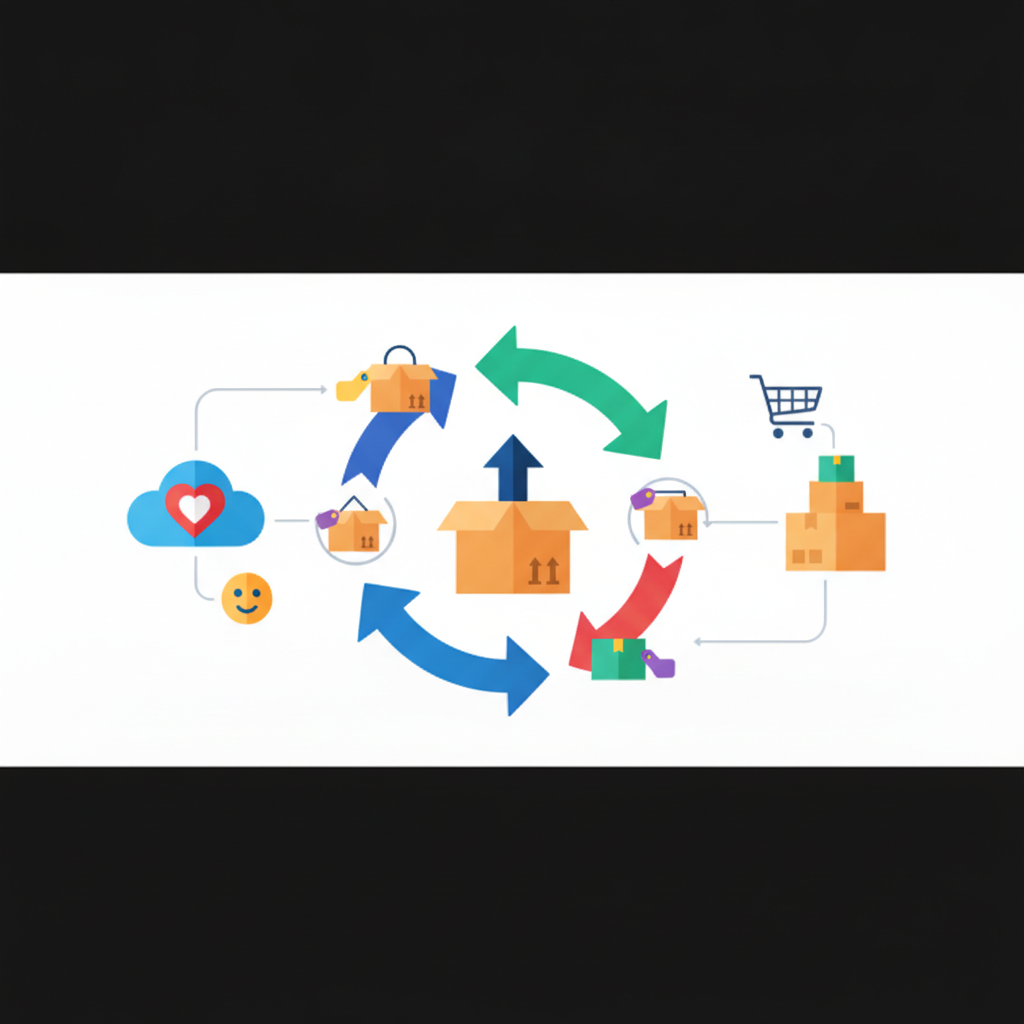
Return Management: Enhancing Customer Experience on Salla and Zid
In today's e-commerce landscape, the margin for error is no longer a luxury online stores can afford, especially with increasing competition and escalating customer expectations. Return management is a critical aspect that is often overlooked or treated as a burden, when in reality, it's a golden opportunity to strengthen customer loyalty and build a robust brand reputation. Customers expect an easy purchasing process, but they value an even more seamless and transparent return process, transforming a potentially negative experience into an opportunity to build trust.
A proactive and efficient approach to return management not only reduces financial losses but also fundamentally enhances the customer experience, positively impacting customer retention rates and increasing long-term sales. Whether you operate your store on Zid, Salla, or even Shopify, understanding the mechanics of returns and implementing best practices will grant you a significant competitive advantage in the Arab market, which is experiencing rapid growth and continuous changes in consumer behavior.

Why Return Management is an Investment, Not Just a Cost?
Many e-commerce store owners view returns as an inevitable financial loss, but this perspective obscures the significant strategic benefits that can be achieved through effective and professional management. A smooth and clear return process builds bridges of trust between the store and the customer, making the customer feel comfortable and secure when making a purchase decision, knowing that the store will stand by them if the product does not meet their expectations or has a defect.
Furthermore, well-executed return management can reduce operational costs in the long run. When the process is organized and automated, human errors and disputes are minimized, saving time and effort for the customer service team and reducing the need for costly interventions. Analyzing return data can also reveal recurring issues in products or their descriptions, allowing the store to take corrective actions that improve product quality or description accuracy, thereby reducing the return rate in the future.
Converting dissatisfied customers into loyal ones is an art mastered by stores that invest in return management. Instead of the return experience becoming an end to the customer's relationship with the store, it can become a positive turning point. When a customer feels that the store has handled their complaint seriously, respectfully, and promptly, they often return for future purchases and even recommend the store to friends and family, transforming an individual experience into invaluable word-of-mouth marketing.
Building a Clear and Effective Return Policy
The return policy is the cornerstone of any effective return management system. This policy must be clear, easy to understand, and comprehensive enough to cover all potential scenarios. Ambiguity or complexity in this policy can lead to customer frustration and an increase in inquiries, consuming customer service resources and harming the store's reputation. Therefore, it must be drafted with extreme care to ensure transparency and build trust.
It is essential that the return policy is easily and clearly accessible on all store pages, preferably with a dedicated section reachable from the website's footer or directly from the product page. Whether you use Zid, Salla, or Shopify, these platforms provide tools and dedicated spaces to display store policies. It must be ensured that customers can find and read it easily before completing a purchase, which reduces unpleasant surprises after delivery.
The policy must consider local legislation in the markets served, such as Saudi Arabia and GCC countries, as well as customer expectations in these regions. For example, allowable return or exchange periods, or refund conditions, may vary. Adhering to legal standards and exceeding customer expectations wherever possible enhances the store's credibility and protects it from potential legal disputes.
Elements of an Ideal Return Policy
To create a flawless return policy, it must include several essential elements that define the general framework of the return process. First and foremost, the allowed timeframe for returns and exchanges must be clearly specified (e.g., 7 days, 14 days, 30 days from the date of receipt), along with the acceptable condition of the item for return (e.g., must be in its original packaging, unused, with all tags and invoices). These details eliminate any ambiguity and set realistic expectations for the customer.
Secondly, it must be clarified who bears the shipping costs for returns. Is it the customer or the store? This depends on the reason for the return. If the product is defective or does not match the description, it is common for the store to bear the costs. If the return is due to a change of mind, the customer may bear the costs. Also, refund methods (store credit, bank transfer, refund to original payment source) and the expected duration for completing the refund process must be specified. This aspect can significantly impact customer retention and trust.
Thirdly, products excluded from the return policy must be mentioned, such as customized items, perishable goods, or health products that cannot be returned for hygiene reasons. Furthermore, clear and simplified steps that the customer must follow to initiate a return request must be defined, from contacting customer service to packaging and shipping the product. These details make the process smooth and reduce the need for repeated inquiries.
- Defined Timeframe: Clearly specify the number of days available for returns or exchanges.
- Product Condition: Stipulate that the product must be in its original, unused condition, with all accessories.
- Shipping Costs: Clarify who bears return shipping costs based on the reason.
- Refund Methods: Outline refund options and the expected duration.
- Excluded Products: Clearly state any products not subject to the return policy.
- Return Procedures: Provide a step-by-step guide for the customer to submit a return request.
Streamlining the Return Process: Steps and Practical Applications
Once a clear return policy is in place, the most important step is to simplify its implementation. The return experience should be as easy and straightforward for the customer as possible. Complicated procedures can lead to customer frustration and deter them from purchasing from your store in the future. The goal is to make the process friction-free, as if it were a natural extension of the seamless purchasing experience customers expect.
You can leverage the features available on e-commerce platforms like Zid, Salla, and Shopify to create an effective system for managing return requests. These platforms often provide tools or supplementary applications to create self-service return portals, where customers can submit return requests, track their status, and receive automatic updates. This reduces the burden on the customer service team and gives the customer more control over the process, increasing their satisfaction.
Effective and continuous communication with the customer throughout the return process is crucial. Immediate confirmation messages should be sent upon receipt of a return request, updates on the request status (under review, approved, refunded), and notifications upon completion of the process. This transparency reduces customer anxiety and increases their trust in the store, even in a potentially frustrating situation.
Automating the Return Request Process
Automating the return request process is one of the most important strategies for streamlining procedures and reducing operational burdens on the store. Instead of manually handling each return request via email or phone, stores can use systems or applications specifically designed for this purpose. These systems allow customers to submit return requests directly through a user-friendly interface on the store's website, saving time and effort for both parties.
Platforms like Zid, Salla, and Shopify offer various solutions to automate this process. On Shopify, there are numerous apps available in its App Store that provide integrated return portals, while on Zid and Salla, there might be built-in features or external apps that can be linked to the store. These tools are not limited to receiving requests; they can also automatically check eligibility based on the defined policy, generate shipping labels, and update the order status in the store's management system.
The benefits of automating the return process are manifold: it increases the speed of request processing, reduces human errors, improves data accuracy, and most importantly, enhances the customer experience by providing a transparent and convenient process. It also allows the customer service team to focus on complex cases that require human intervention, rather than spending time on repetitive routine tasks.
- Self-Service Return Portal: Allow customers to submit return requests themselves through an easy interface.
- Automated Eligibility Check: Program the system to verify if the request matches the return policy.
- Shipping Label Generation: Automate the creation of pre-paid return shipping labels.
- Order Status Tracking: Provide automatic updates to the customer on the return request status.
- Inventory Integration: Automatically update inventory status upon receipt of the returned product.
Inventory and Shipping Management for Returns
Returns directly impact inventory management, a process that requires high accuracy and coordination to ensure no unnecessary chaos or losses occur. Upon receipt of a returned product, a thorough inspection of its condition must be performed to determine whether it can be restocked as a new item, sold as used, or disposed of. This process requires clear procedures to ensure inventory management is carried out efficiently and without confusion.
Reverse logistics is an integral part of return management. The store must collaborate with shipping companies that offer solutions for collecting returns from customers and returning them to the warehouse. These solutions might include providing pre-paid shipping labels or arranging a doorstep pickup service, which simplifies the process for the customer and ensures the returned product arrives safely. The costs of these services must be carefully evaluated to ensure they are economically viable for the store.
One of the biggest challenges in return management is dealing with products that arrive damaged or do not meet the conditions. This is where the quality control department plays a crucial role. There must be a clear inspection process to determine the cause of damage, whether it was due to shipping, customer misuse, or a manufacturing defect. This information is vital for future product improvements or for adjusting packaging and shipping policies, thereby reducing the overall return rate.
Effective Communication and Technical Support
Even with the best policies and automated systems, the human element in communication and technical support remains crucial in return management. Customers may find themselves in a frustrating situation when needing to return a product, and here the customer service team's role is to provide support with empathy and professionalism. Listening to customer concerns and offering clear, prompt solutions can turn a potentially negative experience into an opportunity to strengthen the relationship.
Customer service teams must be comprehensively trained not only on return policies and procedures but also on how to skillfully handle angry or frustrated customers. Empowering employees to make quick and reasonable decisions, within the policy framework, can accelerate problem resolution and reduce the need for escalation. This empowerment gives customers a sense that the store values their time and strives to resolve their issues efficiently.
Providing multiple support channels ensures that customers can contact the store in their preferred manner. Whether it's via live chat on the website (available on Zid, Salla, and Shopify), email, phone, or even social media, offering diverse options enhances the customer experience. Prompt and helpful responses through these channels reduce customer waiting time and assure them that the store values their concern.
Turning a Complaint into an Opportunity to Enhance Loyalty
Smart stores do not view complaints or return requests as the end of a customer relationship, but rather as an opportunity to reaffirm customer value and strengthen their loyalty. When a store handles a return issue professionally, promptly, and effectively, the customer often remembers this positive experience more than the original problem. This significantly contributes to building long-term trust and loyalty, positively impacting customer retention.
The secret lies in proactive communication and alternative solutions. Instead of merely processing a return request, the customer service team can suggest other solutions, such as exchanging the product for another, or offering a discount voucher on a future purchase as compensation for the inconvenience. These gestures can transform a frustrating experience into a feeling of appreciation, prompting the customer not only to return but also to speak positively about your store.
Do not forget the importance of customer reviews. A customer who goes through a smooth and satisfactory return experience is often more willing to leave a positive review, whether on product pages or on general review platforms. These positive reviews serve as strong social proof for potential buyers, increasing their trust in the store, which directly impacts future sales and enhances brand reputation.
Continuous Analysis and Improvement
To maximize the benefits of a return management system, there must be a continuous focus on data collection and analysis. It's not enough to simply process returns; the root cause behind them must be understood. By tracking the most common return reasons (e.g., product does not match description, wrong size, defective product, change of mind), stores can identify recurring issues and take corrective actions.
Platforms like Zid, Salla, and Shopify provide powerful analytical tools that can be leveraged for this purpose. Store owners can track return rates by product, category, or even reason. This analysis can reveal specific patterns, such as a particular product consistently being returned due to a quality issue, or that descriptions for some products are not accurate enough, leading to incorrect customer expectations.
Based on the analysis results, the store can implement continuous improvements. This might include enhancing product quality from suppliers, modifying product descriptions to be more accurate and clear, adding detailed sizing guides, or even rethinking packaging and shipping policies. This iterative process of analysis and adjustment ensures that the return management system is not just a reactive response to problems, but a powerful tool for growth and continuous improvement.
- Overall Return Rate: The ratio of returned products to total sales.
- Most Common Return Reasons: Identify recurring reasons (e.g., size, quality, description).
- Cost Per Return: Calculate direct and indirect costs for a single return.
- Return Processing Time: Average time taken from request submission to refund completion.
- Return Impact on Customer Reviews: Monitor how the return experience affects reviews.
In conclusion, effective return management is a fundamental pillar for the success of any e-commerce store in today's competitive market. It is not merely a logistical or financial operation but an integral part of a comprehensive customer experience strategy. Stores that adopt a proactive and transparent approach to handling returns, transforming challenges into opportunities, are the ones that earn customer trust and loyalty in the long run.
By formulating clear policies, streamlining procedures using automation tools available on platforms like Salla, Zid, and Shopify, and training customer service teams to provide empathetic and effective support, stores can transform the return experience from a source of frustration into a differentiating factor. This approach not only reduces losses but also enhances brand reputation and creates a lasting positive impression in customers' minds.
Always remember that a happy customer is the best ambassador for your brand. Investing in a robust and optimized return management system is not just an expense, but a strategic investment that benefits the store by increasing customer retention, improving brand reputation, and ultimately achieving sustainable and profitable growth in the world of e-commerce.