

In the rapidly evolving world of e-commerce, where competition is fierce and customers expect personalized experiences, email marketing stands out as one of the most powerful and effective tools for increasing sales and building strong, lasting customer relationships. It is no longer just a means to send random messages but has become a strategic channel that allows e-commerce store owners, whether they use platforms like Salla, Zid, or Shopify, to communicate directly and targeted with their audience, ultimately translating into higher conversions and greater loyalty.
Imagine having the ability to speak to each customer individually, offering deals that match their interests, reminding them of products they liked, and even recovering them after they abandon their shopping cart. This is the essence of smart email marketing. It's not just a tool for sending newsletters; it's an integrated system that enables you to understand customer behavior, design automated and personalized marketing campaigns that meet their needs at the right time, thereby turning browsers into loyal, repeat buyers. In this comprehensive article, we will delve into advanced email marketing strategies and how store owners on Salla, Zid, and Shopify platforms can leverage them to maximize sales and achieve sustainable growth.
Why Email Marketing is a Cornerstone of E-commerce?
Email marketing is considered the backbone of many successful e-commerce strategies due to several fundamental reasons that make it superior to many other marketing channels in terms of cost and effectiveness. Unlike social media, whose algorithms constantly change, or paid advertising, which requires an ongoing budget, email gives you a direct, fully owned communication channel with your customers. This ownership means you are not subject to the fluctuations of external platforms; instead, you have complete control over your message, its timing, and who receives it, giving you unparalleled flexibility in building long-term relationships with your target audience.
Furthermore, email marketing boasts an exceptionally high return on investment (ROI), with statistics indicating it can reach up to 4200%, meaning every dollar invested in email marketing can yield $42 in return. This high ROI makes it an indispensable tool for any e-commerce store aspiring to grow, especially for stores operating on platforms like Salla, Zid, and Shopify, which allow for seamless integrations with email marketing tools. By targeting customers with personalized and relevant messages, you can convert browsers into buyers, increase average order value, and encourage repeat purchases, all at a significantly lower cost than other channels.
The ability to personalize messages and segment audiences is another invaluable advantage of email marketing. Instead of sending a single message to all customers, you can design campaigns that target specific segments based on their purchasing behavior, interests, past interactions with the store, and even their geographical location. This level of personalization ensures that each message reaches the right customer at the right time with the right content, significantly increasing engagement and conversion opportunities. These capabilities allow you to build a relationship based on trust and value, which positively impacts customer loyalty and increases their lifetime value as customers of your store.
Benefits of Email Marketing for Salla, Zid, and Shopify Stores
For store owners operating on platforms like Salla, Zid, and Shopify, email marketing offers unique advantages that contribute to effectively achieving their business goals. Firstly, it helps in building a valuable database of potential and existing customers, an invaluable asset for your store. You can collect email addresses through subscription forms on your website, during customer checkout, or even through special offers in exchange for signing up. This list provides you with a direct communication channel that doesn't rely on changing advertising platform algorithms, ensuring your messages reach your target audience regularly and more effectively.
Secondly, email marketing significantly boosts conversion rates. By sending personalized messages such as abandoned cart reminders, related product offers, or welcome messages that guide new customers, you can motivate customers to complete purchases they might have otherwise abandoned. Post-purchase messages that request product reviews or suggest complementary products also contribute to increasing the Average Order Value (AOV) and deepening the customer relationship. These strategies, when intelligently applied, can turn casual visitors into loyal and repeat buyers.
Thirdly, email marketing helps build customer loyalty and enhance the overall shopping experience. When customers receive valuable messages, such as tips on product usage, updates on new products, or exclusive offers for subscribers, they feel appreciated and connected to your brand. This feeling translates into long-term loyalty, as they become ambassadors for your store and recommend it to friends and family. You can also integrate email strategies with loyalty applications to offer rewards and points to the most engaged customers, further strengthening your relationship with them and encouraging continued purchases from your store.
Building Your Email List: The Solid Foundation for Your Campaigns
Your email list is the lifeblood of any successful email marketing strategy; without it, you cannot send any messages. Building this list must be an ongoing and thoughtful process, focused on attracting subscribers who are genuinely interested in your products and services. It should go beyond merely collecting addresses to building a relationship of trust with subscribers from the very first moment. The higher the quality and targeting of your list, the more effective your marketing campaigns will be, and the higher sales your store will achieve. Remember that the quality of subscribers is far more important than their quantity.
There are many effective ways to collect email addresses, and you should use a combination of them to maximize your chances. These methods start with clear and enticing signup forms on your e-commerce store's website. You can place them in the footer, as a sticky top bar, or even as pop-ups that appear after a certain time or when a customer attempts to leave the site (Exit-intent Pop-ups). Ensure these forms are easy to fill out and clearly state the value the subscriber will receive in exchange for their email, such as "Get 10% off your first order" or "Be the first to know about our new products and exclusive offers."
In addition to traditional forms, you can use more creative strategies to attract subscribers. Consider offering a "Lead Magnet" such as a free guide, checklist, e-book, or even a free workshop related to your products, in exchange for an email address. This method not only collects email addresses but also attracts an audience already interested in your store's niche. You can also integrate the option to subscribe to your email list as part of the checkout process on Salla, Zid, and Shopify, or when registering for a new account, ensuring transparency and explicit customer consent in compliance with privacy regulations like GDPR.
Email List Segmentation: Key to Personalization and Effectiveness
Once you start building your email list, the crucial next step is to segment it into smaller, more defined groups. Segmentation is the process of categorizing subscribers based on specific characteristics or behaviors, allowing you to send more personalized and relevant emails to each group. This approach ensures that each subscriber receives content relevant to their interests and needs, significantly increasing open, click, and conversion rates, and reducing the chances of unsubscribing or having your messages marked as spam.
You can segment your list based on a variety of criteria, with past purchasing behavior being one of the most important. For example, you can create a segment for customers who have purchased specific products and another segment for those who haven't yet. They can also be segmented by the number of purchases, average order value, or the date of their last purchase. This allows you to target repeat customers with loyalty offers or provide discounts to customers who haven't purchased in a while. Platforms like Salla, Zid, and Shopify provide valuable data on customer behavior that can be used to effectively fuel these segmentation strategies, and data analysis in general is key to the success of these operations.
Other segmentation criteria include personal preferences (such as preferred product types), geographic location, interaction with previous emails (e.g., customers who always open your emails versus those who rarely do), and even demographic data if available. For instance, a clothing store on Shopify can segment customers into men and women to send men's clothing offers to the male segment and women's clothing offers to the female segment. This personalization not only makes your messages more appealing but also builds customer trust in your brand and makes them feel that the store understands them and provides exactly what they need. Remember, the goal is to deliver value, and true value lies in relevance.
Email Marketing Automation: Essential Flows for Boosting Sales
Email marketing automation is the hidden force that drives sales and loyalty for your e-commerce store, especially on platforms like Salla, Zid, and Shopify. Instead of sending messages manually, automation allows you to set up a series of emails that are automatically triggered in response to specific customer behavior or after a specified period. This not only saves you significant time and effort but also ensures that the customer receives the right message at the most impactful moment, greatly enhancing conversion opportunities. These automated flows can transform the shopping experience from a fleeting transaction into a personalized and guided journey for each customer.
One of the most prominent automation flows that every e-commerce store should implement is the Welcome Series. When a new customer subscribes to your email list or creates an account on your Salla, Zid, or Shopify store, they should immediately receive a series of 2-3 welcome emails. The first email can be a thank you for joining and an introductory discount code. The second email can introduce them to your best-selling products or your brand story. The third email can offer tips on how to use the store or highlight specific product categories. This series builds an immediate relationship and guides the customer towards their first purchase.
Another vital flow is Abandoned Cart Reminders. Statistics show that a large percentage of customers add products to their shopping cart and then leave without completing the purchase. This is where automated reminder emails come in. You can set up 2-3 emails to be sent at specific intervals (e.g., after one hour, then after 24 hours, then after 48 hours). The first email can be a friendly reminder, the second can offer assistance or answer common questions, and the third can provide a small incentive such as a limited-time discount. These messages can recover a significant percentage of lost sales and turn hesitation into a confirmed purchase.
Examples of Automation Flows that Increase Sales
In addition to welcome emails and abandoned cart reminders, there are several other automation flows that can make a significant difference in your Salla, Zid, and Shopify store sales. One such flow is the Post-Purchase Series. After a customer completes a purchase, you can send an automated thank-you email containing order details and shipping information. A few days later, another email can be sent asking the customer to review the product they purchased, which helps build social proof for your products. You can also suggest complementary or related products based on what the customer bought, which is an effective strategy for increasing Average Order Value (Upselling/Cross-selling).
Another effective flow is Re-engagement Campaigns for inactive customers. If a customer hasn't interacted with your emails or made a purchase for a long time (e.g., 60-90 days), you can set up an automated email series to try and win them back. These emails can offer exclusive deals, highlight new products, or ask for their feedback to understand why they've become inactive. The goal is to bring them back to your store before they completely lose interest. Remember that retaining an old customer is often less expensive than acquiring a new one.
Finally, don't forget birthday or special occasion automation campaigns. Collecting customers' birth dates (with their consent) allows you to send an automated congratulatory message on their birthday with a special gift or discount. This simple gesture can build deep loyalty and make customers feel appreciated. You can also automate promotional messages for special occasions like national holidays or major shopping seasons, offering attractive discounts and offers. These automated flows work around the clock, ensuring your store never misses an opportunity to connect with customers and increase sales.
Best Practices for Creating Engaging and Effective Email Content
Sending automated and segmented emails is great, but their effectiveness heavily depends on the quality of the content you send. It's not enough to simply send a message; the message must be engaging, valuable, and action-oriented. In the crowded e-commerce world, your messages must stand out from thousands of others in the customer's inbox. This requires a deep understanding of your audience, the ability to craft compelling messages, and a professional visual design that captures attention. Every element of your message, from the subject line to the call-to-action button, plays a crucial role in the success of your campaigns.
Start with a compelling and intriguing Subject Line. The subject line is the first gateway to your message, and if it's not convincing, the message will never be opened. Use numbers, questions, emojis (in moderation), or a clear incentive (e.g., "20% off awaits you!"). Personalization in the subject line, such as using the customer's name, can significantly increase open rates. After the subject line comes the Preheader Text, a short summary that appears next to the subject line, which should complement it and encourage opening. Invest time in crafting these short elements because they determine whether your message will be read or not.
When crafting the message content itself, focus on clarity, conciseness, and value. Make the text easy to read, use short paragraphs, and bullet points to break up information. The message should be focused on the customer's benefit, not just on product features. What problem does your product solve? How will it make the customer's life better? Use high-quality, attractive product images, and ensure the email design is responsive and compatible with all devices, especially smartphones, as most people open emails on their mobile devices. Finally, every email should contain a clear and enticing Call-to-Action (CTA), such as "Shop Now," "Discover More," or "Get Your Discount." Make the CTA button prominent and easy to click.
Optimizing Emails for Maximum Conversions
To achieve maximum conversions from your email marketing campaigns, the optimization process must be continuous and data-driven. Never rely on guesswork; use the analytics tools available in email platforms to understand what works and what doesn't. Start by conducting A/B testing on different elements of your emails. You can test different subject lines, different message content, different call-to-action button designs, or even different sending times. By testing one version against another, you can identify the elements that lead to the best results and continuously improve your campaigns.
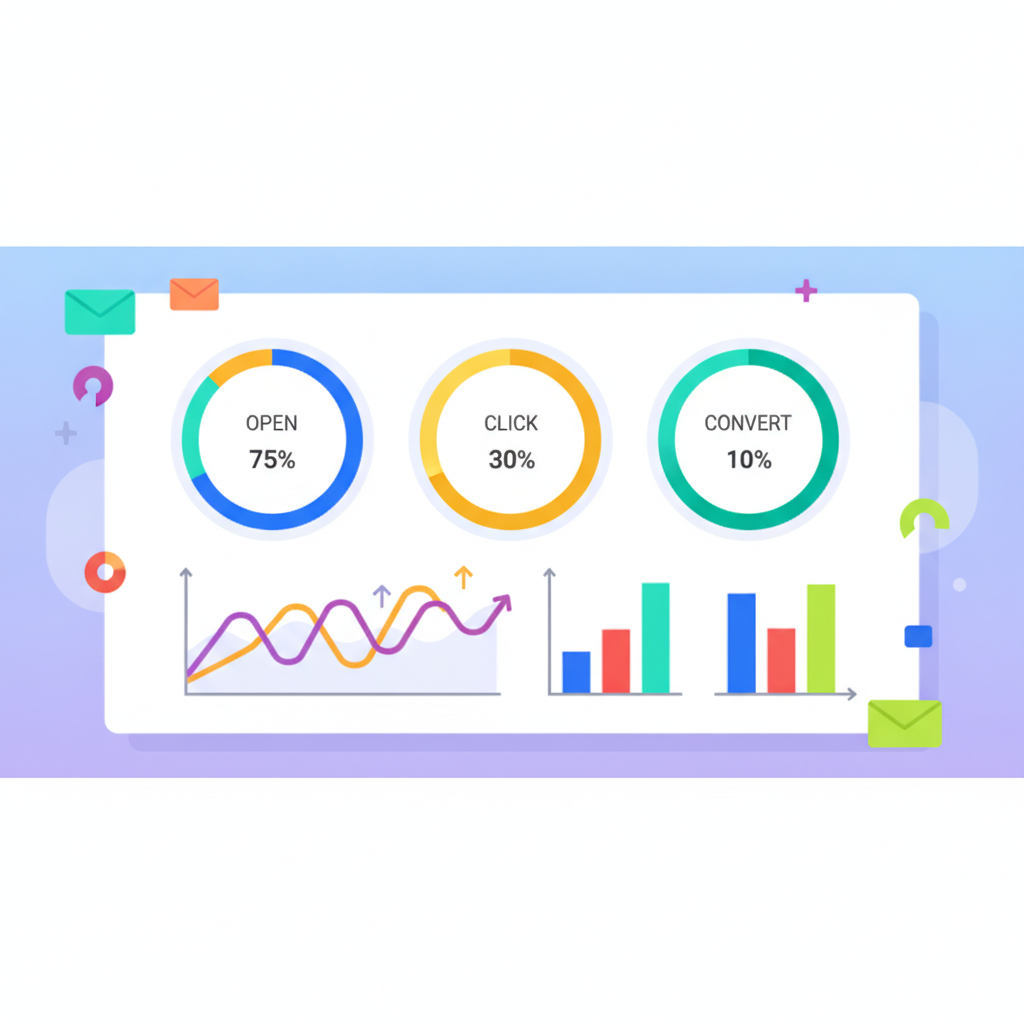
Regularly monitor key metrics such as Open Rate, Click-Through Rate (CTR), Conversion Rate, and Unsubscribe Rate. The open rate indicates the attractiveness of your subject line and preheader text. The click-through rate indicates the effectiveness of your content and call-to-action. The conversion rate is the most important metric, showing how successful your campaign is in generating actual sales. If these metrics are low, it means there's room for improvement, and you should re-evaluate your strategy. Data analysis can provide deep insights into your campaign performance and help you make informed decisions.
Don't forget the importance of mobile responsiveness. The vast majority of people open emails on their mobile phones, so your email design must be responsive and display perfectly on small screens. Avoid overly large images that might take a long time to load, make the text large enough to be easily readable, and ensure CTA buttons are easy to tap with a finger. The landing pages that the email directs to should also be mobile-optimized to ensure a seamless experience from email to purchase. It's also crucial to ensure your emails comply with anti-spam regulations (CAN-SPAM Act) or general data protection regulations (GDPR) to maintain credibility and avoid legal issues.
Choosing the Right Email Marketing Tool for Salla, Zid, and Shopify Stores
The success of your email marketing strategy largely depends on choosing the right tool that seamlessly integrates with your e-commerce platform (Salla, Zid, Shopify) and meets your evolving needs. There are many Email Service Providers (ESPs) available, each offering a different set of features and pricing. Your decision should be based on several factors, including your list size, budget, the level of personalization and automation you require, and ease of use. Choosing the right tool will save you time and effort and ensure your campaigns are as effective as possible.
Shopify, for instance, has a wide range of apps and extensions in its own app store that integrate easily, such as Klaviyo, Mailchimp, and Omnisend. These tools are specifically designed for e-commerce and offer advanced features like customer segmentation based on purchasing behavior, abandoned cart automation, and product recommendations. Platforms like Salla and Zid may have more specific integration options, but they still support powerful tools like Mailchimp and ActiveCampaign, which also provide advanced automation and segmentation capabilities. Before making a decision, always check the list of available integrations for your platform. You can also read comparisons between platforms like Salla, Zid, and Shopify: Which is Best for Your Store? for a deeper understanding of your needs before choosing a marketing tool.
When evaluating email marketing tools, look for the following essential features: ease of creating forms and emails using ready-made templates and a drag-and-drop editor, advanced segmentation capabilities that allow you to target specific customer segments, robust automation options for creating automated email flows (such as welcome messages and abandoned cart reminders), detailed analytics and reporting tools to monitor your campaign performance, and finally, good customer support. Some tools offer free plans for beginners or small stores, allowing you to try them before committing to a paid plan.
Conclusion: Email Marketing, Your Enduring Partner for Success
In conclusion, it is clear that email marketing is not just an additional marketing tactic, but a fundamental and vital strategy for any e-commerce store aspiring to grow and maximize sales and loyalty, whether operating on platforms like Salla, Zid, or Shopify. Its ability to communicate directly and personally with customers, build strong relationships, and achieve a high return on investment makes it an indispensable tool in the toolkit of any e-commerce entrepreneur. By building a quality email list, segmenting it intelligently, automating essential flows, and creating engaging and optimized content, your store can convert visitors into loyal buyers and ambassadors for your brand.
Remember that success in email marketing does not come overnight; it requires a commitment to continuous improvement, careful data monitoring, and a willingness to experiment. Start by implementing the basics, then gradually expand into more complex strategies such as deep personalization and multi-stage automation. Invest in a suitable email tool that integrates seamlessly with your store's platform, and seize every opportunity to collect email addresses ethically and transparently. Every email you send is an opportunity to build a relationship, provide value, and ultimately increase your store's sales.
Make email marketing an integral part of your overall marketing strategy, and you will reap its rewards in the form of increased conversions, repeat purchases, and lasting customer loyalty. In today's competitive e-commerce market, it's not ordinary messages that win, but smart, targeted, and personalized messages that speak directly to the heart and mind of the customer. Start building and nurturing your email list today, and watch your Salla, Zid, or Shopify store flourish.