





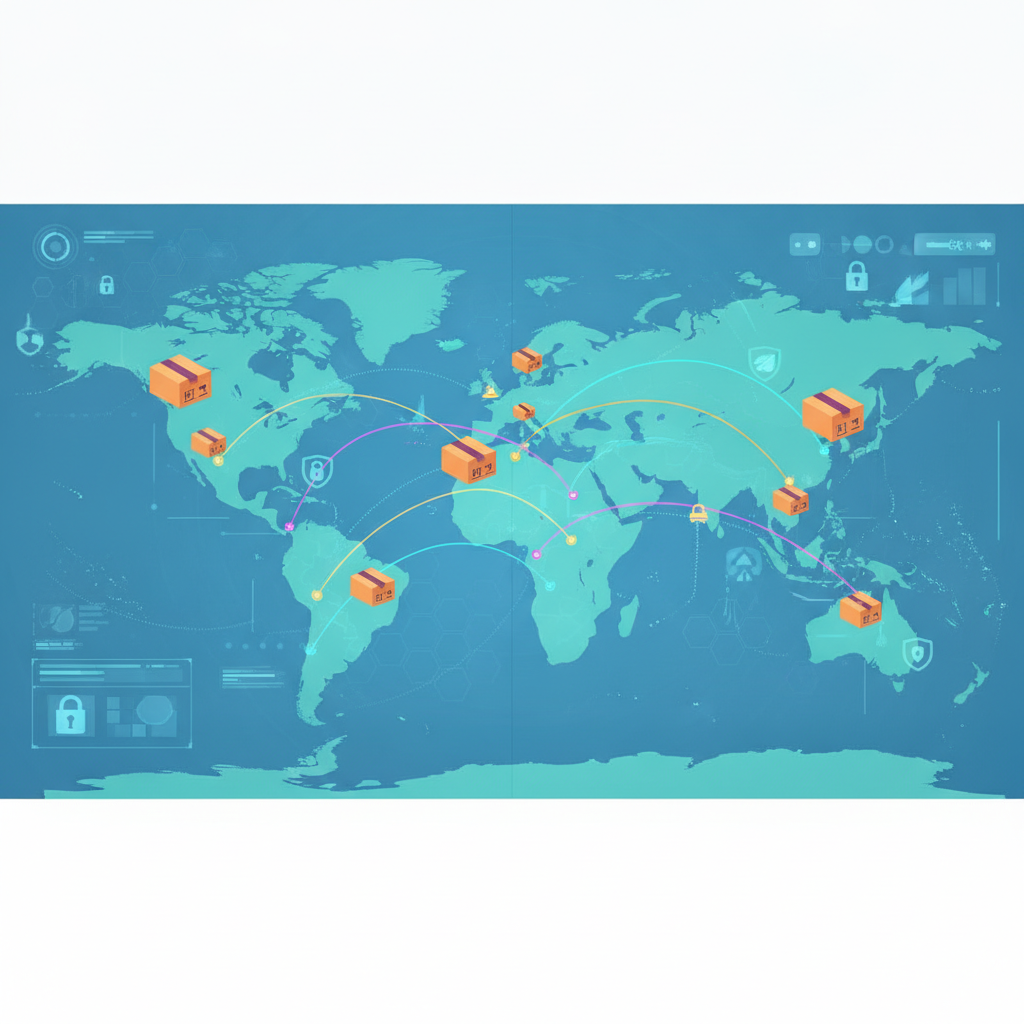
In the rapidly evolving world of e-commerce, thinking only about the local market is no longer the sole option for ambitious store owners. Geographical borders have become mere lines on a map, and opportunities are now available for online retailers to reach customers worldwide. This expansion is not just an option, but a strategic necessity for sustainable growth and increased revenue, especially for stores operating on powerful platforms like Salla, Zid, and Shopify, which provide advanced tools to support this direction.
International shipping represents a golden key to unlock new market doors and achieve an invaluable competitive advantage. Instead of being limited to a specific segment of customers within one country, international shipping allows you to target millions of potential consumers across different continents, thereby diversifying your income streams and reducing the risks associated with relying on a single market. In this comprehensive guide, we will explore all aspects of international shipping, from understanding the challenges to implementing best practices to ensure a successful experience for your Salla, Zid, and Shopify store.
Understanding the Basics: Why is International Shipping Essential for Your Store?
International shipping is a fundamental driver of growth in the modern e-commerce era, as customers are no longer confined to searching for products within their geographical boundaries but are increasingly looking towards global markets to find the best products and deals. This shift in consumer behavior compels store owners, whether on Salla, Zid, or Shopify platforms, to think outside the box and seek ways to expand their reach. The ability to deliver products anywhere in the world not only increases sales opportunities but also enhances the store's position as a global brand capable of meeting the needs of a wider audience segment.
In addition to expanding the customer base, international shipping effectively contributes to increased revenue and profits. When your store can sell to customers in different countries, you open up new markets with diverse purchasing power and different needs that may not be satisfied in your local market. This diversification reduces the risks associated with local economic fluctuations and gives your store greater flexibility in achieving financial stability and continuous growth. Investing in well-thought-out international shipping strategies can yield huge returns that exceed expectations, propelling your store to unprecedented levels of success.
Furthermore, international shipping helps build a strong global brand that enjoys trust and credibility. When customers see that your store can efficiently serve multiple markets, it reflects high professionalism and quality in services and products. This good reputation can spread quickly and attract more customers, not only from international markets but also from the local market, as consumers prefer to deal with stores that have a global reputation. Therefore, international shipping is not just a logistical process; it is a strategic investment in the future of your brand and its position in the market.
Expanding Customer Base and Discovering New Markets
Expanding the customer base is one of the most significant motivations behind adopting an international shipping strategy. With billions of internet users worldwide, e-commerce allows you to reach massive segments of consumers who may be interested in your products but are outside your local market's scope. For example, there might be high demand for certain products in the Gulf countries, North Africa, or even Europe, a demand that can only be met by providing international shipping options. This geographical expansion opens new sales horizons that were previously unavailable, transforming your store from a local entity into a regional or even global player.
Platforms like Salla, Zid, and Shopify facilitate this process by providing tools and add-ons that support multi-language and multi-currency capabilities, making the shopping experience smoother for international customers. When a customer can browse your store in their native language and pay in their local currency, it significantly increases the likelihood of completing a purchase. This approach reduces cultural and financial barriers that might hinder cross-border purchases, making your store more appealing to a global audience. The ability to target specific markets based on their interests and needs also allows you to customize your marketing offers to increase their effectiveness.
Discovering new markets is not just about increasing sales volume; it also includes diversifying revenue streams and reducing reliance on a single market that may be susceptible to economic fluctuations or changes in consumer preferences. If your products face stagnation in your local market, having active international markets can compensate for this shortfall and maintain the stability of your business. This diversification gives your store greater flexibility and adaptability to various challenges, ensuring sustained long-term growth, making international shipping a wise investment in the future of your commercial venture.
Increasing Revenue and Enhancing Competitive Advantage
Undoubtedly, the ultimate goal of any business is to increase revenue and maximize profits, which international shipping effectively provides. When you open your store to customers worldwide, you significantly multiply the number of potential buyers for your products, leading to an overall increase in sales volume. This increase in sales directly reflects on revenue, and with good management of logistical costs, excellent profit margins can be achieved. Moreover, some international markets may have higher purchasing power or a greater willingness to pay premium prices for unique products, which enhances the value of each sale.
Furthermore, international shipping contributes to enhancing your store's competitive advantage in the market. While many stores are still limited to local sales, your ability to offer your products to overseas customers positions you among leading and innovative stores. This advantage attracts the attention of consumers looking for wider options and unique shopping experiences, which can increase customer loyalty and make them prefer your store over competitors. Providing reliable and efficient international shipping options reflects high professionalism and excellent customer service, which are essential factors for building a strong reputation in the e-commerce world.
To maximize this advantage, store owners on Salla, Zid, and Shopify platforms should focus on optimizing their product pricing strategies to suit international markets, considering customs duties, taxes, and shipping costs. Offering competitive prices and diverse shipping options can be a decisive factor in attracting international customers. The ability to meet the needs of these markets with unique or high-quality products not available locally gives you an unparalleled advantage, making your store the preferred destination for many shoppers worldwide, ensuring a continuous flow of revenue and growth.
Key Challenges of International Shipping and How to Overcome Them
Despite the immense opportunities offered by international shipping, it comes with a set of challenges that store owners must be prepared for and effectively overcome. These challenges range from logistical complexities such as choosing the right shipping companies and managing costs, to legal and financial aspects such as customs duties, taxes, and varying regulations in each country. Understanding these obstacles in advance and developing clear strategies to deal with them is key to success in international shipping operations, and helps avoid costly mistakes that could negatively impact your store's reputation and profits.
Managing international shipping requires a multifaceted approach that combines logistics expertise, knowledge of international regulations, and adaptability to changing circumstances. Each international market has its unique characteristics in terms of shipping infrastructure, cultural customer preferences, and legal requirements. For example, customs clearance might be smooth in some countries and highly complex in others, requiring additional documentation and special procedures. Therefore, store owners on Salla, Zid, and Shopify platforms must be prepared for continuous research and learning, and perhaps seek expert assistance in this field to ensure full compliance and smooth operations.
Overcoming these challenges is not limited to the practical aspect but also extends to the technological aspect. Modern e-commerce platforms offer many tools and add-ons that can simplify international shipping operations, such as integration with various shipping companies, estimated customs duty calculations, and real-time shipment tracking. Maximizing these technological features can significantly reduce the effort and time required to manage international shipping, and help provide an excellent customer experience. In the following sections, we will delve into the most prominent of these challenges and provide practical solutions to deal with them effectively.
Costs and Customs Duties: A Profitable Equation
Costs and customs duties are among the most prominent challenges faced by store owners when shipping internationally, and they can be complex and vary significantly from one country to another. These costs include the shipping fees themselves, in addition to customs duties, Value Added Tax (VAT), handling fees, and sometimes other import fees. Not accurately understanding these costs can lead to unpleasant surprises for customers (such as being asked to pay additional fees upon delivery) or significantly reduce the store's profit margin. Therefore, it is essential to have a clear strategy for calculating these costs and presenting them transparently to customers.
To understand customs duties, one must distinguish between the DDP (Delivered Duty Paid) and DDU (Delivered Duty Unpaid) models. In the DDP model, the seller bears all costs, customs duties, and taxes until the product reaches the customer, providing a smooth experience for the customer but requiring the store to accurately calculate these costs and include them in the product or shipping price. In the DDU model, the customer is responsible for paying customs duties and taxes upon receipt of the shipment, which can lead to a negative experience if the customer is not pre-informed of these fees. Many large stores prefer to use the DDP model to ensure customer satisfaction.
To simplify the process of calculating customs duties and taxes, your Salla, Zid, or Shopify store can leverage available applications and add-ons that help estimate these costs based on the product type and destination country. The store should also explicitly and clearly state to customers on the product page or during checkout who will bear these fees. Transparency in this aspect builds trust with customers and avoids any misunderstandings. Always remember that providing a seamless and cost-transparent international shipping experience is a key factor in converting potential customers into loyal buyers, and avoiding complaints and negative reviews.
International Regulations and Laws: Compliance to Avoid Problems
International regulations and laws form a complex web of requirements that every e-commerce merchant must understand and comply with when shipping across borders. These laws vary significantly from country to country, including restrictions on certain types of products, specific requirements for customs documentation, safety and quality standards, in addition to consumer protection laws. Non-compliance with these regulations can lead to shipment delays, hefty fines, or even product confiscation, costing the store substantial amounts and severely damaging its reputation.
One important aspect is understanding prohibited or restricted products in each country. Some countries prohibit the import of certain materials (such as some types of food, cosmetics, or electronics that do not comply with their standards). Before shipping to any new market, your store on platforms like Salla, Zid, and Shopify must conduct thorough research on the lists of prohibited and restricted products in those countries. You can refer to official customs websites of target countries or major international shipping companies, which often provide this information to their customers.
Furthermore, customs documentation plays a vital role in facilitating the customs clearance process. These documents include the commercial invoice, packing list, certificate of origin, and sometimes special import or export licenses. These documents must be accurate, detailed, and contain a clear description of the products, their value, and their Harmonized System (HS Code). Any error or omission in these documents can lead to shipment delays at customs. Therefore, the store must ensure that all required documents are prepared with utmost care, and perhaps use software or add-ons provided by e-commerce platforms to streamline this process.
Shipping Services and Logistics: Choosing the Right Partner
Choosing the right shipping companies is one of the most critical decisions in the international shipping process, as these companies directly impact delivery speed, shipping cost, and overall customer experience. Many options are available, from industry giants like DHL, FedEx, UPS, Aramex, to local shipping companies that may offer international services. Each company has its strengths and weaknesses, and different specializations in terms of geographical coverage, service types (express or economy shipping), and pricing.
When choosing a shipping partner, your Salla, Zid, and Shopify store should consider several key factors. First, geographical coverage: Does the company reach your target countries? Second, cost: Are shipping prices competitive and compatible with your product's profit margins? Third, speed and reliability: Does the company offer fast and guaranteed shipping options? Fourth, tracking and support: Does the company provide an effective shipment tracking system and good customer support in case of problems? You can read a comparison of shipping companies to help you make a decision.
Additionally, the extent of the shipping company's integration with your e-commerce platform (Salla, Zid, Shopify) should be considered. Seamless integration allows you to automate many tasks such as generating shipping labels, tracking orders, and updating shipment status for customers. This integration reduces manual errors and saves time and effort, allowing you to focus on other aspects of your business. It is advisable to contract with several different shipping companies to provide diverse options for customers and meet their varying needs in terms of speed and cost, which enhances your store's flexibility and competitiveness in the global market.
Preparing for International Shipping: Practical Steps for Your Store
To transform your online store into a global platform, it requires meticulous planning and systematic execution of several practical steps. Good preparation is the foundation for ensuring a smooth and efficient international shipping process, starting from accurately defining target markets, through selecting suitable logistical partners, all the way to technically and financially preparing your store to receive international orders. These steps not only ensure compliance with international regulations but also contribute to providing an exceptional customer experience that encourages repeat purchases and increases customer loyalty to your brand.
Preparing for international shipping also involves a comprehensive review of your current infrastructure, both at the inventory and packaging level, and at the technical support and customer service level. You must be able to manage inventory efficiently to ensure the availability of required products in international markets, and prepare them for export in a safe and appropriate manner. Customer service teams must also be trained to handle international inquiries, including time zone differences and multiple languages. These fine details are what make the difference between a globally successful store and one that faces difficulties in expansion.
It is also important to leverage the tools and features provided by e-commerce platforms such as Salla, Zid, and Shopify. These platforms are designed to facilitate international operations by offering shipping settings, support for different currencies, and integration with international payment gateways. Understanding how to effectively use these features can save you a lot of time and effort, and help you automate many tasks related to international shipping. In the following sections, we will discuss each of these practical steps in detail to enable you to launch your store globally with confidence and professionalism.
Identifying Target Markets and Feasibility Studies
Before embarking on international shipping, it is essential to carefully identify target markets and conduct a comprehensive feasibility study for each market. It is not enough to simply wish to sell internationally; your decisions must be based on accurate data and analysis. Start by researching countries where there is high demand for your products, or where there is a lack of local competition in your niche. You can use data analysis tools, such as Google Trends, keyword research tools, and global market reports to identify these opportunities.
When conducting a feasibility study, you should consider several key factors: first, the purchasing power of customers in those markets and their willingness to pay for your products. Second, the customs regulations, taxes, and import requirements in each country, and whether they are complex or straightforward. Third, logistical costs and the availability of shipping companies that serve those regions at reasonable prices. Fourth, cultural and linguistic aspects: will you need to translate your store or provide customer support in different languages? All these factors will help you prioritize which markets are worth investing in first.
For example, you might find that Gulf countries have high demand for certain products from your Salla or Zid store, with relatively easy shipping and customs clearance. Other markets in Europe or North America might be more complex in terms of regulations but offer higher purchasing power. It is important to start with a few specific markets to test the waters, then gradually expand based on successes and lessons learned. This phased approach reduces risks and allows you to refine your strategies with each step you take towards globalization, ensuring sustainable growth for your store.
Choosing the Right Shipping Companies and Pricing Strategies
After identifying target markets, the crucial step is choosing the right shipping companies for your store. As mentioned earlier, international shipping companies vary greatly, and your choice should be based on a balance between cost, speed, reliability, and geographical coverage. It is advisable to contract with more than one shipping company to provide multiple options for your customers (such as slower, more affordable economy shipping, and faster, more expensive express shipping), which meets their different preferences and gives you greater flexibility in logistics management. You should carefully study a comparison of different shipping companies to ensure the best choice.
Once you have chosen your shipping companies, it's time to develop international shipping pricing strategies. There are several models you can follow: flat rate shipping per order, free shipping which can be a great sales incentive but its cost must be included in the product price, or calculated shipping which depends on the product's weight, dimensions, and destination country, and is the most accurate and transparent for the customer. Platforms like Salla, Zid, and Shopify provide advanced settings to implement these strategies, making it easier for you to manage shipping costs and pass them on to the customer fairly.
When setting shipping prices, don't forget to include all potential costs, including customs duties and taxes if you are following the DDP model. Transparency in displaying shipping costs to customers is paramount to avoid unpleasant surprises. Your store's shipping policy should be clear and accessible to customers, outlining expected delivery times, tracking options, and who bears customs duties. Offering multiple, clear-cost shipping options enhances customer trust and encourages them to complete their purchase, contributing to increased sales for your store in the long run.
Product Preparation and Setting Up International Payment Gateways
International shipping preparation is not limited to choosing shipping companies; it extends to preparing the products themselves in a way that ensures their safe arrival at their destination, in addition to providing convenient payment options for international customers. For product preparation, high-quality, shock-resistant, and moisture-proof packaging materials should be used, especially for fragile or valuable products. Good packaging not only protects the product but also reflects your store's professionalism and attention to customer experience. Clear labels should also be placed on packages, including shipping information, sender and recipient details, and barcode numbers.
As for international payment gateways, they are a crucial factor in the success of your store in global markets. Your Salla, Zid, and Shopify store should support diverse payment options common in target markets, including international credit cards (Visa, Mastercard), payment gateways like PayPal, as well as popular local payment methods in some countries. Providing multiple payment options increases customer convenience and reduces shopping cart abandonment rates. You can leverage payment gateways to enhance the checkout experience to ensure best practices.
It is also important for your store to display prices in the customer's local currency whenever possible, or at least provide an easy-to-use currency converter. This removes a significant barrier for international customers and makes the shopping experience smoother and clearer. All transactions must be secure and encrypted to ensure the protection of customers' financial data, which enhances their trust in your store. By providing well-prepared products and flexible, secure payment options, you lay the foundation for a successful e-commerce store capable of competing and growing in the global arena.
Optimizing Customer Experience in International Shipping
In the world of e-commerce, the customer experience is not limited to product quality or ease of browsing within the store; it extends to every stage of the purchase journey, especially the shipping process. In the context of international shipping, the customer experience becomes even more critical and complex, as it is affected by factors such as shipping duration, cost transparency, ease of order tracking, and the quality of support provided. Optimizing these aspects ensures customer satisfaction, enhances their loyalty, and encourages repeat purchases, contributing to building a strong reputation for your store in global markets.
Achieving an excellent customer experience in international shipping requires a proactive approach that focuses on effective communication, providing clear information, and being prepared to handle any issues that may arise. The customer should feel confident and reassured from the moment the purchase is completed until the product is received, and even afterward in case of any inquiries or a desire for return. This level of service goes beyond merely selling products to become a comprehensive experience that reflects the value of your brand and its commitment to its customers, regardless of their geographical location.
Platforms like Salla, Zid, and Shopify contribute to this aspect by providing tools for order management and shipment tracking, but the store's role in customizing these tools and providing additional service remains paramount. In the following sections, we will discuss the main aspects that should be focused on to improve the customer experience in international shipping, and how you can turn potential challenges into opportunities to build strong and lasting relationships with your customers worldwide.
Clear and Transparent Communication: Key to Trust
Clear and transparent communication is the cornerstone of building trust with international customers, especially since international shipping can involve longer waiting periods and unfamiliar customs procedures. Your store must provide customers with accurate and updated information about the status of their orders at every stage of shipping. This includes order confirmation, shipping notification with a tracking number, regular updates on the shipment's location, and any potential delays with the reason stated. Transparency in communication reduces customer anxiety and avoids repetitive customer service inquiries.
It is also essential for your store to explicitly state all international shipping details before completing the purchase. This includes the estimated delivery time (with a realistic estimate in days), available shipping options (express or economy), total costs including shipping fees and any potential customs duties or taxes (with clarification on who will bear them). This information should be easily accessible, whether on the product page, FAQ page, or clearly on the checkout page. Lack of clarity in these details can lead to customers abandoning their cart or feeling deceived later.
Use automated messages (via email or SMS) to keep customers informed, but also be prepared to offer personalized support when needed. Customer service channels should be accessible, easy to reach, and respond to inquiries effectively and within a reasonable time frame. Remember that building trust with international customers takes time and effort, but its long-term results are worth it, leading to customer loyalty and increased repeat sales. Effective communication is key to transforming a complex international shipping experience into a simple and reassuring one for the customer.
Multilingual Customer Support and Return Policies
To ensure an excellent international customer experience, it's not enough to simply sell and ship products; effective customer support that speaks their language and understands their cultural needs must also be provided. Offering multilingual customer support reflects your respect and appreciation for customers of different nationalities, making them feel comfortable and confident when dealing with your store. You can start by providing support in the main target market languages, either by hiring staff who speak these languages or by using advanced translation tools with human review to ensure accuracy.
As for return and exchange policies, they gain particular importance in international shipping. These policies must be clear and understandable, and take into account the additional complexities of cross-border shipping. Will the customer bear the international shipping costs for returns? What is the allowed timeframe for returns? How are damaged or non-conforming products handled in international shipping? All these questions must be answered clearly in your store's return policy, ensuring that this policy is fair and equitable to customers.
Platforms like Salla, Zid, and Shopify provide tools to create dedicated policy pages, which you can use to display your return policy clearly. The customer service team must also be fully aware of these policies and capable of applying them flexibly and effectively. Remember that a negative return experience can quickly destroy your store's reputation, while a smooth and professional return experience can turn a dissatisfied customer into a loyal one. Investing in multilingual customer support and transparent, fair return policies is an investment in customer loyalty and your store's long-term success in global markets.
Leveraging E-commerce Platforms (Salla, Zid, Shopify)
Modern e-commerce platforms like Salla, Zid, and Shopify are the cornerstone for any store seeking to expand into global markets. These platforms are not just tools for building stores, but integrated ecosystems that provide technical and logistical solutions to help businesses manage their international operations efficiently. By integrating international shipping features, offering specialized applications, and simplifying dealing with different currencies and languages, these platforms enable merchants to focus on growing their businesses rather than getting bogged down in complex technical details. Understanding how to leverage these features is key to success on your journey to globalization.
Each platform boasts unique features that make it suitable for specific types of businesses or markets. For example, Salla and Zid might be more focused on the Saudi and Gulf markets and offer strong local integrations, while Shopify has a vast global reach and provides a tremendous number of apps and add-ons covering all international shipping needs. Choosing the right platform for your store depends on your strategy and target markets. You can refer to the article Salla, Zid, and Shopify: Which is Best for Your Store? for more details on the differences between these platforms to help you make a decision.
Regardless of the platform you choose, maximizing its potential requires you to delve into understanding its international shipping settings and features. From setting up shipping zones and rates, to integrating multiple payment gateways and shipment tracking applications, all these tools are designed to streamline operations. Investing time to learn how to effectively use these tools will pay off in the form of higher operational efficiency, a better customer experience, and ultimately, greater growth for your store in global markets.
International Shipping Features in Salla, Zid, and Shopify
Salla, Zid, and Shopify all offer a robust set of features that make it easier for stores to manage international shipping, but with some differences that might influence your platform choice. Salla and Zid, being platforms heavily focused on the Saudi and Gulf markets, are characterized by strong integrations with local and regional shipping companies, making them an excellent choice for stores starting their expansion from this region. They often provide multiple local currency and language options, and simplify local tax and duty procedures, reducing the initial complexities of international shipping.
On the other hand, Shopify, as a global platform, offers greater flexibility and integration with a vast number of major international shipping companies, in addition to specialized applications for automatically calculating customs duties and taxes (DDP/DDU). Shopify also excels in its superior support for multiple languages and currencies, allowing stores to efficiently target broad global markets. The ability to highly customize the shipping experience through available apps in the Shopify app store gives merchants unparalleled power in managing the complexities of international shipping.
Regardless of the platform, these common features include the ability to define shipping zones based on countries or continents, set different shipping rates for each zone, and link your accounts with shipping companies to automatically generate shipping labels and track orders. They also provide tools for inventory management and alerts, which are vital to ensure that out-of-stock products are not sold. Utilizing these settings correctly can reduce operational errors and provide a seamless shipping experience for your international customers, enhancing your store's reputation and sales.
Applications and Add-ons to Streamline Shipping Operations
To get the most out of international shipping, store owners on Salla, Zid, and Shopify platforms should explore a wide range of available applications and add-ons that can simplify and enhance their logistical operations. These applications are designed to automate complex tasks, from calculating customs duties to managing returns, saving time and effort and reducing manual errors. For example, there are specialized applications for estimating customs duties and taxes that display them to the customer in advance, eliminating any surprises upon delivery and improving the transparency of the purchase process.
Additionally, there are shipment tracking applications that allow customers to monitor the progress of their orders in real-time via a dedicated branded page, which enhances their trust and reduces customer service inquiries. There are also add-ons that help manage inventory across multiple warehouses, which is crucial if you plan to store your products in different countries to reduce shipping times. Some applications also provide integrated solutions for managing international returns, simplifying procedures for both the customer and the store.
When choosing applications and add-ons, focus on those that integrate seamlessly with your platform (Salla, Zid, Shopify) and offer real added value to your international shipping operations. Read reviews, compare features, and start by experimenting with free options or trial plans before committing. Investing in the right tools can transform the complex international shipping process into a smooth and efficient one, allowing you to confidently expand into global markets and maximize every international sales opportunity.
Conclusion
International shipping is a crucial strategic step for any e-commerce store aspiring to grow and expand beyond local borders. We have seen how this approach opens doors to new markets, increases the customer base, boosts revenues, and contributes to building a strong global brand. Despite challenges such as costs and customs duties, international regulations, and choosing logistical partners, careful planning and leveraging the tools available on platforms like Salla, Zid, and Shopify can turn these challenges into opportunities for remarkable success. Good preparation, from identifying target markets to preparing products and providing international payment gateways, is key to achieving a smooth and efficient shipping experience.
The success of international shipping is not limited to logistical and technical aspects; it extends to comprehensively improving the customer experience. Clear and transparent communication about shipment status and costs, providing multilingual customer support, and establishing fair and understandable return policies are all essential factors for building trust and loyalty with international customers. Remember that every satisfied international customer is an ambassador for your brand and can bring you more business through positive word-of-mouth marketing. Focusing on these fine details is what distinguishes globally successful stores from others.
In conclusion, international shipping is not just a logistical process; it is an investment in your store's future and its global vision. By leveraging the power of e-commerce platforms like Salla, Zid, and Shopify, adopting well-thought-out strategies, and committing to providing the best customer experience, your store can transcend borders and reach new horizons of success and sustainable growth. Start with small steps, learn from every experience, and be ready to adapt, and you will find that the whole world is a potential market for your products.