



Loyalty Programs: Boosting Sales on Salla and Zid
In the rapidly evolving and intensely competitive world of e-commerce, merely attracting new customers is no longer sufficient to ensure sustainable growth and long-term profitability. Instead, retaining existing customers and transforming them into loyal ambassadors for your brand has become the true key to success. This is where loyalty programs come into play, serving as a powerful marketing strategy designed to incentivize repeat purchases and strengthen customer engagement with your store. They are not just about discounts or points; rather, they are about building a relationship based on appreciation and reward, benefiting both the store and the customer alike, and directly contributing to increased sales and profits.
E-commerce platforms such as Salla, Zid, and Shopify offer a variety of tools and features to support loyalty programs, whether integrated directly or through applications and external integrations. These programs, when effectively designed and implemented, can make a significant difference in your store's performance, helping to increase average order value, boost customer loyalty, and improve customer lifetime value (CLV). In this comprehensive article, we will delve into what loyalty programs are, their paramount importance for Salla and Zid stores, best practices for designing and launching them, and how to measure their success, with a focus on practical examples and actionable tips to ensure maximum benefit.
What are Loyalty Programs and Why Are They Essential for Your E-commerce Store?
Loyalty programs are a set of marketing strategies and initiatives aimed at rewarding customers for their loyalty and repeat purchases from your store. These programs go beyond the idea of fleeting discounts to establish a long-term relationship between the customer and the brand. Instead of focusing solely on attracting new buyers – a costly process in itself – loyalty programs seek to convert existing customers into permanent and enthusiastic buyers of your products and services. This transformation is not limited to increasing the number of times a customer buys; it extends to increasing the value of their purchases each time, which significantly benefits the store's overall profits.
These programs are absolutely essential in the current competitive e-commerce landscape, where customers have countless options. When customers feel appreciated and rewarded for their loyalty, they become less likely to switch to competitors, even if similar offers are presented. This sense of belonging and appreciation creates an invisible barrier that protects your store from sales fluctuations and ensures a stable customer base. Additionally, loyal customers tend to be the best marketers for your brand, sharing their positive experiences with friends and family, which leads to attracting new customers at a much lower marketing cost compared to traditional advertising. Loyalty programs can be very effective in enhancing strategies for Customer Retention: Strategies for Your Salla & Zid Store's Growth, which is a cornerstone of building a thriving and sustainable business.
Statistics show that the cost of retaining a customer is significantly less than the cost of acquiring a new one, and increasing customer retention rates by just 5% can boost profits by 25% to 95%. This alone highlights the economic importance of loyalty programs. When you invest in these programs, you are not just investing in customer loyalty; you are investing in the future and continuous growth of your store. Whether you are using Salla, Zid, or Shopify, the ability to integrate and implement an effective loyalty program will give you an invaluable competitive edge in a market full of choices.
Key Benefits of Loyalty Programs for Salla, Zid, and Shopify Stores
Loyalty programs offer a wide range of benefits that go beyond simply providing discounts, making them a wise investment for any e-commerce store aspiring for growth and sustainability. First and foremost, these programs directly contribute to increasing customer loyalty and retention rates. When customers feel appreciated and rewarded for every purchase they make, they tend to return to your store repeatedly. This reduces the likelihood of them switching to competitors, even if they offer similar deals, and creates an emotional bond with your brand that is difficult to break. Loyal customers are the foundation of any successful business, and loyalty programs are the ultimate tool for building this strong base.
Secondly, loyalty programs help to increase Average Order Value (AOV) and Customer Lifetime Value (CLV). When a customer sees that additional points or rewards await them upon spending a certain amount or purchasing specific products, they are often willing to increase their shopping cart value to achieve these rewards. In the long run, this means that each customer brings more revenue to your store over their engagement period. This multiplying effect on AOV and CLV directly translates into an increase in the store's overall profits, demonstrating the significant economic value of these programs. These programs can also complement other strategies, such as using Discount Coupons: How to Use Them Smartly to Boost Sales?, to enhance the overall customer shopping experience.
Thirdly, loyalty programs provide valuable data on customer behavior and preferences. By tracking loyalty points, redeemed rewards, and recurring purchase patterns, your store can gain deep insights into what motivates your customers. This data is invaluable for personalizing future offers, improving user experience, and developing new products that align with market needs. Furthermore, these programs contribute to building a strong brand identity and enhancing its positive image. A store that rewards its customers is perceived as valuing and caring for its patrons, which builds trust and credibility. This positive image not only attracts new customers but also encourages existing customers to become advocates for your brand, leading to free and effective word-of-mouth marketing.
Types of Loyalty Programs and How to Implement Them on Salla, Zid, and Shopify
Loyalty programs vary greatly to suit different types of stores and target audiences. Understanding these types and how to effectively implement them on platforms like Salla, Zid, and Shopify is key to success. Each type offers a unique set of benefits and mechanisms that can be adapted to fit your specific store goals, whether you aim to increase repeat purchases, boost average cart value, or build a community around your brand. The correct program choice depends on the nature of your products, the size of your customer base, and the budget available for running the program. Let's explore the most prominent types and how to activate them.
Most major e-commerce platforms, including Salla, Zid, and Shopify, offer flexible options for implementing loyalty programs. For instance, platforms like Shopify have a vast app marketplace (Shopify App Store) featuring hundreds of specialized loyalty apps such as LoyaltyLion, Smile.io, and Yotpo Loyalty & Rewards, which provide seamless integration and advanced features. Salla and Zid platforms also offer integrated solutions or external apps in their respective app stores, allowing merchants to choose what best suits their needs. These solutions range from simple points systems to advanced membership programs, ensuring there's an option for every store, regardless of its size or complexity. It is crucial to seek solutions that integrate smoothly with your store's infrastructure to ensure a seamless user experience for both merchants and customers.
When considering implementing a loyalty program, you should take into account the nature of your customers and what will truly motivate them. Do they prefer direct discounts, free products, or exclusive access? Answering these questions will help you choose the most suitable type of loyalty program and customize it to meet your audience's needs. The program should also be easy for customers to understand and use, avoiding any complexities that might deter them from participating. Transparency in the program's terms and conditions is also a critical factor for building trust and credibility, ensuring the program's long-term sustainability and its effectiveness in achieving marketing goals and increasing profits.
Points-Based Programs
Points programs are the most common and straightforward form of loyalty programs, centered around rewarding customers with specific points for every purchase they make. For example, a customer might earn one point for every Saudi Riyal spent, and upon accumulating a certain number of points (e.g., 1000 points), they can redeem them for a cash discount (e.g., 100 Riyals), a free product, or even free shipping. This type of program incentivizes customers to make repeat purchases to collect more points and redeem them for valuable rewards, thereby increasing Customer Lifetime Value (CLV) and encouraging an increase in Average Order Value (AOV) as customers may add more to their cart to reach a specific point threshold.
To implement points programs on platforms like Salla, Zid, and Shopify, you can leverage dedicated applications available in these platforms' respective app stores. For instance, on Shopify, apps like Smile.io and LoyaltyLion offer user-friendly dashboards to create and track points and rewards. On Salla and Zid, integrated features or additional apps often allow for setting up a similar points system. The points system should be clear and easy for customers to understand, with full explanations of how to earn points and how to redeem them, to ensure active participation. It's also important to set an expiration date for points to encourage customers to use them and not forget about them, which stimulates repeat purchases.
When designing your points program, consider offering diverse rewards that aren't limited to cash discounts. Rewards can also include exclusive products, early access to sales, or personalized services. This variety makes the program more appealing to a wider range of customers. Remember that the goal is not just to offer discounts but to build a long-term relationship with the customer. Use the data you collect from the points program to refine your marketing strategies and personalize future offers, enhancing customer experience and increasing their loyalty to your store.
Tiered Programs
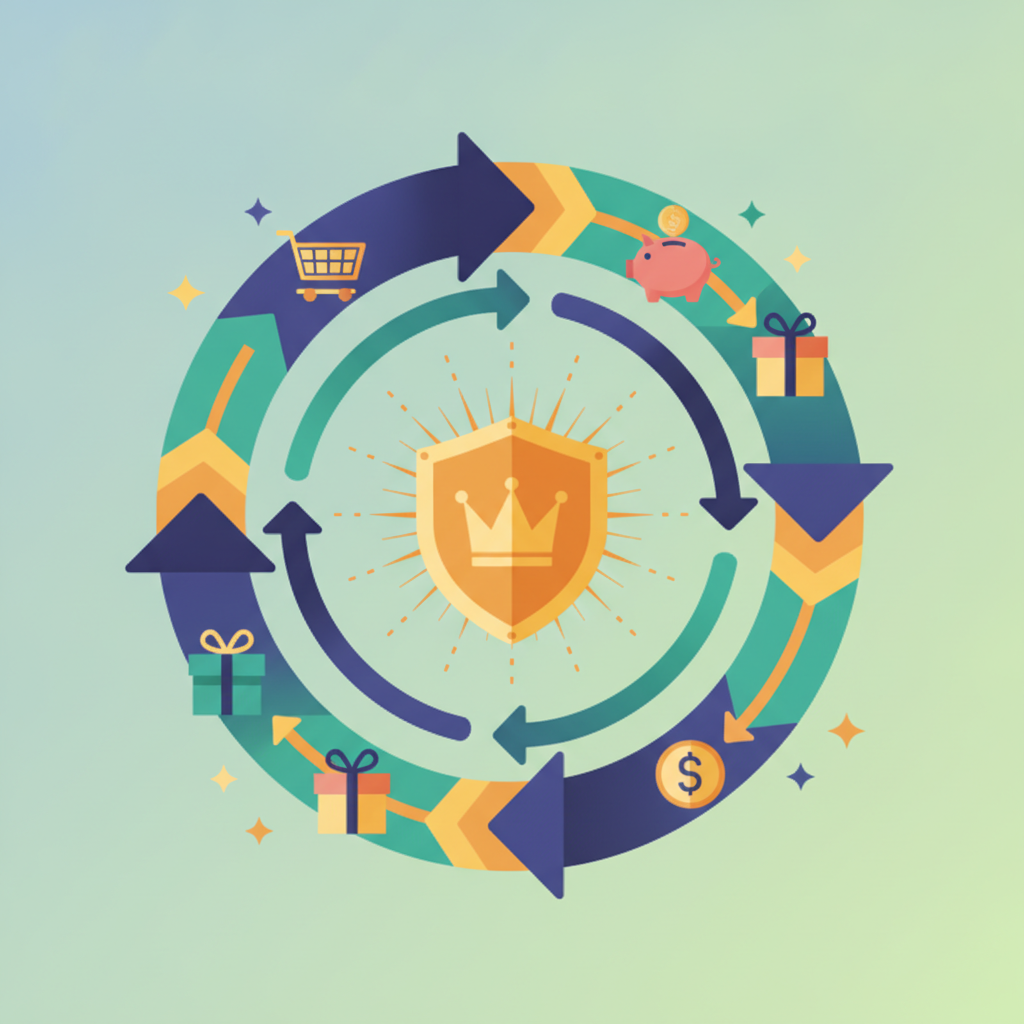
Tiered membership programs offer a more sophisticated and engaging structure for loyalty programs, where customers are segmented into levels or tiers based on their spending or purchase frequency. These levels typically start from a basic tier (e.g., Bronze), then advance to higher levels (e.g., Silver, Gold, Platinum) as customer spending increases. The higher the customer climbs in the tiers, the better and more exclusive rewards and privileges they receive, such as larger discounts, free shipping, complimentary gifts, early access to new products, or personalized customer service. This type of program creates a sense of accomplishment and exclusivity, motivating customers to spend more to reach higher tiers and enjoy their unique benefits.
To implement tiered membership programs on platforms like Salla, Zid, and Shopify, you will need more advanced solutions than a simple points system. On Shopify, apps like LoyaltyLion or Smile.io can support these tiered structures, allowing you to define the conditions for each level (e.g., spending 500 SAR to reach Silver, and 1500 SAR for Gold) and customize rewards for each tier. For Salla and Zid, you might need to look for specialized applications in their respective app marketplaces, or it might require some customization if the built-in features do not support the required complexity. It is crucial that the conditions for advancing between levels are clear and transparent to customers, and that they are clearly informed of the benefits they will receive at each tier to encourage them to strive for advancement.
When designing a tiered membership program, you must ensure that the rewards in the higher tiers are attractive enough to justify the additional effort and spending from the customer. These rewards should be exclusive and make the customer feel appreciated and special. Consider adding non-monetary rewards as well, such as exclusive invitations to special events, personalized consultations, or limited-edition products. This variety adds greater value to the program and makes it more enticing. Remember that the goal of tiered programs is to build strong relationships with your best customers, turning them into advocates and promoters of your brand, thereby ensuring a continuous flow of sales and contributing to your store's long-term growth.
Paid/Subscription Programs
Paid subscription programs, also known as premium membership programs, are a unique model of loyalty programs where customers pay a recurring fee (monthly or annually) to gain exclusive benefits and privileges. The most famous example of this type is Amazon Prime, which offers free and fast shipping, access to video and music streaming services, and exclusive deals for subscribers. This model creates a stable revenue stream for the store, and at the same time, encourages subscribers to purchase more frequently from the store to maximize the value of the fees they have paid, thereby greatly enhancing loyalty and increasing repeat purchases.
To implement paid subscription programs on Salla, Zid, and Shopify, you will need tools that support the subscription model. Shopify has many dedicated subscription service apps like Recharge Subscriptions and Bold Subscriptions, which allow you to set up subscription products, manage recurring customer invoices, and offer exclusive benefits to subscribers. For Salla and Zid, this feature might require integration with payment gateways that support subscriptions, or the use of specialized applications in their respective app marketplaces. The benefits offered in the subscription program must be attractive enough to justify the paid fees and provide clear value to the customer, such as unlimited free shipping, fixed discounts on all products, or exclusive early access to new products before they are released to the public.
When designing a paid subscription program, it is very important to conduct a thorough feasibility study to ensure that the benefits offered do not cost your store more than the loyalty revenue they generate. There must be a balance between the value provided to the customer and the fees paid. You should also consider how to promote the program to attract initial subscribers, and offering a free trial period can be an effective way to convince customers to experience the benefits before committing to a subscription. Paid subscription programs are a powerful strategy for building a highly loyal and enthusiastic customer base, and they contribute to achieving recurring and sustainable revenue for your e-commerce store.
Best Practices for Designing and Launching a Successful Loyalty Program
Designing and launching a successful loyalty program requires more than just offering random discounts; it demands a well-thought-out strategy that focuses on understanding the customer and delivering genuine value. Starting with a strong foundation ensures that your program will be effective in achieving its goals, whether it's increasing sales, fostering customer loyalty, or collecting valuable data. In this section, we will review the best practices to consider when building your loyalty program on platforms like Salla, Zid, and Shopify, emphasizing aspects that ensure maximum participation and long-term success. Adhering to these practices will help you avoid common pitfalls and achieve the highest possible return on your investment.
One of the most crucial principles is to clearly define your objectives before you start designing the program. Do you want to increase Average Order Value (AOV)? Or repeat purchases? Or acquire new customers through referrals? Defining clear primary or secondary objectives will help you choose the right type of loyalty program and determine the most effective rewards. For instance, if your goal is to increase AOV, a points program that offers greater rewards when a certain spending threshold is exceeded in a single order might be most suitable. If you're aiming to increase repeat purchases, a tiered membership program might be more effective in incentivizing customers to return. This clarity in objectives guides every step of the design and implementation process and ensures that all components of the program work towards the right direction.
Furthermore, the program must be easy to understand and participate in. Complexity is the enemy of loyalty programs; if customers find it difficult to understand how to earn points or redeem rewards, they are likely to lose interest quickly. The terms should be clear and straightforward, and the enrollment process should be extremely simple. Use clear and concise language in all your marketing materials related to the program, and ensure that all necessary information is easily accessible on your e-commerce store. Additionally, the program should be visible and easily accessible on your store, whether through a pop-up, a sticky announcement bar, or a dedicated loyalty program page. Effective promotion of the program is key to increasing participation rates and attracting the attention of both new and existing customers.
Defining Goals and Understanding Customers
Before embarking on the design of any loyalty program, the first step must be to clearly define your goals. Are you aiming to increase Average Order Value (AOV)? Or Repeat Purchase Rate? Or Customer Lifetime Value (CLV)? Perhaps you wish to gather more detailed data about customer preferences? Defining one or two clear primary goals will help you build an effective and targeted loyalty program. For example, if your goal is to increase AOV, you can design a points program that rewards customers with extra points when they exceed a certain spending threshold in a single order. This clarity in objectives guides all design decisions, from the type of rewards to the entire program structure.
The second, equally important step, is to deeply understand your customers. Who are your ideal customers? What are their values? What motivates them? And what types of rewards do they truly appreciate? This information can be gathered through analyzing past purchase data, conducting surveys, or even directly speaking with customers. For example, if your customers care about eco-friendly products, you could offer rewards such as donations to environmental charities or access to sustainable products. If they are luxury product enthusiasts, they might appreciate exclusive access to limited-edition products or personalized shopping experiences. This in-depth understanding allows you to tailor the loyalty program to suit your audience's needs and preferences, increasing the likelihood of their participation and loyalty.
Once goals are defined and customers are understood, you can begin to design the reward structure. Rewards should be attractive and of real value to customers. Don't limit yourself to cash discounts; consider offering free products, free shipping, exclusive experiences, early access to products, or even philanthropic rewards. Rewards should be commensurate with the effort or spending required to obtain them. For example, rewards that require significant spending should be more valuable and enticing. Remember that a successful loyalty program is one where the customer feels appreciated and special, and it offers them value beyond mere commercial transactions. This approach will ensure the building of strong and lasting relationships with your customers on platforms like Salla, Zid, and Shopify.
Simplifying Program Rules and Effective Communication
One common mistake stores make when launching loyalty programs is making the rules too complex, which deters customers from participating. A loyalty program should be simple, clear, and easy to understand. Customers should be able to grasp how to join, how to earn points or advance through tiers, and how to redeem rewards within a few seconds. Avoid complex jargon or hidden conditions. Use clear and direct language, and provide practical examples if necessary. The simpler the program, the more likely customers are to participate and continue using it. This simplification is key to ensuring a positive user experience, which is a crucial element in the success of any marketing initiative.
In addition to simplification, effective and continuous communication is vital for the success of a loyalty program. It's not enough to launch the program and leave customers to discover it on their own. You must actively promote the program across all your marketing channels. Start by announcing the program launch via email, social media, and on your store's homepage on Salla, Zid, or Shopify. Create a dedicated page on your website that fully explains the program's details. Use pop-ups or prominent banner ads to remind customers about the program as they browse your store. Ensure you regularly inform customers about their progress in the program, the number of points they've accumulated, and the rewards they can redeem.
Effective communication is not limited to initial announcements; it also includes continuous and personalized reminders. Send personalized emails to customers when they've accumulated enough points to redeem a reward, or when they are about to advance to a higher tier in a tiered membership program. These reminder messages can be powerful motivators to encourage customers to return and make another purchase. Use push notifications or WhatsApp messages if available on your platforms (such as WhatsApp apps available for Salla, Zid, and Shopify) to provide quick and effective reminders. Remember that the goal is to keep the loyalty program top-of-mind for the customer, reminding them of the value they receive through their loyalty to your store, thereby enhancing opportunities for repeat purchases and long-term loyalty.
Continuous Analysis and Improvement
After launching a loyalty program, the task doesn't stop there; rather, a crucial phase begins, which involves continuous analysis of the program's performance and seeking opportunities for improvement. You must track a set of key metrics to evaluate your program's effectiveness. These metrics include: participation rate (how many customers joined the program?), redemption rate (how many rewards were redeemed?), average order value of participating customers compared to non-participants, customer retention rate, and Customer Lifetime Value (CLV). Regularly tracking these metrics will give you valuable insights into how successful the program is in achieving its initial objectives.
In addition to quantitative metrics, gathering customer feedback is extremely important. You can use short surveys, suggestion boxes, or even conduct interviews with a sample of customers to understand their experience with the program. Do they find it easy? Are the rewards attractive? Are there any features they would like to see? This qualitative feedback can reveal the strengths and weaknesses of your program and guide future improvement efforts. Remember that a loyalty program is not a static solution, but a dynamic process that requires continuous adaptation and evolution to meet changing customer needs and remain effective in an ever-changing market.
Based on the analyses, data, and feedback you collect, you should implement improvements periodically. This might include adjusting point values, changing reward types, simplifying the redemption process, or adding new tiers to a tiered program. For example, if you notice a low reward redemption rate, you might need to offer more attractive rewards or make the redemption process easier. If customers are not advancing to higher tiers in your tiered program, you might need to make the advancement conditions easier or increase the value of higher-tier rewards. This iterative approach to improvement ensures that your loyalty program remains effective and appealing, continuously contributing to increased sales and enhanced customer loyalty for your store on Salla, Zid, and Shopify platforms.
Common Challenges and How to Overcome Them
Despite the numerous benefits of loyalty programs, stores may face challenges when designing and implementing them. Understanding these challenges and how to overcome them is crucial to ensuring your program's success. Without proper planning and addressing potential issues, the loyalty program may not achieve its desired goals and could even lead to a waste of resources. It is important to take these challenges seriously and be prepared to adjust your strategy when necessary. In this section, we will discuss the main challenges you might encounter and how to effectively overcome them.
One of the most significant challenges is lack of customer engagement. A store might launch an ambitious loyalty program, but find that only a few customers participate. This could be due to the program's lack of clarity, unattractive rewards, or insufficient promotion. To overcome this, ensure the program is simple and easy to understand, and that the rewards are genuinely valuable to the target customers. Also, intensify promotional efforts across all marketing channels, and regularly remind customers of the program's benefits and how to utilize it. Offering additional incentives for joining, such as free points upon registration, can also boost initial participation rates.
Another challenge lies in the complexity of program management and its costs. Some advanced loyalty programs may require investments in applications or software solutions, in addition to continuous effort to manage points, rewards, and customer communication. For small and medium-sized stores, these costs can be a barrier. To overcome this, you can start with a simpler, less expensive loyalty program, such as a basic points program, and then gradually expand. You can also leverage the built-in features of platforms like Salla, Zid, and Shopify, which offer relatively affordable solutions. A thorough cost-benefit analysis should also be conducted to ensure that the investment in the program generates a positive return. Ultimately, challenges exist, but with the right strategy and good planning, they can be transformed into opportunities to enhance customer loyalty and sustainably increase sales.
Conclusion
In conclusion of this comprehensive article, it is clear that loyalty programs are not merely an added luxury in the world of e-commerce, but a strategic necessity for any store aspiring for sustainable growth and distinction in a highly competitive market. Whether you use Salla, Zid, or Shopify, investing in a carefully designed loyalty program can transform ordinary customers into loyal advocates for your brand, directly translating into increased sales, higher average order value, and improved customer lifetime value. We have explored the different types of loyalty programs, from simple points programs to tiered membership and paid subscription programs, and how to effectively implement them to serve your store's diverse objectives.
The key to success in loyalty programs lies in simplicity, clarity, and the genuine value you offer to the customer. Your program must be easy to understand and participate in, and offer attractive rewards that are relevant to your customers' interests. Remember that effective and continuous communication with customers about the loyalty program is a crucial element to increase participation rates and maintain their interest. Most importantly, you must be prepared for continuous analysis of your program's performance, gathering feedback, and implementing periodic improvements to ensure it remains effective and appealing in the face of constant changes in the market and customer preferences. This iterative approach ensures that your loyalty program remains a powerful tool in your store's marketing arsenal.
Finally, do not hesitate to start with a simple loyalty program and then gradually expand it as you gain more experience and understanding of your customers. Remember that building loyalty takes time and effort, but it is an investment that yields immense benefits in the long run. By implementing the best practices we discussed in this article, you can create a loyalty program that not only increases your sales but also builds strong and lasting relationships with your customers, ensuring a prosperous future for your store on Salla, Zid, or Shopify. Make loyalty a core part of your business strategy and watch your store grow in ways you never expected.