





Cash on Delivery: Activating and Boosting Sales on Salla and Zid
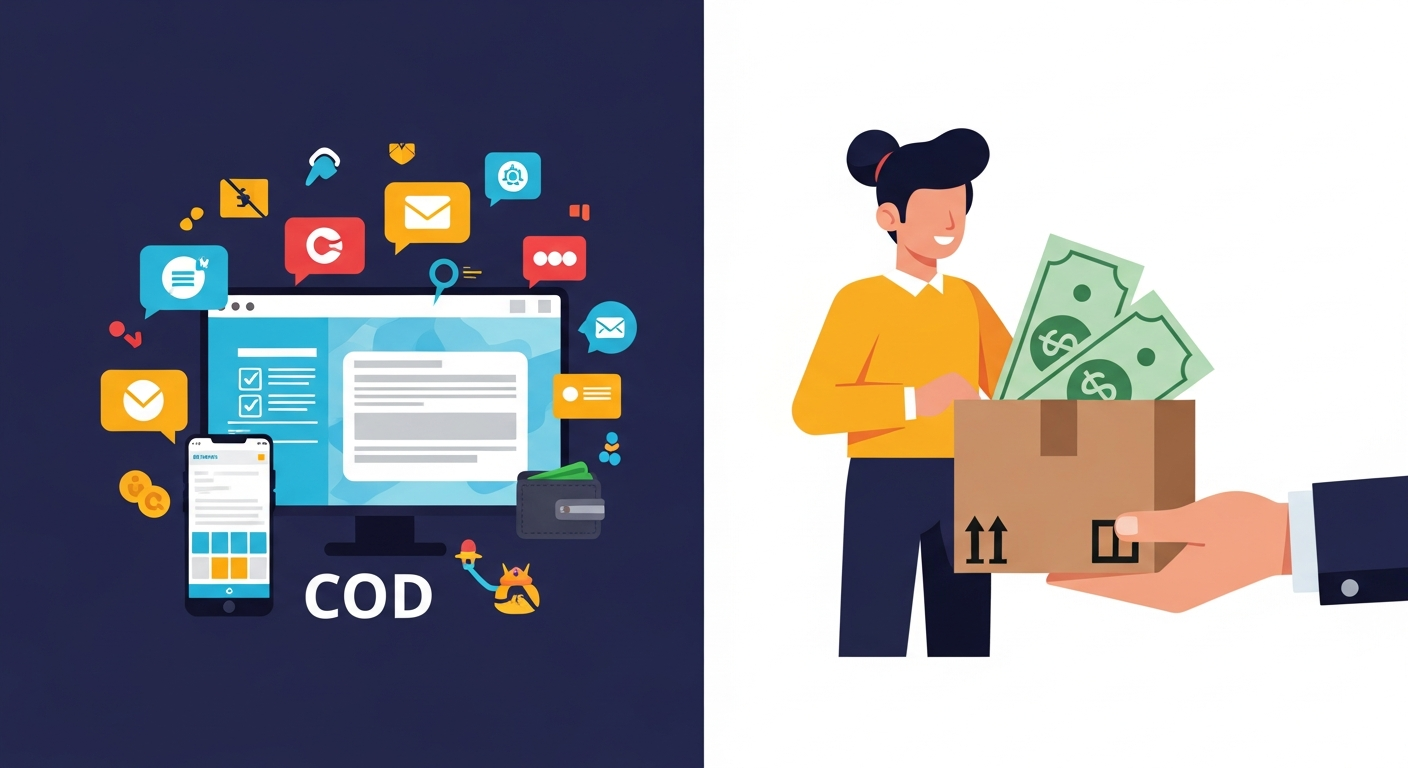
In the rapidly evolving world of e-commerce, Cash on Delivery (COD) remains one of the most important and widespread payment methods, especially in the Middle East and North Africa region. This traditional method, which allows customers to pay for their products in cash or by card upon receipt, holds the key to unlocking new markets and gaining the trust of a wide segment of consumers who may hesitate to use their credit cards online due to cultural reasons or security concerns. Understanding how to effectively activate and manage this service on platforms like Salla, Zid, and Shopify is not just an option; it's a strategic necessity for any online store aspiring to grow in these markets.
Ignoring the importance of Cash on Delivery could mean losing a significant percentage of potential customers who prefer this method, or even consider it a primary condition for completing a purchase. While Western markets are moving towards fully digital payments, our region retains its unique characteristics, where many see COD as an additional guarantee against fraud or receiving a product that does not match specifications. Therefore, intelligently integrating this method into your store's strategy not only enhances customer trust but also directly contributes to significantly increasing conversion rates and sales, requiring a deep understanding of its challenges and how to overcome them.

Understanding Cash on Delivery: A Cornerstone of Arab E-commerce
Cash on Delivery is a payment method that allows buyers to pay for their purchases at the moment they receive the goods from the shipping company. Payment can be made in cash, or in some cases, via Point of Sale (POS) using credit or debit cards, depending on the agreement with the shipping company. This method has gained immense popularity in the Arab region due to several deeply rooted cultural, economic, and social factors, making it an indispensable option for e-commerce stores seeking to reach the widest possible customer base, including those who do not own credit cards or prefer not to use them online.
The importance of Cash on Delivery lies in its ability to build a bridge of trust between the store and the customer, especially for new or less-known stores. When customers know that they will not pay any amount until they receive and inspect the product, their concerns about product quality or store credibility diminish, encouraging them to complete the purchase. This psychological factor plays a crucial role in the purchasing decision and directly impacts conversion rates, especially in markets where the culture of online shopping is still developing. Activating this method opens the door to a wide segment of customers who would not have shopped from your store without this option.
In the Arab e-commerce environment, where credit card penetration might be lower compared to Western countries, Cash on Delivery presents an ideal solution to overcome these obstacles. It offers great flexibility to customers and reduces barriers to purchase, significantly increasing the potential customer base. Understanding this dynamic and effectively implementing it on platforms like Salla, Zid, and Shopify, while considering the specificities of each platform, is key to success in this competitive market. It requires a comprehensive strategy that extends beyond merely activating the option to improving the overall customer experience. To maximize benefits, attention should be paid to optimizing the checkout page to ensure a smooth and clear experience for customers.
Advantages of Cash on Delivery for Your Online Store
Activating the Cash on Delivery option offers numerous strategic advantages that can significantly boost your online store's growth, especially in emerging markets like the Middle East. One of the most prominent advantages is increased conversion rates. By simply offering this option, many customers who were previously hesitant find an incentive to complete their purchase, as it gives them a sense of security and control, significantly reducing cart abandonment rates and driving sales upwards.
The second advantage lies in expanding your customer base and reaching new segments. A large portion of the population in the Arab region either does not own credit cards or prefers not to use them online for privacy or trust reasons. Cash on Delivery provides them with an easy way to shop online, opening doors for your store to new customers you would not have reached through traditional payment methods. This segment represents a significant part of the market, and reaching them means a substantial increase in sales volume and revenue.
Finally, Cash on Delivery contributes to building and strengthening customer trust and loyalty towards your store. When customers see that the store trusts them enough to provide the product before payment, it builds a positive feeling towards the brand. This trust translates into repeat purchases and recommendations to others, leading to sustainable organic growth. Stores that effectively implement this option on platforms like Salla, Zid, and Shopify often notice a significant improvement in their reputation and market position, making them an attractive choice for many new customers.
Challenges of Cash on Delivery and How to Overcome Them
Despite the significant advantages offered by Cash on Delivery, it is not without challenges that e-commerce store owners must address with intelligence and astuteness. One of the most prominent challenges is high return rates or delivery failures. Some customers may order products without a genuine intention to purchase, or they may change their minds upon package arrival, leading to return shipping costs and a loss of time, effort, and resources. This phenomenon requires robust strategies for order verification and mitigating potential risks before shipping the product.
The second challenge is related to logistical complexities and cash management. Cash on Delivery requires close coordination with shipping companies, which must be capable of collecting money in cash or by card upon delivery and remitting it to the store. This process can be complex and time-consuming, potentially delaying revenue collection. Additionally, handling cash involves security and administrative risks that must be considered. Therefore, store owners must choose reliable shipping companies that provide effective solutions for managing this aspect.
The third challenge is increased operational costs. Shipping companies often charge additional fees for COD services due to the extra effort and risks involved. These fees can impact profit margins, especially for low-value products. Furthermore, handling returns and re-shipments directly increases costs. Thus, it is essential to carefully evaluate these costs and try to mitigate them by improving order verification processes and effective communication with customers to ensure successful purchases and reduce unjustified rejections.
Activating Cash on Delivery on Salla, Zid, and Shopify Platforms
Activating Cash on Delivery on e-commerce platforms like Salla, Zid, and Shopify is an essential process to enable this payment method for your customers. Although the basic steps are similar, each platform has its own interface and settings that merchants must understand. Generally, the process begins by logging into the store's control panel and looking for the payment methods or shipping section. From there, you can select the Cash on Delivery option and adjust its settings to suit your store's needs and policies, taking into account any geographical or order value restrictions you may wish to apply.
For the Salla platform, merchants can easily activate Cash on Delivery by going to the 'Settings' section, then 'Payment Methods'. You will find the 'Cash on Delivery' option available and can activate it with a click of a button. Salla also allows linking this payment method to specific shipping companies supported by the platform, which simplifies the logistical coordination process. Merchants can also set a maximum order value that can be paid for by COD, a useful feature to reduce the risks of large orders. It is important to ensure that all shipping companies you work with support this service to avoid any conflicts.
On the Zid platform, activating Cash on Delivery follows a similar path. Merchants log into the control panel, then navigate to 'Settings' and from there to 'Payment Methods'. They will find the 'Cash on Delivery' option in the list, which can be activated and customized. Zid allows linking this payment method to available shipping options and specifying the geographical areas where this service can be offered, which is crucial for stores operating in different regions. It is important to review the shipping companies contracted with Zid and ensure their support for this service and its associated costs to ensure transparency in invoicing and operations.
Regarding the Shopify platform, Cash on Delivery is activated as a 'manual payment method'. From the control panel, merchants go to 'Settings' then 'Payments'. In the 'Manual payment methods' section, 'Cash on Delivery' can be added. Instructions can be added for customers on how this method works, and it is very important to link it to specific shipping rates or regions. Shopify offers great flexibility, but it requires merchants to manage the logistical collection aspect more directly or through third-party apps, as it does not offer direct integration with local shipping companies at the same level as Salla and Zid. Merchants can also consider activating other payment methods like Tabby and Tamara as alternatives or complements to Cash on Delivery to meet diverse customer preferences.
Strategies to Increase Sales and Improve the Cash on Delivery Experience
After activating Cash on Delivery, the task does not end there. E-commerce store owners must adopt effective strategies to enhance customer experience, mitigate challenges, and maximize sales. These strategies require a comprehensive approach focusing on effective communication, risk management, and optimizing logistical operations, in addition to smart marketing of this service. Implementing these practices will ensure that COD becomes a genuine competitive advantage for your store, rather than just an additional payment option, positively impacting customer loyalty and increasing your revenues over time.

Optimizing Communication and Information Transparency
Clear communication and transparency are key to success when offering Cash on Delivery. Customers should be fully aware of how this method works, any additional fees that may apply, and the estimated delivery time. It is crucial to display the COD policy clearly on product pages, the checkout page, and in the FAQ section, to dispel any doubts or misunderstandings that could lead to order cancellation or refusal of delivery. Stores on Salla, Zid, and Shopify can easily customize these pages to include this vital information.
After an order is placed, continuous communication plays a crucial role in reducing return rates. Sending confirmation messages via email, SMS, or even WhatsApp, including order details, the COD amount, and the estimated delivery date, reinforces customer commitment. Customers can also be reminded a day before delivery that their shipment will arrive, ensuring their presence and readiness to pay. This type of proactive communication significantly reduces the likelihood of customers rejecting the shipment upon arrival.
Furthermore, providing an order tracking system that allows customers to monitor their shipment status in real-time is essential. This not only gives customers peace of mind but also reduces the number of inquiries to customer service. Stores on Salla and Zid can integrate with shipping companies to provide direct tracking links, while Shopify stores may need to use available order tracking apps from its app store. Transparency at every step of the purchase process builds trust and makes the Cash on Delivery experience smoother and more effective for everyone.
Risk Management and Reducing Returns
To overcome the challenge of high returns with Cash on Delivery, stores must implement effective risk management strategies. One such strategy is order verification. Stores can make a quick phone call to new customers, especially for high-value orders, to confirm the seriousness of the order and the accuracy of contact details. This simple step can significantly reduce fake orders and save a lot of wasted shipping costs. This process can be clearly integrated into the store's policy to ensure customer understanding of its importance.
Another strategy is setting restrictions on Cash on Delivery. For example, stores can set a maximum order value for COD, or limit this service to specific geographical areas with a good track record of successful deliveries. Some stores may require a small upfront deposit for very large orders to ensure customer commitment. These restrictions, when intelligently applied, help protect the store from losses while still offering the service to a wide range of customers.
Finally, improving product quality and descriptions plays a pivotal role in reducing returns. When the product exactly matches what is displayed in the store with accurate images and descriptions, the likelihood of customers rejecting it upon delivery decreases. Investing in high-quality images, detailed and realistic descriptions, and honest customer reviews all contribute to building correct customer expectations and ensuring their satisfaction upon receiving the product, directly reducing returns related to product discrepancies.
Efficient Shipping and Delivery
Efficient shipping and delivery are the cornerstone of successful Cash on Delivery. E-commerce store owners, whether on Salla, Zid, or Shopify, must pay special attention to choosing their shipping partners. Selecting reputable shipping companies with a proven track record in handling COD is crucial. These companies must be capable of accurately and securely collecting payments, providing detailed reports, and delivering shipments on time. Signing clear agreements that define responsibilities, costs, and collection terms is an indispensable step to ensure smooth operations.
Offering diverse shipping options can enhance customer experience and increase their satisfaction. For example, stores can provide an expedited shipping option for an additional fee for customers who wish to receive their products faster. Furthermore, setting clear and specific delivery times reduces the likelihood of customers not being present when the shipment arrives, thereby reducing the costs of repeated delivery attempts and returns. Transparency in shipping costs and delivery expectations is key to building trust and avoiding unpleasant surprises for customers.
For stores operating on a large scale, it may be beneficial to consider integrating Shipping Management Systems that integrate with e-commerce platforms like Salla, Zid, and Shopify. These systems help automate the process of creating shipping labels, tracking shipments, and managing Cash on Delivery operations more effectively. Investing in robust logistical solutions ensures operational efficiency, reduces human errors, and contributes to delivering an excellent delivery experience, which positively reflects on the store's reputation and customer satisfaction.
Smart Marketing for Cash on Delivery
To maximize the benefits of the Cash on Delivery option, e-commerce stores must intelligently integrate it into their marketing strategies. It is not enough to simply activate the option on the checkout page; it must be highlighted as added value for potential customers. This can be done by clearly advertising the availability of COD in your ads, on your homepage, and on product pages, which attracts customers who prefer this method and reassures hesitant ones. Using clear banners like "Pay on Delivery" or "Secure Payment After Receipt" can have a significant impact.
You can also target specific customer segments who are likely to prefer Cash on Delivery in your marketing campaigns. For example, stores can target new customers, customers in specific regions where credit card penetration is lower, or customers looking for flexible payment solutions. Digital advertising platforms like Facebook, Instagram, and Google allow precise targeting of these segments, increasing the effectiveness of your marketing campaigns and achieving maximum return on investment.
The importance of marketing extends beyond attracting new customers; it also includes building loyalty among existing customers. Stores can reward customers who choose Cash on Delivery and successfully complete their orders by offering discounts on future purchases or loyalty points. This encourages repeat purchases and makes them ambassadors for your brand. By integrating Cash on Delivery into a comprehensive marketing strategy, stores can transform this option from a mere payment method into a powerful tool for increasing sales and building long-term customer relationships.
Conclusion
In conclusion, Cash on Delivery (COD) represents more than just an additional payment option in the Arab e-commerce world; it is a strategic cornerstone that can open new horizons for online stores and drive them towards sustainable growth. Despite the logistical challenges and associated risks, the benefits of building trust, expanding the customer base, and increasing conversion rates far outweigh these challenges if managed intelligently and effectively. Activating this service on platforms like Salla, Zid, and Shopify, and managing it professionally, is not merely an option, but a competitive necessity in a market that seeks flexibility and security.
In this article, we have reviewed how to activate Cash on Delivery on leading platforms, in addition to a set of practical strategies that help store owners reduce risks and increase the efficiency of this service. From optimizing communication with customers and information transparency, to implementing effective mechanisms for risk management and reducing returns, to choosing reliable shipping partners and implementing smart marketing strategies, all these steps contribute to transforming Cash on Delivery into a true competitive advantage that supports your store's growth.
Therefore, we urge all e-commerce store owners to adopt a proactive and thoughtful approach when integrating Cash on Delivery into their business models. Invest in robust support systems, continuously monitor performance indicators, and do not hesitate to adjust your strategies based on market data and customer behavior. With the right knowledge and proper implementation, Cash on Delivery can be the powerful engine that drives your store towards success and prosperity in the evolving digital landscape of the Arab region.