




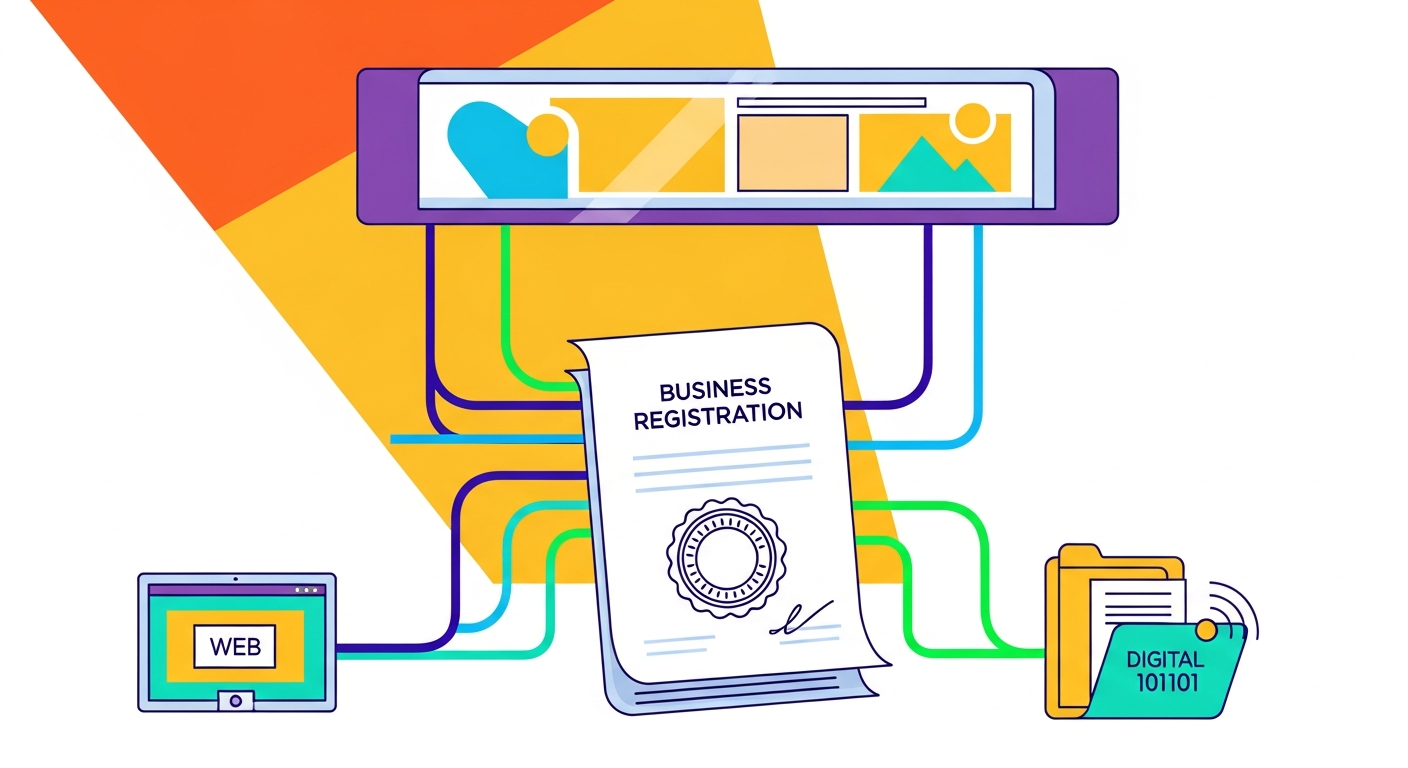
Introduction: Commercial Registration, the Cornerstone of Your E-commerce Store
In the rapidly evolving world of e-commerce, which is witnessing tremendous growth in Saudi Arabia and the region, establishing a successful online store requires more than just attractive products and a professional user interface. The fundamental pillar for any digital business striving for sustainability and growth is legal compliance, and at the forefront of this compliance is obtaining a commercial registration. A commercial registration is not merely an official document; it serves as the birth certificate for your business entity, granting it the necessary legitimacy and trust to operate in the market, and opening vast horizons for dealing with suppliers, banks, and even customers themselves.
This article aims to provide a comprehensive and detailed guide for ambitious entrepreneurs planning to launch their online stores on leading platforms such as Salla, Zid, and even Shopify. We will analyze and simplify all the necessary steps and procedures for obtaining a commercial registration, starting from understanding its utmost importance, moving through the basic requirements, and finally, how to link this registration to your online store to ensure smooth and secure operation. Understanding these steps and implementing them accurately guarantees that you build a solid foundation for your business, from which you can expand and innovate with confidence, away from potential legal risks that might hinder your progress.
The Importance of Commercial Registration for Your E-commerce Store
Commercial registration serves as your e-commerce store's passport to professionalism and credibility in the digital marketplace. It is not merely a routine procedure mandated by regulations and laws; rather, it is a strategic investment that places your business on a path of sustainable growth and long-term success. Without it, your store may face numerous challenges related to trust, access to financial services, and even the ability to expand, significantly limiting its potential in a competitive market.
Possessing a valid commercial registration grants your e-commerce store a clear legal identity, enabling it to conduct commercial activities officially and recognized. This identity is essential for dealing with government entities, banks, electronic payment service providers, shipping companies, and even suppliers. It also enhances your store's credibility with customers, who are now more aware of the importance of purchasing from reliable business entities that guarantee their rights and uphold their commitments, directly translating into increased sales and repeat purchases. Simply put, commercial registration is the protective shield that safeguards your business and elevates its standing in the market.
Furthermore, commercial registration is a prerequisite for benefiting from many government initiatives and support programs aimed at small and medium-sized enterprises, which seek to stimulate economic growth and provide an attractive business environment. It also facilitates e-commerce store owners in obtaining necessary funding for expansion and enables them to enter into strategic partnerships with larger entities. These combined aspects underscore that commercial registration is not just a document; it is a gateway to countless opportunities that contribute to enhancing your store's ability to compete and thrive in the evolving e-commerce landscape.
Building Trust and Credibility with Customers and Partners
Building trust and credibility is one of the most significant challenges facing e-commerce stores, especially with the increasing instances of fraud and lack of transparency in the digital space. Here, commercial registration plays a crucial role in solidifying this trust. When a customer sees that a store is officially registered and has a recognized legal entity, they feel reassured that there is an official body they can refer to in case of any issues or inquiries. This significantly boosts their purchasing decision. Commercial registration sends a clear message that the store operates seriously and transparently, adhering to local regulations and laws.
The impact of trust extends beyond customers to include business partners and suppliers. When you seek to contract with new suppliers, shipping companies, or even advanced electronic payment gateways, one of the first documents they will request is your commercial registration. This document assures them that they are dealing with a real and responsible business entity, facilitating negotiation and obtaining better terms, and opening doors for cooperation with major companies. On platforms like Salla, Zid, and Shopify, payment gateways and shipping companies often require a commercial registration to activate their services, making it an indispensable step to ensure the full operation of your store.
Moreover, commercial registration enhances the professional image of your e-commerce store. Instead of appearing as an unorganized individual operation, your store emerges as an institutional entity with rights and obligations. This professional image not only attracts customers but also draws talent and expertise who might wish to join your team, supporting your store's long-term growth and development. Investing in commercial registration is an investment in your business's reputation and its ability to sustain and grow in a dynamic market.
Legal Compliance and Avoiding Risks and Penalties
Legal compliance is one of the most important reasons entrepreneurs seek to obtain a commercial registration for their e-commerce store. In every country, there is a set of laws and regulations governing commercial activities, including e-commerce, and commercial registration aims to ensure the store's adherence to these laws. Non-compliance can expose the store owner to a wide range of risks, from hefty financial penalties to the complete closure of the store and prohibition from engaging in commercial activity, threatening the business's continuity and the foundational efforts invested in it.
The laws that an e-commerce store must comply with vary to include consumer protection laws, e-commerce laws, tax regulations, anti-money laundering laws, and others. Commercial registration places your store under the umbrella of these laws, making it easier for you to understand and fulfill your obligations. For example, in Saudi Arabia, many regulations require e-commerce stores to display commercial registration information on their interface, enhancing transparency and making it easier for regulatory bodies to verify the store's compliance. These requirements ultimately aim to protect consumers and ensure a fair and honest business environment.
Furthermore, commercial registration provides legal protection for the store owner in the event of commercial disputes with customers or suppliers. As the store is a legal entity, it facilitates litigation or settlement processes and ensures that the rights of both parties are preserved according to the law. Without a commercial registration, you might find yourself in a legally weak position, and it might be difficult to prove your ownership of the store or your commercial rights. Therefore, obtaining a commercial registration is not just a duty; it is a preventive measure that protects your business from legal risks and ensures its continuity in a regulated business environment.
Essential Requirements for Obtaining Commercial Registration
Before embarking on the process of obtaining a commercial registration, it is crucial to understand the essential requirements set by government authorities. These requirements vary depending on the type of legal entity you wish to establish, as well as the nationality of the business owner and the specific commercial activity. Preparing for these requirements in advance saves time and effort and ensures a smooth and efficient process. Accurately defining these details is the first step towards building a successful and legally compliant e-commerce store, whether you plan to operate on Salla, Zid, or even Shopify.
The basic requirements typically include a set of personal documents and information related to the business activity, in addition to general conditions that the applicant must meet. For example, you may be asked to provide proof of national ID or residency, specify a business address (even if virtual), choose a unique business name, and define the capital allocated for the business. All these details are the cornerstone of the commercial registration application and must be handled with utmost care to ensure compliance with official requirements and avoid any delays in obtaining approval.
Furthermore, accurately defining the type of commercial activity is paramount, as it must match the activities your e-commerce store will perform. For instance, if you plan to sell retail products online, your commercial registration must include the activity of "e-commerce" or "online retail." This precise definition ensures that your store operates within the correct legal framework and prevents any future conflicts that may arise with regulatory bodies. Consulting with a legal expert or reviewing local regulations can play a significant role in guiding you through this critical stage.
Defining Your Store's Legal Entity: Sole Proprietorship or Company?
Choosing the appropriate legal entity for your e-commerce store is a strategic decision with far-reaching implications for your liability, tax obligations, and even your ability to attract investments. The most common options for e-commerce entrepreneurs are the sole proprietorship and the Limited Liability Company (LLC) (or its equivalent in different legal systems). Each option has its advantages and disadvantages that must be carefully considered before making a final decision that will affect your business structure and future.
Sole Proprietorship: This is the simplest and most common option for startups and small businesses. It is characterized by ease of establishment and lower administrative and operational costs, as the establishment is considered an extension of its owner's personality. This means the owner is fully and unlimitedly liable for all debts and obligations of the establishment, which may expose their personal assets to risk in case the business faces financial problems. However, a sole proprietorship offers high flexibility in management and decision-making, making it ideal for those starting alone or with a limited budget on platforms like Salla or Zid.
Limited Liability Company (LLC): This is a more advanced option that provides greater legal protection for the owners' assets. In this entity, the partners' liability is limited to the extent of their share in the company's capital, meaning their personal assets are protected in case the company incurs debts or legal claims. Although establishing an LLC is more complex and requires higher procedures and expenses, it grants the e-commerce store greater credibility, facilitates attracting investors or entering partnerships, and suits projects that anticipate rapid growth or require larger capital, especially when considering expansion or operating on global platforms like Shopify.
When deciding on the legal entity, you should consider your projected business size, the level of risk you are willing to undertake, and your future plans for expansion and funding. Consulting a legal advisor or accountant can be invaluable in helping you understand the nuances between the two entities and choosing the most suitable for your specific circumstances and your e-commerce store's ambitions. This decision will form the foundation upon which you will build all your subsequent steps in establishing commercial registration and operating your store.
Preparing Required Documents and Paperwork
The process of preparing the required documents and paperwork is a critical step in the journey of obtaining a commercial registration, and any deficiency or error in it can lead to significant delays in completing the procedures. Therefore, it is essential to meticulously gather all required documents before submitting the official application. These documents vary slightly based on the type of legal entity you have chosen (sole proprietorship or company) and the owner's nationality, but there is a basic set of documents generally requested in most cases.
For sole proprietorships, typically a copy of the national ID (for citizens) or a valid residency permit (for residents) is required, along with specifying the business address. The business address can be a physical office or even a virtual office provided by specialized companies, which is a common option for e-commerce stores that do not require actual office space. The proposed trade name must also be specified, which must be unique and not previously used, and its availability can be checked through the Ministry of Commerce's online portal. It is also required to clearly define the main commercial activity and any sub-activities that the e-commerce store will undertake.
As for Limited Liability Companies, the requirements are slightly more complex. In addition to the partners' identity documents, you will need to prepare a company formation contract that specifies the partners' shares, capital, commercial activities, and management mechanism. This contract must be attested by the competent authorities. A company address is also required, which can be a physical office or a virtual office, as in sole proprietorships. Ensuring that all documents are valid and conform to official requirements greatly facilitates the review and approval process, allowing you to quickly move to the stage of operating your store on platforms such as Salla, Zid, or Shopify.
Steps to Obtain Commercial Registration in Saudi Arabia (via the Business Platform)
In the Kingdom of Saudi Arabia, the process of obtaining a commercial registration has become easier and more streamlined thanks to the comprehensive digital transformation of government services, specifically through the Business Platform of the Ministry of Commerce. This platform consolidates many services under one umbrella, reducing the effort and time required to complete procedures. Understanding and accurately following these digital steps ensures you obtain a commercial registration for your e-commerce store in the shortest possible time, paving the way for launching your business with confidence and compliance.
The process typically begins with registering on the Business Platform and creating your own account, then proceeding to the commercial registration issuance service. These steps require filling out electronic forms with accurate data about your business activity, the chosen legal entity, and the personal data of the owner or partners. Accuracy in entering information and uploading high-quality required documents is key to speeding up the review and approval process by the competent authorities, avoiding any unnecessary delays. This ease of procedure reflects the Kingdom's keenness to support entrepreneurs and facilitate an attractive digital business environment.
After completing data entry and document upload, the step of paying the prescribed fees for commercial registration issuance follows. The payment process can be completed electronically through the platform using available payment methods. Once payment is confirmed, and the application is reviewed and approved by the Ministry of Commerce, the commercial registration is issued digitally and sent to you, ready for immediate use. This streamlined process enables store owners to focus on developing their products and services, rather than being preoccupied with complex bureaucratic procedures, thereby enhancing success opportunities on e-commerce platforms such as Salla, Zid, and Shopify.
Registering on the Business Platform and “Maras” System
The first and fundamental step to obtaining a commercial registration in the Kingdom of Saudi Arabia is to register on the electronic Business Platform of the Ministry of Commerce. This platform is the main gateway for submitting all commercial registration applications, renewals, and amendments. To create an account, you will need to use your national ID or residency permit number, and your identity will typically be verified via NAFATH or Absher. Once the account is created, you will gain access to a comprehensive dashboard that offers a wide range of integrated government services, making it easier for you to manage all legal aspects of your e-commerce store.
The Business Platform is closely integrated with the "Maras" system, a unified business services system aimed at simplifying business establishment and operation procedures in the Kingdom. Through "Maras," entrepreneurs can complete many government services related to company and establishment formation, licenses, registration renewals, and more, from a single location. This integration reduces the need to move between different government agencies, saving significant time and effort for business owners, reflecting the Kingdom's commitment to providing a friendly and attractive business environment for investment, especially in the rapidly growing e-commerce sector.
The use of the Business Platform and the "Maras" system is not limited to facilitating commercial registration procedures; it also extends to providing accurate and updated information on requirements and regulations. Through these platforms, you can track the status of your application in real-time, receive notifications, and communicate with relevant authorities if you have any inquiries. This transparency and efficiency in providing digital government services are a great support for e-commerce store owners on platforms like Salla, Zid, and Shopify, as they can focus on building and developing their businesses instead of being preoccupied with administrative complexities.
Filling Out Data and Submitting the Application
After successfully registering on the Business Platform, the most detailed stage follows: filling out the required data for the commercial registration application. This step demands extreme accuracy and attention to detail, as any error in data entry could lead to the rejection of the application or delays in its processing. You will be asked to enter essential information such as the proposed trade name (ensuring it is not already in use), the type of legal entity (sole proprietorship or company), the capital allocated for the project, and the main commercial activity and sub-activities your e-commerce store will undertake.
In addition to business data, you will also need to enter personal data for the owner or partners, such as national ID or residency permit number, date of birth, national address, and contact information. It is crucial that this data matches the official documents you will upload. The platform will also request you to specify the business premises address, which can be a physical or virtual address, and must comply with local regulations. After entering all data, you will need to upload the required documents mentioned earlier (such as a copy of the national ID/residency permit and a lease agreement if applicable), ensuring their clarity and validity.
After reviewing all data and documents and ensuring their accuracy and completeness, you can proceed to the application submission step. At this stage, a summary of the application may appear for final review before confirmation. It is highly recommended to re-check every detail before submission to avoid any errors that might cost you time and effort later. After submitting the application, you will receive a reference number that you can use to track the application status via the Business Platform, ensuring transparency and the ability to monitor the progress of your e-commerce store's commercial registration procedures, whether on platforms like Salla, Zid, or Shopify.
Paying Fees and Receiving Commercial Registration
After completing all required data entry and successfully submitting the application, you will proceed to the final and crucial stage: paying the prescribed fees for issuing the commercial registration. These fees are determined by the Ministry of Commerce and vary based on the type of legal entity and the desired validity period of the registration (usually one year renewable or several years). The Business Platform offers multiple convenient electronic payment options, making it easy for business owners to complete this step without needing to visit government offices or banks, which reflects the Kingdom's commitment to the comprehensive digital transformation of government services.
Payment options typically include credit cards (Visa and Mastercard), Mada cards, or even the SADAD system. Once you select a payment method and enter your payment details, the transaction will be processed and confirmed instantly. It is important to keep the payment receipt for your reference, although the platform provides a record of all your transactions. After payment confirmation, your application moves to the final review stage by specialists at the Ministry of Commerce. This review aims to ensure that all conditions and documents are met before the final issuance of the commercial registration.
If all information and documents are correct and complete, the commercial registration will be issued digitally within a very short period, which may not exceed a few business days, and in some cases, it may be instantaneous. A copy of the electronic commercial registration will be sent to you via email or will be available for download directly from your control panel on the Business Platform. With this step, your e-commerce store will have obtained its official legal identity and will be ready for full operation on any e-commerce platform such as Salla, Zid, and Shopify, with full compliance with regulations. You can refer to our comprehensive guide on which is more suitable for your store from Salla, Zid, and Shopify to better understand the right platform for you after obtaining commercial registration.
Linking Commercial Registration to Your E-commerce Store (Salla, Zid, Shopify)
After successfully obtaining your commercial registration, the crucial step is to link it to your e-commerce store on platforms like Salla, Zid, or Shopify. This step is not just an administrative procedure; it is essential for activating many fundamental features and services for your store, such as electronic payment gateways, shipping companies, and even some advanced applications that require verification of the store's legal identity. Linking your commercial registration ensures your store operates efficiently and in full compliance, and enhances customer trust in you.
Most e-commerce platforms, especially those targeting the Saudi and Gulf markets like Salla and Zid, require store owners to submit official documents proving their legal identity, foremost among them being the commercial registration. This procedure is necessary to ensure a safe and reliable trading environment for all parties. Even global platforms like Shopify, despite their flexibility in some aspects, require compliance with local regulations when activating payment and shipping services tailored to the region, making commercial registration an indispensable document to ensure the full operation and expansion of your store.
The linking process is often straightforward and done through the store's control panel on the chosen platform, where you will be asked to upload a digital copy of the commercial registration or enter its registration number. After that, the platform reviews the documents and verifies their validity, which may take a few business days. Once approved, restricted services are activated, allowing your store to operate at full capacity, receive orders, and process shipments efficiently. This step is the bridge from a mere idea to a fully functional e-commerce store with all necessary authorizations.
E-commerce Platform Requirements
The requirements of e-commerce platforms regarding the necessity of commercial registration and the level of scrutiny vary, but the general trend is towards requesting proof of legal identity for stores, especially with increasing efforts to combat fraud and enhance consumer protection. Platforms like Salla and Zid, which focus heavily on the Saudi and Gulf markets, make commercial registration a fundamental requirement for activating many vital services. This procedure ensures that all stores operating on these platforms are subject to local regulations and adhere to approved commercial standards, providing a safe environment for shoppers.
For Salla and Zid, commercial registration is an indispensable condition for activating local electronic payment gateways (such as Mada, Visa/Mastercard through local banks), as well as for contracting with shipping companies that provide their services within the Kingdom. Without commercial registration, you will not be able to link your store to these essential services, meaning you will lose the ability to accept online payments or ship products efficiently, which significantly hinders your store's operation. These requirements aim to build an e-commerce ecosystem characterized by trust and transparency, protecting the rights of both sellers and buyers.
Shopify, on the other hand, is a global platform that is initially more flexible, allowing you to start a trial store or a small store without an immediate need for commercial registration to activate some basic features. However, once you start generating serious sales, or when you wish to use local payment gateways available in your country or contract with specialized shipping companies, you will find that commercial registration becomes an absolute necessity. Compliance with local regulations is essential to ensure the continuity of your store's operation on Shopify and avoid any legal complications that may arise later. Stores can benefit from the best Salla and Zid apps to boost your e-commerce store's efficiency after activating their commercial registration.
Linking Steps and Store Activation
After obtaining the commercial registration and understanding the platforms' requirements, the practical step of linking this registration to your e-commerce store on Salla, Zid, or Shopify follows. This process is often simple and straightforward, but it requires you to log into your store's control panel and follow the specific instructions for each platform. The goal is to provide proof that your store is a recognized legal entity, which opens the door for you to activate essential services indispensable for any successful e-commerce store.
On platforms like Salla and Zid, you will typically find a dedicated section in the store settings that asks you to enter the commercial registration number and upload a clear image of the registration. You may also be asked for additional information such as the registered trade name, expiration date, and legal entity type. After uploading the documents, the platform's support teams will review them to verify their accuracy and consistency with the entered data. This process may take a few business days, and during this period, some services might be restricted. Therefore, it is advisable to complete this step as soon as possible after obtaining the commercial registration to avoid any delays in launching your store or activating its services.
For Shopify, the linking process might be more flexible initially, but it becomes necessary when setting up local payment gateways or when aiming for expansion. You will need to enter your legal business information when setting up payments via Shopify Payments or when linking external payment gateways. Remember that the purpose of these steps is to ensure your store operates within a sound legal framework, giving you peace of mind and saving you from future issues. Once the verification process is complete, you will be able to activate all payment gateways and shipping companies, allowing you to start selling your products and receiving orders smoothly. Don't forget to review our guide to choosing the best payment gateways in Salla and Zid to ensure you have suitable payment options for your customers after activating your registration.
Additional Tips for New Entrepreneurs
After completing the procedures for obtaining commercial registration and linking it to your e-commerce store, there are still many important aspects that new entrepreneurs should pay attention to to ensure the success and sustainability of their businesses in the world of e-commerce. Establishing an online store goes beyond merely obtaining licenses; it requires a comprehensive vision for operational, financial, and marketing processes. Applying these tips will help you build a strong business capable of competing and growing, whether you use Salla, Zid, or Shopify.
First, consult experts: Do not hesitate to seek advice from legal accountants and legal consultants, especially regarding taxes and other legal obligations. Understanding and correctly applying tax requirements from the outset will save you many future problems. Second, maintain accurate records: Document all financial transactions, purchases, and sales, as well as inventory records. Accurate records not only facilitate tax audits but also help you make informed business decisions and better analyze your store's performance. These practices are the foundation of effective management for any business.
Third, keep up with legal changes: Laws and regulations are constantly changing, especially in the rapidly evolving e-commerce sector. Stay informed about any legal updates that may affect your business, and ensure you renew your commercial registration and other licenses on time to avoid any disruption in operations or penalties. Fourth, focus on customer service: Building strong relationships with your customers is key to success. Providing excellent customer support, clear return and exchange policies, and listening to their feedback will contribute to building customer loyalty and increasing repeat sales. Fifth, invest in effective marketing: Even the best products need marketing to reach the target audience. Explore suitable digital marketing strategies for your store, whether through social media, search engines, or content marketing, to increase awareness of your store and attract more potential customers.
Conclusion
In this comprehensive and integrated article, we have reviewed the importance of commercial registration as the cornerstone of any e-commerce store aspiring for success and sustainability in the digital commerce world. Through our deep understanding of legal requirements, the detailed steps for obtaining commercial registration in Saudi Arabia via the Business Platform, and how to link it with platforms like Salla, Zid, and Shopify, we have provided you with a clear roadmap to confidently and compliantly embark on your commercial journey. Commercial registration is not just a document; it is an expression of your commitment to professionalism, building trust with your customers and partners, and avoiding potential legal risks.
The journey of establishing and operating a successful e-commerce store is one that requires patience, precision, and continuous learning. After securing the legal foundation for your business, doors open for you to explore new horizons in product development, enhancing customer experience, and implementing innovative marketing strategies. Remember that legal compliance is the first step towards building a strong and reliable brand that can thrive in a competitive market. Invest your time and effort in understanding these fundamental aspects, and you will reap the rewards in the form of sustainable growth and long-term success for your e-commerce store.
In conclusion, we invite you, ambitious entrepreneurs, to move forward with confidence and determination in achieving your business dreams. The Kingdom of Saudi Arabia, thanks to its ambitious vision and continuous digital transformation of its services, provides a nurturing and enabling environment for the growth of e-commerce. Seize these opportunities, build your stores on solid foundations, and do not hesitate to utilize available resources, consult with experts, and learn from experiences. The future of commerce is yours, and commercial registration is your key to launching into this promising future.