



The electronic payment stage is the decisive moment in the customer journey within your online store. It is the point where a browsing visitor turns into an actual customer, and funds are transferred from their account to your business's treasury. Choosing the right payment gateway is not just a marginal technical or financial decision; it is a fundamental pillar that directly impacts conversion rates, customer satisfaction, and their trust in your brand. In light of the rapid development of e-commerce in Saudi Arabia and the Arab region, Cash on Delivery (COD) is no longer the only or preferred option. Instead, digital wallets, credit cards, and installment services have become the new standard that shoppers look for.
Many merchants, whether beginners or professionals on platforms like "Zid" and "Salla", face a major challenge when comparing available payment options. Should they rely on built-in solutions like "Salla Pay" and "Zid Pay"? Or should they turn to independent external payment gateways? And how can they decipher the complex fee structure that includes percentages, fixed fees, and setup costs? These questions require careful analysis because every riyal saved in processing fees reflects directly as net profit for your store, and every seamless payment experience means a customer who will return to buy again.
In this comprehensive article, we will dive deep into electronic payment gateways to explain the exact criteria for comparison, uncover hidden fees that many might overlook, and provide practical tips for choosing the optimal solution that balances cost and service quality. Whether you run a small store with limited products or a massive enterprise with heavy daily transactions, understanding the mechanics of these gateways will give you greater negotiating power and the ability to make sound financial decisions that ensure the sustainability and growth of your business.
Key Criteria for Comparing Electronic Payment Gateways
When you start looking for the ideal payment gateway for your store, your focus should not solely be on the "cheapest" available option, because low costs can sometimes come at the expense of quality, security, or the speed of financial settlement. The first and most important criterion is "user experience" and the ease of completing the transaction. A gateway that requires too many steps or redirects the customer to slow external pages can cause you to lose the customer at the last minute. The gateway must support all popular local payment options in Saudi Arabia and the Gulf, such as "Mada", "Apple Pay", and "STC Pay", in addition to global cards like Visa and Mastercard. The absence of a customer's preferred payment method simply means they will go to a competitor.
The second crucial criterion is the "fee and cost structure," which is usually divided into three parts: setup fees, monthly or annual fees, and transaction fees. These fees vary based on your sales volume and the type of card used. For example, fees for "Mada" cards are typically much lower than those for international credit cards. This is where the smart merchant comes in, calculating the total cost based on their Average Order Value (AOV) and monthly sales forecasts. To learn more about how the payment experience impacts customer decisions, you can review our article on optimizing cart and checkout pages to reduce cart abandonment, where we explain in detail how checkout page design can increase or decrease your sales.
The third criterion is the "settlement period," which is the time it takes for the payment gateway to transfer funds from its account to your commercial bank account. For emerging stores that need continuous cash flow to purchase inventory and pay operational expenses, waiting a week to receive funds can be fatal. Some built-in solutions on platforms like Zid and Salla feature fast settlements (daily or within 48 hours), while other gateways may be delayed. Therefore, you must read the terms of service carefully and ensure that the financial transfer cycle aligns with your operational cycle to guarantee no liquidity shortages occur.
Comparing Built-in Solutions and Independent Payment Gateways
Leading e-commerce platforms like "Salla" and "Zid" offer their own built-in payment solutions (Salla Pay and Zid Pay), which are game-changing options for merchants in the region. The biggest advantage of these solutions is "seamless integration" and speed of activation. You don't need complex paperwork or lengthy negotiations with banks; once your store is verified, you can activate payments and receive funds immediately. Additionally, these solutions provide a unified dashboard that allows you to track orders, payments, and refunds from one place, simplifying accounting operations and reducing the administrative effort required to reconcile accounts.
On the other hand, some large stores or those with special needs resort to independent external payment gateways (such as PayFort/Amazon Payment Services, Tabby, Tamara, or Moyasar). The main reason for this trend is often the search for advanced features not available in standard solutions, such as multi-currency support for international sales, providing customized payment solutions for specific sectors, or securing significantly lower commission rates due to massive sales volumes that allow for direct negotiation. However, integrating with these gateways sometimes requires technical expertise or the use of middleware applications, and activation procedures can be stricter and lengthier compared to built-in solutions.
When comparing, you must consider the size of your store and its growth stage. For emerging and medium-sized stores, the built-in solutions in Zid and Salla are often the best and most cost- and effort-efficient options, providing everything a merchant needs to start and grow without technical complexities. However, if your store handles millions of riyals monthly, it may be financially worthwhile to seek special contracts with external payment gateways to reduce the commission rate, even by fractions of a percent, because these fractions translate into substantial amounts in the end. To discover apps that help you manage these operations, we recommend checking out the best Salla and Zid apps to boost your online store's efficiency, which includes auxiliary tools for payments and accounting.
The Impact of Buy Now, Pay Later (BNPL) Services on Sales
Discussions about payment gateways are no longer limited to bank cards alone. "Buy Now, Pay Later" (BNPL) services like "Tabby" and "Tamara" have stormed the market and become an integral part of the payment strategy for any successful online store. These services allow the customer to pay for their purchase in installments (usually 3 or 4 payments) with zero interest, while the merchant receives the full amount upfront (minus the service commission). Statistics indicate that activating these services significantly increases the Average Order Value (AOV), as customers are encouraged to buy more expensive products or add more items to their cart since they won't have to pay the full amount immediately.
Although the fees for these services on the merchant are higher than those of traditional payment gateways (reaching up to 6% or 7% plus fixed fees), the return on investment is often highly rewarding. The increase in conversion rates and the drop in cart abandonment more than make up for the fee difference. Merchants should view these fees not just as payment processing costs, but as part of marketing and customer acquisition costs, because these services bring in a segment of customers who might not be able to purchase with full upfront payment. To deepen your understanding of how to measure the feasibility of these services, you can read our article on Key Performance Indicators (KPIs): 5 metrics that determine your online store's success, to connect payment costs with net profit.
It is very important when activating installment options to be transparent with your customers, clarify the terms and conditions, and ensure that your product profit margins can absorb these additional fees. Do not activate them on products with very slim profit margins unless the goal is to clear inventory or acquire new customers. Furthermore, both Zid and Salla platforms offer easy and fast integration with these services, making the technical activation process take only minutes. However, the financial planning regarding their impact on profit margins is what requires careful study from you as a professional merchant.
Managing Risks, Hidden Fees, and Refunds
One aspect that many merchants overlook when evaluating payment gateways is the policies and fees for refunds and chargebacks. In e-commerce, refunds are a common and natural occurrence, but how does the payment gateway handle them? Some gateways do not refund the processing fees to the merchant when the amount is returned to the customer, meaning you will lose the commission percentage (e.g., 2.5%) even if the sale is ultimately canceled. The repetition of these transactions can act as a silent drain on your profits, so you must read the terms and conditions regarding refunds carefully before contracting with any gateway.
Moreover, there is what is known as a "Rolling Reserve," which some gateways may impose on new stores or those considered high-risk. A certain percentage of your funds (e.g., 10%) is held for up to 90 days to ensure coverage for any future fraud or refund operations. This procedure can severely harm your cash flow. It is also essential to pay attention to international transfer fees if you sell to customers outside your country, as currency conversion fees and additional charges are applied to non-local cards. To protect yourself legally and financially, you must have a clear policy. You can refer to our article: Refund Policy: How to write terms that protect your store and your customer? to draft clauses that align with the capabilities of your chosen payment gateway.
Digital security is also a part of risk management. The payment gateway must comply with the highest global security standards (PCI DSS). Any security breach does not just mean losing money; it means destroying your store's reputation forever. The approved solutions in Zid and Salla provide this protection automatically, lifting the burden of cybersecurity for payment operations off your shoulders. Always remember that saving on fees with an insecure or unreliable payment gateway is a risk not worth taking; security is the true currency in e-commerce.
Practical Strategies to Reduce Payment Costs and Increase Profits
To maximize the benefits of payment gateways and reduce costs, you must adopt a strategy of guiding customers toward the most cost-effective payment methods for you, without negatively impacting their experience. In Saudi Arabia, "Mada" cards are considered the least costly for the merchant compared to Visa and Mastercard. You can indirectly encourage customers to use Mada by prominently displaying its logo or placing it as the first option on the checkout page. Some smart merchants offer special promotions for those who pay with a Mada card or via direct bank transfer (if available automatically) to save on high credit card fees.
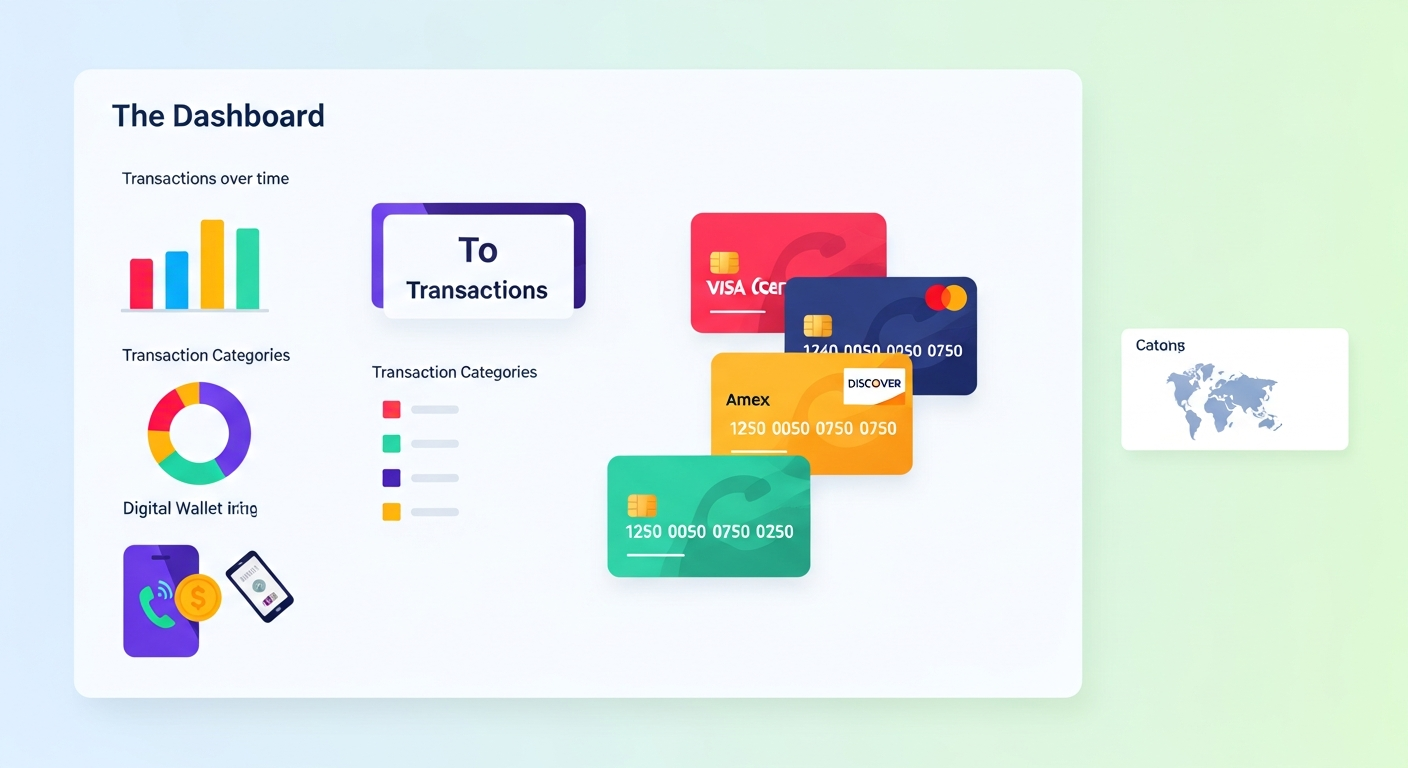
Another important tip is to review your monthly payment reports meticulously. Do not just look at the final amount deposited into your account; analyze the details: How much did you pay in fees for Visa transactions? How much for Mada? And how much for installment services? This analysis will help you make future decisions, such as negotiating with the payment gateway to lower the percentage if your sales volume exceeds a certain threshold, or perhaps disabling a specific payment method if its cost eats up your entire profit margin and is only used by a few customers. Data is your strongest weapon in improving profitability.
Finally, do not neglect the importance of the mobile payment experience. The largest percentage of purchases on Zid and Salla are made via smartphones, so activating Apple Pay is not a luxury but an absolute necessity. Apple Pay provides the fastest and easiest payment experience (Face ID or Touch ID), which insanely boosts conversion rates compared to manually entering card details. Speed here means more sales; even if the fees are similar to other cards, the increase in the number of orders will offset the cost and increase total profits.
Conclusion: Choosing the Most Suitable Financial Partner for Your Store's Success
Concluding this detailed guide, it becomes clear that electronic payment gateways are not just tools for collecting money; they are strategic partners in the success of your online store on platforms like Zid and Salla. The right choice depends on a careful balance between financial cost (fees) and added value (user experience, security, settlement speed). There is no single "best" option for everyone; what is best for a store selling luxury jewelry might be completely different from what is best for a store selling inexpensive accessories.
Our golden advice to you is to start with the easy, built-in solutions provided by your platform (like Salla Pay and Zid Pay) because they are specifically designed for your environment and save you a lot of technical and administrative hassle at the beginning. As your store grows and your sales volume increases, start monitoring the numbers closely. At that point, you can consider negotiating or looking for custom solutions if the need arises. Always remember that the customer is looking for security and ease; if you provide that, they will not hesitate to buy from you time and time again.
Invest your time in understanding the details of your payments, review your financial policies periodically, and do not hesitate to use the tools and reports provided by your store's platform. Success in e-commerce is an accumulation of small, correct decisions, and choosing the right payment gateway is undoubtedly one of the most important decisions you will thank yourself for in the future.