

Payment Gateways: Choosing the Best for Your Salla and Zid Store
In the rapidly evolving world of e-commerce, payment gateways are the lifeblood that pumps vitality into any online store. They are not merely a means to collect money; they are the cornerstone of building customer trust and ensuring a smooth, efficient shopping experience. With increasing competition and a variety of available options, choosing the right payment gateway for your store on platforms like Salla, Zid, or Shopify has become a strategic decision as crucial as selecting your products or designing your store. This decision can directly impact conversion rates, customer satisfaction, and even the overall financial performance of your business.
The ultimate goal of any e-commerce store is to make the purchasing process as easy as possible, removing any obstacles a customer might face. This is where effective and secure payment gateways that support diverse payment options tailored to the target audience's preferences come into play. Today's shoppers expect flexibility and ease in payments, ranging from credit and debit cards to buy now, pay later (BNPL) options like Tabby and Tamara, and digital wallets. Ignoring these expectations can lead to the loss of many potential sales, as statistics show that a significant percentage of abandoned shopping carts are due to a complicated payment process or the unavailability of preferred payment options. Therefore, a deep understanding of available payment gateways and how to choose the best among them is key to success in the digital market.
The Importance of Payment Gateways in E-commerce
The importance of payment gateways extends beyond the technical aspect of collecting money; they play a pivotal role in building bridges of trust between the store and the customer. When a customer sees that a store offers secure and well-known payment options, they feel confident in completing their purchase, which positively reflects on the brand image and customer loyalty. These gateways provide multiple layers of security, such as data encryption and compliance with PCI DSS standards, protecting sensitive customer payment information from potential breaches and saving the store from fraud risks and financial losses.
Furthermore, effective payment gateways significantly contribute to improving the user experience, leading to higher conversion rates. If the payment process is fast, smooth, and involves the fewest possible steps, the customer will be more likely to complete the purchase rather than abandoning their shopping cart. This requires the gateway to be compatible with different devices (mobile and desktop) and to support one-click payments or saving card details (with necessary security) for returning customers. The ability to offer a wide range of payment methods, such as Mada, Visa, Mastercard, Apple Pay, and even BNPL options like Tabby and Tamara, gives shoppers the flexibility they seek in the digital age.
The impact of payment gateways is not limited to the technical aspect or customer experience; it also extends to the store's operational efficiency. The right gateway provides robust tools for transaction management, detailed sales reports, and facilities for refunds and cancellations, reducing administrative burdens on store owners. Some gateways also offer additional services such as fraud detection and data analytics, which help the store better understand customer behavior and make informed marketing and operational decisions. In summary, payment gateways are a fundamental investment that ensures business continuity and growth in the competitive e-commerce environment.
Direct Payment Gateways
Direct payment gateways are those where the entire payment process takes place within the e-commerce store's website without redirecting the customer to an external page to complete the transaction. This type of gateway gives the store full control over the payment experience, allowing for customization of the checkout page to match the brand's identity and enhancing the customer's sense of trust and security. Common examples of these gateways in the region include MyFatoorah and PayTabs, in addition to global solutions like Stripe, which allows for direct integration. These gateways require the store to handle PCI DSS compliance requirements to a greater extent, or to rely on advanced solutions from the gateway itself to avoid technical complexities.
The main advantage of direct payment gateways lies in their ability to provide a seamless and integrated user experience. The customer never leaves the store, which reduces the likelihood of distraction or cart abandonment due to redirection. This helps build a strong, unified brand, as the customer feels they are interacting with a single, cohesive entity from the beginning of the browsing process to the completion of payment. The store can also collect better data on customer behavior during the payment process, enabling continuous optimization of this process to increase conversion rates.
Despite the many advantages, direct payment gateways require a higher level of attention regarding security and compliance, which can be a challenge for small and medium-sized businesses. The store must ensure that all sensitive customer data is handled and stored securely and in compliance with international standards. However, platforms like Salla, Zid, and Shopify often offer ready-made solutions that help stores integrate these gateways safely and easily, with the platform bearing a significant portion of the compliance responsibility, making it easier for store owners to leverage these solutions without needing deep technical expertise.
Redirect Payment Gateways
Redirect payment gateways differ from direct ones in that the customer is redirected to an external page, often belonging to the payment service provider itself, to complete the payment process. After entering payment details and confirming the transaction, the customer is redirected back to the order confirmation page on the store. One of the most famous examples of this type of gateway globally is PayPal, in addition to many local gateways that offer this option. This method is characterized by its ease of setup, as the gateway provider assumes full responsibility for data security and PCI DSS compliance, lifting a significant burden from the store owner.
The main advantage of redirect payment gateways is their simplicity and security for the store. The store owner does not need to worry about storing credit card data or complying with complex security standards, as the gateway provider handles all these aspects. This makes them an attractive option for startups or stores that lack sufficient technical resources to manage security requirements. These gateways are also often reliable and well-known to customers, increasing their sense of security when making payments, especially if they are using payment methods like PayPal that offer additional buyer protection.
However, redirect payment gateways may face a challenge in maintaining a completely consistent user experience, as changing the interface between the store and the payment page may cause some customers to feel distracted or lose trust. Some customers may see the redirection to an external page as an undesirable extra step, which could negatively affect conversion rates. Therefore, it is important to choose a redirect payment gateway with a clean and familiar user interface, and to clearly inform the customer that they will be redirected to complete the payment. Platforms like Salla, Zid, and Shopify support these types of gateways and provide tools to simplify the integration process, helping to alleviate some of these challenges.
Installment Payment and Cash on Delivery (BNPL & COD) Solutions
In the Arab and GCC markets, particularly, Buy Now, Pay Later (BNPL) and Cash on Delivery (COD) solutions have gained immense popularity and have become essential requirements for many shoppers. Companies like Tabby and Tamara have led the way in providing deferred payment options that allow customers to purchase products now and pay for them in easy installments without interest. These solutions significantly increase customers' purchasing power, thereby raising the average order value and increasing overall sales, especially for higher-priced products. Store owners on Salla, Zid, and Shopify can easily integrate these solutions to offer unparalleled payment flexibility. You can refer to our guide on Tabby and Tamara to learn more about how to increase your store's sales.
As for Cash on Delivery (COD), it remains a vital and preferred option for a large segment of customers, especially those who do not have credit cards or prefer to inspect the product before payment. Despite the logistical challenges that this option may pose, such as the need to coordinate with shipping companies to collect payments and the risks of refusal upon delivery, it remains a powerful tool for building trust and attracting a wider customer base. Many e-commerce platforms like Salla and Zid offer integrated options for managing COD orders, making it easier for store owners to handle them efficiently.
These solutions complement traditional payment gateways rather than replacing them. Offering a mix of traditional payment options (cards, e-wallets) with modern (BNPL) and conventional (COD) payment options ensures that the needs and preferences of the largest possible number of customers are met. This diversity enhances the overall shopping experience and reduces shopping cart abandonment rates. Store owners should carefully study their target audience to determine which of these options are most in demand and ensure their availability through integrated payment gateways on their platforms.
Fees and Costs
Fees and costs are among the most crucial criteria to consider when choosing a payment gateway, as they can significantly impact your store's profit margin. Fee structures vary among service providers and typically include several types: transaction fees (a percentage of each payment value plus a small fixed amount), one-time setup fees, monthly maintenance or subscription fees, and additional fees for specific services such as chargebacks or refunds. It is essential to read the terms and conditions carefully and understand all potential fees before committing to any payment gateway.
To effectively evaluate costs, store owners should conduct detailed calculations based on projected sales volume and average order value. Some gateways may appear attractive with their low transaction fees, but they might impose high monthly fees or hidden charges for certain services. Conversely, other gateways might offer slightly higher transaction fees but no monthly fees, which could be more suitable for stores with lower sales volumes initially. It is important to compare the total cost of several gateways over a specific period (such as a year) to estimate the true financial impact.
Attention should also be paid to foreign currency fees if you plan to sell to international customers. Some gateways impose additional currency conversion fees, which can accumulate and become costly over time. Additionally, chargeback fees must be considered; these are amounts charged to the merchant when a customer disputes a payment. Choosing a payment gateway that offers robust fraud prevention tools can help reduce these fees and protect your store from unexpected losses. A comprehensive understanding of these financial aspects ensures the selection of an economically sustainable payment gateway for your store on Salla, Zid, or Shopify.
Security and Compliance
Security and compliance with international standards are fundamental pillars that cannot be compromised when choosing a payment gateway for your e-commerce store. With the increasing cyberattacks and fraud risks, the chosen payment gateway must provide the highest levels of protection for sensitive customer financial data. One of the most important of these standards is compliance with the Payment Card Industry Data Security Standard (PCI DSS), a set of security requirements designed to ensure the secure processing, storage, and transmission of credit card information. You must ensure that the payment gateway you choose is certified and fully compliant with this standard, and that it uses strong encryption protocols such as SSL/TLS to protect data during transit.
In addition to PCI DSS compliance, the payment gateway must provide advanced tools for fraud detection and prevention. These tools include behavioral analysis systems, databases of suspicious addresses, Address Verification Service (AVS), and Card Verification Value (CVV). These features help reduce the risk of fraudulent transactions, which not only lead to direct financial losses but can also damage the store's reputation and customer trust. The gateway should also be capable of handling 3D Secure authentication technologies like Verified by Visa and Mastercard SecureCode, which add an extra layer of security by requiring the customer to verify their identity with the card-issuing bank.
On platforms like Salla, Zid, and Shopify, the platform itself often bears part of the compliance responsibility, especially for stores that do not directly handle card data. However, it remains the store owner's duty to ensure that all components connected to the payment process are secure and reliable. Choosing a reputable payment gateway with a proven track record in security is an investment in protecting your store and your customers in the long run, and it enhances their trust in the purchasing process. This aspect is as important as any other feature, and sometimes even more so.
Ease of Integration and Use
The ease of integrating a payment gateway with your e-commerce store on platforms like Salla, Zid, or Shopify is a crucial factor that affects the time and effort required to start accepting payments. Modern e-commerce platforms often provide ready-made applications or plugins that allow for quick integration with popular payment gateways, eliminating the need for complex programming. You should look for payment gateways that offer clear and detailed documentation for the integration process, as well as effective technical support that can assist if you encounter any technical challenges. Seamless integration means you can focus on managing your store and growing your business instead of spending time troubleshooting technical issues.
The concept of ease of use is not limited to the technical integration aspect; it extends to the experience of both the merchant and the customer. For the merchant, the gateway should provide an easy-to-use dashboard for managing transactions, viewing reports, and processing refunds or cancellations. An intuitive user interface reduces the learning curve and enables you to manage payment operations efficiently. For the customer, the payment process should be simple, clear, and fast. Complex steps or slow loading pages can frustrate customers and lead to cart abandonment, even if they are interested in the product. For more information on choosing the most suitable platform for your store, you can read our comparison of Salla, Zid, and Shopify.
It is also important to consider the payment gateway's responsiveness across different devices (mobile and desktop). With the increasing use of smartphones for online shopping, the payment page must be responsive and optimized for the mobile experience. This ensures that customers can complete payments easily regardless of the device they are using. Choosing a payment gateway that offers an excellent user experience at all levels enhances customer satisfaction and contributes to increasing conversion rates, which is a primary goal for any e-commerce store seeking success and growth in the dynamic e-commerce environment.
Supported Payment Methods and Currencies
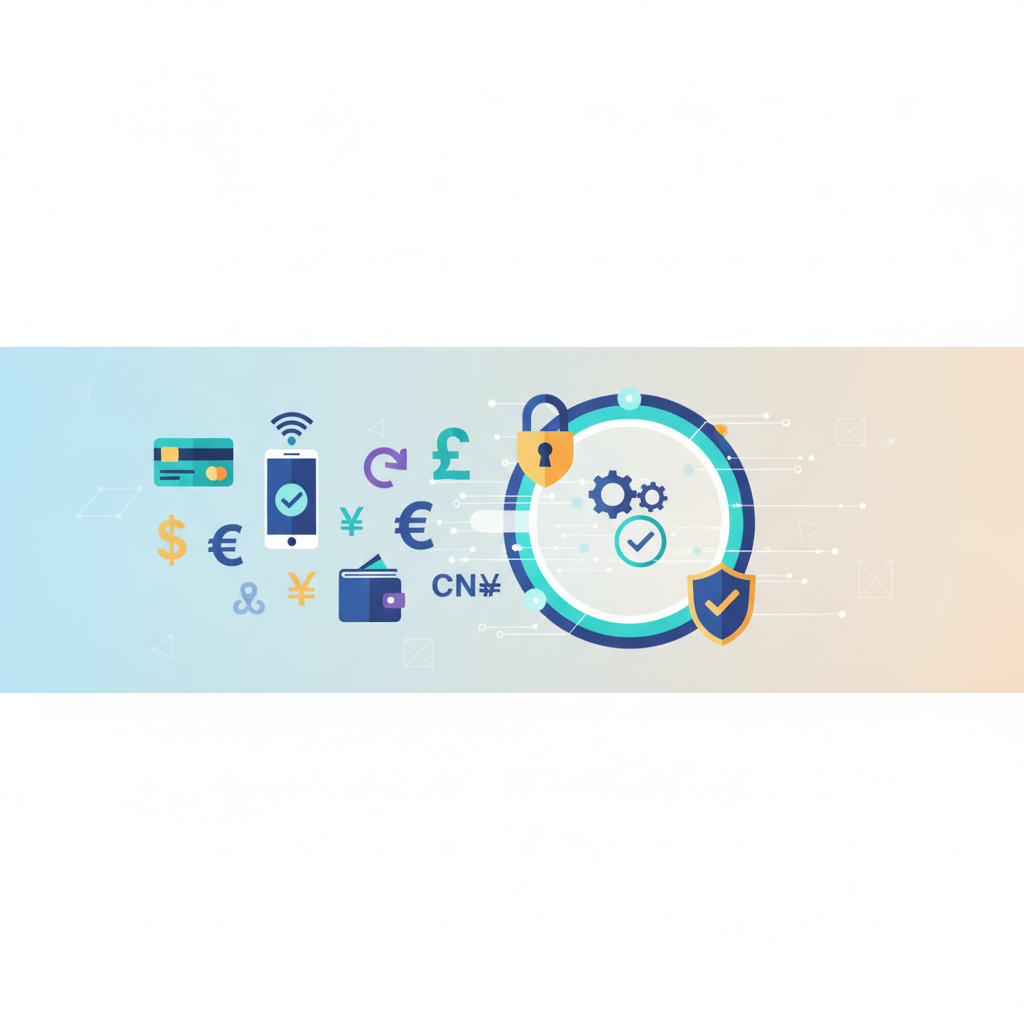
The diversity of payment methods supported by the chosen gateway is a crucial factor in meeting the needs of a wide customer base and increasing sales opportunities. In the Arab Gulf region, for example, Mada cards are the most common payment method, so the payment gateway must be fully compatible with them. Additionally, it is essential to support international credit cards such as Visa and Mastercard, e-wallets like Apple Pay and Google Pay, and even instant payment solutions like STC Pay. The more payment options available, the easier it is for the customer to complete the purchase, and the lower the likelihood of abandoning the shopping cart due to the unavailability of a preferred payment method.
If your store targets international customers, multi-currency support becomes indispensable. Allowing customers to pay in their local currency enhances their trust and reduces the confusion caused by currency conversion. It also enables the store to display prices in the customer's preferred currency. You must ensure that the payment gateway not only supports displaying and collecting prices in different currencies but also offers competitive exchange rates and minimizes hidden fees related to currency conversion. This currency flexibility contributes to expanding your store's reach and effectively entering new markets.
Consideration should also be given to the emergence of installment payment solutions like Tabby and Tamara, which have become an essential requirement for many shoppers in the region, especially for high-value products. Providing these options can make a significant difference in conversion rates and increase the average order value. Choosing a payment gateway that offers a comprehensive range of popular payment methods in your target market, along with multi-currency support and modern payment options, ensures that your store is fully equipped to meet changing customer expectations and enhances its competitiveness in the booming e-commerce market.
Customer Service and Technical Support
Although it may not seem like the top priority when choosing a payment gateway, the quality of customer service and technical support is a critical factor that can make a significant difference in your e-commerce store's experience. In the world of e-commerce, where every minute means potential sales, any technical issue with the payment gateway can lead to sales disruption and customer loss. Therefore, it is essential to choose a payment gateway provider that offers responsive and available 24/7 technical support, preferably in Arabic if the target market is the Arab region.
Support channels should be diverse, including phone, email, and live chat, to ensure easy access when needed. The quality of technical support is as important as the speed of response; the team should be knowledgeable about the technologies used and capable of providing effective solutions to issues that may arise, whether related to integration, transaction processing, or security matters. Reading reviews from other customers about the quality of a payment gateway's technical support can provide valuable insights and help in making an informed decision.
In addition to technical support, the payment gateway should provide comprehensive educational resources, such as user guides, FAQs, and tutorial videos. These resources enable you to troubleshoot simple issues yourself and enhance your understanding of how the gateway works. Choosing a payment service provider that focuses on supporting its customers and offers comprehensive tools to empower them to succeed is a smart investment. Good support reduces unplanned downtime, minimizes operational stress, and allows you to focus on growing your business with confidence, whether you are using Salla, Zid, or Shopify.
Local and Regional Gateways
Local and regional payment gateways are an excellent choice for stores specifically targeting the Arab and GCC markets, for several key reasons. Firstly, these gateways are often fully compatible with the most common local payment methods, such as Mada cards in Saudi Arabia, and mobile payment services like STC Pay. This compatibility ensures that customers can easily pay using their preferred and trusted methods. Among the most prominent of these gateways in the region are MyFatoorah, PayTabs, and HyperPay. These gateways are characterized by providing Arabic-language technical support services, which makes it easier for store owners to communicate and resolve issues.
Secondly, local payment gateways have a deep understanding of the regulatory and legal environment in the region, ensuring full compliance with local requirements related to financial transactions. This reduces legal and operational risks for the store. These gateways also often provide faster withdrawal options for funds to local bank accounts, improving the store's cash flow. Integration with platforms like Salla, Zid, and Shopify is often seamless and direct thanks to partnerships between these platforms and regional payment gateway providers.
Thirdly, these gateways offer customized solutions for the challenges facing e-commerce in the region, such as supporting Cash on Delivery (COD) in an organized manner, and providing installment payment solutions like Tabby and Tamara, which have become an integral part of the shopping experience in the GCC. Choosing a strong local payment gateway means leveraging its expertise in the local market, which enhances your store's ability to meet local customer expectations and effectively increase conversion rates.
International Gateways
International payment gateways are an ideal option for stores looking to expand their operations and serve customers from around the world, or for stores targeting an audience that prefers international payment brands. Among the most popular of these gateways are Stripe, PayPal, and 2Checkout (now part of Verifone). These gateways are characterized by their wide global acceptance and support for a large number of currencies and international payment methods, opening new horizons for stores to reach wider markets. On platforms like Shopify, integration with these gateways is often deeply embedded and highly optimized, making it easier for international merchants to start accepting payments.
The main advantage of international payment gateways is their ability to provide a unified payment experience for customers of various nationalities, while offering high levels of security and compliance with international standards such as PCI DSS. They also often provide advanced features such as robust fraud detection tools, comprehensive reporting and analytics capabilities, and one-click payment options that improve the user experience. Some of these gateways, such as Stripe, can be an excellent choice for stores requiring greater flexibility in customization and control over the payment workflow, as they provide powerful Application Programming Interfaces (APIs) for developers.
However, store owners should pay attention to several aspects when choosing international payment gateways. Fees may sometimes be higher compared to local gateways, especially concerning currency conversion fees or withdrawal fees to local bank accounts. Also, some gateways may not support all common local payment methods in a specific region, which may require integrating an additional payment gateway to cover all needs. Therefore, choosing an international payment gateway requires careful consideration of the target market, operational costs, and its compatibility with the nature of your business on Salla, Zid, or Shopify.
BNPL and COD Solutions
Buy Now, Pay Later (BNPL) and Cash on Delivery (COD) solutions are essential pillars in the payment strategy for e-commerce stores in the Arab Gulf region, specifically in Saudi Arabia. Companies like Tabby and Tamara have become an integral part of the shopping experience, allowing customers to split the value of their purchases into easy monthly installments without interest or additional fees for the customer. This payment flexibility encourages customers to complete purchases they might otherwise hesitate on due to the total price, leading to a significant increase in conversion rates and average order value. Salla, Zid, and Shopify platforms offer easy integrations with these solutions, making adding them to your store simple and effective.
As for Cash on Delivery (COD), despite technological advancements in digital payments, it remains a popular and preferred option for a large segment of shoppers in the region, especially for customers who prefer not to use credit cards online, or who wish to inspect the product before payment. Providing this option helps build trust with a wide range of customers and enables the store to reach a segment that might not be able to purchase through other payment methods. However, COD requires good coordination with shipping companies to manage collection operations and deposit funds, in addition to dealing with the possibility of refusal upon delivery.
The optimal strategy is to offer a balanced mix of traditional payment gateways (credit cards, Mada) and modern payment solutions like BNPL, in addition to the Cash on Delivery option. This diversity ensures that all customer preferences are met, which improves the shopping experience and reduces the shopping cart abandonment rate. Store owners should analyze their customer data and understand their purchasing behavior to determine the optimal mix of payment options that suits their store and enhances their sales in the long run, bearing in mind that each option has its costs and benefits that must be carefully weighed.
Practical Tips for Your Store on Salla, Zid, or Shopify
To maximize the benefits of payment gateways in your e-commerce store on platforms like Salla, Zid, or Shopify, it is essential to adopt some practical tips that ensure a smooth and effective payment experience for your customers. First and foremost, offer a variety of payment options. Every customer has their own preferences, and providing multiple options such as credit cards, Mada, Apple Pay, STC Pay, and especially BNPL solutions like Tabby and Tamara, significantly increases the likelihood of purchase completion. Understanding your target audience and their common payment methods is key to this step. Do not limit yourself to just one option, as diversity is essential for attracting the largest segment of customers.
Secondly, regularly review fees and costs. Payment gateway prices can change, and new gateways may emerge with better pricing or additional features. Conduct a periodic review of all fees (transaction fees, monthly fees, chargeback fees) to ensure you are getting the best value for money. Do not hesitate to negotiate with current service providers or explore new options if you find that costs are negatively impacting your profit margins. You should also pay special attention to the security and compliance of the payment gateway with international standards, as customer trust is your most valuable asset. Ensuring that all operations are secure and encrypted reduces fraud risks and enhances your store's reputation.
Thirdly, make the payment process as easy and fast as possible. Avoid extra steps or unnecessary information. The simpler the payment process, the more likely the customer is to complete the purchase. Ensure that the checkout page is responsive and optimized for all devices, especially smartphones. Periodically test the payment process yourself to ensure it is free of any issues. You can also leverage features such as saving card details (with customer consent and necessary security) for returning customers to speed up future purchases. For stores targeting the GCC market, it is very important to study which is more suitable for your GCC store: Shopify, Salla, or Zid, as each platform offers different payment solutions and integrations that may better suit your business nature.
Conclusion
In conclusion of this comprehensive guide, it is clear that choosing the right payment gateway for your e-commerce store on platforms like Salla, Zid, or Shopify is not just a technical decision; it is a strategic investment that directly contributes to the success and growth of your business. We have reviewed the pivotal importance of payment gateways in building trust, improving customer experience, and increasing conversion rates. We also discussed the different types of gateways, from direct and indirect to BNPL and Cash on Delivery solutions, emphasizing the necessity of understanding each one's characteristics to determine the most suitable for your store and target audience in the Arab market.
We have highlighted the essential criteria that must be considered with utmost care, starting from fees and costs that affect profit margins, through security and compliance with international standards to ensure the protection of customer data, up to the ease of integration and use that enhances operational efficiency and user experience. We also touched upon the importance of supporting multiple payment methods and currencies to meet diverse customer preferences, and the quality of customer service and technical support as a crucial factor in business continuity. A holistic approach to these criteria is what distinguishes successful stores that focus on the overall customer experience.
Finally, we advise store owners to conduct thorough research, make comprehensive comparisons between available options, and not hesitate to test different payment gateways before making a final decision. Remember that the goal is to provide a smooth, secure, and diverse payment experience for your customers, encouraging them to complete purchases and return to your store again. The right payment gateway choice will enable your store to flourish in the competitive e-commerce world and establish a long-term relationship built on trust and satisfaction with your valued customers.