





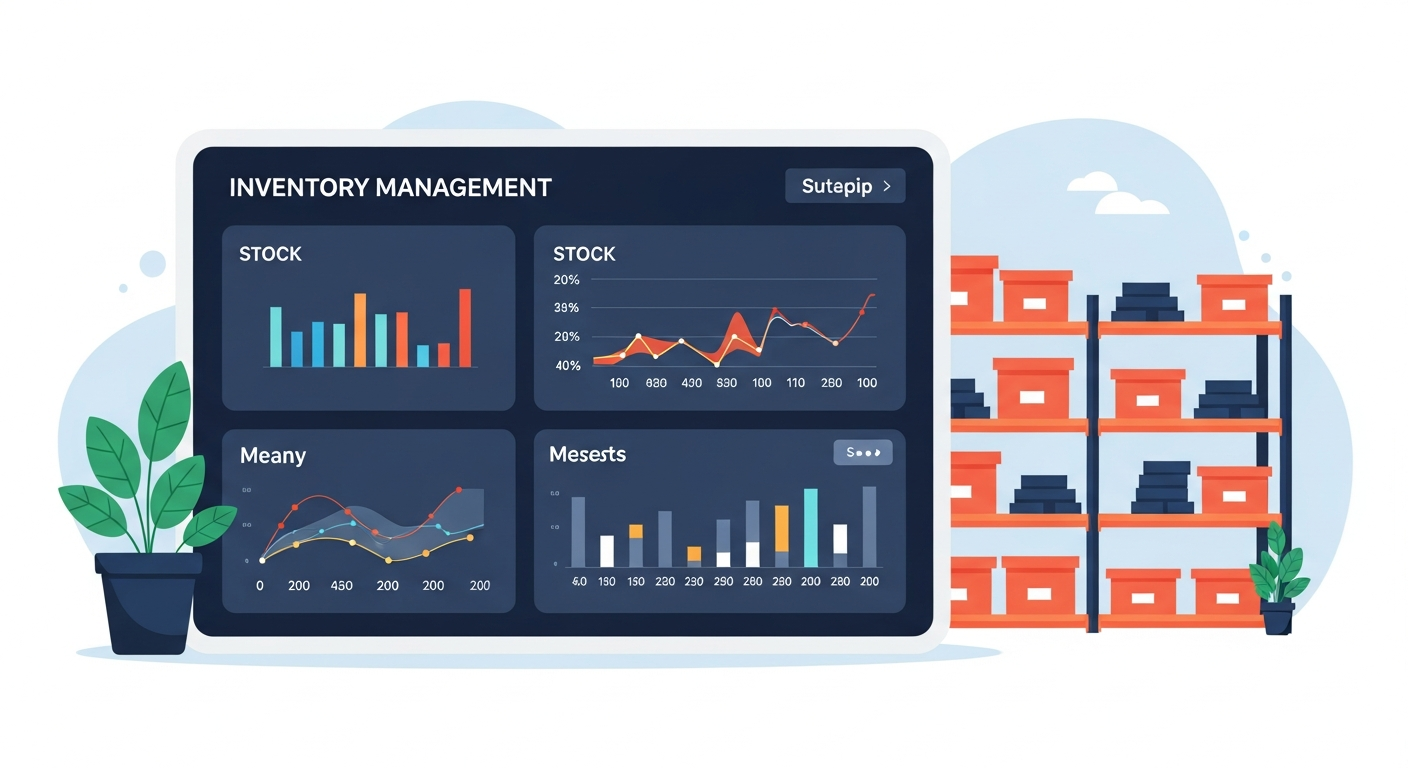
Introduction: The Key to E-commerce Profitability
In the fast-paced world of e-commerce, the equation for success is not limited to attracting customers or offering unique products; it extends to efficiently managing internal operations. Among these operations, inventory management stands out as a critical component that directly impacts operational profitability, customer satisfaction, and even the store's reputation. Inventory is not just stored goods; it is frozen capital that can turn into significant profits or losses based on how it is managed.
The biggest challenge facing e-commerce store owners, whether on platforms like Salla, Zid, or Shopify, is striking a precise balance between having products available to meet immediate demand and avoiding excessive inventory accumulation that drains resources. Inventory waste, whether due to damage, obsolescence, or exorbitant storage costs, can undermine a store's entire efforts and significantly reduce profit margins. Therefore, optimizing inventory management is no longer a luxury but a strategic necessity for survival and competition in the volatile digital market.
The Concept of Inventory Management and Its Importance in E-commerce
Inventory management is the comprehensive process that involves overseeing the flow of goods from the manufacturer to the warehouse, and then to the end customer. This process includes tracking inventory levels, placing orders, storing products, and controlling the quantities of incoming and outgoing goods. The primary goal is to ensure the availability of required products at the right time and in the right quantity, while minimizing storage and waste-related costs as much as possible, which directly benefits e-commerce stores on platforms like Salla, Zid, and Shopify.
Inventory management gains paramount importance in the e-commerce sector due to the rapid changes in demand and customers' increasing expectations for fast and efficient product delivery. Well-managed inventory ensures that popular products do not go out of stock, preventing lost sales and customer frustration, and maintaining a positive reputation in the competitive market. On the other hand, holding excessive inventory leads to increased storage costs, the risk of product obsolescence, and frozen capital that could otherwise be invested in other aspects of the business.
Poor inventory management can lead to severe consequences, such as the accumulation of slow-moving products (dead stock) that are difficult to sell, or the need to sell products at heavily discounted prices (liquidation) to clear inventory, negatively impacting profit margins. Excess inventory also increases insurance costs and risks related to theft or damage. In contrast, effective inventory management enhances the store's cash flow, improves supply chain efficiency, and supports more informed marketing and pricing decisions, all of which positively reflect on the store's overall performance.
Inaccurate Demand Forecasting
Demand forecasting is one of the biggest challenges facing e-commerce store owners, as the accuracy of predictions is affected by multiple factors such as seasonality, changing trends, sudden marketing campaigns, and even global events. In the e-commerce environment, consumer behavior can change very rapidly, making it difficult to accurately predict the exact quantities of each product that will be purchased within a specific timeframe. This challenge becomes even more complex in fast-growing markets, such as the Arab market, where new products emerge and others disappear at a high pace.
Inaccurate demand forecasts directly impact inventory levels. Under-forecasting leads to stockouts and missed sales opportunities, resulting in potential revenue loss and customer dissatisfaction. Over-forecasting, on the other hand, results in excess inventory, which increases storage costs, raises the risk of product obsolescence and damage, and ties up capital that could be used for other more profitable investments for the store, whether it's on Salla, Zid, or Shopify.
To overcome the challenge of inaccurate forecasting, e-commerce stores must adopt more sophisticated methodologies based on historical data analysis, statistical models, and even artificial intelligence. It is also essential to continuously monitor market trends and competitors, and leverage the analytical tools available on e-commerce platforms to identify seasonal patterns and the impact of promotional campaigns. Combining quantitative analysis with qualitative market understanding can significantly improve forecast accuracy and reduce waste.
Real-time Inventory Tracking
In the dynamic e-commerce environment, real-time inventory tracking is an absolute necessity to ensure data accuracy and avoid costly errors. With multiple sales channels – whether the store is on Salla, Zid, or Shopify, or also sells through social media and external marketplaces – it becomes extremely difficult to manually track every product unit. Any delay in updating inventory levels can lead to overselling unavailable products, which harms the store's reputation and results in order cancellations and customer frustration.
The challenges associated with manual inventory tracking are immense, as the likelihood of human error and discrepancies between actual inventory and what is recorded in the system increases. This lack of accuracy affects the ability to make informed restocking decisions and can lead to missed sales opportunities or the accumulation of unnecessary inventory. Additionally, stores dealing with inventory in multiple locations, such as different warehouses or fulfillment centers, face greater complexities in synchronizing data across these sites.
To achieve accurate real-time inventory tracking, e-commerce stores must invest in integrated inventory management systems that connect directly with e-commerce platforms. These systems allow for automatic inventory level updates with every sale, purchase, or return, ensuring that the data displayed to customers is accurate and reliable. Third-party applications available in the Salla, Zid, and Shopify app stores can also be utilized to enhance tracking and synchronization capabilities across different channels, reducing waste and improving operational efficiency.
Multi-Location Inventory Management
The need for multi-location inventory management is growing as e-commerce stores expand to include additional warehouses, fulfillment centers, or even partnerships with third-party logistics (3PL) providers, such as some services available through Salla, Zid, and Shopify. This strategy aims to reduce delivery times and shipping costs by storing products closer to target customers. However, it introduces a new set of complexities that must be effectively managed to ensure waste does not occur.
The challenge lies in accurately synchronizing inventory levels across all locations to ensure each site has the right quantity of products to meet local demand, while avoiding excess inventory in one location and stockouts in another. Lack of coordination between these locations can lead to shipping products from distant warehouses at higher costs or delivery delays, negatively impacting the customer experience. Human error risks also increase when attempting to manually manage this complex network, leading to data inaccuracies and exacerbating the waste problem.
To overcome these complexities, a centralized inventory management system that provides a comprehensive, real-time view of all levels across all locations is required. These systems must be able to determine the optimal location for shipping each order based on inventory availability and customer proximity, thereby reducing shipping costs and improving delivery speed. Utilizing advanced inventory management applications that integrate with e-commerce platforms like Shopify, Salla, and Zid can provide these capabilities, helping to significantly improve efficiency and reduce waste.
Accurate Demand Forecasting and Data Analysis
Accurate demand forecasting is the cornerstone of effective inventory management and is fundamental to significantly reducing waste. This requires in-depth analysis of historical sales data, considering seasonal patterns, cyclical trends, and the impact of promotional campaigns and discounts that may have been implemented. Store owners on platforms like Salla, Zid, and Shopify should make the most of the built-in analytics tools on these platforms, or dedicated third-party applications, to identify best-selling and slow-moving products, and understand customer behavior.
In addition to internal data, it is crucial to integrate external factors into the forecasting process, such as general market trends, competitor analysis, and even macroeconomic indicators. For instance, news related to global supply chains or changes in consumer preferences can significantly affect demand. By integrating these diverse data sources, stores can build more comprehensive and accurate forecasting models, enabling them to order the right quantities of inventory at the right time.
Advanced demand forecasting techniques include using moving averages, exponential smoothing, and even machine learning algorithms that can detect complex patterns in data. Stores can leverage performance reports available in the Salla, Zid, and Shopify dashboards, which provide valuable insights into product sales, campaign performance, and conversions. For more details on how to utilize data, you can refer to our article on Store Analytics: Reading Data to Grow Your Profits in Salla and Zid, which offers practical guidance for analyzing e-commerce store data.
Implementing Just-In-Time (JIT) Inventory System
The Just-In-Time (JIT) inventory system operates on the principle of receiving goods and raw materials only when they are needed, rather than storing large quantities in advance. The primary goal of JIT is to minimize inventory levels as much as possible, thereby reducing storage costs, mitigating risks associated with obsolescence and damage, and freeing up tied-up capital. This approach requires precise planning and excellent coordination with suppliers to ensure shipments arrive exactly at the scheduled times.
For e-commerce stores operating on platforms like Salla, Zid, and Shopify, implementing JIT can be particularly effective for products with relatively stable demand or high-value products where the store does not want to tie up significant capital. This system reduces the need for large storage spaces, saving the store rental and operational costs, and decreasing the likelihood of products remaining in warehouses for extended periods. It also enhances the store's flexibility to respond to changes in market demand or introduce new products.
However, successful JIT implementation requires strong, reliable relationships with suppliers who can guarantee on-time delivery and high quality. Any delay in the supply chain can lead to stockouts and lost sales, which represents a significant risk. Therefore, the store must carefully assess supply chain risks and develop alternative plans. E-commerce stores can leverage the systems provided by e-commerce platforms to effectively manage supplier orders and monitor incoming shipment statuses to ensure good coordination.
ABC Inventory Classification
The ABC classification system is an inventory management strategy based on the Pareto principle (80/20 rule), which posits that approximately 80% of inventory value is concentrated in only 20% of items. This system categorizes inventory into three classes based on its annual value or strategic importance to the store. This classification helps stores focus their efforts and resources on the most important items, thereby reducing waste and improving management efficiency.
Category A includes high-value products that represent a small percentage of the total number of products but contribute a significant percentage to the total inventory value (e.g., 10-20% of products account for 70-80% of value). These items require strict control, accurate forecasting, and frequent periodic inventory counts (e.g., weekly or monthly counts). Category B consists of products with medium value (e.g., 30% of products account for 15-20% of value) and require a moderate level of management. Category C includes low-value products but represents the largest portion of the total number of products (e.g., 50-60% of products account for 5-10% of value) and can be managed with less strict control and less frequent inventory counts.
By applying this classification, e-commerce stores on Salla, Zid, and Shopify can identify which products deserve the most attention. For example, Category A products should be the focus for improving demand forecasting and implementing JIT or safety stock strategies. This approach ensures that resources are not wasted on detailed management of low-value products, while protecting the most profitable products from the risk of stockouts or damage, thereby positively impacting profit margins and reducing overall inventory waste.
Managing Safety Stock and Reorder Points
Safety stock is an additional quantity of inventory held as a buffer to deal with unexpected fluctuations in demand or delays in the supply chain. The goal of safety stock is to prevent stockouts and ensure continuous fulfillment of customer orders even under unforeseen circumstances. Accurately calculating safety stock is crucial to avoid tying up excess capital in unnecessary inventory while maintaining a high service level. Stores should consider factors such as average daily demand, supplier lead time, and demand variability when calculating this quantity.
A reorder point is the specific inventory level at which the store should issue a new purchase order to the supplier. The reorder point is typically calculated based on the average demand during the lead time plus the safety stock. For example, if the lead time is 7 days, the average daily demand is 10 units, and the safety stock is 20 units, the reorder point would be (10 * 7) + 20 = 90 units. When the inventory reaches 90 units, a new batch should be ordered.
E-commerce platforms like Salla, Zid, and Shopify, through their apps or built-in features, offer capabilities to set reorder points and receive alerts when inventory approaches these points. Some advanced applications can even automate the reordering process based on these settings, reducing human intervention and improving efficiency. By effectively managing safety stock and reorder points, stores can mitigate the risk of stockouts, avoid the costs of expedited shipping for urgent products, and improve cash flow by maintaining the minimum necessary inventory.

Effective Returns Management
Returns management is an integral part of inventory management and has a direct and significant impact on inventory levels and waste. In e-commerce, returns are common, and if not handled effectively, returned products can become stagnant or damaged inventory, increasing waste and operational costs. Therefore, it is essential for a store to have a clear and swift process for handling returned products, from receiving them to reintegrating them into sellable stock.
Effective returns management strategies include inspecting returned products immediately upon arrival to determine their condition: are they resellable as is? Do they need repackaging? Are they damaged and should be removed from inventory? This process must be fast to minimize the time products spend outside active inventory. E-commerce stores on Salla, Zid, and Shopify can also leverage returns management tools available on these platforms or through third-party applications to streamline the process and track the status of each return.
In addition to quick inspection, stores must establish clear policies for damaged or unsellable products. This may involve recycling them, selling them at heavily discounted prices as second-grade items, or disposing of them responsibly. Effective returns management not only reduces waste but also improves customer satisfaction by providing a smooth and transparent return experience. For more tips on this topic, you can read our comprehensive article on Returns Management: Optimizing It in Your Salla and Zid Store, which provides detailed strategies for improving this process.
Integrated Inventory Management Systems (IMS)
Integrated Inventory Management Systems (IMS) are comprehensive software solutions designed to streamline and automate all aspects of inventory management, from tracking goods to processing orders and managing suppliers. These systems are indispensable for e-commerce stores that are growing and dealing with large quantities of products or have complex operations. IMS provides a unified and comprehensive view of inventory levels across all channels and locations, significantly reducing errors and increasing operational efficiency.
IMS systems are characterized by their ability to integrate with e-commerce platforms such as Salla, Zid, and Shopify, either through Application Programming Interfaces (APIs) or ready-made connectors. This integration ensures real-time synchronization of inventory levels between the online store and the backend system, preventing overselling of unavailable products or missing sales opportunities due to inaccurate information. They also offer advanced features such as multi-location inventory management, shipment tracking, and detailed analytical reports that help in making informed decisions.
The main benefits of IMS include improved inventory accuracy, reduced storage costs, increased order fulfillment speed, and enhanced customer satisfaction. They also help identify slow-moving products and those nearing stockout, allowing the store to take proactive measures. Choosing the right IMS depends on the store's size, the complexity of its operations, and the available budget, but investing in such a system yields significant long-term benefits in reducing waste and improving profitability.
Third-Party Apps and Services
Leading e-commerce platforms like Salla, Zid, and Shopify offer rich app stores that provide specialized solutions to enhance inventory management capabilities. These apps can fill gaps in the platform's core features or provide advanced functionalities not directly supported by the platform. These applications range from simple inventory tracking tools to complex Warehouse Management Systems (WMS) or Enterprise Resource Planning (ERP) solutions that integrate seamlessly with the online store.
For example, stores on Salla, Zid, and Shopify can benefit from apps that synchronize inventory across multiple sales channels, ensuring that inventory levels are automatically updated whether sales occur through the online store, a Facebook Shop, or even a physical store. There are also specialized apps for managing product bundles, tracking product expiry dates, or even providing advanced analytical reports beyond what the basic platform offers. For more information on the best apps that can enhance your store's efficiency, you can visit our article on Best Salla and Zid Apps to Boost Your E-commerce Store's Efficiency.
When choosing third-party applications, store owners should carefully assess their needs, ensure compatibility with their current platform, read reviews, and confirm that the app provides the necessary technical support. Leveraging these applications allows stores to customize inventory management solutions to suit their unique requirements, achieving higher levels of automation and accuracy, which significantly reduces waste and improves overall store performance.
Barcoding and Scanning
Using barcodes and scanning technologies is one of the most effective ways to improve the accuracy and speed of inventory management in e-commerce. Instead of manual data entry, which is prone to human error and time-consuming, barcode scanning allows for quick and highly accurate data recording when receiving products, preparing orders for shipment, or conducting inventory counts.
When a new shipment arrives from suppliers, employees can simply scan the barcode of each product to instantly update inventory levels in the system. This ensures that the recorded numbers accurately reflect the actual inventory in the warehouse. Similarly, when fulfilling orders, barcodes of selected products are scanned, reducing the likelihood of sending the wrong product and ensuring that outgoing inventory is correctly updated. This process significantly helps reduce errors that lead to waste, such as sending incorrect products or not accurately accounting for sold items.
Many integrated inventory management systems and third-party applications available in the Salla, Zid, and Shopify app stores enable the integration of barcode and scanning technologies. Stores can use handheld scanners or even smartphone apps to convert them into barcode scanners. Investing in these technologies not only reduces waste resulting from errors but also increases the speed and efficiency of logistics operations, leading to a better customer experience and reduced operational costs in the long run.
Neglecting Periodic Inventory Counts
One of the most common and costly mistakes in inventory management is neglecting to conduct periodic inventory counts, whether through a full physical inventory or cycle counting. Even with sophisticated inventory management systems, discrepancies between recorded inventory and actual physical inventory can occur due to human errors, theft, damage, or even delivery errors from suppliers. Failing to detect these discrepancies early can lead to escalating problems and significant negative impacts on the store.
When periodic counts are not performed, the store may rely on inaccurate inventory data, leading to incorrect purchasing and stocking decisions. This can result in stockouts of highly demanded products while large quantities of slow-moving items accumulate. This situation leads to lost sales, tied-up capital, and increased waste. Furthermore, not knowing the actual inventory can affect the accuracy of future forecasts and make effective planning more difficult.
To avoid this mistake, e-commerce stores, regardless of the platform they use (Salla, Zid, Shopify), should establish a regular inventory counting plan. This can include a full inventory count once or twice a year, in addition to daily or weekly cycle counting for a specific number of products, with a focus on high-value (Category A) items. This helps detect and correct errors early, maintaining inventory data accuracy and effectively reducing waste.
Sole Reliance on Manual Forecasts
In the age of data and advanced analytics, some store owners still rely entirely on manual forecasts or personal experience alone for inventory management. While experience and market insights are important, relying solely on them can be risky, especially in the rapidly changing e-commerce environment. Manual forecasts are often susceptible to human bias and lack the ability to process and analyze vast amounts of complex data that can influence demand.
This reliance can lead to inaccurate demand estimations, resulting in either excess inventory that costs the store significant money in storage and waste, or stockouts that lead to lost sales and customer frustration. In contrast, automated forecasting tools powered by artificial intelligence and machine learning offer the ability to analyze historical patterns, identify trends, and even predict future changes based on multiple factors in a more accurate and objective manner. These tools can also adapt to sudden market changes faster than human assessment.
To achieve the best results, stores should integrate human expertise with automated analytical capabilities. Store owners can use the built-in analytics tools on platforms like Salla, Zid, and Shopify, or leverage specialized demand forecasting applications. These tools do not replace human understanding of the market but enhance it and provide data and insights that support smarter, more informed decision-making, thereby reducing waste and improving overall inventory management efficiency.
Failure to Leverage Sales Data
Sales data is a true treasure trove for e-commerce stores, containing valuable information about what customers buy, when they buy it, in what quantities, and which products sell well versus which do not. However, many store owners make the critical mistake of not adequately leveraging this data to improve inventory management decisions. Ignoring this information means missing significant opportunities to reduce waste and increase profitability.
By analyzing sales data, stores can identify fast-moving items and slow-moving items. This knowledge allows them to allocate resources better; ordering larger quantities of fast-moving products ensures demand is met and prevents stockouts, while reducing orders for slow-moving products prevents their accumulation and conversion into dead stock. Sales data can also reveal seasonal patterns or emerging trends, helping with more accurate future planning.
Platforms like Salla, Zid, and Shopify provide detailed sales reports that store owners can use to analyze product performance. Stores should conduct regular reviews of these reports to identify products that need special promotion to clear, or products that should be re-evaluated or even removed from inventory. Leveraging this data is not limited to reducing excess inventory; it can also influence pricing and marketing strategies, leading to an overall improvement in the store's financial performance and a radical reduction in waste.
Conclusion: Towards Smarter and More Profitable Inventory Management
Effective inventory management is the lifeline of any successful e-commerce store, and it is not merely a logistical process but a pivotal strategy that impacts every aspect of the business, from customer satisfaction to net profits. In today's competitive e-commerce environment, especially on platforms like Salla, Zid, and Shopify, the costs of waste resulting from poor planning or inefficiency can no longer be afforded. Adopting best practices and leveraging available technologies has become an absolute necessity to ensure continuity and growth.
In this article, we have reviewed a range of key strategies aimed at improving inventory management and reducing waste, starting from accurate demand forecasting and data analysis, through implementing the Just-In-Time (JIT) inventory system and ABC inventory classification, up to effectively managing safety stock and returns. Each of these strategies, when properly implemented, contributes to striking a precise balance between efficiently fulfilling customer orders and avoiding the costs of excess inventory.
Ultimately, the success of inventory management depends on the store's commitment to continuous improvement, leveraging modern tools and technologies such as integrated inventory management systems and third-party applications, as well as learning from data and analyzing common mistakes. By adopting a proactive and well-considered approach, e-commerce store owners on Salla, Zid, and Shopify can transform inventory from a potential burden into a strategic asset that supports sustainable growth and enhances profitability, securing a strong position in the digital market.