




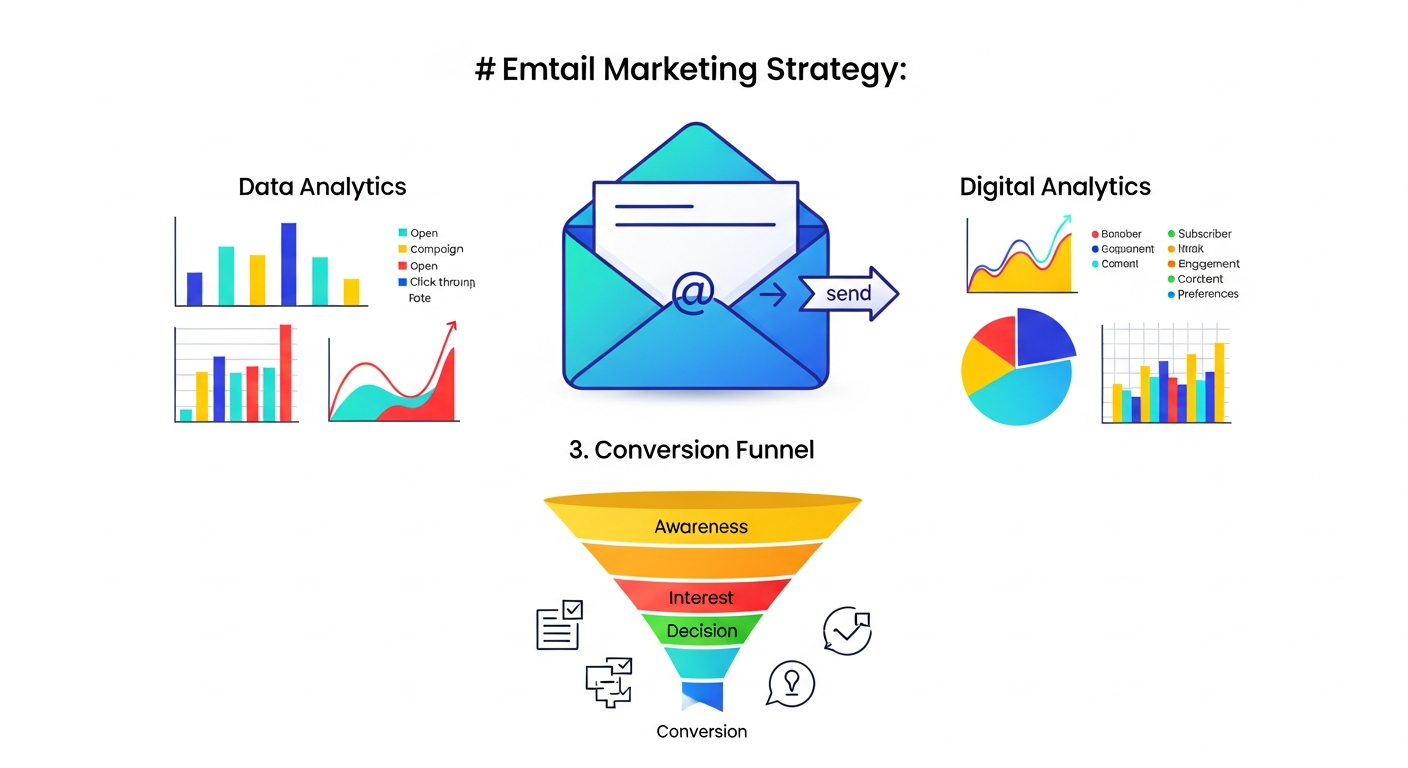
Email Marketing: Boosting Your Sales in Salla and Zid
In the rapidly evolving world of e-commerce, where competition is fierce and customers receive thousands of messages daily, email marketing stands out as one of the most powerful and effective tools for increasing sales and building strong, lasting customer relationships. It is no longer just a means of sending random messages; it has transformed into a strategic channel that allows online stores, whether built on platforms like Salla, Zid, or Shopify, to communicate directly and personally with their target audience. The ability to reach a customer's inbox directly offers an invaluable opportunity to present customized offers, launch new products, or simply remind them of your unique value.
Investing in email marketing is not a luxury, but an urgent necessity for every e-commerce store aspiring to grow and sustain itself in the digital market. It often provides a return on investment (ROI) that surpasses other marketing channels, thanks to its ability to target potential and existing customers with messages specifically designed to meet their needs and interests. By building a strong email list and implementing effective strategies, store owners on Salla, Zid, and Shopify can convert visitors into loyal buyers, and buyers into brand advocates, ensuring a continuous flow of revenue and enhancing long-term brand value.
The Importance of Email Marketing for Salla, Zid, and Shopify Stores
Email marketing is a cornerstone of any successful digital marketing strategy for several fundamental reasons that make it indispensable for stores operating on e-commerce platforms like Salla, Zid, and Shopify. Firstly, this type of marketing provides a direct and private communication channel with the customer, away from changing social media algorithms or paid advertising limitations. When a customer chooses to subscribe to your email list, they express genuine interest in your products or services, making them a more receptive audience for your marketing messages and more likely to convert into actual sales.
Secondly, email marketing boasts an exceptionally high return on investment compared to many other marketing channels. Studies indicate that every dollar spent on email marketing can yield a return of up to $42, making it a cost-effective tool, especially for nascent and medium-sized stores looking to maximize their marketing budget. This efficiency makes it an excellent choice for boosting profits and achieving sustainable growth, reducing reliance on expensive advertising campaigns that may not guarantee the same level of engagement or conversion.
Thirdly, email marketing significantly contributes to building strong and sustainable customer relationships. By sending valuable content, exclusive offers, or even personalized messages on special occasions, stores can foster brand loyalty and transform customers into advocates and promoters of their products. This deep relationship is not limited to repeat purchases but extends to building a community around your brand, increasing customer lifetime value (CLV) and ensuring a continuous flow of business. For a deeper understanding of how to build these relationships, the article Loyalty Program: Increase Your Store's Sales in Salla and Zid might be very helpful.
Fundamentals of Building a Successful Email List
The cornerstone of any effective email marketing strategy is building a strong, high-quality email list. An email list is not just a collection of addresses; it's your most valuable asset in digital marketing, containing individuals who have shown genuine interest in your products or services. The larger and more targeted your list, the greater your chances of achieving higher sales and conversions. This process begins with understanding how to effectively and ethically collect these addresses, then utilizing the right tools to efficiently manage these lists to ensure maximum benefit.
Strategies for Collecting Email Addresses
To effectively collect email addresses, you must rely on a variety of strategies that encourage visitors to subscribe voluntarily. Among the most important of these strategies are pop-ups that appear when a visitor enters the site or attempts to leave (exit-intent pop-ups), which typically offer a special discount or exclusive content in exchange for subscribing. Ensure these pop-ups are visually appealing and easy to close so as not to disrupt the user experience.
You can also use lead magnets such as free e-books, comprehensive guides, discount coupons, or participation in a contest. These tools offer real value to the visitor in exchange for their email address, increasing the likelihood of subscription. These lead magnets should be closely related to your products or industry to ensure you attract the right audience interested in what you offer.
Don't forget to naturally integrate email subscription options during the checkout process (checkout opt-ins) on platforms like Salla, Zid, and Shopify, where the customer is at the peak of their interest in your products. You can also add a static subscription form in the website's footer or on dedicated landing pages. The most important thing is that terms and conditions are clear, you adhere to privacy rules, and you explain to customers the type of content they will receive to build trust from the outset.
Recommended Tools and Platforms
To effectively manage email marketing campaigns, you'll need specialized tools and platforms that provide automation, segmentation, and analytics capabilities. Among the most popular and widely used platforms is Mailchimp, which offers free plans for beginners and robust features for scaling. It features an easy-to-use interface and extensive integrations with many e-commerce platforms.
Klaviyo is an excellent choice for larger e-commerce stores seeking highly advanced automation, deep personalization, and detailed analytics. Klaviyo integrates seamlessly with Shopify, Salla, and Zid, allowing for the creation of highly complex campaigns based on customer behavior. There's also ConvertKit, which focuses on content creators and businesses looking to build communities, offering powerful tools for email list segmentation and message automation.
When choosing a platform, you should consider your budget, your expected email list size, the level of personalization and automation you need, and the ease of integration with your current platform, whether it's Salla, Zid, or Shopify. Make sure the platform you choose provides detailed reports to help you track your campaign performance and continuously optimize it for the best possible results.
Types of Effective Email Campaigns
To get the most out of email marketing, simply sending random messages is not enough. Instead, you must design different types of campaigns that target various stages of the customer journey and aim to achieve specific goals. From welcome emails that establish the first impression, to abandoned cart recovery campaigns that turn hesitation into purchase, and newsletters that keep customers informed and increase their loyalty. Each of these campaign types plays a vital role in building a strong customer relationship and boosting your store's sales on Salla, Zid, and Shopify.
Automated Welcome Emails
Automated welcome emails are the first impression you make on new subscribers to your email list, and therefore, they must be meticulously designed. These emails are sent immediately after a customer subscribes, aiming to confirm the subscription, welcome them to your community, and set expectations about the type of content they will receive. This email can include a thank you for subscribing, an introduction to your brand and its values, or even a special discount as a welcome gift to encourage their first purchase. These emails are a golden opportunity to build trust and foster a relationship with the customer from the start, helping to convert new subscribers into loyal customers.
To make welcome emails more effective, try to personalize them as much as possible. Use the subscriber's name, and mention how they subscribed to your list if possible. You can also include links to your best-selling products, or to important pages on your website such as the FAQ page or shipping policy. Remember, the goal is not just to welcome, but to guide the customer toward the next step in their journey with you. You can create a welcome series of consecutive emails over a few days, with each email focusing on a different aspect of your brand or offering additional value, increasing engagement and conversion opportunities. This type of automation is readily available in most email marketing platforms integrated with Salla, Zid, and Shopify.
Abandoned Cart Recovery Campaigns
Abandoned shopping carts are one of the biggest challenges facing e-commerce stores, where customers add products to their cart but leave without completing the purchase. This is where abandoned cart recovery email campaigns come in, which are among the most effective campaigns for reclaiming lost revenue. These emails are automatically sent to customers who have left their carts, reminding them of the products they added, while highlighting their value or benefits.
To increase the effectiveness of these campaigns, you can design a series of 2-3 emails sent at specific intervals (for example, after one hour, then after 24 hours, then after 48 hours). The first email might be a gentle reminder, while the second might include a special offer such as a small discount or free shipping to encourage the customer to complete the purchase. The third email might focus on highlighting customer testimonials or addressing any concerns the customer might have about the purchase. Remember, the goal is to remove obstacles and provide an additional incentive, and you can leverage the statistics available on platforms like Salla, Zid, and Shopify to track cart recovery rates and continuously optimize your campaigns.
Newsletters and Promotional Offers
Newsletters and promotional offers are essential tools for keeping current customers engaged and informed about new developments. Newsletters can include updates about your brand, useful articles related to your products, tips and guides, or even behind-the-scenes glimpses. The goal is to provide continuous value to customers beyond just selling, which enhances their loyalty and makes them look forward to your messages.
Promotional offers, on the other hand, are designed to drive direct sales. These can include announcements of new products, seasonal sales, exclusive offers for email subscribers, or discounts on specific products. When sending these offers, ensure the message is clear, appealing, and contains a clear call-to-action (CTA) such as "Shop Now" or "Get Your Discount." A balance must be struck between the number of promotional messages and value-driven content to avoid overwhelming customers and devaluing your messages. These strategies can significantly contribute to Conversion Optimization: Increasing Your Store's Sales in Salla and Zid.
Loyalty and Re-engagement Campaigns
Building loyalty is a long-term goal for every e-commerce store, and email campaigns play a pivotal role in achieving it. Loyalty campaigns can be designed to offer rewards to loyal customers, such as special discounts on their birthdays or on the anniversary of their first purchase. These personal touches make customers feel appreciated and increase their connection to your brand. You can also use thank-you emails after each purchase, or emails requesting a product review, showing your interest in their opinion.
Re-engagement campaigns, on the other hand, target customers who haven't interacted with your messages or made purchases for a long time. The goal of these campaigns is to "wake up" these customers before they completely lose interest. This could involve a "We miss you!" or "We want your feedback" message with a special incentive to return. It's important to schedule these campaigns regularly to identify inactive customers and try to win them back before it's too late. The effective use of these campaigns ensures your email list remains active and engaged, boosting future sales opportunities.
Optimizing Your Campaigns for Maximum Sales
After building a strong email list and designing various types of campaigns, the crucial stage is optimizing these campaigns to ensure maximum sales and conversions. It's not enough to just send messages; these messages must be targeted, engaging, and persuasive. This requires a deep understanding of your audience, the ability to analyze data, and a continuous willingness to experiment and adapt. The following strategies will help you refine your email marketing efforts and transform them into a powerful sales machine for your store on Salla, Zid, and Shopify.
Email List Segmentation and Personalization
Email list segmentation and personalization are among the most powerful tools for improving your campaign performance. Instead of sending the same message to all subscribers, you can divide your list into smaller groups based on different criteria such as: previous purchasing behavior (what did they buy?), interaction with previous messages (who opened emails? who clicked links?), demographics (age, gender, geographic location), or even products they viewed but didn't buy. For example, you can send special offers on women's products only to female subscribers, or messages about baby products to customers who previously bought child-related items. This approach ensures that each customer receives messages directly relevant to their interests, significantly increasing open, click-through, and conversion rates.
Personalization goes beyond just using the customer's name in the message. It includes dynamic content, where certain sections of the email change based on customer data. For example, the email could display recommended products based on the customer's browsing history or previous purchases. The more personal and relevant the message, the more the customer feels it is specifically addressed to them, which builds trust and increases the likelihood of a purchase. Platforms like Salla, Zid, and Shopify provide analytical tools that allow you to collect this data, while advanced email marketing tools like Klaviyo offer the ability to implement this level of personalization with ease.
Crafting Engaging Subject Lines and Compelling Content
Even with a segmented and personalized email list, your messages won't achieve their goal if they're not opened in the first place. This is where catchy subject lines come in. The subject line should be concise, intriguing, or offer clear value. Avoid generic or spammy-looking subject lines. Use emojis sparingly, and test different formulations to see what resonates with your audience. Remember, the subject line is the first thing a customer sees, and it's the deciding factor in whether they open the email.
Once the email is opened, the content must be compelling and geared towards achieving a specific goal. Use clear, concise language, and focus on the benefits the customer will receive rather than just listing features. Support your messages with high-quality product images, and ensure the call-to-action (CTA) button is clear, prominent, and easy to click. The content must be mobile-responsive, as the majority of customers check their emails on their smartphones. Don't forget to include clear unsubscribe links to foster transparency and trust. Additionally, Store SEO: Topping Search Results in Salla and Zid can complement your overall marketing efforts.
Performance Analysis and Informed Decision-Making
To ensure the continued success of your email marketing campaigns, it is essential to regularly analyze their performance and make informed decisions based on this data. There are several key metrics to track: the Open Rate, which is the percentage of subscribers who opened your email; the Click-Through Rate (CTR), which is the percentage of subscribers who clicked on a link within the email; and the Conversion Rate, which is the percentage of subscribers who completed a purchase or a specific action after clicking the link.
Additionally, you should monitor the Unsubscribe Rate and Bounce Rate to ensure the health of your email list and the effectiveness of your content. Use A/B testing to experiment with different elements in your emails, such as subject lines, product images, call-to-action wording, and even send times. Through continuous experimentation and analysis, you can identify what works and what doesn't, and adjust your strategies to achieve maximum performance. This cyclical process of monitoring and optimization is the key to long-term success in email marketing for your store on Salla, Zid, and Shopify, and directly contributes to Choosing the Most Suitable Platform for Your Store that supports these analytics.
Conclusion
In conclusion, it is clear that email marketing is not just an additional tool in the digital marketing arsenal, but a fundamental cornerstone for the success of any e-commerce store, whether operating on Salla, Zid, or Shopify. Its ability to provide a high return on investment, build personal relationships with customers, and convert visitors into loyal buyers, makes it an indispensable investment. We have seen how building a strong email list, designing diverse and targeted email campaigns, and continuously optimizing these campaigns through personalization and analysis, can lead to a significant increase in sales and enhanced brand loyalty.
Remember that success in email marketing does not happen overnight. It requires patience, a commitment to learning and adapting, and a willingness to experiment with different strategies. Start building your email list now, invest in the right email marketing tools that integrate with your store's platform, and focus on delivering real value to your customers in every message. Be creative with your subject lines and content, and don't be afraid to analyze the numbers to determine what works and what needs improvement. By doing so, you will be able to transform your customers' inboxes into a powerful and sustainable sales channel.
With the continuous evolution of e-commerce, email marketing will remain a core channel for growth. Therefore, invest your time and effort in mastering this powerful tool, and watch your store on Salla, Zid, or Shopify flourish and exceed your expectations. The future belongs to stores that know how to communicate effectively and personally with their audience.