



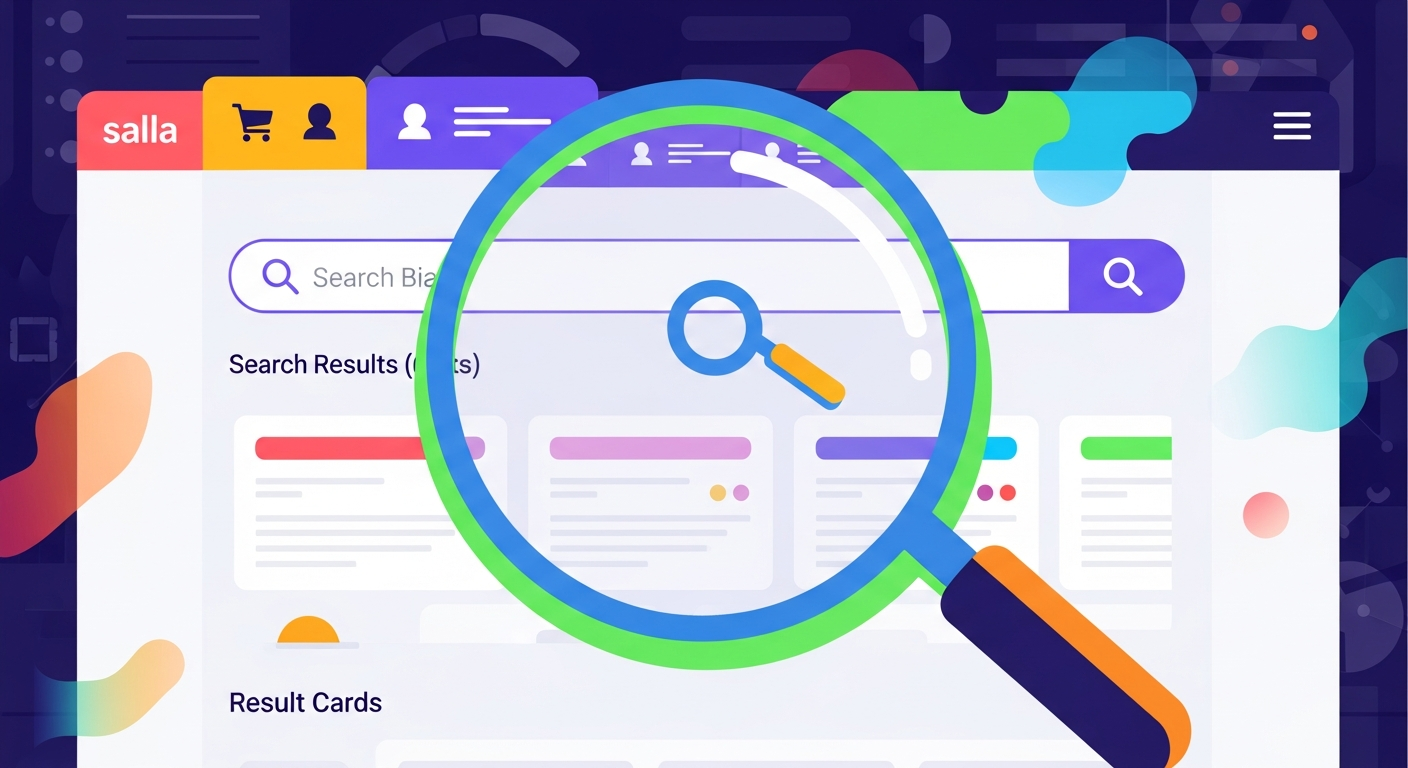
Introduction to Salla SEO: Dominating Search Engines
In the rapidly evolving world of e-commerce, merely having an online store is no longer enough to achieve desired success; ranking high in search engine results has become a vital necessity. Thousands of merchants compete daily to capture the attention of potential customers, and this is where Search Engine Optimization (SEO) emerges as an indispensable tool to ensure your store appears at the top of search results, thereby increasing traffic and sales. Salla, as one of the leading e-commerce platforms in the Arab world, offers store owners various tools, but effectively utilizing these tools requires a deep understanding of SEO strategies.
SEO is not just a collection of technical tactics; it is an art and science aimed at understanding how search engines work and what users are looking for, then adapting your store's content and structure to meet these criteria. For a store built on the Salla platform, applying the correct SEO principles means building a strong foundation for your store that ensures its sustainable growth in the crowded digital market. Whether you sell physical products, services, or even digital products, investing in your Salla store's SEO will yield invaluable returns in the long run, enabling you to outperform competitors and reach a wider segment of target customers.
This comprehensive article aims to provide you with a detailed guide on how to optimize your store's SEO on the Salla platform, taking into account best practices and effective strategies. We will cover all aspects, from keyword research to technical optimizations and link building, with references to how these principles can also be applied to other platforms such as Zid and Shopify. This guide will help you understand the underlying reasons behind the importance of each step and provide you with the necessary knowledge to implement them effectively to ensure your store ranks high in search results.
Keyword Research: The Cornerstone of Salla SEO
Keyword research is the first and most crucial step in any successful SEO strategy; it acts as the compass that guides your marketing efforts and ensures you are targeting the right audience. It's not enough to merely guess what words your customers might be searching for; you must conduct thorough and precise research to identify keywords with high search volume and reasonable competition that accurately reflect the products or services your Salla store offers. These keywords are the bridge connecting your store to potential customers looking for what you provide.
To begin the research process, you can use various tools such as Google Keyword Planner, Semrush, Ahrefs, or even Google's auto-suggest feature. Start by identifying core keywords related to your products, then expand to include long-tail keywords, which consist of three or more words. These keywords are more specific, less competitive, and often indicate stronger purchase intent from the user. For example, instead of targeting the keyword “shoes,” you might target “comfortable men's running shoes for walking.”
It's also important to analyze the keywords your competitors use for their Salla, Zid, or Shopify stores. You can use competitor analysis tools to discover which keywords they rank for and draw ideas from them to refine your own strategy. Don't just aim to replicate what competitors are doing; instead, look for market gaps or untapped keywords that you can target to attract unique traffic to your store. This approach ensures you build a real competitive advantage in the e-commerce market.
Types of Keywords and How to Use Them
Not all keywords are equal, and categorizing them helps you understand the user's intent behind a search. There are informational keywords, where users seek specific information, such as “how to choose the right running shoe?” There are also commercial keywords, where users look for options or comparisons before making a purchase, such as “compare best running shoes.” Finally, transactional keywords indicate direct purchase intent, such as “buy Nike running shoes size 42.” Understanding these types allows you to create targeted content for each stage of the customer journey.
When using keywords in your Salla store, it should feel natural and not overdone. Try to integrate your target keywords into product titles, descriptions, category titles, and static pages like your “About Us” or “FAQ” pages. Using keywords in these places helps search engines understand your page's content and associate it with relevant queries. Remember that the goal is to provide a smooth reading experience for the customer, not just to stuff keywords randomly, which can backfire and lead to penalties from search engines.
For optimal results, update your keyword list periodically. Search trends and consumer behavior constantly change, so your strategy must be flexible and adaptable. Monitor the performance of your current keywords using analytics tools, and look for new keywords that may emerge with new product launches or seasonal changes. This continuous monitoring ensures your Salla store remains at the forefront and continues to attract visitors interested in your products.
Optimizing Product and Category Pages in Salla
After identifying the right keywords, the next stage is to apply them to your store's pages. Product and category pages are the primary interface through which customers and search engines interact, so they must be professionally optimized. On the Salla platform, you have the ability to control many important SEO elements for each page, offering a great opportunity to boost your store's visibility in search results. These optimizations not only contribute to SEO but also enhance the overall user experience.
Start by optimizing your page titles (Title Tags) and meta descriptions. The page title should be engaging, contain the main keyword for the page, and accurately reflect its content. As for the meta description, it should be a concise and compelling summary (around 150-160 characters) that includes the keyword and encourages users to click. Although the meta description doesn't directly influence rankings, it significantly impacts the click-through rate (CTR), which is an important SEO factor.
Product and category descriptions are no less important than titles. Write unique, detailed, and comprehensive descriptions for each product and category, integrating keywords naturally. Avoid copying descriptions from suppliers, as duplicate content is very detrimental to SEO. Use subheadings (`
`) and bullet points to make descriptions easier to read and more engaging. The richer and more useful your description is to the customer, the greater its chances of ranking well and convincing the customer to make a purchase.Optimizing Images and URLs
Images play a crucial role in e-commerce, but they can also affect page load speed and store SEO. Ensure your product images are compressed to a small file size without sacrificing quality, and use descriptive alt text for each image that contains relevant keywords. This helps search engines understand the image content and improves accessibility for visually impaired users. It also helps your product images appear in image search, increasing traffic sources to your Salla, Zid, or Shopify store.
URLs should be clean, short, and descriptive. Avoid using random numbers or long symbols. Instead, use keywords relevant to the product or category in the URL path. For example, instead of yourstore.salla.sa/product/12345, make it yourstore.salla.sa/products/red-t-shirt. Optimized URLs are easy for both users and search engines to read, contributing to improved user experience and ranking factors. You can usually edit these URLs from your Salla control panel for each product or category.
Remember that user experience (UX) is an integral part of SEO. A store that provides a smooth browsing experience, excellent loading speed, and a responsive design across all devices will be favored by search engines. The Salla platform is designed to be responsive by default, but you should ensure all elements of your store function efficiently. You can refer to our guide to choosing shipping companies to ensure an excellent customer experience from order to receipt, which positively reflects on your store's rating.
Technical SEO Enhancements for Salla Stores
The technical aspect of SEO is often complex, but it is essential to ensure that search engines can crawl and index your store efficiently. While the Salla platform handles many technical aspects automatically, there are some settings and optimizations you can perform to boost your store's technical SEO performance. These improvements ensure your store is accessible and understandable to the bots that crawl the internet, making it easier for them to categorize your content.
Ensure your store uses an SSL certificate (HTTPS). The Salla platform provides this certificate by default for all stores, and it is a very important ranking factor for Google, as search engines prefer secure websites. Having HTTPS reassures customers and protects their data, enhancing trust in your store. If your store still uses HTTP, a warning sign will appear in the browser, which could negatively impact your store's reputation and click-through rate.
Website loading speed is another vital factor. Google penalizes slow websites, and users tend to abandon sites that take too long to load. Use tools like Google PageSpeed Insights to analyze your Salla store's speed and identify any potential issues. Although Salla generally optimizes speed, very large images, too many add-ons, or custom code can negatively affect it. Optimizing your store's loading speed not only benefits SEO but also improves user experience and reduces bounce rate.
Website Structure and Internal Linking
A clear and organized website structure makes it easier for search engines to understand the relationship between your store's different pages, and also makes navigation easier for users. Use a logical hierarchical structure, with the homepage at the top, followed by main categories, then subcategories, and finally product pages. This structure effectively distributes link equity across your store and enhances the visibility of all your pages.
Internal linking is the process of connecting your store's pages to each other using text links. These links help search engines discover new pages, distribute SEO power throughout your store, and guide users to relevant content. For example, in a product description, you can add a link to a relevant category or a blog post that provides additional information about the product. Use anchor text relevant to the target page instead of “click here.” You can also benefit from the e-commerce SEO guide to apply best practices in internal and external linking.
Providing an XML Sitemap and a robots.txt file helps search engines crawl and index your store more effectively. The Salla platform typically generates these files automatically. Make sure to submit your store's sitemap to Google Search Console. This will help Google understand your store's structure and ensure all your important pages are indexed. You can also use the robots.txt file to tell search engines which pages you don't want them to crawl, such as checkout or login pages.
Off-Page SEO for Salla Stores
Off-Page SEO, or what is known as Off-Page SEO, is one of the most important ranking factors in search engines. This term refers to activities carried out outside your Salla store with the aim of improving its position in search results. When other authoritative and reliable websites link to your store (backlinks), it sends a strong signal to search engines that your store is a trustworthy and valuable source of information or products, thereby boosting your domain authority and improving your ranking.
The goal is not just to get any links, but to get high-quality links from relevant and highly authoritative websites. A single link from a major news site or a specialized blog in your product niche can be more valuable than dozens of links from low-quality sites. Avoid buying links or engaging in unethical link-building practices (Black Hat SEO), as these practices can lead to Google penalties that severely harm your store in the long run.
Effective strategies for off-page link building include: creating valuable and shareable content (such as blog posts, product guides, infographics), reaching out to influencers and bloggers to request product reviews or mentions of your store, and participating in relevant forums and communities. The more unique and useful content you offer, the more likely others are to link to it naturally. Remember that link building is a process that takes time and effort, but its returns are significant.
Content Marketing and Social Media Presence
Content marketing is a powerful strategy to support SEO and off-page link building. By creating a blog for your Salla store, you can publish articles on topics related to your products and industry. For example, if you sell coffee supplies, you can write articles about “the best types of coffee beans” or “how to brew the perfect coffee at home.” This content not only attracts visitors looking for information but also provides natural opportunities to integrate internal and external links, encouraging other sites to refer to you as a trusted source.
An active social media presence does not directly impact SEO as a ranking factor, but it indirectly influences it by increasing brand awareness, driving traffic to your store, and increasing opportunities for your content to be shared. When your store's content is widely shared, the chances of it being seen by bloggers and influencers increase, which can lead to natural backlinks. Platforms like Facebook, Instagram, Twitter, and TikTok can be powerful channels to enhance your Salla, Zid, or Shopify store's SEO strategy.
Don't forget the importance of customer reviews and ratings. Positive reviews not only increase the trust of potential customers but also provide unique, keyword-rich content that search engines can index. Encourage your customers to leave reviews for the products they purchased, and respond to these reviews, whether positive or negative. This interaction shows search engines that your store is active and cares about its customers, which enhances its position. You can also read a comparison between Salla, Zid, and Shopify to understand how these platforms differ in available marketing tools.
Measuring and Analyzing Your Salla Store's SEO Performance
After implementing all SEO strategies, it is essential to regularly measure and analyze your store's performance to evaluate the effectiveness of your efforts and identify areas that need improvement. SEO is not a one-time task that is completed and then forgotten; rather, it is an ongoing optimization process that requires continuous monitoring and adjustments based on data and actual performance. Without analysis, you won't be able to know if your strategies are working or not, and which keywords are actually bringing you visitors.
Google Analytics is your best friend at this stage. Link your Salla store to Google Analytics to track the number of visitors, traffic sources, most visited pages, and bounce rate. Through it, you can find out which keywords visitors use to reach your store, how long they stay, and the path they take within the store. This data is invaluable in understanding your customers' behavior and refining your content and keyword strategy.
Google Search Console is equally important. This tool allows you to monitor how Google views your store, identify any indexing or crawling issues, and view the keywords for which your store appears in search results (Impressions) and the number of clicks it receives. It also alerts you to any potential Google penalties or security issues. Regularly reviewing Search Console reports helps you stay up-to-date with your store's SEO status and take necessary corrective actions.
Competitor Monitoring and Strategy Updates
Monitoring competitor performance is crucial to maintaining a competitive advantage. Use competitor analysis tools to track the keywords they rank for, the backlinks they acquire, and changes in their search engine performance. This doesn't mean blindly imitating them, but rather drawing inspiration and identifying opportunities you can exploit to improve your Salla store. For example, if you notice a competitor ranking for a specific keyword with a blog post, you can create a better and more comprehensive article on the same topic.
SEO is constantly changing with search engine algorithm updates. What was effective yesterday may not be effective today. Therefore, your strategy must be flexible and adaptable. Stay up-to-date with the latest SEO news and updates from reliable sources, and be prepared to adjust your strategies based on these changes. Investing in continuous learning will ensure your Salla store remains compliant with SEO best practices and maintains its high ranking.
Don't hesitate to seek assistance from SEO experts if you feel you need additional support. SEO specialists can provide an in-depth analysis of your store, identify hidden issues, and develop a customized strategy for your Salla store. Remember that the ultimate goal is to increase visibility, attract more qualified traffic, and convert those visitors into loyal customers. You can also refer to the Shopify SEO guide to see how SEO principles are similar across different platforms.
Conclusion: The Ongoing SEO Journey for Your Salla Store
In conclusion to this comprehensive guide on Salla SEO, we emphasize that search engine optimization is not merely a task to be completed once and then forgotten; rather, it is an ongoing journey that requires commitment and regular follow-up. We have covered the fundamental pillars for building a strong SEO strategy for your online store on the Salla platform, starting from precise keyword research, moving through optimizing product and category pages, extending to technical aspects and off-page link building, and culminating in the importance of continuous measurement and analysis.
Always remember that the ultimate goal of SEO is to provide the best possible user experience, offering them the content and products they are looking for with ease and convenience. When you focus on meeting your customers' needs, search engines will reward you with higher rankings and more traffic. Whether you are using Salla, Zid, or Shopify, these fundamental SEO principles remain constant and effective, enabling you to achieve success in the competitive e-commerce world.
Start implementing the tips and strategies mentioned in this article step by step, and be patient, as SEO results may not appear overnight. With perseverance and continuous improvement, you will notice a significant difference in your store's online visibility and an increase in sales. Make SEO an integral part of your overall marketing strategy, and you will find your store dominating search engines, attracting more customers, and achieving the prosperity you aspire to. Best of luck on your journey to ranking high in search results!