




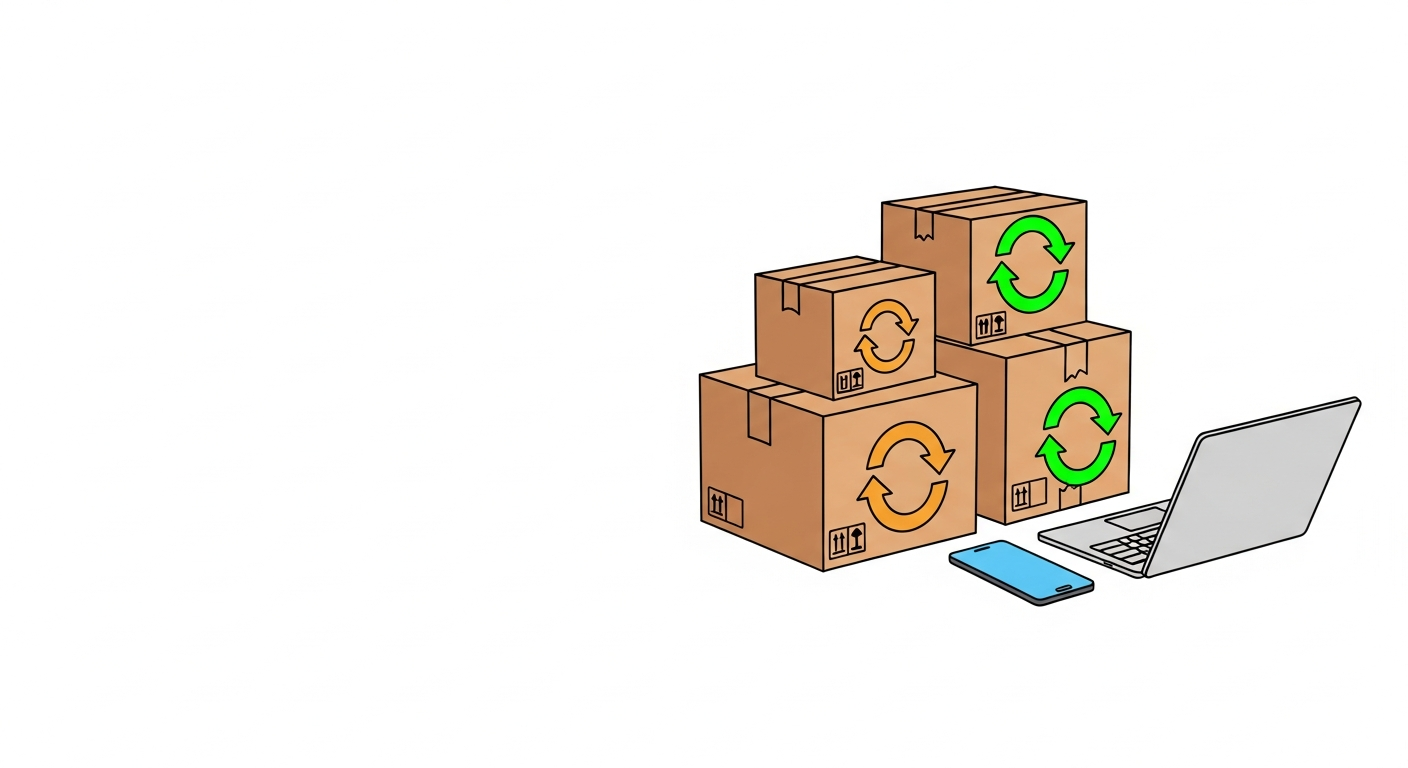
The e-commerce sector in the Arab world is experiencing rapid and unprecedented growth, especially with the immense technical facilities provided by leading platforms like Zid and Salla, which have enabled thousands of entrepreneurs to launch their professional stores in record time. However, amidst this great momentum and the joy of achieving daily sales, a hidden challenge emerges that can devour a large portion of profits if not handled professionally: "returns." Managing returns is not just a routine operational step; rather, it is a comprehensive financial and marketing strategy that determines the long-term sustainability and success of your online store.
Many novice store owners view returns as a pure loss and an annoying nightmare, forgetting that the return process is a natural and inevitable part of digital consumer behavior. In the world of traditional shopping, a customer can try on clothes or inspect devices before paying for them. In e-commerce, however, the customer buys based on trust and descriptive images. Therefore, when a customer requests to return a product, the cost is not limited to the product's value alone; it includes double shipping costs (outbound and return), packaging costs, and the time spent on customer service, as well as the possibility of the product being damaged during the return journey.
Hence, the utmost importance of adopting proactive and effective strategies to manage returns and reduce their rates in your store on the Zid or Salla platform becomes clear. The primary goal is not to prevent the customer from returning items—this would inevitably destroy your brand's reputation and lose shoppers' trust—but rather to address the root causes that lead to the return request in the first place. In this comprehensive and detailed article, we will dive deep into the causes of returns and provide you with practical solutions and deliberate, actionable steps to help you turn this operational challenge into a competitive advantage that boosts customer loyalty and increases your net profit margins.
Causes of High Return Rates in E-commerce Stores and How to Avoid Them
One of the most prominent reasons leading to high return rates in e-commerce stores is the significant gap between the customer's expectations and the actual reality of the product they receive. When a customer browses your store on the Zid or Salla platform, they do not have the ability to touch or physically inspect the product; instead, they rely entirely on the images and texts you provide. If the images are overly edited, altering the true color of the product, or if the description is brief and fails to answer the customer's questions about materials and sizes, the inevitable result is customer disappointment upon receipt and an immediate return request. Therefore, it is absolutely essential to pay attention to the finest product details. You can refer to the article Product Descriptions: Secrets to Writing Copy That Doubles Your Sales to understand how to build correct and accurate expectations for the customer from the very first moment of their visit.
The second fundamental reason relates to shipping and delivery issues, a common weak point faced by many stores. When an order arrives later than scheduled, the customer may lose interest in the product, especially if it is tied to a specific occasion like gifts or holiday clothing, prompting them to refuse delivery and return the shipment. Furthermore, poor packaging or rough handling by delivery representatives can result in the product arriving damaged or broken. To solve this dilemma, you must build strong, reliable partnerships with logistics service providers. To ensure you make the best choice, we recommend reviewing our comprehensive guide on Shipping Companies: Your Guide to Choosing the Best in Salla and Zid to guarantee your shipments arrive safely and on time.
The third reason is impulse buying, or what is known as "buyer's remorse," which is particularly common in orders relying on the "Cash on Delivery" (COD) option. In this case, the customer makes a purchasing decision in a moment of enthusiasm without being financially committed right then and there. When the delivery representative arrives at their door, they might back out of their decision and refuse delivery for financial reasons or a change in mood. To mitigate the impact of this issue in your stores on Salla and Zid, you can regulate the use of COD by imposing additional fees on it, or incentivize prepaid electronic payments by offering exclusive discounts. Additionally, you can activate automated WhatsApp messages to confirm the order and ensure the customer's seriousness before starting to prepare the shipment and incurring waybill costs.
Effective Strategies to Reduce the Return Rate in Zid and Salla
The first and most important step in a return reduction strategy is drafting a clear, transparent, and highly visible return and exchange policy. A common mistake many make is hiding this policy in hard-to-reach subpages, thinking this will reduce return requests. On the contrary, a clear policy builds a wall of trust and credibility with the customer, making them feel secure enough to complete the purchase. Your policy must clearly specify: the allowed time frame for returns, the required condition of the product (such as not opening the original packaging), who bears the return shipping costs, and the expected time frame for refunds. The Zid and Salla platforms provide excellent tools to easily add these pages and link them in the store's footer so they are always accessible to the customer.
The second strategy focuses on strict quality control before any shipment leaves your warehouse. The order fulfillment process (Pick and Pack) is the last line of defense before the product reaches the customer's hands. You must train your team or commit yourself (if you manage the store alone) to double-check every order. Ensure the size is correct, the color matches, and there are no manufacturing defects or visible scratches. Sending the wrong product is an unforgivable operational error for the customer and guarantees a return rate of up to 100% for those orders. Using printed checklists (Checklists) attached to invoices in Salla and Zid greatly helps in reducing these naive and costly human errors.
The third strategy lies in providing proactive and excellent customer service during the order waiting period. Anxiety and uncertainty are enemies of e-commerce. When the customer is left in the dark and doesn't know when their order will arrive, tension increases, which may drive them to refuse delivery. Use the automated tracking features available in the settings of the Salla and Zid platforms to send regular updates via SMS or email (order received, processing, shipped, out for delivery). Furthermore, providing a fast and effective communication channel to answer post-sale and pre-delivery inquiries can save many orders from the fate of a guaranteed return.
Improving the Pre-Sale Experience to Ensure Customer Satisfaction
If your store specializes in selling clothing, shoes, or accessories, providing accurate and comprehensive size guides is indispensable. The issue of mismatched sizes is the leading cause of returns in the fashion sector. Do not settle for standard sizes (S, M, L) because they vary from one brand to another and from one factory to another. Instead, design detailed size charts showing dimensions in centimeters for chest circumference, waist, length, and more. On the Salla and Zid platforms, you can easily insert these charts as images within the product image gallery or in the description section, helping the customer choose the size that fits them with extreme precision and reducing the likelihood of a later exchange or return request.

Ratings and reviews play a crucial role in managing the expectations of new customers. User-Generated Content (User-Generated Content), such as customer photos of products in real life and their honest reviews, is more powerful than any marketing description you could write. When a potential customer sees what a product looks like in a real environment, away from professional studio lighting, they build highly realistic expectations. You should enable the reviews feature in your store on Zid or Salla and encourage your current customers to leave their feedback and attach photos of their orders in exchange for loyalty points or discount coupons for their next purchases. This simple investment yields a double benefit: increasing sales and reducing returns.
Adding a Frequently Asked Questions (FAQ) section within the product page itself is one of the best practices for improving the pre-sale experience. Customers often have specific questions in mind about how to use the product, its compatibility with other devices, or how to care for and clean it. If they do not find satisfactory answers, they might buy the product based on false assumptions discovered later, leading to a return. Compile the most frequent questions you receive through customer service channels and add them systematically to the product descriptions. This upfront clarity removes ambiguity, accelerates the purchasing decision, and ensures the customer knows exactly what they are paying for.
How to Handle Returns and Turn Them Into an Opportunity for Growth
Despite all preventive efforts, returns will undoubtedly happen, and here emerges the art of handling them to turn a negative experience into an opportunity to boost customer loyalty. When a customer requests to return a product, the process must be smooth, fast, and free of annoying complications and bureaucracy. A customer who goes through a comfortable and fair return experience will have significantly higher trust in your store, and studies indicate that these customers return to buy again at higher rates than others. Make return options clear, whether by issuing an instant electronic return waybill through the Salla or Zid dashboard, or by offering the option to refund the amount as store credit (which keeps the money within your ecosystem).
Returns are not just lost products; they are a treasure trove of valuable data that must be smartly leveraged to improve your store's performance. You must track the reasons for return for each order with extreme accuracy. Is the reason a manufacturing defect? Is the issue with the size? Does the product not match the description? By using available analytics tools and linking them with what you learned in the article Sales Analysis: How to Read Your Store Reports in Zid and Salla?, you will be able to discover recurring patterns. If you notice that a specific product has a very high return rate due to poor quality, the sound managerial decision is to immediately stop selling this product and contact the supplier, thereby halting the continuous bleed of losses.
Finally, smart management of returned inventory is what separates professional stores from amateur ones. When a product returns to your warehouse, it must be inspected and its condition evaluated as quickly as possible. If the product is intact and in its original packaging, it should be immediately returned to the system to become available for sale again, avoiding freezing capital in the corners of the warehouse. As for products that have suffered minor packaging damage, they can be sold in a "Clearance" section at an attractive discount. This fast cycle requires a precise system, which we discuss in detail in the guide Inventory Management: How to Avoid Running Out of Products in Zid and Salla?, to ensure a continuous flow of goods and reduce losses resulting from neglected products.
Conclusion: Managing Returns as Part of Your Store's Success
In concluding this comprehensive guide, we must emphasize a fundamental truth in the world of e-commerce: returns are not evidence of your store's failure, but rather an integral part of the nature of digital business. The real challenge does not lie in how to eliminate them entirely, but in how to manage them smartly, reduce their rate to the absolute minimum, and transform them from a heavy financial burden into a tool for evaluating performance and building long-term relationships with customers. Through powerful platforms like Zid and Salla, you possess all the necessary technical tools to implement professional return policies and deliver an exceptional user experience that minimizes the likelihood of errors.
Together, we have reviewed the importance of being proactive in business; starting with writing accurate and honest product descriptions, moving on to providing clear size guides and choosing reliable shipping partners, all the way to the meticulous inspection of products before packaging. Each of these steps is a direct investment in protecting your net profits. The extra minutes you spend ensuring the quality of an order before handing it over to the shipping company will save you hours of dealing with customer complaints and hundreds of riyals in wasted reverse logistics costs.
Finally, remember that a customer who finds it easy to return a product that didn't suit them is a customer who feels secure and trusts your brand. Make your return policy a competitive advantage that you proudly promote, and always continue to analyze your store's data to identify flaws and address them immediately. E-commerce is a continuous journey of improvement and development, and by successfully managing the returns portfolio, you place your store on a path of sustainable growth and assured profitability in a highly competitive market.