



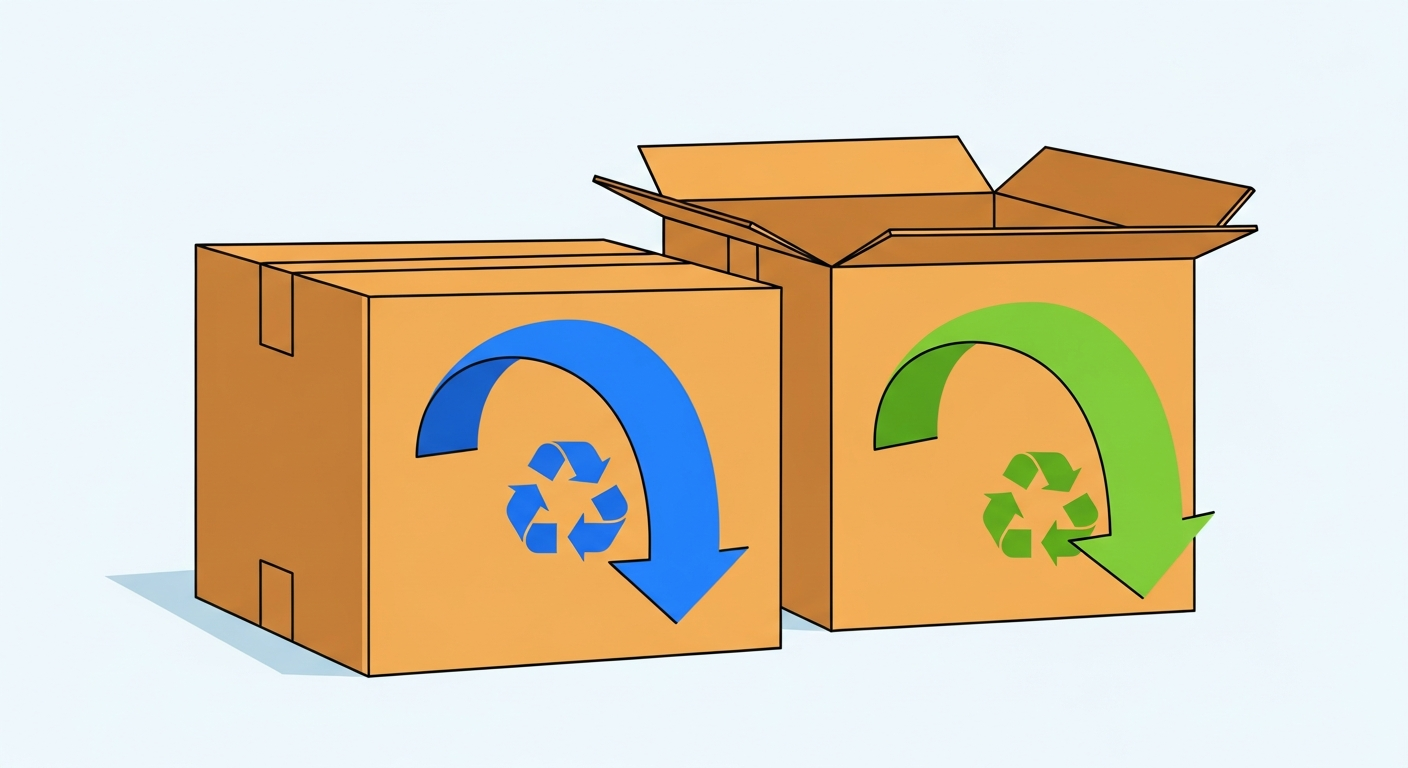
Return and exchange policies are among the most overlooked elements by beginner merchants when setting up their online stores, even though they form the cornerstone of building trust between the store and the customer. In the world of e-commerce, the customer cannot touch or try the product before purchasing, which creates a psychological barrier and natural hesitation when reaching the checkout page. Having a clear, fair, and easy-to-understand return policy acts as a psychological safety net that persuades the customer to complete the order, as they realize their money is not at risk if the product does not meet their expectations. Reality proves that stores adopting flexible and transparent policies achieve significantly higher conversion rates than those imposing impossible or vague conditions, as the customer sees a clear policy as proof of product quality and the merchant's confidence in what they sell.
On the other hand, the importance of a return policy is not limited to the marketing aspect alone; it is a legal and operational necessity to protect your rights as a merchant and regulate the relationship with the consumer, especially in light of the evolving regulations of the Ministry of Commerce in Saudi Arabia. Writing terms that protect your store from fraud or unjustified returns that drain resources, while simultaneously preserving the customer's right to receive a sound product, is a delicate equation that requires smart and thoughtful drafting. In this article, we will dive into the details of how to write a professional return policy for Salla and Zid stores, and how to turn this boring legal page into a powerful marketing tool that increases your sales and customer loyalty.
Why is a clear return policy your "secret weapon" to increase sales?
Some might think that facilitating the return process will open the door to losses and increased operational costs, but behavioral studies in e-commerce indicate the exact opposite. When a customer reads clear and reassuring terms, their hesitation rate drops significantly, reducing the phenomenon of "abandoned carts." The fear of making a wrong purchasing decision is the number one enemy of sales, and a return policy is the tool that eliminates this fear. Furthermore, customers who go through a smooth and positive return experience are much more likely to return and buy again because they have actually tested the store's credibility, which increases Customer Lifetime Value (LTV) and turns a potential problem into an opportunity to build loyalty. To deepen your understanding of how to leverage these interaction points, you can review our article on optimizing cart and checkout pages to reduce cart abandonment, where the return policy plays a pivotal role at that stage.
In addition to the psychological aspect, a return policy plays a major role in boosting your store's ranking on search engines and building brand reputation. Stores that receive positive reviews regarding customer service and ease of issue resolution earn the trust of both search algorithms and new customers alike. Conversely, vague or hidden terms lead to public disputes on social media, damaging the store's reputation in ways that may be hard to repair. Clarity in terms from the very beginning cuts off any future misunderstandings and makes the customer a partner in responsibility because they agreed to clear terms before completing the payment process. This clarity is an integral part of professional store design, which we discussed in detail in the article How professional store design affects customer trust, where the policies page is considered a fundamental part of a reliable store's structure.
Finally, we must realize that the return policy is part of the legal framework for e-commerce in Saudi Arabia. Complying with the laws of the Ministry of Commerce and consumer protection is not an option but a duty, and violating them may expose your store to penalties or closure. However, the law also grants the merchant rights, such as specifying non-returnable cases for used products or those damaged due to misuse. The cleverness here lies in drafting these legal rights in a friendly language understandable to the average customer, away from complex legal jargon that might alienate them. The goal is to make the customer feel that you are on their side, and that these terms were set to regulate the process to guarantee everyone's rights, not to evade responsibility. This balance is what distinguishes major successful stores on platforms like Zid and Salla.
Essential elements that a successful return policy must include
The first element that must be precisely defined is the "timeframe" for returns and exchanges. You must be very specific about the number of days allowed to submit a return request from the moment the order is received. Saudi law specifies certain periods (such as 7 days in specific cases), but as a merchant, you can extend this period as a competitive advantage. For example, giving the customer 14 or even 30 days might seem long, but it provides a great sense of comfort. The most important thing here is clarity; is the period calculated from the order date or the delivery date? Does it include holidays? These fine details prevent hundreds of questions that might reach customer service and save your team's time to focus on sales instead of resolving disputes over deadlines.
The second and most important element is the "product condition" and acceptance criteria. You must clearly state that the product must be in its original packaging, unused, with all its accessories, and accompanied by the invoice or order number. Here you must be strict to protect your inventory from damage and waste. Clarify to the customer with pictures or precise descriptions what constitutes a "manufacturing defect" versus "misuse." For example, in clothing stores, it must be clarified that removing tags or the presence of perfume scents on the item voids the right of return. These conditions protect you from customers who use products once and then try to return them, a common practice that must be hedged against smartly and diplomatically at the same time.
The third element relates to "financial and logistical costs," which is often the most controversial point. Who bears the shipping cost upon return? The general fair rule is: if the mistake is from the store (damaged, wrong, or not-as-described product), the store bears all costs. However, if the return is due to a change of mind or wrong size (without an error in the size chart), the customer bears the shipping cost. The refund mechanism must also be clarified; does it go back to the credit card? Bank transfer? Or store wallet balance? The latter option (store wallet balance) is an excellent strategy to maintain liquidity within your store and ensure the customer returns to buy. For more details on managing these logistical operations, we recommend checking out Effective shipping strategies to improve customer experience in your online store.
How to handle non-returnable products
There are categories of products that require special treatment and clear exceptions in the return policy, and mentioning them should not be taken lightly. Personal products such as underwear, cosmetics, and opened perfumes are often non-returnable for health and regulatory reasons. You should write a clear list of these products under a prominent heading "Products Excluded from Return." This clarity prevents embarrassment with the customer later and protects you from guaranteed losses, as these products cannot be resold and are considered damaged once opened or tried.
Also, digital products (such as courses, e-books, recharge cards) and custom-made products (such as printing a name on a shirt or tailoring an abaya with custom measurements) must be excluded from returns unless there is a clear technical or manufacturing defect. The nature of these products makes their return worthless to the store. In the case of customized products, you lose the value of materials and labor because you cannot sell the product to someone else. Therefore, a mandatory checkbox should be placed specifically when purchasing these products, where the customer acknowledges that this product cannot be returned.
Finally, the return policy for products purchased during sales and clearance periods must be clarified. Many stores follow a "final sale" policy for heavily discounted products, and this is your right, but it must be clearly disclosed. Do not assume the customer knows this automatically. Write explicitly: "Clearance and White Friday products are not eligible for cash refunds and can only be exchanged within 3 days." This kind of transparency protects you from disputes that abound during busy sales seasons and helps you manage inventory more effectively, which is directly related to what we discussed in the article The optimal inventory management system for Zid and Salla e-commerce stores.
Drafting terms on Zid and Salla platforms: Practical steps
When working on platforms like Zid and Salla, the technical process of adding a return policy is easy and straightforward, but the art lies in the content and placement. In the Salla or Zid dashboard, there are designated fields for informational pages (additional pages). Do not just put the policy in a forgotten page at the bottom of the site (Footer). The golden advice here is to place a quick summary of the policy on the product page itself, next to the "Add to Cart" button. A simple phrase like "Free returns within 7 days for manufacturing defects" builds tremendous trust. You can use the customization features in Zid and Salla to display these messages attractively and consistently with the store's visual identity.
Practically speaking within the platform, make sure to activate automated return request management options if available in your plan. The Salla platform, for example, allows the customer to raise a return request through their personal account in the store, and allows you as a merchant to accept or reject the request based on the terms, while automatically issuing a reverse shipping label (Reverse Logistics). This automation saves you the hassle of manual coordination via WhatsApp and email. You should explain to the customer in the policy page "how to submit a request" step-by-step: "Log into your account > My Orders > Return." This simple guide reduces the pressure of inquiries and elevates your store's professionalism.
When drafting the text inside the page builder in Zid or Salla, use good formatting. Do not place the text as a solid wall of text. Use subheadings, bullet points, and bold font to highlight numbers and timeframes. The human eye scans text looking for important information, so make this task easy for your customer. Remember that most visitors browse from mobile phones, so ensure the page is responsive and easy to read on small screens, as long, unformatted texts on mobile can be very off-putting and cause the customer to exit the page immediately.
Conclusion
At the end of this guide, we must remember that a return policy is not just a legal document to protect the store, but an integral part of the overall customer experience and your brand's growth strategy. Balance is key; the balance between protecting your financial rights and preventing manipulation, and providing a comfortable, risk-free shopping experience for the customer. A very strict policy might protect you from some short-term losses, but it will cost you a lot of lost sales and potential customers who chose a more flexible competitor. Meanwhile, a flexible and well-thought-out policy builds bridges of trust and encourages repeat purchases.
Start today by reviewing your store's current policy on the Zid or Salla platform. Is it clear? Is it fair? Is its language simple and understandable? Update it based on the points we discussed, and make sure it is easily accessible in your store. Do not hesitate to use the return policy as a marketing tool; when you say "We guarantee 100% satisfaction," you are not just selling a product, you are selling peace of mind. And remember that every return is a learning opportunity; constantly analyze the reasons for returns to improve the quality of your products and their descriptions, as reducing the return rate starts with improving pre-sales.
Finally, e-commerce is a long-term relationship game. A customer who feels appreciated and respected when a problem occurs will often turn into an advocate and defender of your brand in front of others. Invest in drafting your terms carefully, use the technical tools provided by platforms like Zid and Salla to facilitate the process, and make your return policy a competitive advantage that sets you apart in a crowded market. Success does not only come from selling the product, but from how you handle what happens after the sale.