



Discount coupons are a double-edged sword in the world of e-commerce. They can skyrocket your store's sales to record levels in a short time, but simultaneously, they can erode profit margins if not used with wisdom and careful strategic planning. Today's Arab shopper has become smarter and more demanding, always looking for the "best deal" before completing any purchase. This makes coupons more than just a passing promotional tool; they are a fundamental part of the customer journey and purchasing decision. On platforms like Zid and Salla, powerful tools are available to create and manage these coupons, but the tool alone is not enough without a smart operational strategy that converts a visitor into a loyal customer.
Over-reliance on random discounts can harm your brand image in the long run, as customers get used to buying only during sale seasons, making selling products at full price an almost impossible task on regular days. Therefore, the goal of the coupon must be clear and specific: Is it to attract new customers? To encourage existing customers to make repeat purchases? Or to clear out old inventory? Defining the goal is the first step toward success. Your deep understanding of consumer behavior and how they interact with offers is what will differentiate a store that achieves massive sales with net profits from a store that sells a lot but ultimately loses money due to poor financial estimation.
In this comprehensive article, we will dive deep into discount coupon strategies and how you can employ them smartly to serve your business goals on the Zid and Salla platforms. We will discuss the different types of discounts, the ideal timing to launch them, and how to avoid common mistakes that many merchants make. We will also touch on how to integrate these coupons with other marketing tools to maximize return on investment, ensuring that every riyal you deduct from a product's price comes back to you multiplied in the form of loyalty, reach, and sustainable sales.
The Psychology of Discounts: Why Does the Customer Buy When They See a Coupon?
To understand how to use coupons effectively, we must first understand the psychological driver that pushes the customer to use them. When a customer sees a discount code or a special offer, the brain releases dopamine, which is responsible for feelings of happiness and reward. This lowers purchasing barriers and makes the payment process less psychologically painful. This feeling of "winning" a good deal is a very strong motive, especially in our purchasing culture that values saving and seizing opportunities. Additionally, coupons create a sense of urgency, especially if they are time-bound, prompting the customer to make an immediate decision rather than postponing, which often ends in no purchase.
Another important factor is the "Fear Of Missing Out" (FOMO). When you specify that a coupon is available to a limited number of users or for a short period, you trigger a positive anxiety in the customer that they might lose this opportunity if they don't act now. This psychological tactic is highly effective in increasing the conversion rate. Furthermore, coupons help build trust with new customers; the discount acts as risk reduction for a customer trying your product for the first time. They feel that even if the product isn't 100% perfect, they didn't pay full price, making it easier for them to take that first step to try it.
However, you must be wary of the reverse psychological effect. If discounts are always available without a compelling reason, the customer will start questioning the true value of the product, believing the original price was deliberately inflated just to be discounted later. Therefore, it is absolutely essential before launching any discount campaign to carefully review your product pricing. You can check out our article on Product Pricing: How to Determine the Right Profit Margin? to ensure your base prices can absorb discounts without incurring operational losses, and to maintain the credibility of your offers to your audience.
Types of Strategic Coupons and How to Activate Them in Zid and Salla
The Zid and Salla platforms offer wide and diverse options for creating coupons, and choosing the right type depends entirely on the campaign's goal and the nature of the products. The first and most common type is the "Percentage Discount," such as a 10% or 20% discount. This type is highly effective with low- or medium-priced products, as the customer feels they are saving a good percentage of their payment. However, for high-priced products, a "Fixed Amount Discount" might be more attractive. For example, a 50 riyal discount on a 500 riyal product might seem psychologically stronger and clearer than a 10% discount, even though they are mathematically equal, because the saved amount is specific and immediately tangible to the customer.
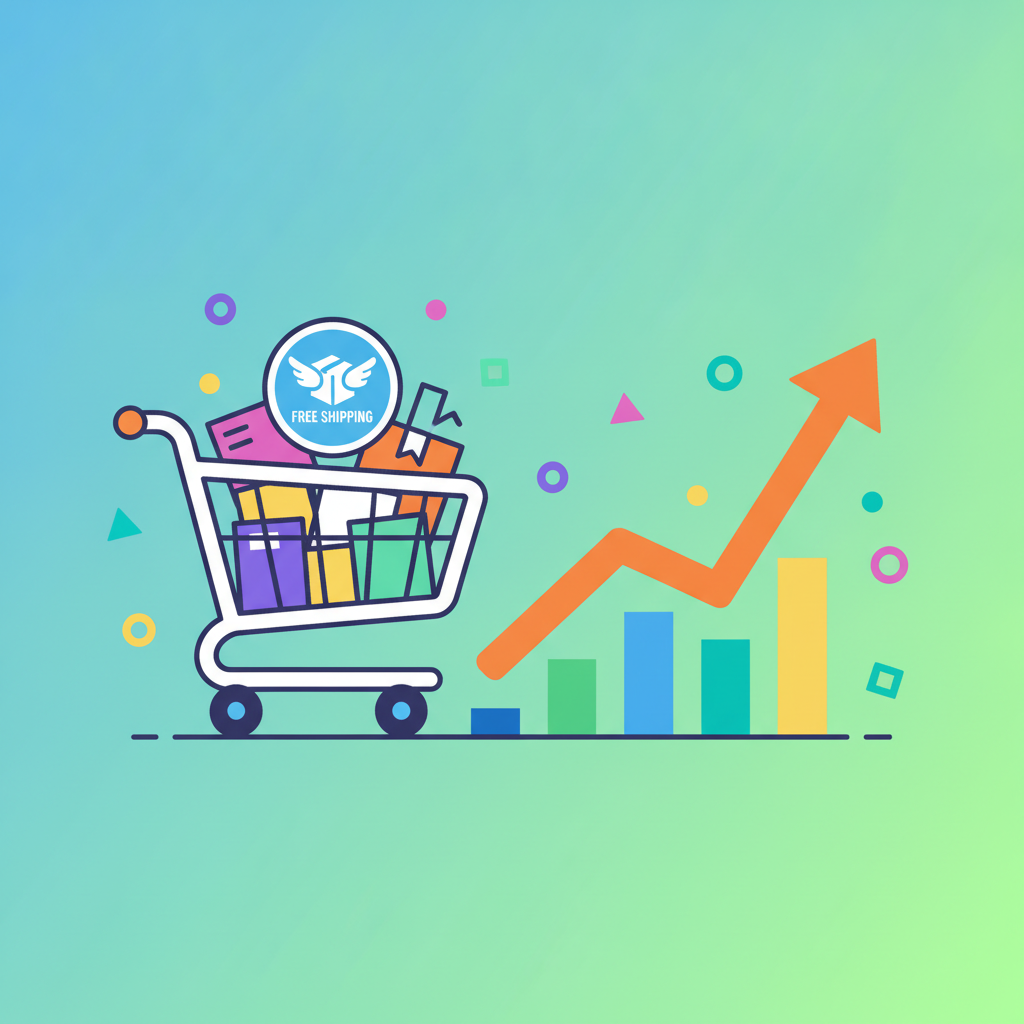
The third and highly beloved type is the "Free Shipping Coupon." Statistics indicate that shipping costs are the number one reason for cart abandonment in Arab stores. Offering a free shipping code, and linking it to a minimum order value (e.g., free shipping for orders over 299 riyals), is considered one of the smartest strategies to increase the Average Order Value (AOV). In the Salla or Zid dashboard, you can easily set up this condition so that the discount is only activated when the cart reaches the specified amount. This not only covers the shipping cost from the profit margin of the additional products but also encourages the customer to add products they hadn't planned to buy just to get free shipping.
The fourth type is "Bundle" coupons or package deals. Instead of discounting the price of a single product, you can create a coupon that grants a discount when buying a group of products together (e.g., buy the shirt and pants and get the shoes at a 50% discount). This strategy is excellent for clearing out stagnant inventory and increasing the order value simultaneously. To learn more about how to smartly configure these bundles, we recommend reading our guide on Product Bundles: How to Smartly Increase Average Order Value?, where you will find details to help you integrate complementary products to create irresistible offers.
Advanced Strategies for Targeting Customers with Coupons
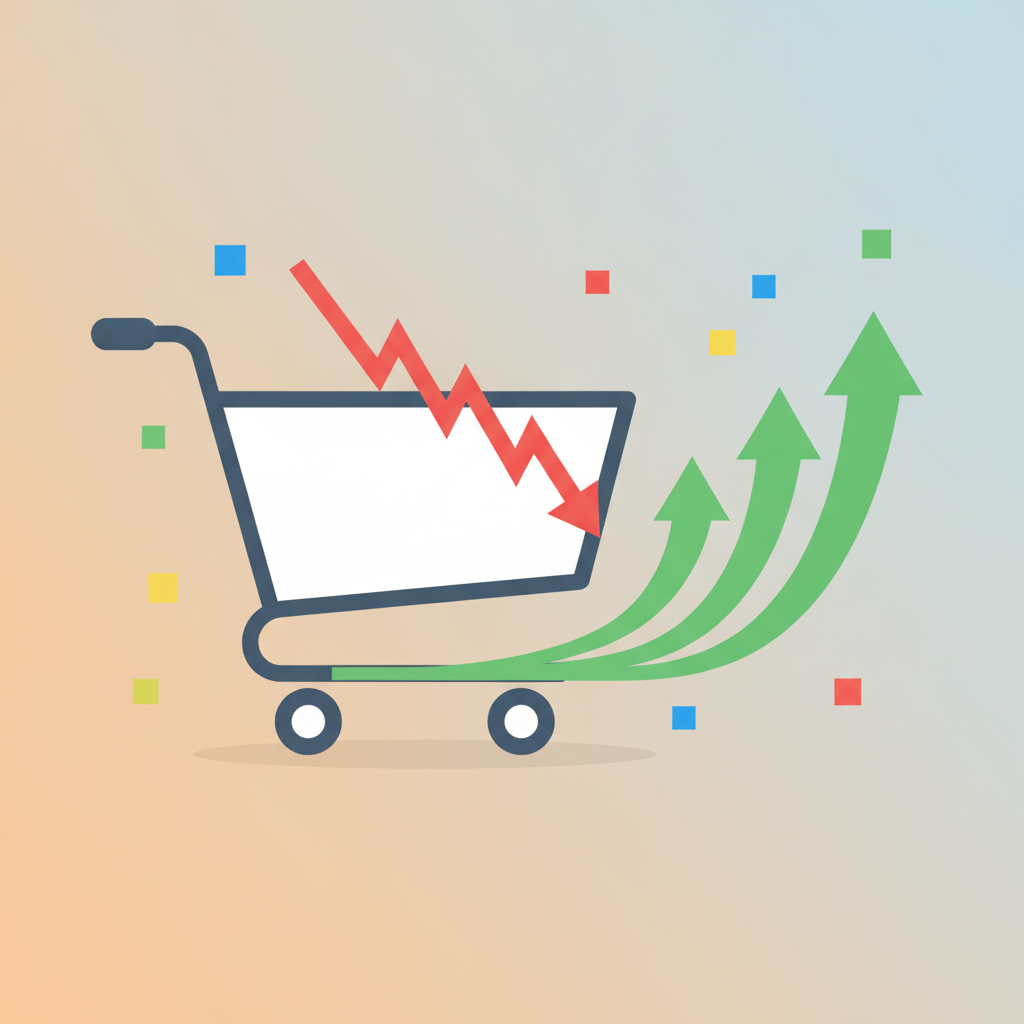
The intelligence in using coupons lies not only in creating them but in "who" gets them and "when." One of the most powerful strategies is targeting "abandoned carts." A customer who reached the checkout stage and then left is highly interested but faced some obstacle (usually price or shipping). Sending an additional discount coupon or free shipping specifically to this customer via email or WhatsApp can recover a large percentage of these lost sales. In Zid and Salla, there are automation tools that can do this on your behalf. For more details on this vital point, you can review our article on Abandoned Carts: Strategies to Recover Them in Zid and Salla to learn how to effectively craft recovery messages.
Another effective strategy is "Loyalty Coupons" directed at existing customers. Instead of focusing solely on acquiring new customers at a high acquisition cost, reward your previous customers with exclusive coupons (VIP Coupons). You can segment your customers in the store's database and send a special code to customers who have purchased more than 3 times, or whose total purchases have exceeded a certain amount. This type of personalization makes the customer feel special and appreciated, transforming them from a mere passing buyer into a marketer for your brand among their friends and family, as people love to share experiences where they feel exclusive.
Finally, the "Influencer Coupons" strategy. When collaborating with social media influencers, don't just give them a generic code. Create a customized code with each influencer's name (e.g., AHMAD10). This not only gives their followers a discount but also helps you as a merchant accurately track each influencer's performance. You will know exactly how many sales came through each person, helping you evaluate the success of the marketing campaign and identify the most profitable channels for your store in the future. Sales reports in Zid and Salla allow you to filter orders by the discount code used, making the analysis process easy and precise.
Fatal Mistakes That Destroy Your Profits When Using Discounts
Despite the appeal of coupons, misusing them can lead to financial disasters. The biggest and most common mistake is "profit margin erosion." Some merchants offer massive discounts (30% or 40%) without accurately calculating the total cost of the product (including the cost of goods, shipping, packaging, and electronic payment fees). The result is high sales but zero profits or even losses. You must always set a cap on the discount and calculate it based on net profit, not the selling price, ensuring that the coupon cannot be used with very low-margin products unless the goal is to clear out inventory.
The second mistake is "complicating coupon conditions." Nothing frustrates a customer more than trying to use a discount code only to be surprised by a vague error message or impossible conditions that weren't clear (such as: valid only on the color red, excludes discounted products, or requires a very high minimum order). Coupon conditions must be clear, simple, and written next to the code. In the coupon settings in Salla and Zid, make sure to write a clear description of the coupon and accurately specify the included products to avoid customer anger and their constant contact with customer service to inquire why the code isn't working.
The third mistake is "making coupons permanently and openly available." If a discount code is always available in the store's top banner year-round, it loses its value and meaning. Customers will learn to never buy at full price, and discounted prices will become the normal price in their eyes. Coupons should be tied to specific occasions, seasons, or actions by the customer. Scarcity is what gives a coupon its value. Avoid sites that leak discount codes and try to change codes periodically to ensure that the benefit goes only to the target audience.
Performance Measurement and Analysis: How Do You Know a Coupon is Successful?
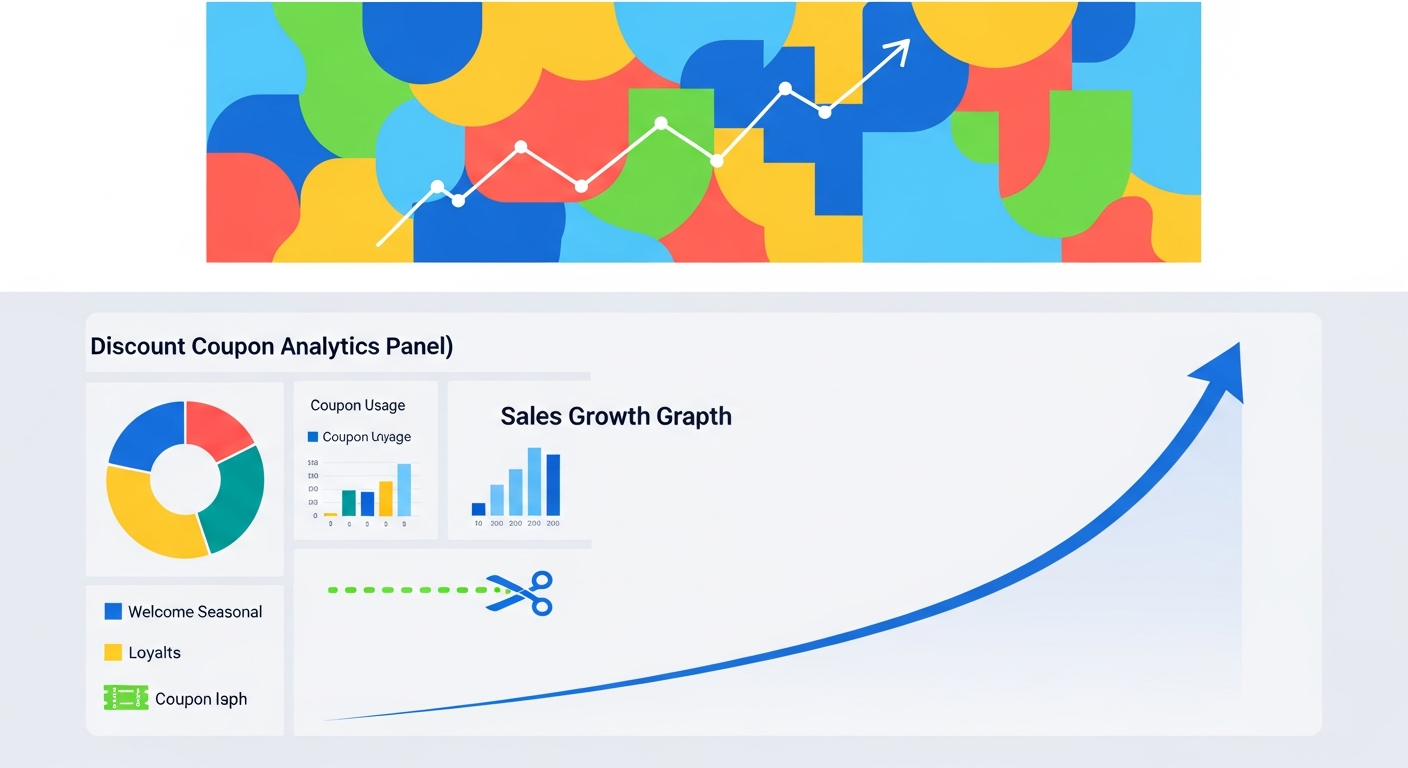
You cannot improve what you cannot measure. After launching any campaign involving discount coupons, you must immediately head to the analytics dashboard in your Zid or Salla store. The first metric to monitor is the "number of coupon uses" versus "total sales." This gives you an idea of the coupon's reach and appeal. But the most important number is the "net profit after discount." Did the increase in the number of orders compensate for the decrease in profit margin per item? If the answer is yes, the campaign is financially successful.
Another vital metric is the "Customer Acquisition Cost" (CAC). If you are using coupons to attract new customers, calculate the discount cost as part of the marketing cost. Compare this cost with the "Customer Lifetime Value" (LTV). Did the customer who came because of the discount return to buy again at full price? Or were they just a deal hunter? Analyzing the behavior of these customers after their first purchase will determine whether your coupon strategy is building a sustainable customer base or just generating temporary sales. For a deeper understanding of these numbers and how to read them, we recommend checking out the article Key Performance Indicators (KPIs): 5 Numbers That Determine the Success of Your E-commerce Store.
Finally, conduct A/B testing for your coupons. Try a 10% discount in a given month, and the following month try a fixed amount discount equivalent to the same value, and compare the results. Try changing coupon names (e.g., Welcome10 vs Save10). These simple experiments will give you precise data on what exactly your audience prefers, as what works for a fashion store might not work for an electronics store. Data is your best friend in the e-commerce journey, and using the reporting tools on your platform is what will make your future decisions based on facts rather than mere guesswork.
Conclusion: Intelligence in Balance
At the conclusion of this guide, it becomes clear that discount coupons are not just numbers subtracted from the final bill; they are a powerful marketing and psychological tool that requires planning and intelligence in execution. Success in using coupons on platforms like Zid and Salla does not depend on the generosity of the discount as much as it depends on its timing, the target audience, and the desired goal. Always remember that the ultimate goal is to maximize profitability and build customer loyalty, not just to increase the number of orders at any cost.
Start today by reviewing the discount strategy in your store. Are you using coupons to rescue abandoned carts? Are you rewarding your loyal customers? Are you accurately calculating your profit margins before launching any code? Answering these questions and applying the tips we mentioned will put you on the right track to transforming coupons from a financial burden into a massive growth engine for your e-commerce store. Don't be afraid to experiment, but make every experiment deliberate and calculated.
E-commerce is a long-distance race, and the smart merchant is the one who knows when to speed up using offers, and when to maintain their pace by preserving their brand's value. Use the tools available to you, continuously analyze your results, and you will find that coupons can be the golden key to both your customer's heart and pocket simultaneously, thereby achieving the difficult equation between customer satisfaction and merchant profitability.