


Customer Segmentation: Increasing Sales in Salla and Zid
In the rapidly evolving world of e-commerce, merely showcasing products is no longer enough to achieve sustained success. Competition has intensified, and customer expectations are constantly rising, pushing e-commerce store owners to seek innovative strategies to differentiate themselves. This is where customer segmentation comes into play—a vital marketing approach that can transform how you think about your target audience. Instead of treating all customers as a single entity, customer segmentation allows you to understand the subtle differences among their groups, addressing their specific needs and desires with extreme precision, which positively impacts your store's performance.
Understanding your customers is not a luxury; it is an absolute necessity for growth. When you know who your customers are, what they want, and how they interact with your store, you can craft more effective marketing messages, offer irresistible deals, and develop products and services that truly resonate with their actual needs. This focus on personalization is what distinguishes successful stores in today's e-commerce landscape. Whether you use platforms like Salla, Zid, or Shopify, the ability to understand your customers on a deeper level will be the key to increasing sales and fostering long-term loyalty.
What is Customer Segmentation and Why is it Essential?
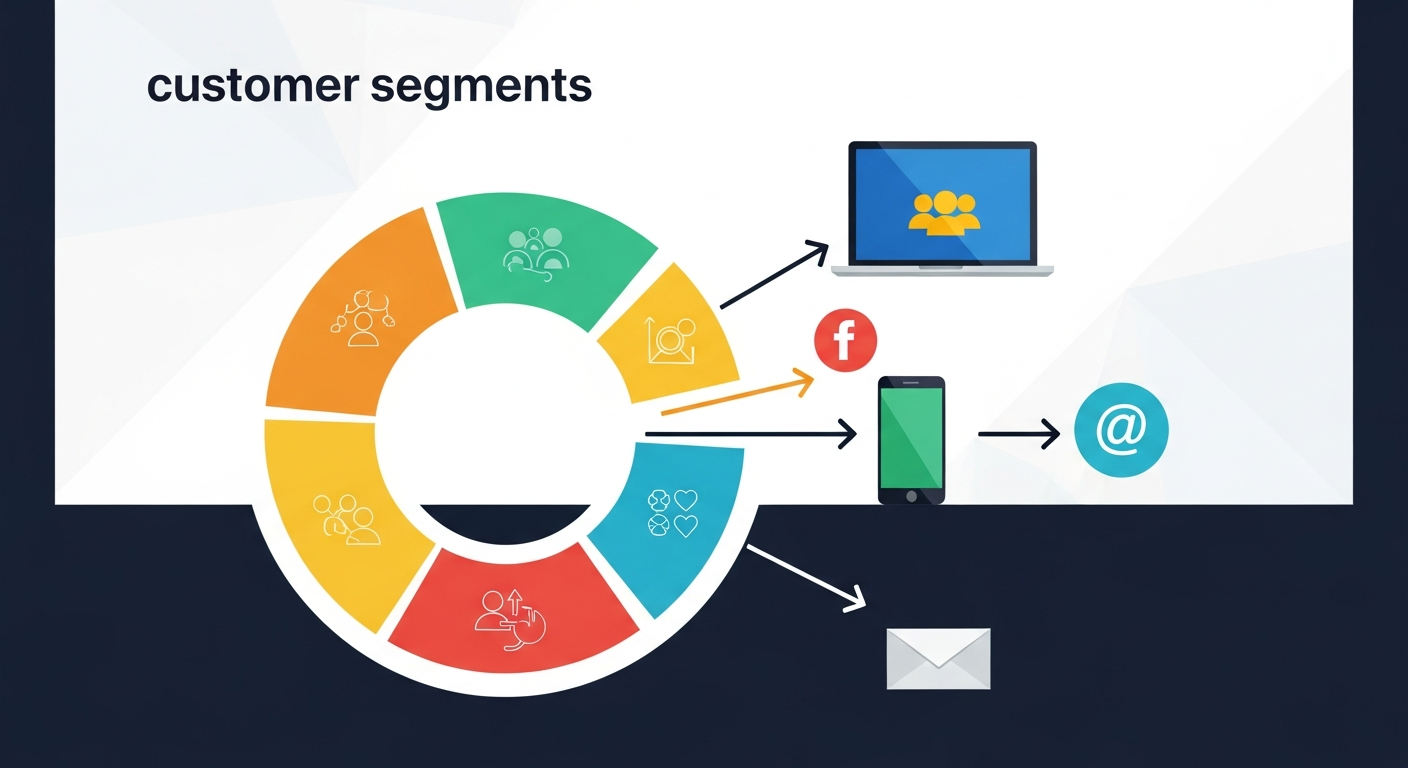
Customer segmentation is the process of dividing your customer base into smaller, more homogeneous groups, based on shared characteristics such as demographics, purchasing behaviors, interests, or geographic location. The goal of this segmentation is to enable e-commerce store owners to design more personalized and effective marketing strategies and product offerings for each segment. Instead of sending a single message to all customers, which might be irrelevant to many, segmentation allows for the creation of targeted campaigns that resonate with each group, increasing engagement and conversion opportunities.
The importance of customer segmentation lies in its ability to improve marketing efficiency and reduce costs. When you direct your marketing efforts towards specific segments, you ensure that your message reaches the right audience at the right time, with the right content. This not only leads to increased conversion rates and sales but also enhances the overall customer experience, as customers feel that the store understands their needs and offers them real value. In a saturated e-commerce market, where thousands of stores compete, customer segmentation is an indispensable tool for differentiation and building strong, lasting customer relationships.
Furthermore, customer segmentation helps identify new market opportunities and improve existing products and services. By analyzing the behaviors and needs of each segment, you can discover market gaps or unmet demands, allowing you to develop new offerings or modify your current ones to better meet these needs. Whether you use Salla, Zid, or Shopify, understanding your customer segments will enable you to make more informed business decisions and maximize every dollar spent on marketing and development.
Objectives of Customer Segmentation
Customer segmentation primarily aims to deepen your understanding of your customers on multiple levels, which translates into a range of strategic and operational benefits for your e-commerce store. One of the main objectives is to radically improve the customer experience by providing content, offers, and products that perfectly match their individual preferences. When customers feel that the store speaks directly to them and understands their needs, their chances of loyalty to the store and repeat purchases increase, building a long-term relationship that goes beyond mere transactions.
Another crucially important objective is to increase the efficiency of marketing campaigns. Instead of sending generic messages that may not resonate with all customers, you can design customized campaigns for each segment. For example, customers who buy luxury products might receive marketing messages focusing on quality and exclusivity, while price-sensitive customers might prefer to receive offers and discounts. This personalization not only saves time and money but also increases response and conversion rates, meaning higher sales and a better return on investment for your marketing campaigns, which can be achieved more easily using the integrated marketing tools in platforms like Salla, Zid, and Shopify.
Finally, customer segmentation contributes to improving the product and service development process. By analyzing data and behaviors for each segment, you can identify the most popular products, discover unmet needs, or even pinpoint new features that customers might desire. This deep understanding can guide your store's strategy towards innovation and delivering unique value, putting you ahead of your competitors and ensuring your offerings remain relevant and attractive to your diverse customer segments. It is a proactive approach that ensures your store's long-term growth.
Main Types of Customer Segmentation
Customer segmentation methods are diverse and varied, encompassing different aspects of customer personality and behavior, allowing you to build a comprehensive and accurate picture of your audience. Understanding these different types is fundamental to implementing an effective segmentation strategy that can serve your e-commerce store's goals. Each type offers a unique perspective on your customers, and when combined, they can provide invaluable deep insights that help you personalize the shopping experience like never before.
The process often begins with basic data, then evolves to include more complex and precise analyses. No single type is superior to another; rather, the optimal choice depends on the nature of your business, the products you sell, and the data available to you. The most important thing is to start with one or two types of segmentation, then gradually expand as you gain more experience and data, ensuring your efforts are focused and effective, whether you manage your store on Salla, Zid, or Shopify.
Investing in understanding these different types of segmentation is not a luxury; it is a direct investment in your store's growth and profits. Every customer segment you discover opens new doors to marketing and conversion opportunities. By effectively applying these methods, you can transform your store from just a seller into a trusted partner for your customers, fostering loyalty and ensuring repeat business.
Behavioral Segmentation
Behavioral segmentation focuses on how customers interact with your store and products. This type of segmentation is considered one of the most powerful because it relies on real, direct data that reflects customer intent and purchasing interests. This segmentation can include factors such as purchase history (what they bought, when they bought, how much they spent), browsing behavior (pages visited, products viewed), interactions with marketing campaigns (email opens, ad clicks), and their use of different store features.
By analyzing these behaviors, you can identify segments like 'frequent buyers,' 'new customers,' 'customers at risk of churning,' 'browsers interested in a specific product but haven't purchased yet,' or 'customers who abandoned their shopping cart.' Each of these segments requires a different marketing approach. For example, frequent buyers can be targeted with exclusive loyalty offers, while cart abandoners can be sent a reminder with an incentive to complete the purchase. This level of personalization significantly increases the effectiveness of your marketing campaigns.
E-commerce platforms like Salla, Zid, and Shopify are rich in behavioral data that can be leveraged to create this type of segmentation. Order histories, shipping dates, and preferred products can be tracked through the platform's control panel. External data analytics tools can also be integrated with these platforms to gain deeper insights into browsing and clicking behaviors. Your understanding of behavioral segmentation will allow you to create a more relevant and engaging shopping experience for each customer, leading to increased conversion rates and loyalty.
Psychographic Segmentation
Psychographic segmentation delves into the more abstract aspects of a customer's personality, such as lifestyles, values, interests, opinions, and personal traits. This type of segmentation goes beyond simple quantitative data and focuses on understanding the underlying motivations behind purchasing decisions. For example, you might have customers who care about sustainable and eco-friendly products, or others who value luxury and exclusivity, or a third group looking for practical and time-saving solutions. All these differences reflect distinct psychographic segments.
To gather the necessary data for psychographic segmentation, you might need to use surveys, customer interviews, analysis of their social media interactions, or even leverage data from extensive market studies. Although this type of segmentation can be more complex to implement compared to demographic or behavioral segmentation, its results can be extremely powerful. It allows you to build a deeper emotional connection with your customers, as your marketing messages feel like they speak to their core values and beliefs.
For instance, if your e-commerce store sells handmade craft products on Shopify, psychographic customer segmentation might reveal that a large segment of your audience values art, authenticity, and supporting local artisans. You can then design marketing campaigns that focus on the stories behind the products, craftsmanship, and positive community impact, rather than just focusing on price or features. This approach builds loyalty, creates a community around your brand, increases the likelihood of repeat purchases, and provides you with a unique competitive advantage in the market.
Demographic and Geographic Segmentation
Demographic and geographic segmentation are among the simplest and most common types of segmentation, serving as an excellent starting point for any customer segmentation strategy. Demographic segmentation relies on measurable characteristics such as age, gender, income, education, occupation, marital status, and family size. This data is easy to collect and is often available through registration information or order data on e-commerce platforms like Salla, Zid, and Shopify. For example, younger people might prefer trendy products at affordable prices, while older customers might look for high-quality and durable items.
Geographic segmentation, on the other hand, relies on customers' physical location, such as country, region, city, or even postal code. This type of segmentation is particularly crucial for stores offering products or services affected by climate, local culture, or shipping costs. For example, you might need to offer special promotions for colder regions in winter or tailor content to local customs and traditions. Understanding the geographic distribution of your customers also helps improve logistics and identify focus areas for paid advertising campaigns.
Despite their simplicity, demographic and geographic segmentation provide a strong foundation for building more complex customer segments. These types can be combined with behavioral and psychographic segmentation for deeper and more comprehensive insights. For example, you might target women aged 25-35 in Riyadh who have purchased beauty products in the last three months. This combination of different segmentation types gives you the ability to precisely tailor your marketing messages and offers, increasing their effectiveness and achieving better results for your store.
How to Implement Customer Segmentation on Salla, Zid, and Shopify Platforms?
E-commerce platforms like Salla, Zid, and Shopify are powerful tools that offer many features and data points that can be effectively leveraged to implement customer segmentation strategies. Although each platform has its interface and some feature differences, the basic principles of customer segmentation remain the same. The key is to make the most of your available data and utilize integrated or external tools to identify your customer segments and personalize their experience. The process always begins with data collection and analysis to understand customer behaviors and preferences.
These platforms, in various ways, allow you to view and analyze customer records, including purchase history, favorite products, and geographic location. This information can be used to create custom customer groups. For example, you can identify customers who haven't purchased in a long time, high-spending customers, or even customers who bought a specific product. This ability to filter and organize your customer database is the first step towards implementing effective segmentation that contributes to increasing sales.
It is also important to remember that customer segmentation is not a one-time process; it is an ongoing effort that requires continuous monitoring and improvement. As your store grows and your customer base evolves, so too will your segments. Therefore, you should regularly review and adjust your segmentation strategies to ensure they remain relevant and effective in achieving your marketing and sales objectives. Utilizing the built-in analytics tools in platforms like Salla, Zid, and Shopify will assist you in this periodic review.
Utilizing Available Data on Platforms
E-commerce platforms like Salla, Zid, and Shopify offer a wealth of data that can be used as the foundation for customer segmentation. The key is knowing where to find this data and how to leverage it. For example, the control panels of these platforms allow you to access complete order information, including products purchased, purchase date, total order value, and customer details such as name, email, and address. This data is the raw gold from which you can begin to build your segments.
You can start by analyzing customer purchase history. For instance, you can identify customers who have made only one purchase (new customers) versus those who have purchased multiple times (repeat customers). You can also identify customers who have spent a certain amount (high-value customers) or who have purchased products from a specific category. Many of these platforms allow you to create 'customer groups' or 'tags' for customers based on these criteria, making it easier to target them with personalized campaigns later.
In addition to order data, some platforms or integrated tools can provide insights into browsing behavior, such as pages a customer visited, products they added to their cart and then abandoned, or even products they viewed multiple times without purchasing. This behavioral data can be crucial in identifying interested customers who need an extra push to complete a purchase. Use this information to create targeted email campaigns or personalized push notifications, increasing the chances of converting these customers into actual buyers.
Integration Tools for Salla, Zid, and Shopify Platforms
To enhance customer segmentation capabilities and personalize the experience, you can leverage a wide range of integration tools available for Salla, Zid, and Shopify platforms. These tools range from Customer Relationship Management (CRM) systems and email marketing platforms to advanced analytics tools and loyalty programs. Effective integration of these tools helps in collecting more detailed data, analyzing it deeper, and activating targeted campaigns more easily, ensuring your marketing efforts achieve the maximum possible return.
Email marketing platforms like Mailchimp or Klaviyo are essential tools for customer segmentation. They can be directly linked to your store on Salla, Zid, or Shopify, allowing you to import customer data and automatically segment them based on their purchasing behavior or interests. You can then send highly personalized email campaigns to each segment, such as special offers for repeat buyers, abandoned cart recovery messages, or even new product recommendations based on their past purchases. You can refer to our comprehensive guide to email marketing for more information on how to utilize these tools.
Additionally, loyalty programs and their applications available in Salla and Shopify app stores can play a crucial role in customer segmentation. Through these programs, you can identify your most loyal customers (those who spend more or purchase frequently) and reward them with exclusive offers or extra loyalty points. This not only enhances their loyalty but also provides valuable data about their behaviors and preferences that can be used to create more precise segments. Integrating these tools with your store opens new horizons for increasing sales and improving customer satisfaction, and you can learn more in our article Loyalty Programs: Effective Strategies in Salla and Zid.
Best Practices for Maximizing Customer Segmentation
To transform customer segmentation from a theoretical concept into a powerful strategy that increases sales for your store on Salla, Zid, and Shopify, you must follow a set of best practices that ensure the effectiveness and sustainability of your efforts. Customer segmentation is not a static process; rather, it is a dynamic approach that requires continuous monitoring and improvement. By implementing these practices, you can ensure that you are not only discovering your customer segments but also fully leveraging them to achieve your business goals.
One crucial aspect is to start simple and then gradually expand. Do not try to segment your customers into dozens of complex segments initially. Begin with a few clear segments based on easily available data, such as new buyers versus repeat buyers, or high-spending customers versus low-spending customers. Once you master handling these basic segments and understand how to effectively target them, you can then move on to more precise and complex segmentation, ensuring that you build on a strong and sustainable foundation.
Best practices also require focusing on actionability. Every segmentation you perform must be targetable with specific marketing messages and personalized offers. If a segment is too small to justify personalized marketing efforts, or too large and heterogeneous, the segmentation may not be effective. Therefore, always ensure that segments are of an appropriate size, accessible, and customizable in terms of marketing messages, ensuring that every effort you put into segmentation yields results.
Personalizing Marketing Messages
Personalizing marketing messages is the cornerstone of a successful customer segmentation strategy. Once your customer segments are identified, the goal is to craft messages and offers that perfectly align with each segment's needs and interests. This personalization goes beyond merely mentioning the customer's name in an email; it's about delivering truly relevant content that encourages engagement and leads to conversion. Whether you use email, push notifications, SMS, or even social media ads, personalization is key.
For example, a segment of customers who have shown interest in certain products but haven't purchased yet could receive an email showcasing positive reviews of those products, or offering a limited-time discount to encourage them to complete the purchase. Meanwhile, a segment of loyal, regular-purchasing customers could receive an announcement about exclusive new products before their general release, or an invitation to join a special loyalty program. This level of personalization makes customers feel valued and significantly increases the likelihood of them responding to campaigns.
Email and SMS marketing tools, whether integrated or external, that work with platforms like Salla, Zid, and Shopify, are ideal for implementing this personalization. You can set up automated campaigns triggered by customer behavior or their membership in a specific segment. For instance, you could send a WhatsApp reminder to customers who abandoned their shopping cart, offering a small incentive. For more details on using these channels, you can read our article on WhatsApp Marketing: Your Guide to Increasing Sales in Salla and Zid. Personalizing messages significantly enhances the customer experience and boosts sales.
Optimizing Customer Experience
Customer segmentation is not limited to personalizing marketing messages; it extends to optimizing the overall customer experience on your e-commerce store. When you understand the needs and preferences of each segment, you can adjust various aspects of your store to better suit them. This includes the design of product pages, the way recommendations are displayed, and even the checkout and shipping process. The goal is to make every customer feel that the store is designed specifically for them, which enhances satisfaction and increases the likelihood of return visits and repeat purchases.
For example, if you have a segment of customers interested in eco-friendly products, you can highlight this feature in the product description, display customer testimonials praising sustainability, or even dedicate a landing page that exclusively showcases this product category. For high-spending customer segments, you might offer faster shipping options or premium customer service. These small but impactful adjustments can make a significant difference in how customers perceive your brand and their loyalty to it.
Platforms like Salla, Zid, and Shopify offer great flexibility in customizing the store interface and user experience through various templates and apps. You can use these tools to create personalized landing pages for each customer segment, or to display dynamic product recommendations that change based on each visitor's browsing and purchasing behavior. This approach not only increases conversion rates but also builds a stronger relationship with the customer, as they feel appreciated and understood. Investing time and effort in optimizing the personalized customer experience will pay off in increased loyalty and higher sales in the long run.
Measuring Performance and Continuous Improvement
To ensure your customer segmentation strategy achieves its objectives, it is crucial to continuously measure performance and analyze results to determine what works and what needs adjustment. Without accurate measurement, you won't know if your segmentation and personalization efforts are paying off, or if you need to change your approach. This requires focusing on Key Performance Indicators (KPIs) that are directly linked to your marketing and sales goals.
Among the most important metrics to track are: conversion rates per segment, average order value (AOV), customer lifetime value (CLV), email open and click-through rates, and customer retention rates. For example, if you notice that a specific segment has a low conversion rate despite being targeted with personalized campaigns, you may need to re-evaluate the marketing messages or offers provided to this segment, or even reconsider the definition of the segment itself. You can benefit from our comprehensive guide on conversion optimization for your store on Salla and Zid.
Platforms like Salla, Zid, and Shopify offer built-in analytics tools that provide valuable insights into your store's and customers' performance. You can also integrate external analytics tools like Google Analytics for a more comprehensive picture. Use this data to conduct A/B tests on different messages and offers for each segment, comparing results to identify the most effective approaches. A commitment to continuous improvement based on data will ensure that your customer segmentation strategy remains dynamic and effective, contributing significantly to your store's sales growth in the long term.
Conclusion
In conclusion, customer segmentation represents an indispensable strategy for any e-commerce store aspiring to succeed and grow in today's competitive e-commerce environment, especially for stores operating on platforms like Salla, Zid, and Shopify. It is not merely a marketing technique but a business philosophy focused on understanding the customer and delivering real value. By dividing your audience into smaller, more homogeneous segments, you can move beyond generic marketing and transition to a new level of personalization, enhancing the efficiency of your marketing campaigns and radically improving the customer experience.
We have seen how different types of segmentation—be they behavioral, psychographic, demographic, or geographic—provide powerful tools for building a comprehensive picture of your customers. We have also reviewed how to practically apply these concepts on your commercial platforms and how integration tools can enhance your capabilities in this field. Most importantly, best practices such as personalizing marketing messages, optimizing customer experience, and continuously measuring performance are what transform theoretical segmentation into tangible results on the ground, manifesting as increased sales and enhanced customer loyalty.
Therefore, do not hesitate to start implementing customer segmentation in your store. Start simple, learn from your data, and be prepared to adapt and improve. Investing in understanding your customers and meeting their specific needs will position your store ahead of the curve, ensuring sustainable growth and increasing profits. Remember that every customer is an individual, and when you treat them as such, you are not just selling a product but building a long-term relationship that will benefit your business for years to come.