



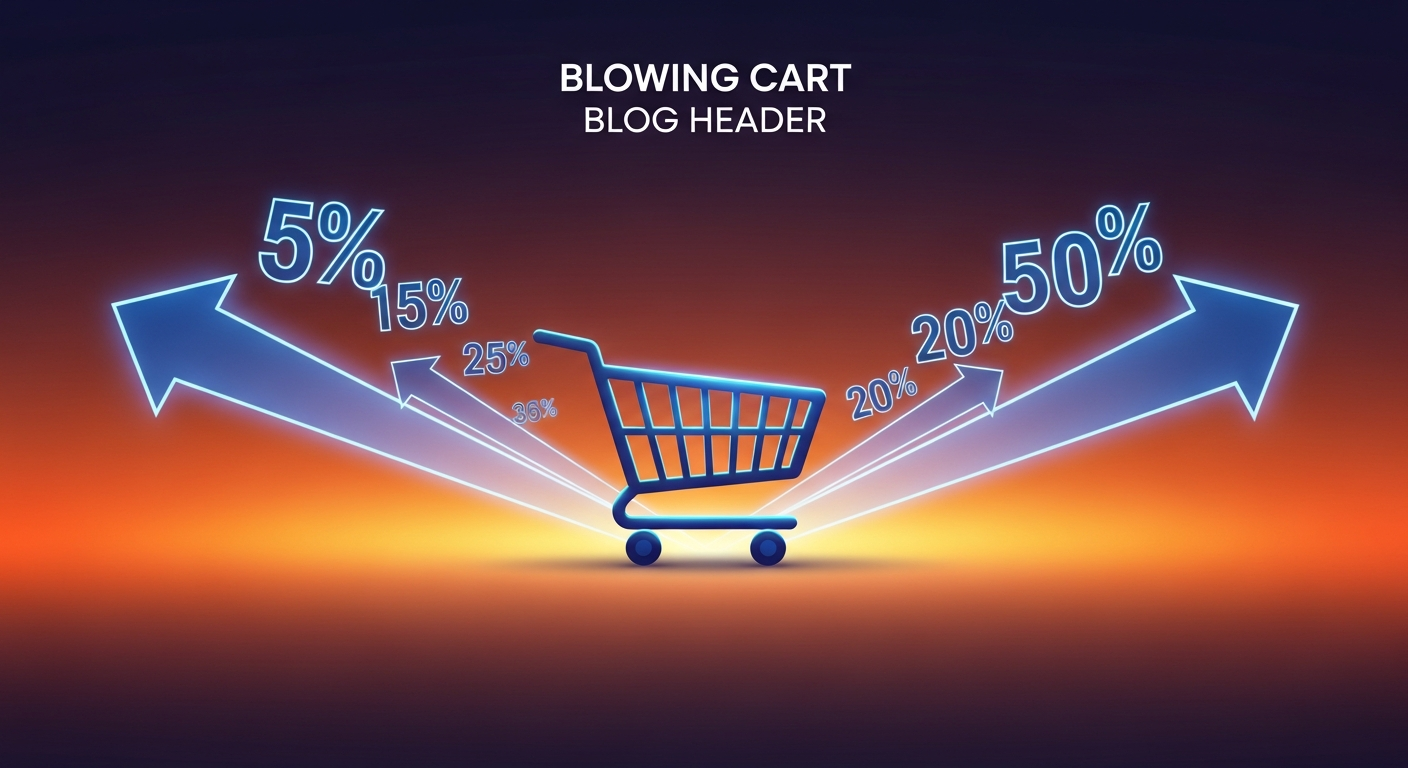
Imagine this scenario that repeats daily in the e-commerce world: a potential customer enters your online store, eagerly browses products, selects a group of items they like, and adds them to their shopping cart. As a merchant, you feel happy that a sale is about to be completed, but suddenly, without any warning, the customer leaves the store, leaving behind a cart full of products without completing the payment process. This phenomenon, known as the "abandoned cart," is considered one of the biggest challenges facing online store owners. It is a real nightmare that devours a large percentage of potential profits that could have been easily achieved if the situation was handled smartly and with a clear strategy.
In the Saudi and Arab market, where platforms like Salla and Zid dominate the e-commerce scene, understanding and analyzing the abandoned carts phenomenon is increasingly important. Global statistics indicate that over seventy percent of shopping carts are abandoned before payment is completed, meaning you are losing more than two-thirds of your potential daily sales. For a merchant using the Salla or Zid platform, this number represents not only a financial loss but also a waste of the marketing and advertising budget spent to bring this customer to the store in the first place. Therefore, recovering even a small percentage of these carts can create a quantum leap in your total monthly revenue without the need to increase your marketing budget.
In this comprehensive and detailed guide, we will dive deep into the abandoned cart problem to understand the psychological and technical motives that make the customer back out at the last minute. Together, we will review the most powerful strategies and practical steps that can be immediately applied to your store on the Salla or Zid platform, starting from analyzing the causes, moving through improving the user experience, and finally setting up automated recovery campaigns that work like magic. Our goal here is not just to reduce the cart abandonment rate, but to convert these hesitant customers into permanent, loyal buyers of your brand.
Reasons for Cart Abandonment in Salla and Zid Stores and How to Address Them
To understand how to recover abandoned carts, we must first accurately diagnose the problem and identify the root causes that drive the customer to leave. Often, store owners tend to blame the customer and consider them not serious about buying, but the truth is that most reasons for cart abandonment relate to the shopping experience itself and the obstacles the customer faces while trying to complete the order. These obstacles can be technical, such as slow checkout page loading, or psychological, such as a feeling of insecurity or hesitation due to a lack of information about the return and warranty policy, creating negative friction that kills the desire to purchase.
Fortunately, the Salla and Zid platforms provide advanced dashboards and powerful analytical tools that allow the merchant to track the customer journey with extreme precision. By reviewing abandoned cart reports in your store's dashboard, you can notice recurring patterns. For example, if you find that a large percentage of customers leave the store specifically at the shipping company selection step, this is a clear indicator of a flaw in your shipping options or pricing. Analyzing this data is the first and most important step; it moves you from random guessing to making decisions based on actual numbers and facts regarding your target audience and their purchasing behavior.
Furthermore, we must realize that some customers use the shopping cart as a tool to save products to return to later, or as a way to find out the total cost of the order, including taxes and shipping, before making a final decision. These customers have not abandoned the purchase entirely; rather, they are in the "thinking and comparing" phase. Dealing with this segment requires a calm and persuasive marketing strategy that does not pressure the customer, but gently reminds them of the products' value and makes it easy for them to return and complete the order with one click when they are ready.
Unexpected Shipping Costs and Hidden Fees
Unexpected shipping costs that appear to the customer in the final step of the checkout process are the number one and most lethal killer of sales in the e-commerce world. When a customer spends time browsing your store on Salla or Zid and is convinced by the product's price, they build a certain expectation of the total cost in their mind. If they are surprised at the checkout page by high shipping fees or taxes that were not clear from the beginning, they feel deceived or exploited, and their immediate reaction is to close the page and look for another alternative that offers greater pricing transparency.
The radical solution to this problem lies in adopting a policy of absolute transparency from the very first moment the customer enters the store. You must display shipping costs and taxes clearly on product pages or in the store's top announcement bar. If you use the Salla platform, you can take advantage of the estimated shipping calculator feature on the cart page before moving to the checkout page. On the Zid platform, make sure to clarify shipping policies in a prominent place. Transparency builds trust, and a customer who trusts your store will be more willing to pay shipping costs if they are aware of them in advance and do not feel they were imposed as a last-minute trap.
In addition to transparency, offering a "free shipping" option is one of the most powerful psychological motivators that eliminates the problem of abandoned carts caused by delivery costs. You can apply this smartly to increase the average order value (AOV) instead of bearing the entire shipping cost. Here are some effective strategies for dealing with shipping costs:
- Setting a minimum threshold for free shipping: Offering free shipping for orders that exceed a certain amount (e.g., free shipping for orders over 299 SAR), which encourages the customer to add more products to the shopping cart to reach this limit.
- Bundling the shipping cost into the product price: You can slightly raise the product price to absorb part of the shipping cost, then offer discounted or free shipping, as the customer always prefers to see the word "Free".
- Providing multiple shipping options: Contracting with various shipping companies via Salla or Zid Ship policies to provide a slow, economical shipping option and a fast shipping option at a higher cost, leaving the freedom of choice to the customer.
- Absolute clarity on additional fees: If there are Cash on Delivery (COD) fees, they must be clearly stated in bold before the customer reaches the final checkout page to avoid shock.
Successful Abandoned Cart Recovery Strategies
Recovering abandoned carts is not just sending a random message ordering the customer to return and pay; it is an art and a science that requires building an integrated strategy that communicates with the customer at the right time, with the right message, and through the most effective channel. In today's competitive e-commerce environment, the successful merchant is the one who has an automated system working around the clock to recover these potential customers. Platforms like Salla and Zid provide built-in solutions and helper apps that facilitate automating these tasks, saving you time and effort and ensuring no potential sales opportunity is lost.
A successful strategy relies on segmenting customers who abandoned their carts into different categories based on their behavior and the value of the abandoned products. A customer who left a cart worth 50 SAR might require a simple reminder message, while a customer who left a cart worth 1000 SAR deserves more attention, and perhaps a special incentive or personal contact from customer service. Using integration tools in Salla and Zid to connect your store with specialized marketing platforms allows you to create custom workflows (Workflows) that handle each segment in a way that maximizes the likelihood of their response and return to complete the purchase.
It is very important to realize that abandoned cart recovery efforts are an integral part of improving your store's overall performance. Every recovered cart directly contributes to raising the overall conversion rate. To learn more about this vital aspect, you can check out our guide on improving the conversion rate for Salla and Zid stores in simple steps, which will help you plug the gaps in your store to ensure customers don't leak out. Integrating your recovery strategy with conversion rate optimization guarantees sustainable sales growth and an unforgettable shopping experience for your customers.
Automated Email and SMS Campaigns
Timing is the decisive factor in the success of any abandoned cart recovery campaign via email or SMS. Sending the message too early might annoy a customer who perhaps intended to return after a few minutes, and sending it too late means the customer may have lost interest or bought from a competing store. The agreed-upon golden rule in the industry is to send the first message one to two hours after the cart is abandoned. This message should be a gentle reminder, asking the customer if they encountered a technical issue while completing the order, and offering direct assistance.
If the customer does not respond to the first message, the second step comes after 24 hours. At this stage, the message should be more urgent, creating a sense of scarcity (FOMO). You can remind the customer that the products in their shopping cart might run out soon due to high demand. You can use Zid or Salla platform tools to embed images of the abandoned products within the email, reviving the emotional desire the customer felt when they first added them to the cart. Catchy phrasing and an intriguing subject line are the keys to getting the message opened and read.
In the Saudi and Gulf market, SMS and WhatsApp messages have proven their effectiveness, sometimes outperforming email, due to their fast open rates and immediate readability. Therefore, we recommend combining both channels for the best results. Use email to display product details and images, and use WhatsApp or SMS for quick reminders and exclusive offers. Here are the best practices when drafting these messages:
- Using the customer's name: Personalization is key. A message starting with "Hi Ahmed, did we forget something in the cart?" is more impactful than a dry, generic message.
- Clear call to action (CTA): The message must contain a prominent and clear button that takes the customer directly to their cart's checkout page with one click, without needing to search for the products again.
- Focusing on customer service: Make the tone of the message supportive and helpful, not purely sales-driven. Ask "Can we help you complete your order?" instead of "Pay now".
- Including positive reviews: Adding previous customer reviews about the abandoned products in the message boosts trust and removes customer hesitation.
The Role of User Experience in Reducing Abandoned Carts
As the common saying goes, "Prevention is better than cure," the best way to deal with abandoned carts is to reduce their occurrence in the first place by providing an exceptional and seamless user experience (UX). When a customer finds that navigating your store is easy, and finding and adding products to the cart is smooth, the likelihood of them abandoning the purchase process drops significantly. The Salla and Zid platforms provide professional templates built on sound user experience principles, but it is up to the merchant to customize these templates to suit their audience and facilitate the customer journey as much as possible.
One of the most important pillars of user experience is full mobile compatibility. Statistics indicate that the vast majority of shoppers in the Arab region use their smartphones to complete purchases. If your store's checkout page is not perfectly optimized for mobile screens, or the buttons are too small, or entering data requires too much effort, the customer will leave immediately. To dive deeper into how to professionally optimize your store's interface, I recommend reading our article on Store Design: How to Improve User Experience in Salla and Zid, which offers practical tips for designing interfaces that increase sales.
Simplifying the checkout process (Checkout Process) is the cornerstone of reducing abandoned carts. You should avoid forcing customers to create a new account to complete a purchase; this requirement is considered one of the most off-putting factors. Instead, activate the "Guest Checkout" option available in Salla and Zid settings. Additionally, the number of required fields in the checkout form should be reduced to the absolute minimum necessary. The fewer the steps, the faster the order completion. Activating express checkout options like Apple Pay, STC Pay, and Google Pay plays a magical role in speeding up the process and reducing thinking time, ensuring the cart is converted into confirmed sales in mere seconds.
Offering Smart Incentives to Complete the Purchase
When gentle reminder messages fail to convince the customer to return, offering smart incentives comes into play as a last line of defense to recover the abandoned cart. However, this strategy must be used with extreme caution and great intelligence. Offering direct financial discounts to everyone who abandons their cart can create negative behavior among customers, as they will intentionally abandon carts to get discount coupons, harming your profit margin in the long run. Therefore, incentives must be calculated and targeted at a specific segment of hesitant customers who need a slight "push" to make a decision.
The secret to successful incentives is creating a sense of urgency. When you send a discount code to a customer to recover their cart, this code must be tied to a very short timeframe, for example, "Valid for 12 hours only" or "Expires at the end of the day". This psychological tactic forces the customer to make a quick decision to avoid missing the opportunity. On the Salla and Zid platforms, you can easily create temporary discount coupons and link them to cart recovery campaigns. Make sure the discount percentage is tempting enough to motivate the customer, but doesn't eat up all your profits.
There are other types of incentives that might be more effective than direct discounts and do not harm your brand's value. For example, you can offer a simple free product or a free sample with the order if the customer completes it. Or you can use cross-selling tactics to provide added value. To learn how you can apply this professionally, check out our detailed article on Cross-Selling: Double Your Sales in Salla and Zid. Offering gifts or additional services makes the customer feel special and appreciated. Here are some ideas for smart incentives you can offer:
- Temporary free shipping: Sending a message stating that the store will cover the shipping costs for this specific cart if paid within 24 hours. This strategy is highly effective if the reason for abandoning the cart was the delivery cost.
- Double loyalty points: If you have an active loyalty program in Salla or Zid, you can offer to grant the customer double points on this order to encourage them to buy and return later to redeem the points.
- Surprise gifts: Telling the customer they will receive a mysterious, free gift upon completing the current order. Curiosity often overcomes hesitation.
- Extended return warranty: Offering a longer-than-usual warranty period or return window to remove any concerns related to product quality or suitability for the customer.
Conclusion: Your Next Steps Towards Increasing Sales
At the conclusion of this comprehensive guide, we must agree that the abandoned cart phenomenon is not a failure or the end of the road; rather, it is in fact a golden opportunity and a positive indicator. A customer who added products to their cart is a customer who showed genuine interest in what you offer and has come a long way in the purchasing journey (Sales Funnel). All this customer needs is the removal of some minor obstacles, a gentle reminder, or a smart incentive to push them to complete the final step. Changing your perspective on this phenomenon from a "loss" to a "hot sales opportunity" is the first step toward achieving unprecedented profits for your store.
Now, it's time for action and actual implementation. Do not let this information stop at reading. Head immediately to your store's dashboard on the Salla or Zid platform, and review the abandoned cart reports to understand the volume of missed opportunities. Start with simple steps: ensure shipping costs are clear, activate express checkout options like Apple Pay, and make sure to simplify the checkout form. After that, set up an automated reminder message campaign, whether via email or SMS, and track its results closely.
Always remember that e-commerce is a continuous process of testing and optimization (A/B Testing). What works for one store may not work as efficiently for another, so you must test different message phrasings, various sending times, and different incentives until you reach the magic mix that suits your target audience and aligns with the nature of your products. By continuously improving the user experience and applying smart recovery strategies, you will undoubtedly notice a gradual decrease in the abandoned cart rate, a remarkable increase in your store's sales, and stability in your long-term profits.