



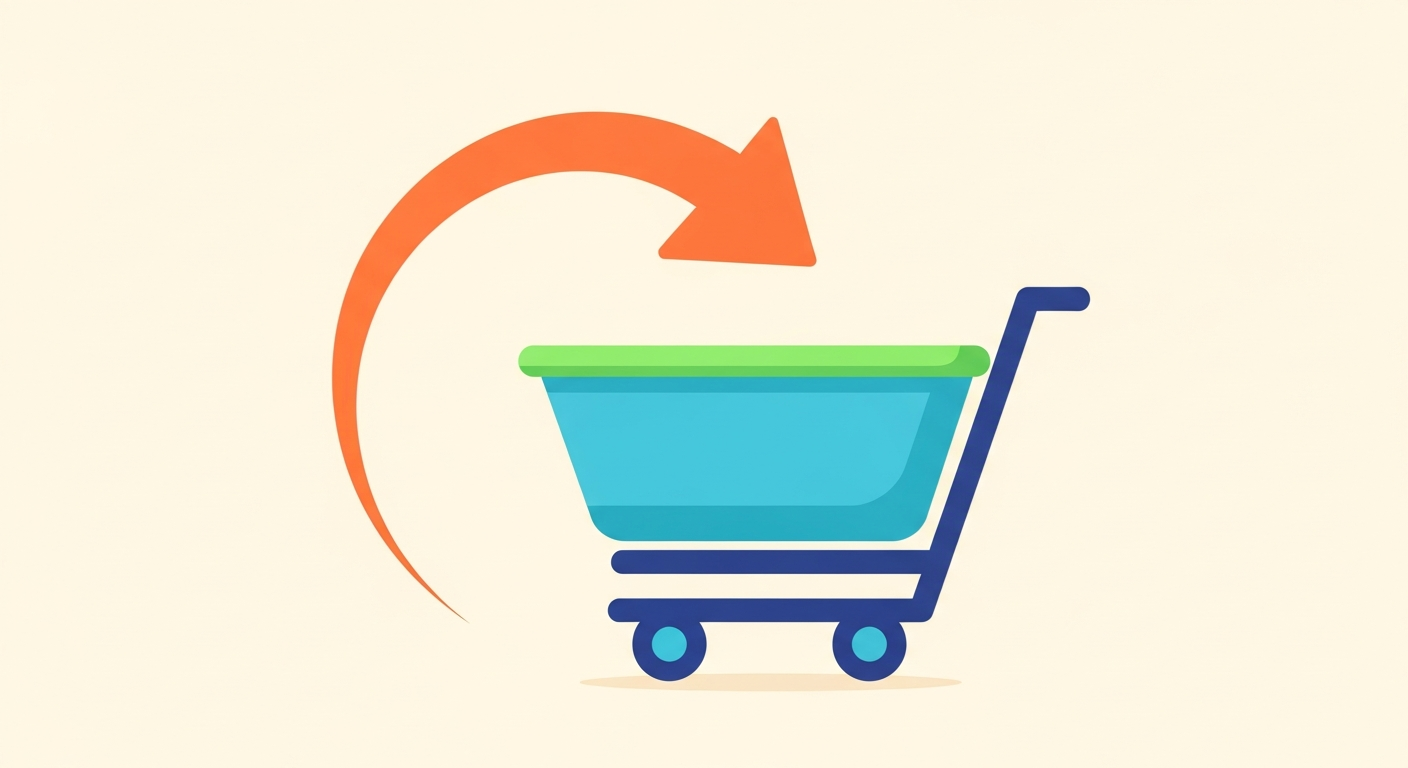
The phenomenon of abandoned carts is considered one of the biggest and most frustrating challenges facing e-commerce store owners in the Arab world, especially those relying on leading platforms like Zid and Salla. Imagine spending huge budgets on advertising campaigns, successfully attracting a potential customer to your store, and convincing them of the quality of your products to the point that they add them to their shopping cart. Then, at the crucial moment, just seconds before completing the checkout process, they leave the store never to return. This phenomenon is not just an isolated case, but a challenge facing the entire e-commerce sector. Global statistics indicate that over seventy percent of shopping carts are abandoned before purchase completion, meaning massive profits are slipping through your fingers daily without you realizing their true magnitude.
However, abandoned carts should not be viewed as a final loss or a failure in the sales process. Instead, they should be considered an incomplete golden opportunity and potential customers who have already shown genuine interest in your products and reached the penultimate stage of the sales funnel. These customers are the easiest to convince to buy compared to new customers who have never heard of your brand. Hence the paramount importance of building smart, well-thought-out strategies to recover these customers and convert those abandoned carts into confirmed sales that boost your store's revenue. On the Zid and Salla platforms, there are many tools and features available that enable merchants to track these carts and communicate with their owners highly effectively, provided these tools are used professionally in a way that encourages the customer to make a purchasing decision rather than annoying them.
In this comprehensive and detailed article, we will dive deep into the abandoned cart phenomenon to analyze the psychological and technical reasons that drive shoppers to abandon their purchases at the last minute. Together, we will explore the latest practical strategies that can be immediately applied in Zid and Salla stores, starting from improving the user experience and simplifying checkout steps, to setting up smart automated recovery campaigns via email and instant messaging apps. Our goal is to provide you with a clear, proven roadmap that enables you to plug the leaks in your store, reduce cart abandonment rates to the absolute minimum, and consequently multiply your profits and return on investment from your marketing campaigns significantly and sustainably.
Understanding the Abandoned Cart Phenomenon and Its Real Causes in E-commerce
The first and most important step in the journey of recovering abandoned carts is a deep and accurate understanding of the reasons that drive the customer to make a sudden decision to leave. A problem cannot be addressed without diagnosing it correctly, and in the e-commerce world, the reasons are numerous and intertwine between psychological, technical, and financial factors. One of the most prominent and common reasons is being surprised by unexpected additional costs upon reaching the checkout page. When a customer spends time browsing your store and is convinced by the product's price, they build a certain expectation of the total amount they will pay. Once they are hit with high shipping fees or taxes that were not clear from the beginning, they feel somewhat deceived or exploited, prompting them to close the page immediately. To overcome this specific obstacle, pricing policies must be reviewed and clarified transparently. You can refer to what was mentioned in Shipping Companies: Your Guide to Choosing the Best in Salla and Zid to offer shipping options at competitive prices or even integrate the shipping cost into the product price to provide free shipping offers that attract the customer and prevent their drop-off.
The second fundamental reason relates to the complexity of the checkout process and forcing the customer through long, tedious steps. Today's digital shopper is looking for speed and ease. If they encounter a registration form asking for many unnecessary details, or are forced to create a new account before completing the purchase, a large percentage of these shoppers will prefer to back out. Platforms like Zid and Salla offer a guest checkout feature, which should always be enabled to facilitate the purchasing flow and reduce friction. Additionally, you must ensure the fast loading speed of checkout pages, as every second of delay in page load leads to a noticeable increase in cart abandonment rates. A seamless user experience and a clean, distraction-free interface are crucial factors in reassuring the customer and encouraging them to complete the payment steps with full confidence and certainty.
The third reason relates to a lack of trust or the absence of the customer's preferred payment options. In the Saudi and Gulf markets in general, payment preferences vary greatly between using credit cards, Mada cards, cash on delivery, or digital wallets like Apple Pay. If the customer reaches the payment page and does not find the method they prefer and trust, they will abandon the cart without hesitation. Furthermore, the absence of security trust seals, or the lack of a clear exchange and return policy in a prominent place during the checkout process, sows doubt in the mind of a hesitant buyer. Therefore, Zid and Salla merchants must ensure that all available and reliable payment gateways are activated, and display security logos and store policies in a way that inspires reassurance and confirms to the customer that they are dealing with a professional commercial entity that protects their rights and financial data.
Effective Strategies for Recovering Abandoned Carts on Zid and Salla Platforms
Once the causes of the problem have been identified and fixed within the store, you must move to the offensive phase of setting up active recovery campaigns for customers who have already left. The most powerful and effective strategy in this context is relying on automated reminder messages, which are programmed to send alerts to the customer after a specific period of abandoning the cart. Timing plays an absolutely crucial role here, as e-commerce experts recommend sending the first message just one hour after the cart is abandoned. This message should be polite and friendly, phrased as an inquiry like "Did you encounter a technical issue during checkout?" or "Did you forget your awesome products in the cart?". The goal of this first message is not to offer a discount, but to remind the customer and offer assistance if they faced an obstacle preventing them from completing the purchase, reflecting the store's care for the customer experience and not just their money.
In our Arab region, direct communication channels have proven their overwhelming superiority over traditional email when it comes to open and engagement rates. Therefore, integrating the WhatsApp application into your abandoned cart recovery strategy is an indispensable step for any merchant seeking to multiply their sales. Zid and Salla platforms provide apps and direct integrations with WhatsApp service providers to enable sending these reminders automatically and effectively. Through WhatsApp, the message reaches the customer's phone directly, ensuring it is read in a very short time. To apply this strategy professionally and avoid being annoying, you can check out the exact details in the article WhatsApp Marketing: Double Your Sales in Salla and Zid, where you will learn how to craft personalized and engaging messages that motivate the customer to click the attached link and return immediately to their shopping cart to complete the process smoothly.
The third strategy lies in the art of offering incentives and deals to break the customer's hesitation. If the customer does not respond to the first reminder message, a second message can be sent after twenty-four hours, including an incentive that encourages them to make a decision. This incentive could be a simple percentage discount code, a limited-time free shipping offer, or even a small free gift with the order. The secret here lies in creating a sense of urgency or scarcity by setting a short validity period for this offer, such as "Use this code within the next twelve hours to complete your order and get free shipping." This strategy must be used carefully and smartly so that customers do not get used to intentionally abandoning carts to wait for discounts. Therefore, it is preferable to vary the type of incentives and present them surprisingly and unexpectedly to maintain your store's profit margins and avoid draining your marketing budget.
Improving the Checkout Experience and Offering Flexible Options to Customers
The checkout stage is considered the bottleneck in any e-commerce store, and any friction or difficulty at this stage leads directly to a massive increase in the number of abandoned carts. One of the most important strategies to improve this stage is providing exceptional financial flexibility for customers, especially when it comes to relatively high-cost products. Many customers add products to the cart with a strong desire to own them, but upon seeing the total amount, they feel a financial burden that prevents them from clicking the confirm order button. This is where splitting purchases and dividing the amount comes into play to alleviate this psychological and financial burden, transforming the purchasing decision from a difficult and complex one into an easy and acceptable one that can be made without much hesitation or prior financial planning.
The magic solution that has recently revolutionized e-commerce in Saudi Arabia and the Gulf is integrating Buy Now, Pay Later services, which have proven their superior ability to reduce cart abandonment rates and significantly increase the average order value. By activating these services in your store on Zid or Salla, you grant your customer the ability to get the product immediately and split its value into several easy, interest-free monthly installments. This option completely removes the price barrier and accelerates the decision-making process. To understand how to integrate these services and benefit from them to the maximum, we advise you to refer to our comprehensive guide titled Installment Payments: How to Increase Your Sales with Tabby and Tamara?, which explains in detail how these financial tools can turn hesitant visitors into actual buyers and loyal customers for your store.
Alongside installment options, close attention must be paid to the design of the checkout page itself. The page design must be fully responsive to mobile phone screens, given that the vast majority of shopping operations are done via mobile. Payment buttons should be clear and large, and data entry fields restricted to necessary information only, such as name, mobile number, and delivery address. Furthermore, the auto-fill feature for returning customers plays a major role in speeding up the process. The more you reduce the number of clicks required to reach the "Your order has been successfully confirmed" message, the lower the percentage of abandoned carts in your store will be. Investing in improving the checkout experience is a direct investment in increasing conversion rates and raising the net revenues of your business.
The Role of Analytics and Data in Reducing Cart Abandonment Rates
In the modern e-commerce world, there is no room for guesswork or making decisions based solely on intuition. Data is the new oil, and it is the secret key to understanding your customers' behavior and identifying the root causes of any leakage occurring in the sales funnel. Platforms like Zid and Salla provide advanced dashboards and detailed reports that allow the merchant to track every move a visitor makes inside the store. By analyzing this data, you can pinpoint the exact stage at which the customer abandons their cart. Does it happen immediately upon seeing the cart page? Or after moving to the shipping address selection page? Or at the final step when choosing a payment method? Accurately identifying the exit point helps you focus your optimization efforts in the right place instead of wasting time and effort on random tweaks that do not address the core problem.
One of the highly useful and advanced analytical methods is segmenting abandoned carts based on their total value and the type of products in them. Dealing with an abandoned cart worth fifty riyals is completely different from dealing with an abandoned cart worth five thousand riyals. High-value carts require more personalized intervention, and it might warrant the customer service team making a direct phone call to the customer to offer a personal consultation or an exceptional deal that guarantees closing the sale. Meanwhile, low-value carts can be handled efficiently through automated messages. To learn how to extract this valuable data and read it professionally, you can benefit from the information provided in the article Sales Analysis: How to Read Your Store's Reports in Zid and Salla?, which serves as an essential guide for every merchant who wants to manage their store with an analytical mindset based on precise numbers.
Finally, data must be used to conduct continuous A/B testing on cart recovery campaigns. There is no single magic message that works with all customers all the time. You must test different message texts, varied email subject lines, different send times, and various types of incentives. By measuring the performance of each version and comparing open rates and conversion rates, you will gradually be able to build the optimal and most effective model for your target audience. This analytical approach, based on experimentation and measurement, guarantees continuous improvement in customer recovery rates and transforms the marketing process from random attempts into a precise scientific system that generates profits predictably and stably.
Conclusion: Building a Sustainable System for Customer Recovery and Profit Multiplication
In conclusion to this comprehensive guide, we must emphasize an important fact: abandoned carts are not just a passing problem, but an inherent part of the nature of e-commerce and digital consumer behavior. No matter how perfect your store is, there will always be a percentage of customers who leave before paying for reasons that may be beyond your control, such as sudden busyness or a desire to compare prices. However, the successful merchant on platforms like Zid and Salla is the one who realizes that these hesitant individuals represent the warmest and most purchase-ready segment, and that investing a little effort and money in recovering them yields profits far exceeding what is spent on attracting new customers from scratch.
In this article, we have reviewed a set of integrated strategies that start with improving the root causes of the problem by simplifying the checkout process, providing absolute transparency in pricing and shipping, and integrating flexible payment options like installments to break the price barrier. Then, we moved on to effective communication strategies by building smart automated reminder campaigns, relying primarily on high-engagement channels like the WhatsApp application, with a focus on the importance of timing and offering well-thought-out incentives that protect profit margins. We also highlighted the pivotal role of data and analytics in guiding these efforts and accurately measuring their success to ensure continuous improvement.
Now, it is time to turn this theoretical knowledge into tangible practical steps. We invite you to log into your store's dashboard in Zid or Salla today and start reviewing your abandoned cart settings. Activate the automated reminder feature, write a friendly and engaging message to your customers, and ensure that your payment and shipping options meet their expectations. Always remember that recovering a small percentage, not exceeding ten percent, of abandoned carts is enough to create a quantum leap in your monthly revenues without the need to increase your advertising budget. Build your sustainable customer recovery system now, and watch how missed opportunities turn into confirmed sales that boost the growth and prosperity of your brand in a crowded market.